
Is the story of carrying elderly parents on a burden and abandoning them in the mountains true?
- We explore how much the Goryeo era actually valued filial piety (孝).
- We trace the true origin of the ‘Goryeo Jang’ story.
- We analyze how this story was distorted and utilized during the Japanese colonial period.
In the memories of many Koreans, there remains a heartbreaking scene of a son carrying his elderly parents on a burden and abandoning them deep in the mountains. This custom, engraved with the name ‘Goryeo Jang’, has long been viewed as a shameful page in our history. I too remember feeling both doubt and shame as a child when I heard this story, wondering if such a sad custom really existed in our history.
However, this story is not our history. It is merely a ghost of a lie that was created in a distant foreign land for moral lessons, which at some point quietly entered our history and transformed into a tool of oppression. Now, let us begin the journey of a historical detective to uncover the identity of that ghost.
1. The Real Goryeo: A Kingdom that Respected the Elderly
The myth of Goryeo Jang and the actual history of Goryeo show completely opposite images. Goryeo society could never condone the act of abandoning parents, both structurally and culturally.
A Society of Filial Piety (孝) and Compassion (慈悲)
The spiritual foundation of Goryeo was rooted in Confucian filial piety (孝) and Buddhist compassion (慈悲). Filial piety was considered the root of loyalty to the king (“Loyal subjects emerge from filial sons”), and the state widely promoted stories of devoted children as models. Stories like that of Seo Neung, who saved his mother by rescuing a frog in winter, and Choi Nubak, who avenged his father against a tiger, are representative examples.
Punishing Filial Impiety by Law
Goryeo treated filial impiety (不孝) as a serious crime, akin to treason. The Goryeo History’s penal code specifies that failing to properly care for parents or enjoying entertainment during mourning would be punished by imprisonment or exile. Extreme crimes, such as plotting to kill parents, were subjected to the highest punishment of execution, which was reserved for treason.
State Responsibility for Elderly Welfare
The Goryeo government actively implemented welfare policies for the elderly.
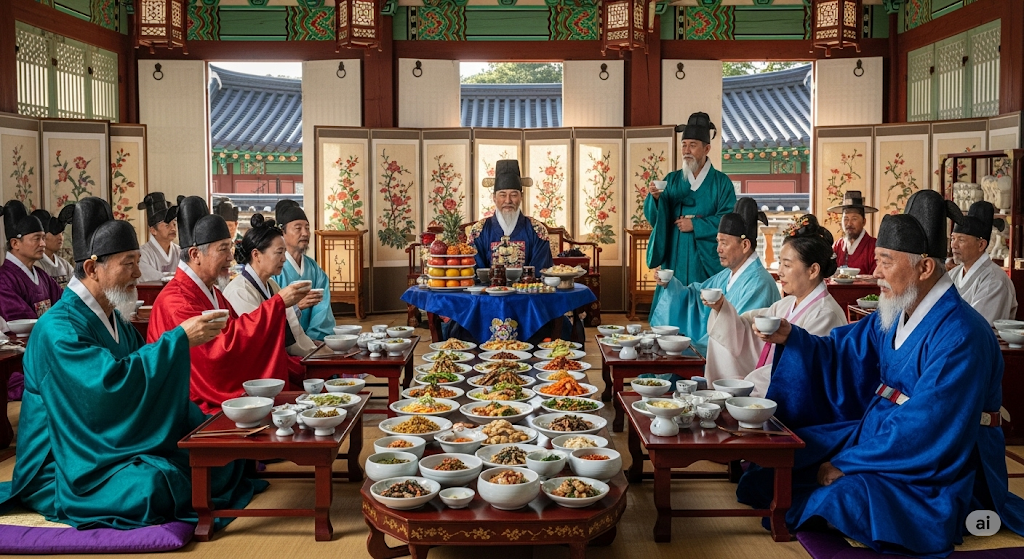
- Yangroyeon (養老宴): A national feast where the king personally invited elderly people over 80 years old, providing food and gifts.
- Medical Institutions: Establishing Dongseo Daebiwon and Hyemin-guk to provide medical care and medicine to the poor and sick.
- Practical Support: Granting leave to officials to care for sick parents (Sibyeongga) or exempting children caring for elderly parents from military service.
The strongest rebuttal to the myth of Goryeo Jang is not the lack of evidence but rather the overwhelming abundance of evidence that is contrary to it.
2. The True Origin of the Goryeo Jang Story: Fables from India and China
So where did the Goryeo Jang story we know come from? Its roots lie not in our history but in moral fables that spread across Asia.
The Abandonment of the Elderly Fable (棄老說話): A Universal Moral Tale
The narrative of abandoning elderly parents is a genre known as ‘Abandonment of the Elderly Fable (棄老說話)’, found throughout Eurasia, including India and China. This is not a record of actual customs but rather a moral fable intended to paradoxically teach the importance of the wisdom of the elderly and filial piety. The Japanese legend of ‘Ubasute Yama (the mountain of abandoning the old woman)’ is not evidence of an actual custom.
The ‘Burden’ Story from China
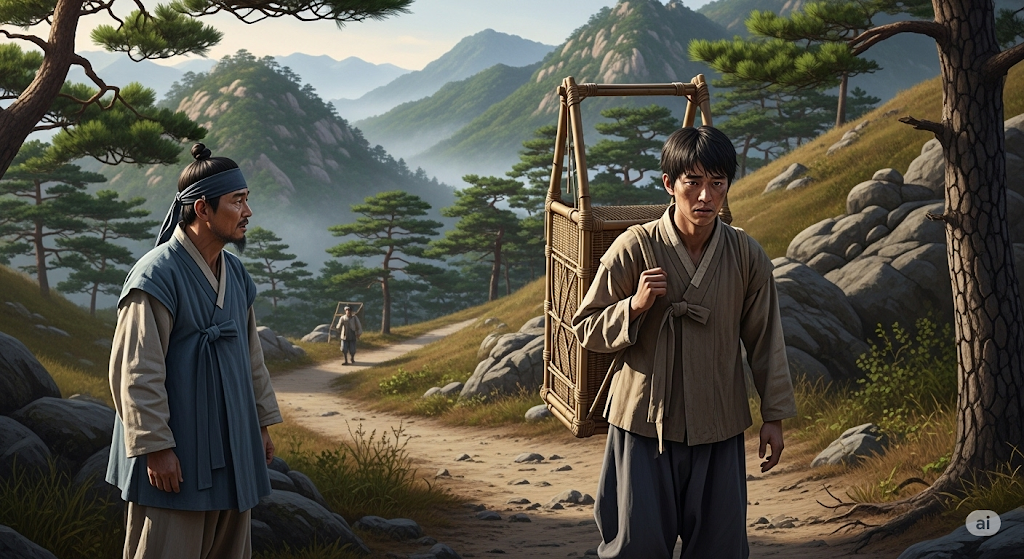
The story we commonly know, where a son learns a lesson from his grandson, originates from the ‘Wongok’ story in the Chinese text ‘Filial Sons (孝子傳)’. In this tale, when a father tries to abandon his grandfather, the grandson says, “I will use this when I abandon my father later,” leading the father to repent. This story was already included in the Joseon era’s ‘Three Principles of Conduct’, clearly recognized as a foreign fable teaching filial piety.
Problem-Solving Stories from Buddhist Texts
Another type of story where the wisdom of the elderly solves a national crisis comes from the Buddhist scripture ‘Zabohangyeong (雜寶藏經)’. The background of this story is a fictional country called ‘Giroguk (棄老國)’, or ’the country that abandons the elderly’. Here, a critical misunderstanding occurs.
Over hundreds of years of oral transmission, the fictional country ‘Giroguk (棄老國)’ became confused with the actual historical ‘Goryeo (高麗國)’ due to similar pronunciation. This was the decisive moment when a foreign fable transformed into Korean history.
3. The Beginning of Distortion: Why Colonial Historiography Weaponized Goryeo Jang
Fables that encouraged filial piety transformed into a malicious weapon to justify colonial rule in the 20th century.
Japanese Colonial Historiography (植民史觀)
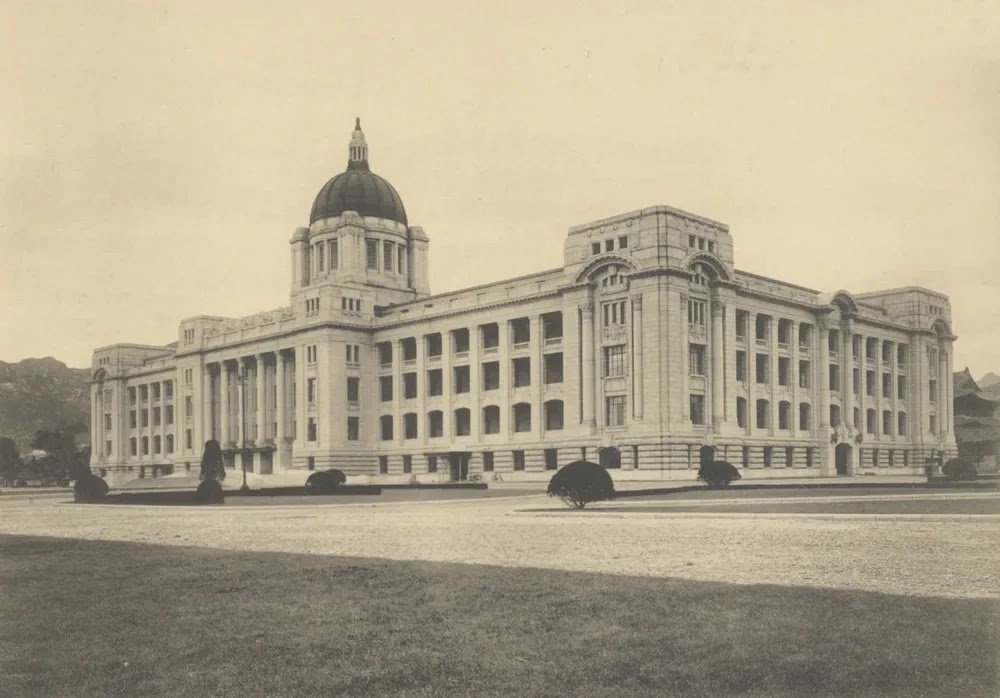
The Japanese colonial government spread a colonial historiography that depicted Korean history as stagnant and primitive to crush Korean national pride. The Goryeo Jang story served as a perfect tool to argue that Koreans were a barbaric nation that even abandoned their parents, thus necessitating Japan’s ‘civilized’ governance.
Justification for Tomb Robbery
There was an even more cynical purpose. It was to justify the looting of Goryeo-era tombs. The Japanese claimed that as they dug up the tombs of Goryeo nobles, “This is not an ancestral grave but the site of Goryeo Jang, abandoned by children, so it is not a crime to excavate it.”
Tools of Indoctrination
This myth was instilled in students through the ‘Joseon Fairy Tales’ published by the Joseon Governor-General in 1924, and it gained false authority through books like ‘The Land of the Hermit’ by William Griffiths, which relied solely on Japanese sources.
4. Decisive Evidence: The True Meaning of ‘Goryeo Jang (高麗葬)’
So what did the term ‘Goryeo Jang’ originally mean? Records from the Joseon era clarify its meaning.
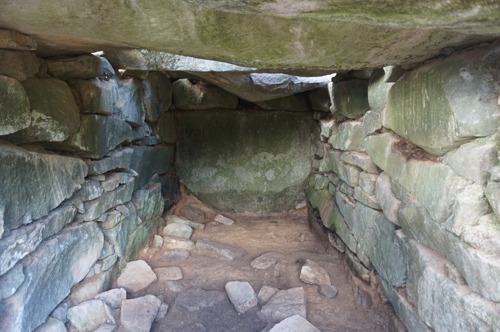
The term ‘Goryeo Jang (高麗葬)’ used in the Joseon era was not a custom of abandoning elderly parents but simply a neutral archaeological term meaning ‘Goryeo-era funeral’ or ‘Goryeo-era tomb’. Records like the ‘Sungjeongwon Ilgi’ mention, “Goryeo Jang (高麗葬) used many iron nails,” referring to the unique funeral practices of the Goryeo era (cremation, stone chamber tombs, etc.).
Colonialists erased the original meaning of this neutral term and replaced it with the name of the barbaric custom they created. This was an act of ’linguistic hijacking’ that transcended historical distortion. Was it a simple misunderstanding, or was it intentional linguistic appropriation?
Comparison: Fables vs. Distorted Myths
| Feature | Original Fable (Filial Sons / Zabohangyeong) | ‘Goryeo Jang’ Myth |
|---|---|---|
| Background | Ancient China / Fictional ‘Giroguk (棄老國)’ | Historical Goryeo era, Korea |
| Conflict | Son’s personal immorality / King’s foolish law | Presented as a national custom based on historical fact |
| Hero | Pure grandson / Wise elder | No hero. The custom itself has negative traits. |
| Conclusion | Family restoration / Abolition of law | Distorted to justify tomb robbery |
| Original Lesson | Filial piety is important / The wisdom of the elderly is precious. | (Distorted lesson) Koreans are barbaric. |
Conclusion
The Goryeo Jang as a custom of abandoning elderly parents is a complete fabrication. The truth can be summarized in three points.
- Reality: Goryeo was a dynasty of filial piety that respected and protected the elderly through laws and systems.
- Origin: The Goryeo Jang story was a moral fable that entered from abroad to teach filial piety.
- Distortion: This fable was distorted by Japanese colonialists who sought to demean Koreans and plunder cultural heritage.
The myth of Goryeo Jang is not a shameful secret of our history but a painful scar left by colonialism. Now that you know this truth, please gently correct anyone who mentions the Goryeo Jang story around you. Join in driving away the ghost of lies and filling that space with the true history of our ancestors who respected the elderly.
References
- Goryeo Jang - Wikipedia https://ko.wikipedia.org/wiki/%EA%B3%A0%EB%A0%A4%EC%9E%A5
- Was Goryeo Jang a funeral custom of Goryeo? - Steemit https://steemit.com/kr/@kanade1025/6xo7ch-11
- Goryeo Jang - Namu Wiki https://namu.wiki/w/%EA%B3%A0%EB%A0%A4%EC%9E%A5
- Goryeo Jang - YTN Science https://m.science.ytn.co.kr/program/view.php?s_mcd=1165&key=201711271007371433
- Filial Piety (孝) - Encyclopedia of Korean Culture https://encykorea.aks.ac.kr/Article/E0065627
- Elderly Welfare (老人福祉) - Encyclopedia of Korean Culture https://encykorea.aks.ac.kr/Article/E0012870
- Goryeo Jang Fable (高麗葬 說話) - Encyclopedia of Korean Culture https://encykorea.aks.ac.kr/Article/E0003488
- Colonial Historiography - Wikipedia https://ko.wikipedia.org/wiki/%EC%8B%9D%EB%AF%BC%EC%82%AC%EA%B4%80
- [Economic Review in History] Goryeo Jang - Financial Review http://www.financialreview.co.kr/news/articleView.html?idxno=22552