
Understanding the Psychological Warfare at the Poker Table through Behavioral Economics and Mental Management Strategies for Victory
Introduction: The Victory of 1 Million Won that Took Everything from You
Imagine a player named ‘Alex’ sitting at a cash game table. Early in the session, Alex receives fantastic cards and wins a substantial amount of 1 million won. As the chips pile up, excitement surges, and confidence skyrockets. However, at that very moment, an invisible switch flips in the brain. The player, who was previously folding cautiously, suddenly calls a raise with a borderline hand and attempts a bold bluff that they would never normally consider. It feels as if the 1 million won just won is not their money but rather play money. What was the outcome? Within an hour, the winnings vanish, and they start to deplete the original funds they brought.

This story is a painfully familiar scenario that resonates deeply with countless poker players. We have all asked ourselves this question: “Why does the 1 million won withdrawn from my bank account feel sacred, while the 1 million won just won at the table feels like ‘found money’? Why does our brain treat money of the same value so differently?” This is the essence of one of the most intriguing puzzles in behavioral economics, the ‘House Money Effect.’
This article is not just a simple poker strategy guide. We will embark on a journey that starts from the psychological laws operating deep within our brains to the mental management techniques used by the world’s top professional poker players. Through this journey, you will gain the following:
- An understanding of the hidden psychological rules that govern your financial decisions.
- Witness how these cognitive biases manifest predictably at the poker table and can even be exploited.
- Explore the subtle differences and contradictions that separate amateurs from professionals.
- Learn specific and systematic strategies that professionals use to build mental fortresses against these deep-rooted biases.
By the end of this article, you will have a clear blueprint to become a player who no longer is a slave to emotions and cognitive illusions, but one who masters their mind and wins long-term at the table.
Part 1: The Hidden Rules in Your Brain: The Science Behind the Worst Poker Decisions
In this part, we will dissect the core theories of behavioral economics that fundamentally govern our decision-making before applying them to poker.
1.1 The Brain’s Secret Ledger: How Mental Accounting and Prospect Theory Hijack Your Decisions
Mental Accounting: Not All Money is Equal
Traditional economics assumes that 10,000 won is just 10,000 won, nothing more, nothing less. Money is merely an interchangeable number. However, one of the founders of behavioral economics, Richard Thaler, demonstrated that humans are not so rational. Through the concept of ‘Mental Accounting,’ he explained that we attach invisible labels to money based on its source and purpose, storing it in different ‘mental accounts.’
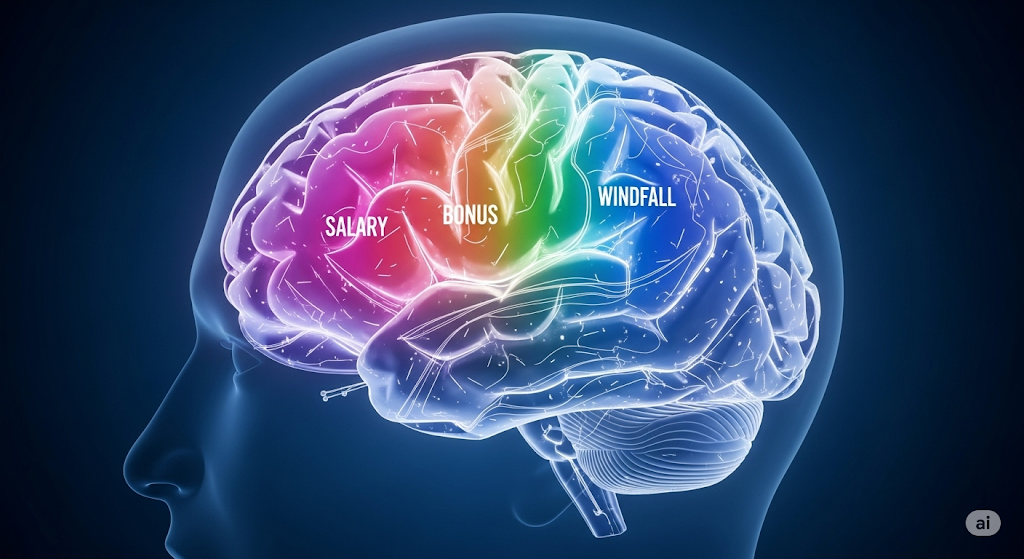
For example, if we receive a tax refund of 1 million won from the government, we are much more likely to spend that money on a fancy dinner at a restaurant we would normally hesitate to visit. However, spending the same 1 million won received on payday for the same purpose feels much more difficult. Why? Because the tax refund goes into a ‘windfall’ or ‘bonus’ account, while the salary goes into a ‘working income’ account for serious purposes like living expenses and savings. The moment money is labeled by its source, its psychological value changes.
Prospect Theory: The Pain of Loss is Greater than the Joy of Winning
Daniel Kahneman and Amos Tversky presented ‘Prospect Theory,’ which explains how humans make choices in uncertain situations, providing a much more accurate psychological model. The core pillars of this theory are threefold:
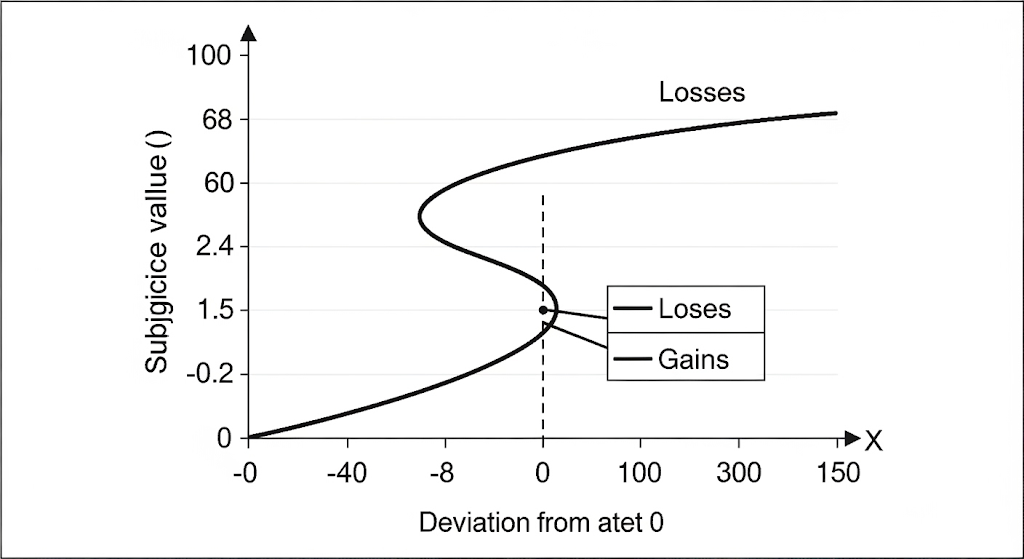
- Reference Point: We do not evaluate outcomes based on absolute wealth. Instead, we assess gains and losses based on a ‘reference point’ such as our current state or expectations.
- Loss Aversion: The pain of loss is psychologically much stronger than the joy of equivalent gain. It is said that losing 100,000 won feels about 2 to 2.5 times worse than gaining 100,000 won. Mathematically, this can be expressed as v(x) < -v(-x).
- S-Shaped Value Function: This visually represents our risk preferences. In the gain area, the curve is concave, indicating a ‘risk-averse’ tendency. In contrast, in the loss area, the curve is convex, indicating a ‘risk-seeking’ tendency. We tend to take greater risks to recover losses and return to break-even.
The Great Integration: How the Two Theories Combine to Create the ‘House Money Effect’
Now, let’s examine how these two powerful theories combine at the poker table. When a player wins a large pot, two psychological phenomena occur simultaneously:
- Activation of Mental Accounting: The player’s brain separates the money just won from their ‘original money’ account and opens a new mental account labeled ‘House Money’ or ‘winnings.’ This money is psychologically isolated.
- Shift in Reference Point of Prospect Theory: The player’s reference point for ‘break-even’ remains at the stack they originally had. Therefore, losing money in the ‘House Money’ account is not perceived as a true ’loss.’ Instead, it is framed as ‘reduced winnings.’
Why is this important? Recall the S-shaped value function. A player losing ‘House Money’ moves down in the less painful concave ‘gain’ area rather than the steep and painful convex ’loss’ area. The psychological pain of loss becomes dramatically dulled, and loss aversion nearly disappears. This is why players are willing to take risky plays they would never normally consider. They are literally gambling with the casino’s money. At the core of this phenomenon is the cognitive error known as ‘failure of integration.’
1.2 The Winner’s Curse and the Loser’s Chase: A Field Guide to Poker Biases
The Reality of the House Money Effect
Imagine a player who has just won a large pot with a set and now holds a gutshot straight draw in the next hand. An opponent makes a large pot-sized bet on the turn. An hour ago, this player would have recognized that the pot odds do not justify a call and would have folded without hesitation. However, now their mind is racing with the thought, “It’s not my money anyway, so why not?” Ultimately, they make a call with a negative expected value (-EV). This is a classic example of the House Money Effect increasing risk sensitivity due to recent winnings.
The Loss Recovery Effect: Chasing Back to Break-Even
This is the dark side of the S-shaped value function. A player who has suffered a significant loss now finds themselves in the convex, ‘risk-seeking’ area of the value function. Their primary motivation is no longer to make good decisions. The only goal becomes erasing the painful loss and returning to their original reference point of ‘0.’ We call this ‘chasing.’ For instance, consider a player who went all-in with pocket aces (AA) and lost to an opponent’s lucky river card. In the next hand, they might re-raise with a mediocre hand like A-9 offsuit, desperately attempting a massive bluff to recover their previous loss in one go.
Winner’s Tilt vs. House Money Effect: The Critical Difference
While both phenomena appear similar in that they lead to aggressive behavior after a win, their motivations are fundamentally different. The House Money Effect is a ‘cognitive’ bias related to mental accounting, while Winner’s Tilt (Winner’s Tilt) is purely an ’emotional’ state.
- Winner’s Tilt - Type 1 (Invincibility): A player on a winning streak begins to feel invincible. Their ego inflates, and they fall into the illusion that they can dominate any pot. The reason they play excessively loose and aggressively is not due to rationally using ‘House Money,’ but because their judgment is clouded by emotions.
- Winner’s Tilt - Type 2 (Fear): Conversely, a player who has won a large amount may become overwhelmed by the fear of losing that money. They become overly tight and passive to protect their newly acquired higher chip stack, starting to fold strong hands even to slight aggression.
These biases do not exist independently; they can form feedback loops that influence each other. Imagine a player who was playing recklessly under the influence of the House Money Effect and then lost a large pot. Because they were winning, this loss feels particularly unjust, triggering the ‘Loss Recovery Effect (chasing).’ If that chasing fails, they may fall into a complete emotional tilt state, mixing frustration and anger, leading to even more catastrophic decisions.
Part 2: The Subtleties Not Discussed by Experts: Building a Sophisticated Risk Model
In this part, we will explore the moderating variables that explain why these biases do not affect everyone equally, beyond the basic theories.
2.1 The Professional’s Reversal: The Reverse House Money Effect
There are intriguing empirical research findings that directly challenge traditional House Money Effect theory. Highly skilled professional poker players tend to become more conservative and risk-averse after a big win. This is known as the ‘Reverse House Money Effect.’

The key to understanding this phenomenon lies in the psychological labels assigned to money.
- Amateur Perspective: Amateurs view large wins as ‘windfalls’ or ‘found money.’ This money enters a mental account for ‘fun’ that is separate from ‘real’ money.
- Professional Perspective: Professionals perceive large wins as an increase in their ‘business capital’ or ‘bankroll.’ This money is immediately integrated into their main asset account. For professionals, the bankroll is a lifeline and a tool for sustaining their profession.
The professional’s reference point also shifts upward after a win, but their goal is not to gamble with surplus money. Their goal is to ‘protect and grow’ the newly increased capital base. Losing part of that profit is not seen as ‘reduced winnings’ but as a direct depletion of ‘professional assets’ that threatens their long-term playability and income. Ultimately, the meaning assigned to money determines the direction of the bias.
2.2 Multifaceted Risk Model: What Matters is Not Just Winning, but ‘How’ You Won
A player’s risk-taking behavior is not determined solely by winning or losing. Various contextual factors interact to determine the final behavior.
Factor 1: The Abstraction of Chips vs. Cash
Research shows that people tend to spend more money and take greater risks when using chips, tokens, or credit cards than when using actual cash. Chips abstract the value of money, creating psychological distance from its real monetary value. This abstraction dulls the ‘pain of paying.’
Factor 2: Perception of the Source of Gains: Luck vs. Skill
How players attribute their success is crucial. Money won by hitting a one-outer on the river is likely classified as pure ‘windfall’ and enters the ‘House Money’ account, leading to the typical House Money Effect. In contrast, a win achieved through a perfectly timed bluff or a series of +EV value bets is more likely to be perceived as ‘money earned through effort.’ In fact, studies show that more skilled players tend to better distinguish between luck and skill and are less prone to biases like the gambler’s fallacy.
Factor 3: The Magnitude of Gains/Losses
According to Prospect Theory, the impact of changes diminishes as one moves away from the reference point. The psychological difference between winning 100,000 won from 0 won and winning 1,010,000 won from 10,000,000 won is enormous. This suggests that the House Money Effect and Loss Recovery Effect are most pronounced after ‘significant’ gains or losses compared to a player’s usual stakes and session expectations.
Now we can build a more sophisticated integration model. A player’s subsequent risk-taking behavior is not simply a function of winning or losing. It is determined by the complex interaction of (player’s skill level) x (attribution of outcome: skill/luck) x (form of currency: chips/cash) x (relative size of outcome).
Part 3: The Playbook for Professional Mental Fortresses
So far, we have analyzed the causes of the problem. Now we will present solutions. In this part, we will detail the specific and practical strategies that the world’s top players use to combat deep-rooted biases.
3.1 The Indestructible Vault: Rock-Solid Bankroll Management (BRM)
Core Philosophy: Your Bankroll is Your Business
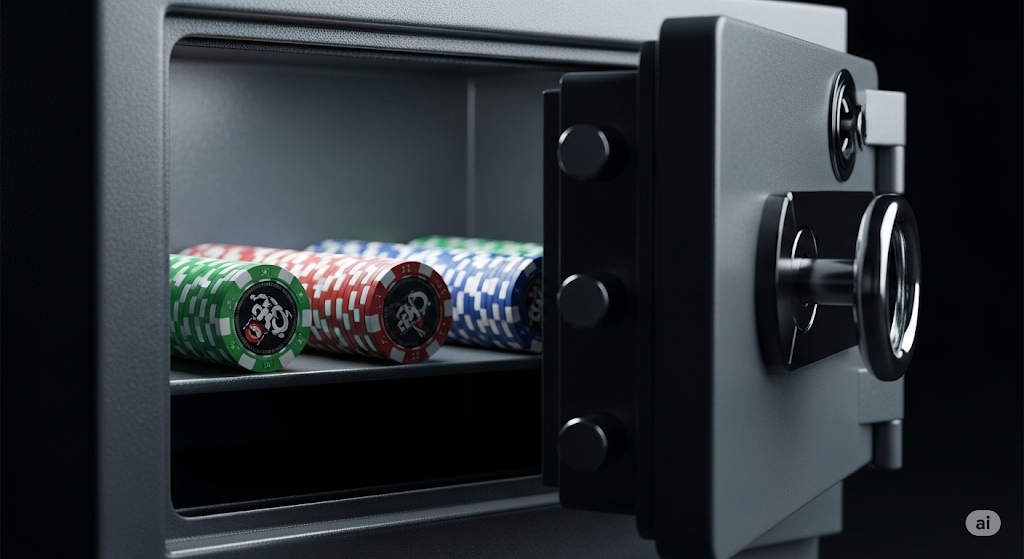
For serious poker players, Bankroll Management (BRM) is the most important principle that cannot be compromised. It serves as a ‘structural defense’ against emotional and cognitive biases. The bankroll is not an ATM for living expenses; it is sacred funds set aside solely for poker. The purpose of BRM is to absorb the shocks of inevitable variance, ensuring that players can continue executing +EV strategies in the long run.
Rules of Engagement: Moving Up and Down in Stakes
BRM is not just about ensuring you have enough money. It is a dynamic system that defines the stakes you can play. This includes training to ‘move down’ in stakes to protect remaining capital during downswings. BRM is a classic ‘pre-commitment device’ in behavioral economics. It is a strict rule created by your rational, ‘cold’ self to bind your emotional, ‘hot’ self in the future.
Bankroll Management Rule Table for Serious Players
The following table is a compilation of recommendations from various experts, providing specific bankroll management rules tailored to your game type and risk tolerance. This table will transform the abstract principle of ‘having an appropriate bankroll’ into a concrete and personalized guide.
Bankroll Management Rules (by Game Format and Risk Tolerance)
| Game Format | Risk Tolerance: Aggressive | Risk Tolerance: Standard | Risk Tolerance: Conservative |
|---|---|---|---|
| NLHE Cash Game (6-Max) | 30 Buy-Ins | 50 Buy-Ins | 100 Buy-Ins |
| NLHE Cash Game (Full Ring) | 25 Buy-Ins | 40 Buy-Ins | 75 Buy-Ins |
| PLO Cash Game (6-Max) | 50 Buy-Ins | 100 Buy-Ins | 150 Buy-Ins |
| MTT (Small Field, <200 players) | 100 Buy-Ins | 200 Buy-Ins | 300 Buy-Ins |
| MTT (Large Field, >200 players) | 200 Buy-Ins | 400 Buy-Ins | 500+ Buy-Ins |
| SNG (9 players) | 30 Buy-Ins | 50 Buy-Ins | 100 Buy-Ins |
- Aggressive: Suitable for players looking to quickly build their bankroll at low stakes or hobby players with external income who can absorb bankroll losses. Highest risk of bankruptcy.
- Standard: A balanced approach recommended for most serious amateurs and semi-professionals.
- Conservative: Essential for professional players for whom poker is a primary income source. Aims to minimize bankruptcy risk even in extreme variance.
Using these rules is simple. If you primarily play NLHE 6-Max cash games with a buy-in of 100,000 won and you want a conservative approach, your bankroll should be at least 10 million won (100,000 won x 100 buy-ins). If your bankroll drops to 8 million won, you should interpret that as a signal to move down to the next stake (e.g., buy-in of 50,000 won) rather than having lost 80 buy-ins. This is self-control through the system.
3.2 Training Mental Armor: Lessons from Masters of Tilt Control
While bankroll management is an external defense system, mental game training is an internal defense system.

Jared Tendler’s Systematic Approach: ‘Inchworm’ and A-to-C Game Analysis
Mental game coach Jared Tendler provides a systematic framework for addressing emotional issues.
- Inchworm Concept: This is a powerful metaphor for learning and growth. The inchworm moves by stepping forward with its front legs (A-game, best play) and then pulling its back legs (C-game, worst play) along. True growth occurs when you learn new skills (front legs) while simultaneously eliminating weaknesses like tilt (back legs).
- A-to-C Game Analysis: This is a self-diagnostic tool. Players should document what their A-game, B-game, and C-game look like specifically and identify the triggers that lead them to their worst play.
Daniel Negreanu’s Practical Toolbox: Training to Dominate the Moment
Legendary pro Daniel Negreanu offers more practical tips.
- Post-Session Checklist: Negreanu emphasizes a process-oriented approach rather than a results-oriented one. After a losing session, he asks questions like, “Did I put money in when I was behind? Did I bluff too much?” This shifts focus from uncontrollable ‘results’ to controllable ‘process.’
- Focus on the Present to Manage Tilt: He states that while you cannot eliminate frustration itself, you can control your ‘reaction’ to it. Acknowledge your emotions but immediately refocus on the fundamentals of the current hand.
- Exploiting Opponent’s Tilt: In a pro’s mindset, tilt can become a weapon. When they recognize that an opponent is frustrated or under the influence of the House Money Effect, they adjust their strategy to exploit the predictable and suboptimal plays the opponent is likely to make.
Case Study: The Infamous J4 Hand
In 2022, an incident shook the high-stakes poker world. Robbi Jade Lew called all-in with the worst hand, J4, against Garrett Adelstein’s strong draw and won. This hand is a perfect storm of behavioral economics concepts. Lew’s irrational call can be analyzed through the lens of the House Money Effect or emotional decision-making. However, more importantly, Adelstein’s reaction exemplifies a textbook case of tilt arising from what fundamentally feels like an illogical and unjust ‘bad beat.’
Conclusion: Embracing ‘Probabilistic Thinking’ in Gambling
We began our journey with the understanding that our brains are wired with biases like the House Money Effect. At the poker table, these biases manifest as predictable and costly mistakes. Through this article, we have confirmed that a professional’s true edge does not come from being immune to these biases, but rather from building a robust and systematic defense system against them.
At the heart of all these strategies lies the philosophy articulated by former professional poker champion and cognitive psychologist Annie Duke in her book ‘Thinking in Bets.’ The ultimate victory in the mental game lies in the ability to separate the ‘quality of decisions’ from the ‘quality of outcomes.’ Good decisions can lead to bad outcomes, and bad decisions can lead to good outcomes. Amateurs obsess over results (“I won!”). Professionals focus on the process (“Was that call +EV in the long run?”). This shift in perspective is the true foundation for long-term success.
Your Action Plan: The Ultimate Checklist for Mastery
- Diagnose Your Weaknesses: Keep a poker journal for the next 10 sessions. Use Tendler’s A-to-C framework. When did you tilt? What were the triggers? Did you make loose calls after a big win? Honest documentation is the first step.
- Implement Your Bankroll Strategy: Use the table from this guide. Write your rules on paper and stick them on your monitor. Adhere to those rules without exception for a month. This will become your financial fortress.
- Establish an ‘Inchworm’ Plan: Identify one major C-game weakness (e.g., loss chasing) and one A-game skill you want to learn (e.g., 3-bet bluffing in position). Focus solely on those two. Progress systematically, one at a time.
- Adopt a Process-Oriented Mantra: Steal Negreanu’s checklist. At the end of each session, regardless of winning or losing, ask yourself, “Did I execute my strategy well? Did I make
+EVdecisions based on the information I had?” Evaluate your process, not your profits.
This journey will not be easy. However, through consistent effort and self-reflection, you can transform from a gambler swayed by the whims of luck and emotion into a ‘probabilistic thinker’ embracing uncertainty and moving toward long-term success. Good luck at the tables.
Sources
- [Exploring Human Psychology through Behavioral Economics | Reading the World through Economics | KDI Economic Education and Information Center](https://eiec.kdi.re.kr/material/pageoneView.do?idx=1499)
- The role of mental accounting in risk-taking and spending: a meta-analysis of the house-money effect - Frontiers
- Mental accounting - Wikipedia
- Mental accounting: Understanding Mental Accounting in Prospect Theory - FasterCapital
- House Money Effect - What Is It, Examples, Vs Gambler’s Fallacy - WallStreetMojo
- Why do we ‘hold on’ instead of ‘cutting losses’? The Prospect Theory of Behavioral Economics
- Choices lead to choices - Joongang Newspaper
- Prospect Theory: What It Is and How It Works, With Examples - Investopedia
- Prospect Theory, Mental Accounting, and Momentum
- Gambling with the House Money and Trying to Break Even: The …
- Prospect Theory, Mental Accounting, Nudges: Applications to Economics, Finance, Marketing, Public Policy, and to COVID-19
- Why are gainers more risk-seeking | Judgment and Decision Making | Cambridge Core
- From House Money to Core Funds: Modeling Risk Attitudes in Consecutive Poker Hands
- The hypothesized process which leads to the house money effect. - ResearchGate
- House Money Effect: Meaning, Examples and FAQs - Investopedia
- Everything about Behavioral Economics 3 - easy come, easy go.
- Break-Even Effects in the Decision to Stop Taking Risks
- Making Better Decisions: Lessons from Poker | by Justine Minnie …
- Tilt (poker) - Wikipedia
- Meta Title: Tilt Definition | What is Tilt in Poker? - PokerNews
- Understanding Tilt | Pokerology.com
- What is Winner’s Tilt - YouTube
- Staying Ahead and Getting Even: Risk Attitudes of Experienced Poker Players - Jaimie Lien
- Poker Bankroll Management Tips - Play Smart, Win Long-Term - ReadWrite
- Poker Bankroll Management: An Introduction
- Poker Bankroll Management (BRM) Guide - Yourpokerdream.com
- The role of chips in poker gambling: An empirical pilot study - ResearchGate
- Behavior when the chips are down: An experimental study of wealth effects and exchange media - UW-La Crosse
- Distinguishing Luck from Skill through Statistical Simulation: A Case Study - probability.ca
- Is poker a skill ONLY game, or is a skill and luck combination? : r/poker - Reddit
- The Role of Skill versus Luck in Poker: Evidence from the World Series of Poker - Price Theory
- Skilled poker players provide more accurate responses than amateur poker players to the Gambling Fallacies Measure - CDS Press
- Is Poker Game About Skill or Luck?
- The Bankroll Bible - PokerCoaching.com
- Poker Bankroll Management - Ultimate Guide - BlackRain79
- Poker Bankroll Management: MTT, Spin, and Cash Game
- Poker Bankroll Management Guide | CoinPoker
- Improve Your Poker Game with Inchworm Concept
- Mental Game of Poker Excerpt 5 - Inchworm - The Hendon Mob
- The Inchworm Concept - Jared Tendler
- The Mental Game of Poker - Barry Carter, Jared Tendler | Manas J. Saloi
- Truly Understanding C-game - Jared Tendler
- Worksheets - Jared Tendler
- Tools & Resources to Speed Progress - Jared Tendler
- Daniel Negreanu: Interview World’s Most Popular Poker Player - PokerCoaching.com
- Managing and Exploiting Tilt | Daniel Negreanu Teaches Poker - MasterClass
- [Poker] The infamous J-4 hand that nearly tore the poker community apart - Reddit
- Thinking in Bets – Complete Book Summary & All Key Ideas - HowToes
- Summary of “Thinking in Bets” by Annie Duke | by David Gildart - Medium
- Thinking in Bets: Making Smarter Decisions When You Don’t Have All the Facts by Annie Duke - The Deckle Edge
- Life is Poker