
Why do value stocks provide higher returns than growth stocks? An ongoing debate.
- Understand the logic behind the two key hypotheses explaining value premium (risk compensation, market overreaction).
- Apply each hypothesis to real-world examples (POSCO, Bank of America).
- Explore the reasons behind the recent weakening of the value premium and the lessons investors should learn today.
What is the long-standing puzzle of value premium in finance?
In finance, there is an intriguing puzzle that has remained unsolved for decades, known as the value premium phenomenon. Simply put, it refers to the tendency for stocks deemed ‘value stocks’, which are undervalued compared to their intrinsic value, to yield higher long-term returns than ‘growth stocks’, which are expected to have high future growth. This phenomenon is considered one of the strongest ‘anomalies’ that challenges the traditional financial theory that states, “higher returns can only be achieved by taking on greater risks.”
To unravel this mystery, we will delve into two core perspectives: the ‘risk compensation hypothesis’, which posits that value stocks are inherently riskier and thus receive higher rewards, and the ‘market overreaction hypothesis’, which suggests that psychological biases among investors create price distortions.
1. The Crack in Traditional Models: Why Can’t CAPM Explain Value Premium?
The Capital Asset Pricing Model (CAPM), a cornerstone of modern financial theory, explains that the expected return of an asset is determined solely by its ‘systematic risk (beta, β)’ that moves with the overall market.
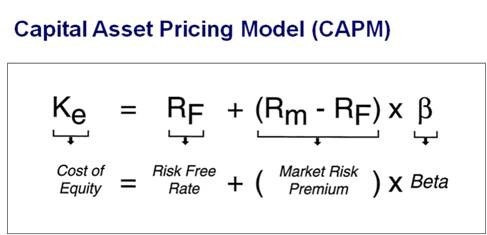
According to this model, if value stocks yield higher returns than growth stocks, then value stocks must have a higher beta. However, numerous studies have shown the opposite: value stocks, characterized by low price-to-book ratios (PBR), consistently achieved higher returns than growth stocks, regardless of beta, and even with lower beta values.
This discrepancy proves that CAPM’s predictions do not align with reality and raises the fundamental question: “Is the market inefficient, or are we misunderstanding ‘risk’?”
Table 1: Long-term Performance of Value vs Growth Stocks in the U.S. Stock Market (Annualized Returns)
| Period | Value Stock Portfolio | Growth Stock Portfolio |
|---|---|---|
| 1927-2022 | 12.8% | 9.7% |
| 1963-2022 | 13.5% | 10.2% |
| 2000-2022 | 8.9% | 7.1% |
Note: Based on Fama/French data, classified by book-to-market (B/M) ratio. Source: Reconstruction based on Kenneth R. French Data Library.
2. Hypothesis 1: Value Premium is Compensation for ‘Hidden Risks’
The saying “There is no such thing as a free lunch” reflects the perspective of the Efficient Market Hypothesis (EMH). This hypothesis argues that the value premium is not due to market inefficiencies, but rather a rational compensation for another systematic risk that CAPM fails to measure.
The Emergence of the Fama-French Three-Factor Model
Eugene Fama and Kenneth French proposed a ’three-factor model’ that adds two factors, Size (SMB) and Value (HML), to the existing market risk (beta) of CAPM.
- SMB (Small Minus Big): A risk factor reflecting the ‘size effect’ where small-cap stocks outperform large-cap stocks.
- HML (High Minus Low): A risk factor reflecting the ‘value effect’ where value stocks outperform growth stocks.
This model explains over 90% of stock return variations. From this perspective, the value premium is a natural reward for bearing the risk represented by HML. The HML factor is primarily interpreted as representing financial distress risk and cyclical risk that responds sensitively to economic conditions.
Case Study: POSCO and the Fate of Cyclical Value Stocks

A good example of the ‘risk compensation hypothesis’ is a steel company like POSCO. Although POSCO is a typical value stock, its low PBR can be seen as a rational market assessment of risk.
- Extreme Economic Sensitivity: The steel industry is heavily influenced by the performance of upstream industries like automotive and construction. It carries systematic risk due to significant demand drops during recessions.
- High Operating Leverage: Due to massive fixed assets like steel plants, even slight changes in sales can lead to substantial fluctuations in profits.
The market assigning a low PBR to POSCO is a rational reflection of the inherent cyclical risk in its pricing. Investors demand a higher expected return, or value premium, as compensation for taking on the risk of poor performance during economic downturns.
3. Hypothesis 2: Value Premium is an Opportunity Created by ‘Market Overreaction’
Behavioral economics posits that humans are not perfectly rational and systematically make mistakes due to psychological biases. This predictable irrationality is the core of the ‘market overreaction hypothesis’ as the true cause of the value premium.
Price Distortions Created by Investor Psychology
Investors exhibit cognitive biases such as:
- Overreaction and Trend Following: Investors become excessively optimistic about growth stocks (winner stocks) when good news arises and overly pessimistic about value stocks (loser stocks) when bad news is prevalent, causing stock prices to rise above or fall below intrinsic value.
- Loss Aversion and Overconfidence: Investors feel the pain of losses more acutely, leading them to hold onto losing stocks, and they tend to flock to growth stocks with compelling narratives due to overconfidence in their judgments.
Lakonishok, Shleifer, and Vishny (LSV) argue that the success of value investing comes from exploiting the systematic misconceptions of other investors. By buying abandoned value stocks due to excessive pessimism and avoiding growth stocks that are overvalued due to excessive optimism, investors can achieve excess returns when market expectations revert to reality.
Case Study: Bank of America (BoA) and the 2008 Financial Crisis

A dramatic example of the market overreaction hypothesis is Bank of America (BoA) during the 2008 financial crisis.
- Extreme Pessimism: Amid fears of a financial system collapse, BoA was branded as the ‘ultimate loser stock.’ Investors reflected the worst-case scenario of bankruptcy in the stock price, leading to repeated crashes.
- Consequences of Overreaction: In 2009, the stock price fell below $3, and the PBR was only around 0.2. This was a classic result of overreaction, ignoring even the liquidation value of the company.
- Reversal of Pessimism: However, government intervention prevented the worst-case scenario, and as extreme pessimism lifted, the stock price gradually recovered over the years. This was a process of the market’s excessive fear returning to normal, not a reduction in business risk.
Personally, I believe these two cases illustrate the dual nature of the value premium well. POSCO strongly reflects the nature of compensation for ‘rational risk,’ while BoA during the financial crisis was closer to an opportunity created by ‘irrational fear.’
Table 2: Key Indicators of Bank of America (BoA) During the Financial Crisis
| Year | Stock Price (Low, $) | PBR (Approx.) |
|---|---|---|
| 2007 | 45.05 | ~1.5x |
| 2008 | 10.93 | ~0.5x |
| 2009 | 2.53 | ~0.2x |
| 2011 | 4.92 | ~0.3x |
| 2013 | 11.61 | ~0.7x |
Note: Approximate values based on public disclosures during the period.
Comparison/Alternatives
Key Comparison of the Two Hypotheses on Value Premium
The ‘risk compensation’ and ‘market overreaction’ hypotheses view the value premium through different lenses. Rather than one being correct, it is likely that both factors interact in a complex manner.
Table 3: Summary of Competing Hypotheses on Value Premium
| Category | Risk Compensation Hypothesis | Market Overreaction Hypothesis |
|---|---|---|
| Core Theory | Efficient Market Hypothesis (EMH) | Behavioral Economics |
| Key Proponents | Eugene Fama, Kenneth French | Werner DeBondt, Richard Thaler |
| HML Factor Interpretation | Proxy for systematic risk | Proxy for price distortion |
| Investor Behavior | Rational | Irrational (Psychological Bias) |
| Source of Returns | Compensation for risk-taking | Correction of market mistakes (errors) |
Conclusion
The debate over value premium provides us with deep insights into how asset prices are determined. Do you believe the market is rational, or do you think it is swayed by psychology? The answer to this question will shape your investment philosophy.
- Key Point 1: Value premium is a complex result of risk and psychology. Some stocks are genuinely cheap due to risk, while others are undervalued due to irrational fear. These two forces intertwine to create the value premium.
- Key Point 2: The definition of ‘value’ is changing. As the importance of intangible assets like software and brands grows, traditional value metrics like PBR are being challenged. This may be one reason for the recent weakening of the value premium.
- Key Point 3: Now, ‘why’ is it cheap matters. The era of investing simply because PBR is low is over. A deep analysis is needed to determine whether the undervaluation is due to rational risk or immediate irrational psychology.
Next Action Suggestion (CTA): Reassess the undervalued stocks in your portfolio. Do those stocks carry hidden risks, or are they misunderstood by the market? Answering this question is where modern value investing begins.
References
- SisaIN Where will you invest: Growth stocks or value stocks? [Capital Market Story]
- Ulsan University Graduate School Risk and Return
- Korean Finance Association Estimation of Size Premium and Cost of Equity in the Korean Stock Market
- Konkuk University Chapter 4 Exercise Answers
- Namu Wiki Capital Asset Pricing Model
- YouTube CAPM, 1 Minute Cut
- Namu Wiki Efficient Market Hypothesis
- Wikipedia Behavioral Economics
- Namu Wiki Behavioral Economics
- Hankyung Economic Terms Dictionary Growth Stocks vs Value Stocks
- Wikipedia Efficient Market Hypothesis
- Velog Fama-French Three-Factor Model
- Korean Securities Association What Really Explains the Korea Discount and PBR …
- Chicago Booth Review The Value-Stock Premium Is Shrinking
- Investopedia Fama and French Three Factor Model Definition
- FnGuide Factor Portfolio Construction Method
- Scripbox Cyclical Stocks: Understanding and Investing
- TradingView POSCO Holdings Common Stock Trading Ideas
- Brunch Introduction to Behavioral Economics - The Meeting of Economics and Psychology
- CNN Business Bank of America stock falls below $5