
Until yesterday, all I had to talk about was semiconductors. The general consensus was: buy Samsung Electronics, buy SK Hynix, and just follow the index for the rest. However, while browsing through a few reports this morning, an unfamiliar term caught my eye: ‘Cyclical.’ I did some digging to understand why this term is being attached to semiconductor discussions.
Semiconductor PER 3.9x: Is it Cheap or Expensive?
Let’s look at the numbers. The Price-to-Earnings Ratio (PER) for Samsung Electronics and SK Hynix is a mere 3.9x, while the KOSPI average (excluding these two) is around 10.3x. That’s a difference of more than two and a half times. It’s confusing whether semiconductors are exceptionally cheap or the rest are exceptionally expensive, but truthfully, both are correct.
Semiconductors have generated massive profits over the past few years, causing the denominator (earnings) to swell rapidly, creating an illusion that the PER is low. Conversely, other KOSPI stocks have seen slower earnings growth, naturally resulting in higher PERs. So, saying “semiconductors are cheap” is only half right—it’s more accurate to say that the stock price hasn’t yet caught up to the scale of semiconductor earnings.
This is where interest rates come in. Researcher Lee Jae-man of Hana Securities, who proposed this logic, suggested a KOSPI upper bound of 7,900–8,350 points if the U.S. 10-year Treasury yield stays within the 4.0–4.6% range. If rates stay within this band, there’s no reason for the KOSPI to drop significantly, but the problem arises the moment it breaks out of this range.
Why is September Considered a Volatile Period?
One reason the brokerage industry is particularly cautious about September is the U.S. midterm elections. Statistics show that since 1980, the average S&P 500 and KOSPI returns in September of midterm election years have been negative, with only a 45% probability of a rise. Conversely, October and November have historically seen higher average returns and probabilities of gains, implying the strategy is simply to survive September.
Speaking of seasonality, there was one more thing that bothered me. iM Securities researcher Kim Jun-young pointed out that the high-beta long-short index performed best between August and October. This also coincided with Federal Reserve Chair Kevin Warsh hinting at the possibility of interest rate hikes at Jackson Hole. Given the talk of rate hikes, the fact that high-beta (volatile) stocks are performing well makes me feel that September won’t be a quiet month.
In summary, the consensus is that while the index might fluctuate in September due to election and interest rate factors, it is not a phase where corporate earnings are collapsing, so any correction shouldn’t last long. That is why the mantra “focus on stocks, not the index” is being repeated.
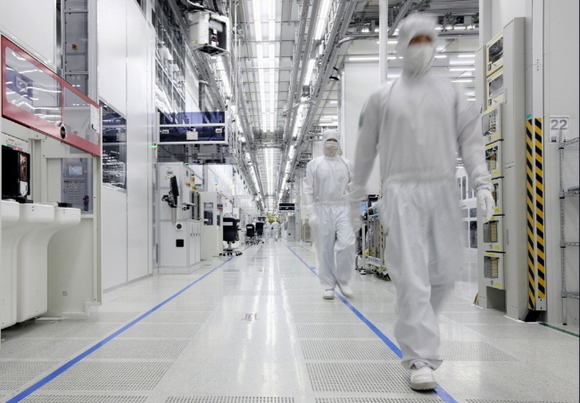
‘Cyclical’ refers to industries that follow the economic cycle. Cyclical stocks are sectors where earnings fluctuate significantly depending on the economic climate, with steel, chemicals, semiconductors, and automotive being prime examples. Interestingly, semiconductors are also traditionally considered cyclicals. However, because semiconductors are recently being treated as “structural growth stocks” due to AI demand, reports seem to be distinguishing them as “IT Giants + Cyclicals.” It seems semiconductors have carved out their own category, while the remaining cyclicals refer to traditional sectors like steel, chemicals, automotive, and shipbuilding.
Indeed, similar trends appear in other brokerage reports. For sectors expected to show improved ROE by 2027—due to rising ROA and lower financial leverage compared to 2026—the U.S. market points to hardware, semiconductors, software, pharma/bio, capital goods, telecommunications, banking, and automotive. Domestically, power equipment, defense, IT hardware, cosmetics, and pharma/bio are being suggested. I get the impression that interest, which was once heavily skewed toward semiconductors, is gradually spreading to adjacent sectors.
Some have pointed out that cyclical, economic-sensitive, and value stocks are being used interchangeably in the current market. While they aren’t strictly identical concepts, because trading is effectively occurring as if economic-sensitive = cyclical = value, it doesn’t seem to matter much in practice.
Differences Between Semiconductor Giants and Traditional Cyclicals
| Category | Semiconductor Giants | Traditional Cyclicals |
| — | — | — |
| Representative Stocks | Samsung Electronics, SK Hynix | Steel, Chemicals, Automotive, Shipbuilding |
| Current Nature | Structural growth driven by AI + Low PER | Earnings linked to economic cycles |
| September Risks | Foreign supply/demand, share buyback capacity | Sensitivity to interest rates/economic shifts |
| Investment Logic | Valuation attractiveness | Selection based on earnings/supply/demand improvement |
Why Are Share Buybacks Considered a Variable for September Semiconductor Supply/Demand?
Since we’re on the topic of semiconductors, I dug deeper. Recent foreign supply and demand have been unusual. Throughout August, foreigners net-sold 705.9 billion KRW worth of SK Hynix, 144.8 billion KRW of Samsung Electronics preferred shares, and 81.9 billion KRW of Samsung Electronics common stock. They have been aggressively offloading semiconductor giants.
Conversely, individual investors moved in the opposite direction. In the same period, they net-bought 264.1 billion KRW of SK Hynix and 228.7 billion KRW of Samsung Electronics. Foreigners sold while individuals bought—a complete divergence in outlook. This is where share buybacks come in. Both companies acquired approximately 10.3 trillion KRW in treasury shares between the 20th and 28th of last month, with about 44.7 trillion KRW in remaining buyback capacity. Notably, the acquisition amount of 805 billion KRW by the two companies from the 24th to the 28th was nearly equal to the 832 billion KRW in KOSPI net-selling by foreigners during the same period, serving as a buffer against foreign selling.
Knowing this, the question naturally arises: “Will this buffer hold in September?” Even with over 44 trillion KRW in remaining capacity, if foreign selling intensifies, the exhaustion rate of that capacity will accelerate, so it might not be a reason to be entirely at ease.
The Market Already Diverged by Sector Today
Since theory can be dull, I checked the market situation right after the close today (September 1). According to Naver Finance’s top searched stocks, semiconductor giants like Samsung Electronics and SK Hynix led the market. In fact, Samsung Electronics closed at 261,000 KRW, up 1,000 KRW (0.38%), and SK Hynix closed at 169,300 KRW, up 19,000 KRW (1.14%).
However, there was a significant temperature gap even within the same IT/Electronics sector. LG Innotek (011070) plunged 52,000 KRW (-8.10%) to 590,000 KRW. The divergence was even clearer in secondary batteries and bio. L&F (066970) plummeted 15,500 KRW (-10.57%) to 131,200 KRW, and Peptron (087010) fell 17,700 KRW (-9.66%) to 165,500 KRW. Construction stocks also dropped; Daewoo E&C (047040) saw a significant decline of 1,370 KRW (-7.53%) to 16,820 KRW.
The “sector-specific differentiation” mentioned in the reports was evident in just a single day. Semiconductor giants remained firm, but others diverged by sector. It is still too early to judge whether this is a one-day coincidence or a trend that will continue throughout September.
How Should We Interpret the Advice to Add Cyclicals?
After reviewing all this, the advice to “add cyclicals to IT giants” makes more sense. It seems to mean that while you should hold onto semiconductors due to their valuation appeal (low PER) and supply/demand safety net (share buybacks), you should broaden your perspective to include other sectors—whether power equipment, defense, or chemicals—that show verified earnings and ROE improvements as we navigate the September volatility.
However, there were varying opinions in the reports on whether this is a signal to “switch immediately” or just “gradually increase your exposure in a corner of your portfolio.” Personally, the latter seems more weighted, but it is only the first day of September, so it’s too early to draw a definitive conclusion.
References
- Korea Investment & Securities September Investment Strategy Report
- Hana Securities Researcher Lee Jae-man's September Market Outlook
- Edaily, Stock-picking market until September... KOSPI 7000-range box expected
- EBN, Market correction coming in September... Buy power, defense, and IT hardware
- Korea Economic Daily, Will we see 9,000 points again? September investment strategies from 10 brokerages
- Seoul Shinmun Seoul Data Lab, 20 most popular stocks right after market close
- Korea Exchange Investor Trading Trends