
I have been closely following the news on tariffs.
It hasn’t been many days since I read articles about tariffs being refunded to importers, and now the same administration has promised to give $5,000 to every adult.
Thinking the order of events seemed reversed, I looked into it further.
After checking various reports, I found that this is by no means the first time this has been mentioned.
There have already been several “dividend” pledges with similar amounts and similar rhetoric, but the results were different each time.
I was curious whether this one follows the same pattern or if it is something different, so I examined it point by point.
Trump’s $5,000 Dividend: What Exactly Did He Say?
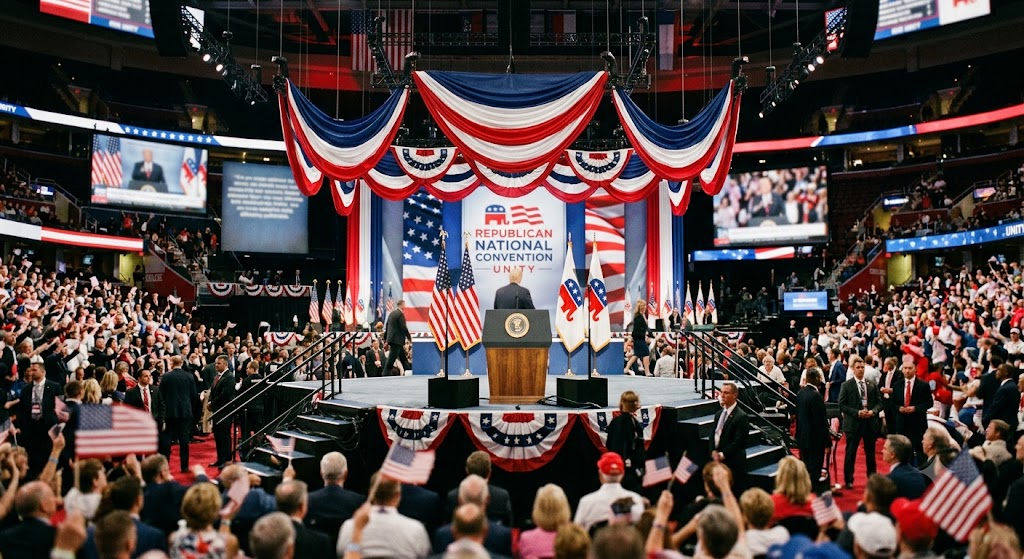
This statement was made on the night of September 9th on stage at the Republican midterm election convention held in Dallas.
President Trump stated that if the Republican Party keeps both the House and the Senate in the November midterms, he will pay a “dividend” of $5,000 to every adult citizen.
To quote his expression directly, he said, “If the Republicans win, you win too; you will receive $5,000.” He even coined the term “Trump Dividend,” likening the payout to a successful company distributing cash to its shareholders.
There was one condition attached: this money must be spent within the United States. He specifically added that it shouldn’t be spent in Canada, China, or Germany. However, there was no explanation of how this condition would actually be verified or enforced. Once payment is made via cash or bank deposit, there is effectively no way for the government to individually track what that money is spent on or where it is used. Even during the COVID stimulus period, there were attempts to restrict usage, but they were never implemented effectively, so this “domestic consumption” condition seems unlikely to hold meaning beyond a mere declaration. The White House reportedly did not provide any answers to reporters’ questions regarding the details.
The numbers themselves are large. With approximately 240 million adult citizens in the U.S. according to the census, $5,000 per person amounts to a total of around $1.2 trillion. This is a plan to distribute more money in one go than the total sum of the stimulus payments issued in several installments during the COVID era.
The choice of the word “dividend” is also worth chewing over.
When a company pays a dividend to shareholders, it is distributing a portion of the profits earned that year. It assumes that there is no dividend without profit. However, the U.S. government is currently not in a state of making a profit; it is running annual deficits while carrying a debt of over $40 trillion. If it were a company, it would be paying dividends while in a state of deficit, which in a normal scenario would warrant concerns about raising capital or borrowing rather than paying dividends. Thus, the analogy of a “successful company’s dividend” seemed somewhat disconnected from fiscal reality.
Why Is This Already the Third Dividend Pledge?
Going back a bit, I reviewed the announcements made so far one by one. This is not the first time the idea of cash payments labeled as a “dividend” has emerged under this administration.
Early in his term, there was talk of a “DOGE Dividend,” where budget savings from the Department of Government Efficiency (DOGE) would be returned to the public. It was an idea first floated by Elon Musk, and the amount was the same $5,000 as it is now. President Trump himself said he liked it, but it never moved to the implementation stage.
Last November, there was talk of returning “at least $2,000 per person" from the money collected through tariffs. Trump even posted on social media, "We are collecting trillions of dollars, and now we will start paying off the massive $37 trillion in debt.” However, the basis for this funding source was shaken a few months later when the Supreme Court ruled the tariffs illegal.
Early this year, a “warrior dividend” of $1,776 was actually paid to over 1 million military personnel—but since the amount was small and the recipients were limited to active-duty and reserve members, the nature of this was somewhat different from the previous two cases.
There was also a proposal to put over $1,000 into Health Savings Accounts (HSA), which emerged as a Republican alternative to extending the expired ACA premium tax credits, but it failed to pass the Senate. Recently, it was reported that a $500 rebate is being prepared for some ACA enrollees who do not receive subsidies.
To summarize:
$5,000 → Canceled, $2,000 → Canceled, $1,000-range HSA proposal → Rejected, $500 rebate → Being prepared, $1,776 military dividend → Payment complete. And now, $5,000 has appeared again.
It is hard to shake the impression that the framework of a “dividend” is being recycled while the amounts, funding sources, and recipients change slightly each time. It is also notable that the only instance that actually led to payment was the military dividend, which had a narrow scope and a small amount.
Can Tariff Revenue Be a Source for Dividends?
Vice President JD Vance explained the funding for this dividend through tariff revenue. However, the timing is a bit strange.
Since the Supreme Court ruled reciprocal tariffs illegal, the government has been refunding tariffs to importers. Estimates suggest that the amount refunded so far is about $100 billion, and could grow to as much as $166 billion.
At a time when the government is returning money rather than collecting it, the calculation to pay out $1.2 trillion in new funds based on those tariffs shows a massive discrepancy in amount.
National debt has also recently surpassed $40 trillion for the first time. As of the first quarter of this year, the debt-to-GDP ratio is 122.6%, and the cumulative fiscal deficit for this fiscal year is at 5.8% of GDP.
Looking at the numbers alone, it is easy to confirm that this dividend is not a scale that can be covered by tariff revenue alone. Furthermore, the refunds go to the importers who paid the tariffs directly, not to the consumers—it is ironic that while consumers shared the burden of rising prices, the refunds go to the importers.
Even within the Republican Party, this point has been raised. Representative Chip Roy, who leads the fiscally conservative Freedom Caucus, stated that he wants to know how this plan will be funded, though there was a clear difference in tone from the Senator of the same party who stepped up to prepare the bill. The fact that views on this pledge differ even within the same party suggests how half-baked the funding issue is.
Reactions from the bond market are also unusual. U.S. Treasury yields have been rising over the past few weeks due to investors concerned about inflation and debt burdens, and some analysts have suggested that this announcement will add to the pressure on that trend. For the government, as Treasury yields rise, interest costs increase, creating another factor that erodes fiscal capacity, independent of the dividend funding issue.
Why Did the Dividend Pledge Emerge Now?
The timing is also worth noting. The current midterm election is one where the burden of inflation and living costs is considered the biggest issue.
According to a Civiqs poll as of September 4, just before the announcement, Trump’s approval rating was 34%, while his disapproval rating was 60%, with his net approval falling to minus 26 points—a significant drop compared to his inauguration in January 2025.
With the Republican Party struggling in the polls, many evaluate this dividend pledge as a desperate gamble made at a time when the President’s approval rating is low. It is also not logically smooth to put forward tariffs as a funding source when tariff policy is being cited as one of the causes of inflation.
What Will Happen to Inflation if $1.2 Trillion Is Released?
As I kept looking at the numbers, I naturally moved to the next question.
Setting aside the funding issue, if this money were actually released, what impact would it have on inflation?
It is now widely known that stimulus checks during the COVID era were one of the causes that fueled inflation. Considering that the total amount of stimulus payments distributed in several installments back then was less than this single Trump dividend payment, one can worry about what kind of stimulus it would provide to inflation if a similar amount of cash were released all at once in a short period.
Moreover, since inflation caused by tariffs is already an election issue, it is ironic that the card pulled out to offset that burden could actually exacerbate the same problem.
Of course, this is all based on the premise that payment actually occurs, and at this stage, since neither the funding nor the legislation is finalized, this concern itself might be premature.
However, I examined it because I believe that the question “Where will we get the money?” must be followed by the question “What will happen if that money is released?”
The Vice President’s Immediate Correction: The Target Is the “Middle Class”
Less than an hour after the announcement, the Vice President changed the phrasing. Vance explained again that this dividend is for the “American middle class,” which differs in tone from Trump’s original statement of “every adult citizen.”
This could be read as narrowing the target based on income, so it is probably correct to assume that nothing has been decided yet regarding who will receive how much.
Execution of the payment also requires congressional approval.
Republican Senator Bernie Moreno wrote on social media that he would prepare a bill to be passed immediately after November 3, the day after the election, which in itself means that the bill does not even exist yet. It is not an issue that the President can decide alone and implement immediately; it means it must pass through another gate: a vote in the House and Senate.
Is It Election Bribery or Not? What the Law Actually Prohibits
On the Democratic side, they openly called it “a bribe to buy votes.” However, after looking for the opinions of legal experts, many said that it would be difficult to apply actual bribery charges.
The reason is that this dividend is paid regardless of whether one votes or which party one supports.
New Mexico attorney John Day explained that, like tax cut pledges, the mere fact of giving voters an economic incentive does not constitute bribery. Under this plan, you could receive the same $5,000 even if you vote for the Democrats or do not vote at all.
The precedent mentioned here is the 1982 Supreme Court case Brown v. Hartlage.
A candidate in Kentucky who promised “I will not take a salary if elected” was challenged for violating anti-corruption laws, but the Supreme Court ruled that punishing such remarks would violate the First Amendment. Justice William Brennan ruled that criminalizing or sanctioning such types of political speech is problematic in itself. The logic is that broad policy promises are treated differently from quid pro quo payments aimed at individual voters, and election law experts also believed that even if this case went to litigation, the Trump side would find it easy to defend based on this precedent.
There is one comparable case.
During the 2024 presidential election, Elon Musk gave $1 million a day to registered voters who signed a petition, but this was a payment conditioned on a specific action (signing), so in Wisconsin, the method had to be changed due to the possibility of violating state law. When the city of Philadelphia filed a lawsuit for similar reasons, election law experts believed that Musk would not be significantly troubled—the reason being that even if a fine were issued, it would have almost no deterrent effect compared to his net worth.
This Trump dividend is structured to be even easier to defend legally than the Musk case, in that it does not condition the payment on individual actions like signing or voting and applies equally to the entire public.
However, there is a point where this logic becomes awkward if pushed to the extreme.
A critic raised this question: If a president said one month before an election, “If our party keeps Congress, I will give $50,000 to every citizen,” would that also be equally legal? The point is that as the amount increases, the boundary between “broad policy pledges” and “buying results” becomes increasingly uncomfortable, and there is no clear monetary standard in the current legal system to draw that line.
The 2021 Georgia Precedent: A Method Used by Democrats Too
In fact, the rhetoric of “If we win the election, we will give you cash” is not the first time this has happened.
Ahead of the 2021 Georgia Senate runoff election, then-President-elect Biden and candidates Ossoff and Warnock promised a $2,000 stimulus payment. Both were elected, and the stimulus was actually paid that year. No one was indicted over this matter.
Though the direction is opposite, the structure is similar. It means that the method of promising to give cash if a specific result occurs before an election is not the exclusive property of the Republican Party. However, the scale this time is overwhelmingly larger—$2,000 versus $5,000, and the difference between one state (Georgia) and the entire U.S. adult population.
When comparing then and now, there is one more thing that stands out.
The 2021 Georgia case had a strong character of reaffirming the previously scheduled COVID stimulus payment before the runoff, and it was actually paid within that year.
On the other hand, this Trump dividend has only had the amount announced while neither the funding, the target range, nor the legislative process has been finalized.
Even if the same rhetoric is used, one must consider that there is quite a difference in feasibility between “a promise to reaffirm something already in progress” and “a promise that must start entirely from scratch.”

Trump Dividend: Who Can Actually Receive It?
After summarizing up to this point, it caught my eye that there is no answer to the most basic question of “who receives how much and when.”
Trump said “all adult citizens,” and Vance said “middle class.” Whether there will be an income cap, if so how much, whether permanent residents are included, and whether it will be taxed or tax-free—none of these practical questions have been answered.
These details will likely emerge only after the bill promised by Senator Bernie Moreno is actually introduced, and I want to reiterate that even that bill assumes a post-election scenario.
So, Will the $5,000 Trump Dividend Happen?
Personally, I am inclined to say I don’t know.
The funding basis is uncertain, the target scope became even more ambiguous after the Vice President’s remarks, and the process of congressional approval has not yet begun. The fact that none of the previous three dividend pledges were actually paid to the entire public is also a concern.
If I were to assign a probability, I would bet on the lower end, but I don’t have the confidence to declare it zero.
However, it is also difficult to dismiss this promise as pure bluster.
It is designed in a structure that is quite legally defensible, and the rhetoric of connecting election results to cash payments, like the Georgia case, is a precedent that has already led to implementation.
I think the answer will become clearer by watching whether a bill is actually introduced after November 3 and whether an income standard like “middle class” is included in that bill.
One more thing I want to keep an eye on:
The fact that whether this pledge passes or not, it is already playing a political role in itself.
Regardless of execution, the single sentence “$5,000 if we win” has been filling the news for weeks ahead of the election.
Both the DOGE dividend and the tariff dividend failed to lead to actual payments, but they each created a buzz at the time of their announcements.
This one is playing a significant part of its intended role regardless of the outcome, so I thought that whether or not it is actually paid might be just one of many goals this pledge is aiming for.
I want to return to this post after November 3 and check if a bill was actually introduced. Will this promise really be implemented in concrete numbers, or will it end with just one more line added to the list—as of now, no one knows the answer.
References
- https://www.pbs.org/newshour/politics/watch-trump-promises-5000-dividend-for-americans-if-gop-wins-midterms
- https://time.com/article/2026/09/10/trump-dividend-five-thousand-dollars-midterms-republican-convention/
- https://www.newsnationnow.com/politics/trump-5k-dividend-republicans-win-midterms/
- https://www.newsnationnow.com/politics/trump-5k-dividend-republicans-win-midterms/amp/
- https://www.cnbc.com/2026/09/10/trump-dividend-midterms-gop.html
- https://fortune.com/2026/09/10/trump-5000-dividend-republicans-midterms-us-debt/
- https://www.axios.com/2025/11/09/trump-tariffs-stimulus-rebate-2000-check
- https://gvwire.com/2026/09/10/trump-wants-to-give-out-5000-checks-it-would-cost-more-than-1-trillion/
- https://electionlawblog.org/2026/trumps-hard-to-believe-pledge-to-give-every-american-adult-5000-if-republicans-win-control-of-house-and-senate-is-almost-certainly-protected-by-the-first-amendment-against-bribery-or-vote-buying/
- https://www.yahoo.com/news/politics/articles/trump-dividend-bribery-president-promises-022536758.html
- https://rollingout.com/2026/09/10/trump-5000-dividend-bribery-claim/
- https://pjmedia.com/scott-pinsker/2026/09/10/the-5k-check-heard-round-the-world-how-donald-trump-reverse-unod-the-midterms-n4957080
- https://www.fortune.com/2024/10/29/musk-philadelphias-lawsuit-vote-buying-election-law
- https://www.newsweek.com/map-donald-trump-approval-rating-every-state-labor-day-12408878