
On August 13, the Russian state-run TASS news agency released a photograph.
It was a seemingly unremarkable scene of a man tasting freshly made caviar at a fish processing plant.
However, once it was revealed that the man was Putin and the location was Iturup Island in the Kuril Islands, Tokyo was thrown into an uproar. The Japanese Ministry of Foreign Affairs immediately summoned the Russian ambassador to Japan to lodge a protest, and Prime Minister Sanae Takaichi even went so far as to call it “an absolutely unacceptable act that hurts the feelings of the Japanese people.” Why did Putin choose this specific moment to set foot on land he hadn’t visited once in the 26 years since taking power in 2000?
It is difficult to view this itinerary—which included caviar tasting, a hospital visit, and a school tour—merely as a gesture to win over local public sentiment.
The fact that the Kremlin specifically chose to release such mundane scenes suggests a calculated performance.
The Kuril Islands are territories occupied by the Soviet Union at the end of World War II and held by Russia ever since, yet Japan and Russia have failed to sign a peace treaty for 80 years. Coincidentally, this visit comes at a time when the US, China, Japan, and Russia are quietly but rapidly competing for the Northern Sea Route, which has emerged as a new shipping path connecting Asia and Europe as the ice melts.
I intend to unpack the context of why a seemingly isolated territorial issue is being read as the opening salvo of a logistics war.
Why did Putin go to the Kuril Islands now?
The timing is suspicious.
The day before his visit to the Kuril Islands, Putin visited Sakhalin and publicly criticized Japan, stating, “Japan imposed unilateral sanctions on Russia without properly grasping the root cause of the Ukraine situation.” The very next day, he moved to the disputed islands, inspected the flagship of the Pacific Fleet, and received reports on military drills. This means it was not a tourist trip, but a message.
The recipient of that message was not just Japan.
Four years have passed since the US and Europe cut off cooperation with Russia on Arctic development following the Ukraine war, and seven Arctic Council nations effectively declared a boycott, excluding Russia. From Russia’s perspective, China is the only country left to fill the void left by the West, and the physical corridor connecting China and Russia is the Northern Sea Route.
The Kuril Islands lie at the gateway where this route enters the Pacific. Reasserting sovereignty over them is synonymous with guarding the eastern gate of the route.
For Japan, the timing is painful. While they continue their sanctions against Russia, the Russian president appeared on an island right on their doorstep with the flagship of the Pacific Fleet, effectively confirming his country’s de facto control. While this is the sixth visit to the Kuril Islands by a high-ranking Russian official, it carries a different weight as it is the first by a sitting president. This is the background of the double pressure Japan faces: having to protest while simultaneously ensuring they do not fall behind in the competition for the shipping route.
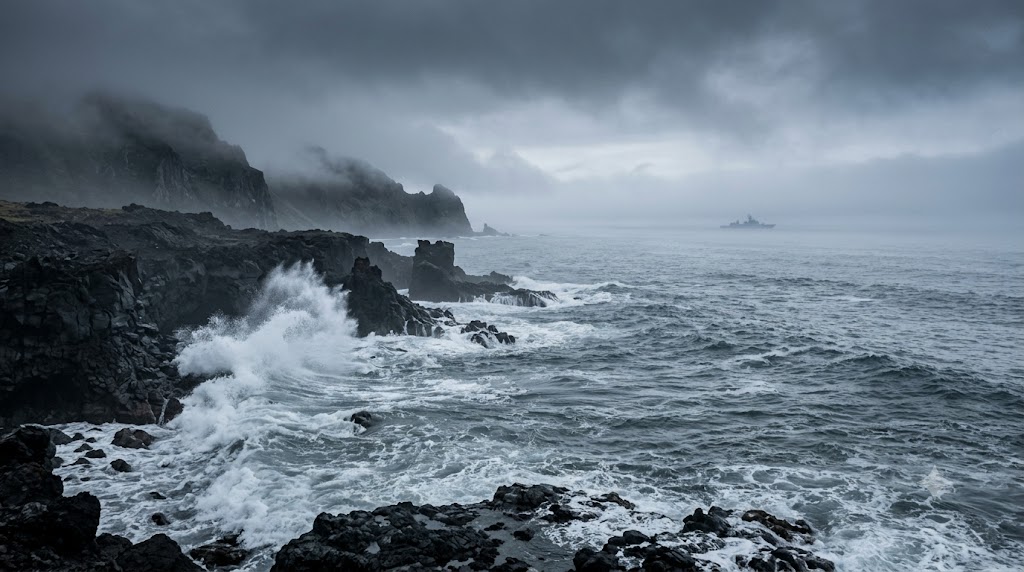
Why has the Northern Sea Route become so important to these four countries?
The reason is simple.
A shipping route that takes 40 days via the Suez Canal can be completed in 20 days via the Northern Sea Route. The distance is reduced by approximately 40%. Furthermore, it allows ships to completely avoid regions with constant conflict risks, such as the Red Sea and the Strait of Hormuz.
Of course, it doesn’t come for free.
The period of navigability is also not long.
Even for the first regular cargo ship deployed by a Chinese shipping company, normal operation is only possible for two months, in August and September, and the window is only open for a few days in July and October.
Yet, countries are jumping in because the calculation is not limited to mere economic efficiency.
The real core of this competition is that the country that lays down the shipping path first will also secure the resources, energy, and security routes that follow.
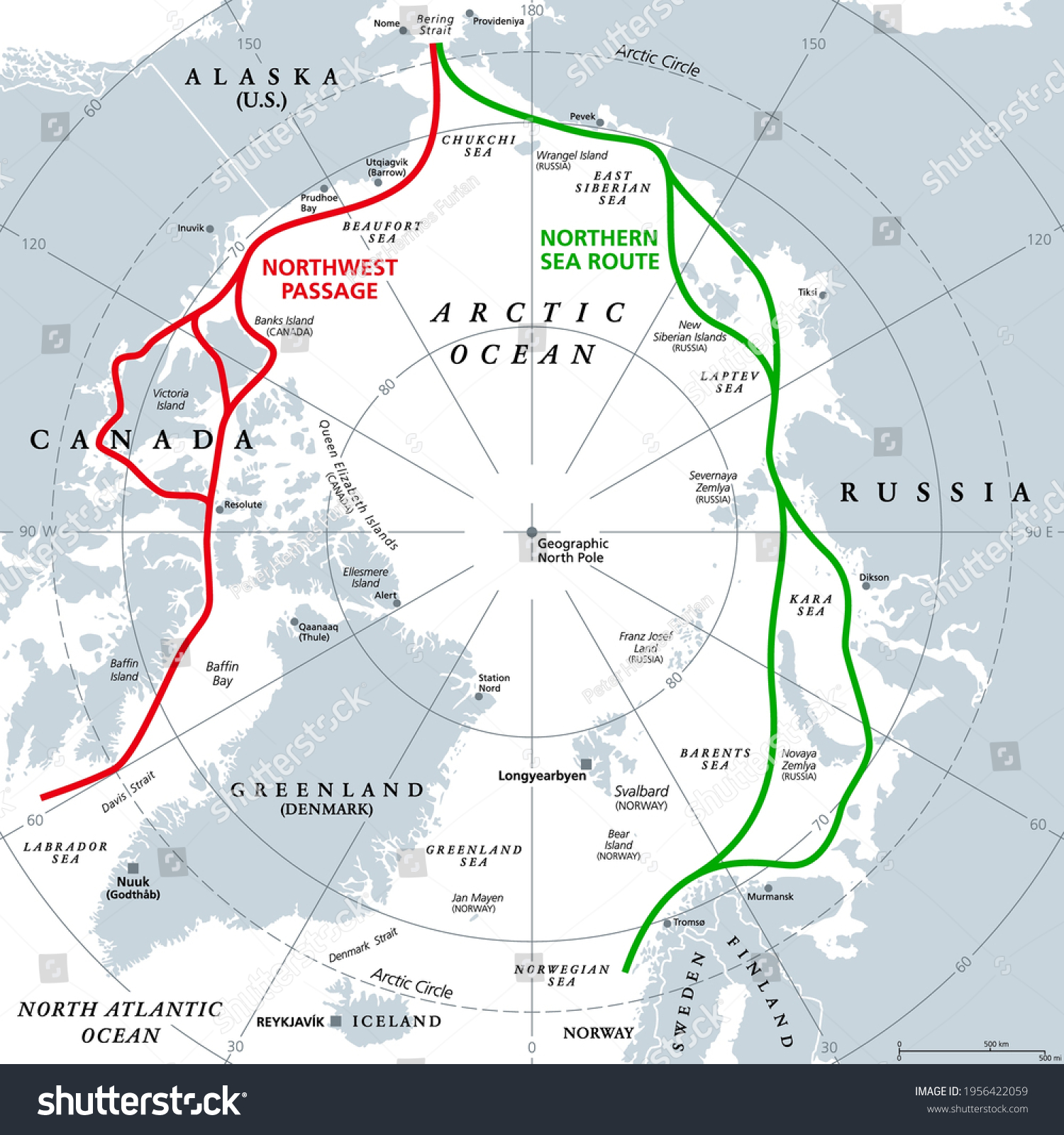
Why are Russia and China getting so close on the Northern Sea Route?
Looking at the numbers, the speed of this alignment is clear.
Of this, the trade volume between Russia and China alone exceeded 5 million tons in the first half of the year, and the two countries have set a goal to increase this figure to 20 million tons by 2030.
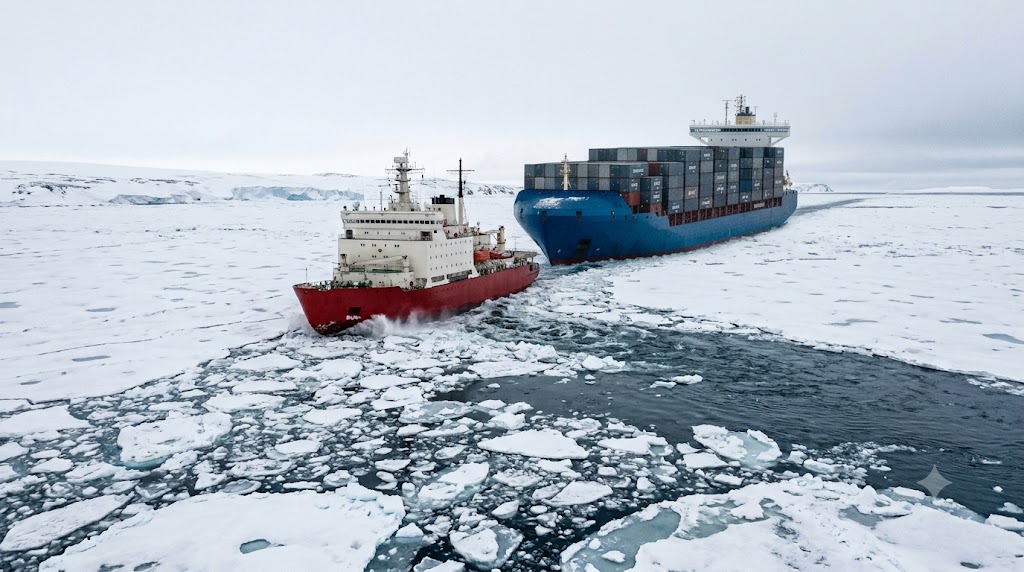
Furthermore, in late August, the two countries agreed to expand transport capacity and strengthen the competitiveness of the Northern Sea Route, officially designating it as a route to replace the Red Sea and the Strait of Hormuz.
In September, the container ship Dubai Tower, owned by the Chinese shipping company C-Legend, crossed the Arctic Ocean for the first time, arriving in the UK in three weeks, and China and Russia conducted their first joint sea-ice observation in the Arctic Ocean. While still in a symbolic phase where a single cargo ship or observation is news, it is a sufficient signal that the two countries are moving in the same direction.
While Vidya Mani, an associate professor and supply chain expert at the University of Virginia, flatly stated that this regular service is “not commercially viable,” from China’s perspective, this project is read less as a profit and loss statement and more as a geopolitical balance sheet.
The calculation is that a few years of losses are worth it for the price of securing a shipping route to Europe that does not pass through the Middle East.
What is the US aiming for in the Northern Sea Route?
The US approach comes from the opposite direction. It is not cooperation, but containment.
In fact, Trump has mentioned military action, stating he would take the “hard road” if not the “easy road” through negotiations, and has not hesitated to make remarks mocking Denmark’s defense capabilities.
While the stated justification is rare earths and energy, the actual benefit they are targeting is the shipping route.
Controlling Greenland means putting nearly half of the Northern Hemisphere’s shipping map under their control.
The US Department of Defense revised its 2024 Arctic Strategy to integrate space, maritime, and Arctic battlefields, and is moving to link NATO with the Arctic Command and integrated missile defense systems.
If the Russia-China cooperation is about weaving a logistics network, the US is more focused on ensuring that the network cannot function without passing through their hands.
The Greenland Thule Air Base, which has existed since the Cold War, is the physical hub of this plan.
Since an early warning system is already in place, it is easier to modernize it than to build from scratch, and it is also easier to bring in troops from NATO member states.
However, this approach has significant side effects. As European allies perceive the threats to territorial incorporation as a security crisis that shakes the NATO system itself, a paradox is emerging where the pressure intended to check Russia and China is turning into fractures within the Western camp.
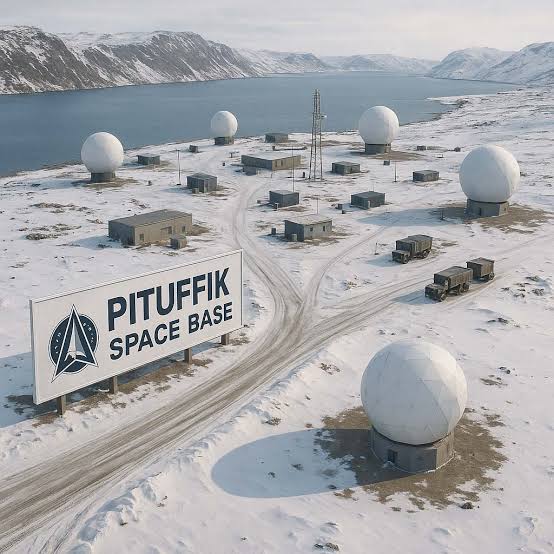
What cards does Japan hold in the Northern Sea Route logistics war?
Japan is the country with the most complex calculations.
It faces a contradiction: clashing head-on with Russia over territorial issues while relying on Russia for energy.
Even during the Ukraine war, Japan has continued to invest in natural gas development in Sakhalin and the Yamal region through private companies, receiving a stable supply of gas. They are protesting strongly against the Kuril Islands while funding gas fields in the neighboring area—a structure where principles and interests operate separately.
In terms of pioneering routes, they have chosen to pick up the pace. Japan is accelerating its Arctic advancement with the next-generation icebreaker research vessel ‘Mirai II,’ scheduled for launch in 2027, and already made Arctic policy a legally binding task in its Basic Plan on Ocean Policy in 2018.
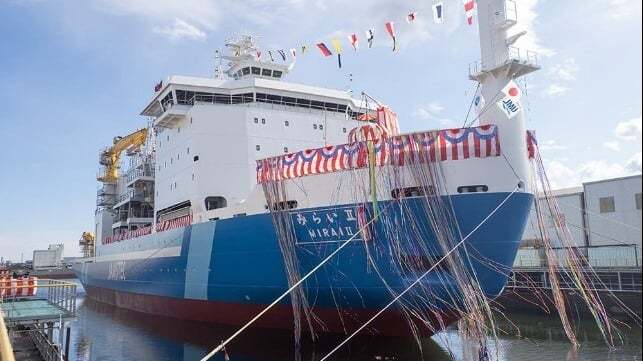
Their policy stance is to combine bilateral and multilateral approaches, advocating for “the establishment of the rule of law and the promotion of international cooperation.” This dual-track approach involves clashing directly with Russia while expanding their presence in the international arena through norms and influence. It is calculated to align with the US policy of containing Russia while not missing out on the actual benefits of the shipping route.
What should South Korea do in the Northern Sea Route competition?
Although South Korea started the latest among the four, its pace has visibly accelerated recently.
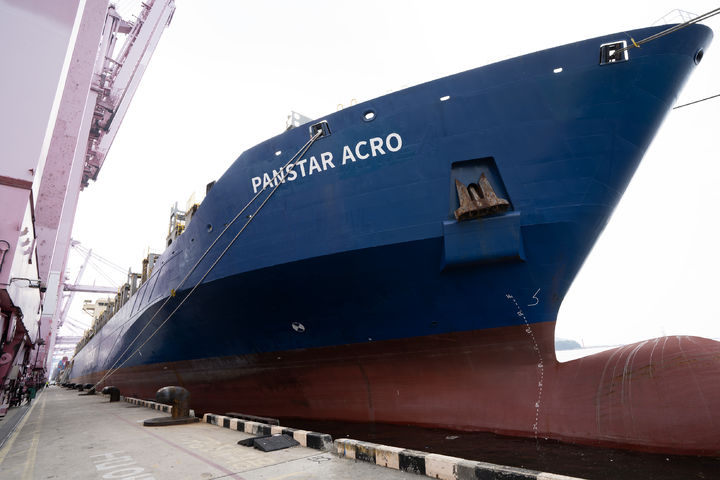
On August 22, the 2,758 TEU container ship Panstar Acro departed from Busan New Port, marking the first pilot voyage of a domestic container ship on the Northern Sea Route. It has been 10 years since 2016 that a domestic vessel has operated on this route.
The budget also has a clear direction.
The Ministry of Oceans and Fisheries has allocated 550 billion won for next year to be used for icebreaker construction and training polar maritime officers, an increase of 104.1 billion won (23.4%) from this year. The budget for technology development, such as next-generation icebreaker research vessels, jumped more than 8-fold from 7.9 billion won this year to 67.7 billion won next year. The establishment of an Arctic Route Comprehensive Support Center, intended to build an industrial ecosystem linking ports, shipbuilding, insurance, finance, and professional human resources, is also being pursued.
However, there are significant obstacles.
Due to strengthened financial and maritime sanctions against Russia after the Russia-Ukraine war, there are practical difficulties for South Korean shipping companies to trade directly with Russian entities. Furthermore, as most of the route belongs to Russia’s Exclusive Economic Zone, operation is impossible without Russia’s icebreaker support and transit permits.
A strategy of going all-in on one side is inherently difficult to establish, as Korea is in a position where it must balance security cooperation with the US and practical transit operations with Russia; the ability to manage both axes simultaneously is the core of its competitiveness.
Domestic maritime policy analysis points to three directions.
First, form a cooperation body with the US and Russia for accident response and environmental protection in sections that serve as gateways to the route, such as the Bering Strait.
Second, preempt discussions on norms in multilateral arenas like the Arctic Council working groups and the International Maritime Organization.
Third, use South Korea’s existing competitive edge in shipbuilding, such as LNG carrier and icebreaker construction technology, as a bargaining chip.
It is more realistic to establish a position by providing the ships and infrastructure needed for the route to actually function, rather than competing head-on with Russia, China, and the US over the Arctic route itself.
The third card is particularly noteworthy.
While Russia has the capacity to build its own icebreakers, it remains highly dependent on the South Korean shipbuilding industry for high-tech, specialized vessels such as LNG carriers and ice-class container ships.
If South Korea establishes itself as a supplier of vessels for the shipping route rather than just a user, it could create a structure where no matter which country holds the lead, they cannot fill their fleets without going through South Korea. The key is to maintain a balance that aligns with the US containment policy while not missing out on orders from Russia and China.
Comparison of 4-Country Northern Sea Route Strategies
| Country | Key Card | Recent Trends |
|---|---|---|
| Russia | Monopoly on Rosatom transit/icebreakers | 2026 cargo volume at record high, expected to exceed 40M tons |
| China | Polar Silk Road, close ties with Russia | First regular container ship arrived in Europe, joint Sino-Russian ice observation |
| US | Securing Greenland, Arctic Command | 2024 Arctic Strategy revision, strengthened NATO linkage |
| Japan | Mirai II icebreaker, Sakhalin gas | 2027 new icebreaker launch, parallel protest and gas import |
| South Korea | Shipbuilding/icebreaker construction capacity | Panstar Acro pilot voyage, Ministry of Oceans budget ↑23.4% |
Is the Northern Sea Route really commercially viable?
There is one thing we must address.
the speed at which sea ice is decreasing and the speed at which the shipping route actually stabilizes are two different issues.
Although the ice is decreasing, it fluctuates wildly every year, and a stable increase in the period of navigability is a different story.
Shin Hyung-chul, director of the Korea Polar Research Institute, pointed out at the Arctic Circle Assembly that “The Northern Sea Route cannot be realized without a perfect emergency plan for oil spills or search and rescue situations, even if safety predictions are made.”
When you add up icebreaker escorts, specially designed ships, and high insurance premiums, the unit cost of cargo rises more easily than one might think.
Nevertheless, the speed of warming itself is ahead of predictions.
Jin Kyung, head of the Policy Cooperation Department at the Korea Polar Research Institute, explained at a Ministry of Oceans and Fisheries forum that “Previously, it was predicted that general ships would be able to operate for 3-4 months in the summer by around 2030, but they are already operating for about 3 months,” noting that the actual opening speed of the route is faster than expected. Projections suggest that if the current speed is maintained, the route could be used for 6-7 months per year for general ships and 7-9 months per year for ice-class ships by 2040. This means that even if cost issues are not resolved immediately, the trend of increasing availability is irreversible.
The reason why the five countries—the US, China, Japan, Russia, and South Korea—are pouring budget and ships into this at the same time ultimately boils down to one thing.
They know that when the route is fully open, the gap between the countries that have already established their positions and those that are just jumping in will be difficult to reverse.
This is why a single photo of Putin tasting caviar in the Kuril Islands is not just about local public sentiment.
References
- https://www.hankookilbo.com/news/article/A2026081313330004054
- https://www.asiatoday.co.kr/kn/view.php?key=20260818010005701
- https://www.fnnews.com/news/202609091638393048
- [Issue Focus] China and Russia Agree to Strengthen Arctic Route Competitiveness... Growing Alternatives to Red Sea and Hormuz
- [Yeon-Yeon Brief] Expanding the Use of the Northern Sea Route and the Role of Busan - Focusing on the Analysis of Economic Value and Geopolitical Risks -
- 'Preempt the Northern Sea Route' Korea-China-Japan Three Kingdoms Period [Arctic, New Route of Hegemony] |
- The Arctic as a Strategic Key Point for Hegemony: US Arctic Strategy in the Second Trump Term
- Japan Accelerating Arctic Development
- https://www.businesspost.co.kr/BP?command=article_view&num=427906
- [Brief Trivia] Trump's Arctic Strategy, Greenland