
1. Introduction: Beyond the Probabilistic Parrot to a ‘Understanding’ Entity
Have you ever felt a peculiar sense of unease using ChatGPT or other Large Language Models (LLMs) recently?
The sentences are remarkably fluent, yet they occasionally spout absurd falsehoods with unwavering confidence.
You might feel like you’re dealing with a ‘clever parrot’ that speaks well but doesn’t truly comprehend.
In fact, that feeling is accurate. Generative AI, which has impressed us for the past two years, is essentially a ‘Probabilistic Model.’
It learns from vast amounts of data to brilliantly calculate the probability of the next word, but it doesn’t ‘understand’ whether the content is ’true’ or ‘false,’ nor does it grasp any logical causality.
The hallucination phenomenon, arising from this inherent limitation, has been a significant obstacle to AI becoming a ‘personal assistant (Agent)’ responsible for our lives, beyond just being a conversational companion.
However, Samsung Electronics’ decisive move to acquire the UK-based ‘Oxford Semantic Technologies (OST)’ is a crucial strategic play that addresses this very issue.
This is not merely a technology adoption; it’s tantamount to a declaration to end the ’era of probability’ and enter the ’era of logic.’
The curtain is rising on ‘Neuro-Symbolic AI,’ which combines the intuitive ‘deep learning’ that reads data patterns with the rational ‘symbolic AI’ that imbues human logical structures.
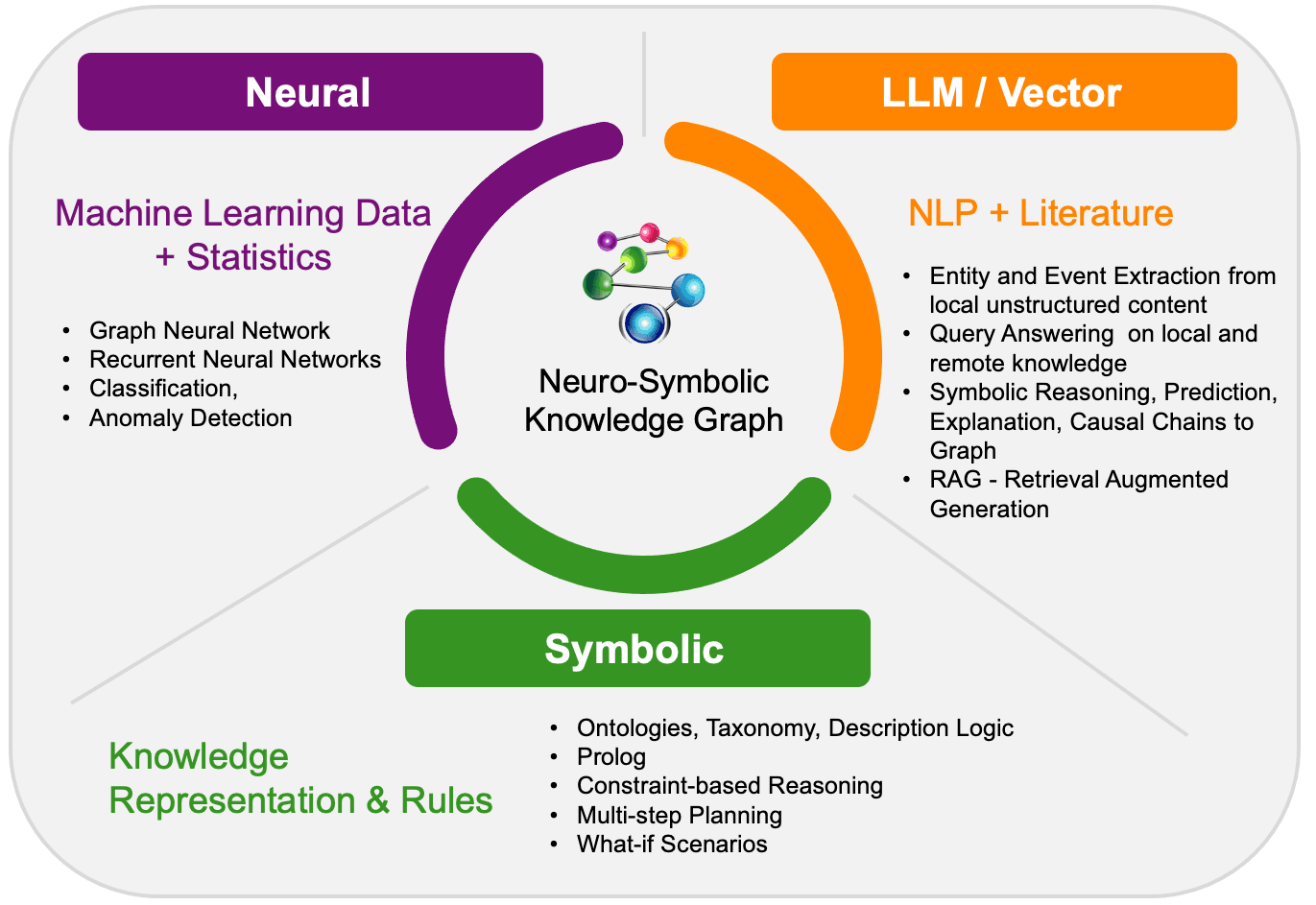
In this article, we will delve deeper into Samsung Electronics’ grand blueprint, divided into three pillars: the brain (knowledge graph), the neural network (semantic communication), and vision (semantic segmentation).
2. Theoretical Foundation of Semantic Technology: Why ‘Meaning’ Now?
2.1. Shannon’s Insight: Back to Level B
Claude Shannon, the father of information theory, clearly distinguished communication problems into three levels early on.

- Level A (Technical Problem): How fast and accurately can signals be transmitted? (The problem of bits)
- Level B (Semantic Problem): Did the transmitted symbols accurately convey the ‘meaning’ intended by the sender? (The problem of meaning)
- Level C (Effectiveness Problem): Did that meaning change the recipient’s behavior or attitude? (The problem of effect)
Over the past decades, through the 4G and 5G eras, we have been obsessed with Level A.
We focused solely on the speed competition of sending data: “faster, more.”
However, in this era of data deluge, simply improving transmission speed has hit a limit.
Samsung’s strategy is now to enter Level B, where machines understand the ‘meaning (Semantics)’ of data.
2.2. The Key to Unlocking the Black Box: Neuro-Symbolic
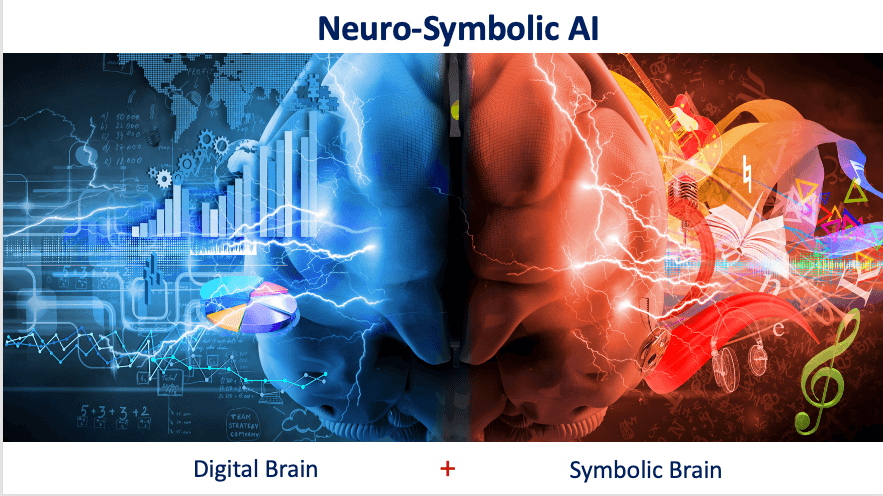
Today’s deep learning-based AI is an inscrutable ‘black box.’
It can recognize a cat in a photo as a “cat,” but it cannot answer “Why is it a cat?”
Samsung’s approach adds human logic to this.
Neural (Sensation/Intuition): Camera sensors recognize visual patterns of a black object.
Symbolic (Reason/Logic): It reasons through a knowledge graph.
If there’s a clear fact (Fact) like “The owner has a black cat,” it concludes that the object is not just a black mass but ’the owner’s pet cat.’
When combined like this, AI becomes explainable.
It can provide clear reasoning when asked, “Why did you make that judgment?” – the birth of true intelligence.
3. Core Technology I: Knowledge Graph and RDFox Engine
The heart of Samsung Electronics’ ‘brain’ innovation lies with the RDFox engine.
This is not a simple data repository; it’s a powerful reasoning engine that mimics human thought processes.
3.1. Data That Outperforms Excel: The Triple Structure
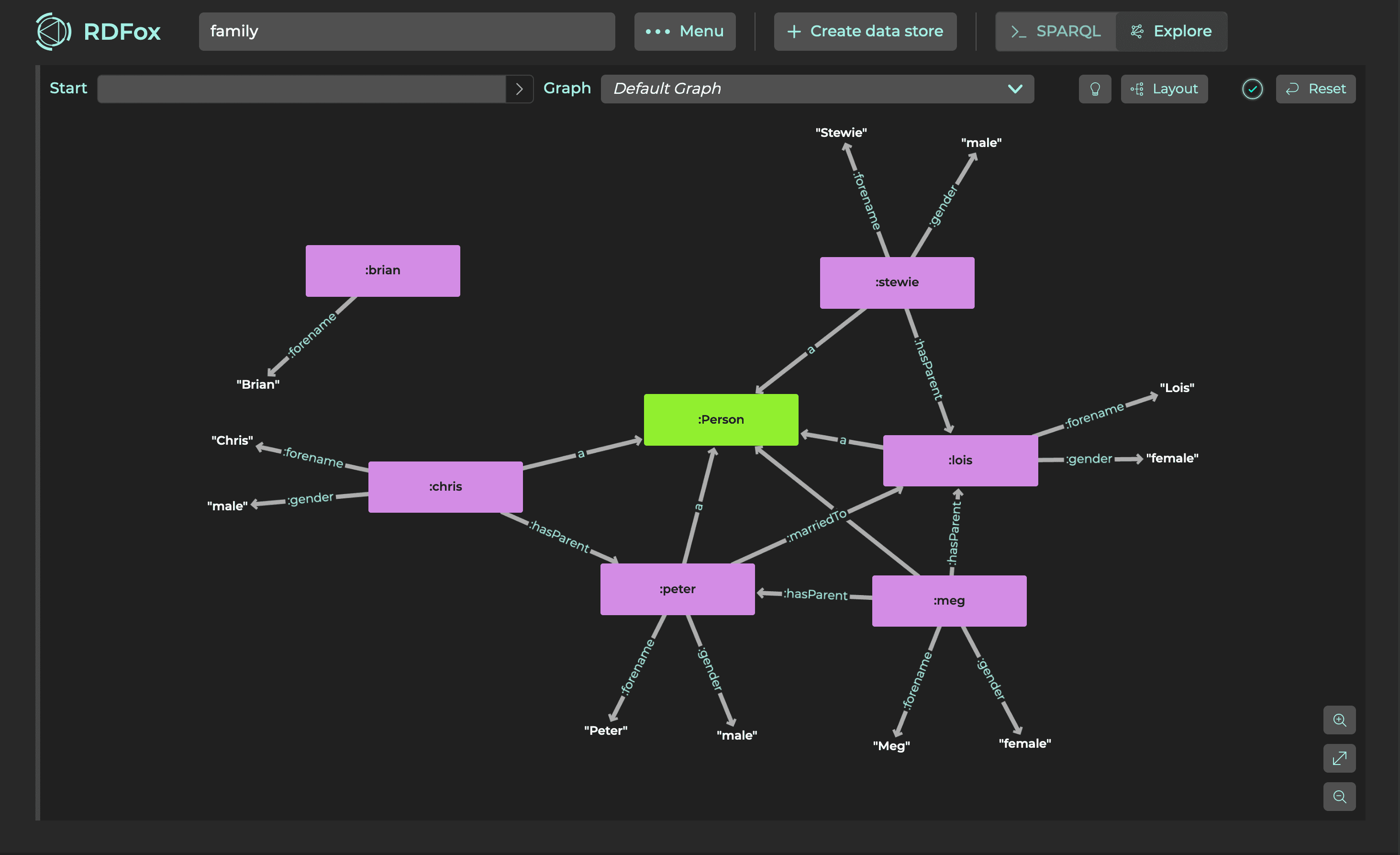
Excel (relational databases), which we commonly use, is too rigid and limited to capture complex, multi-layered relationships like “Cheolsu is Yeonghee’s friend, and Yeonghee likes the pasta place in Gangnam Station.”
In contrast, knowledge graphs flexibly link data in a Triple structure of (Subject) - [Predicate] - (Object), similar to the human brain’s structure.
User → is located at → Gangnam Station → characterized by → traffic congestion
By linking data in a chain like this, as the data grows, the context becomes exponentially richer.
3.2. RDFox: Why This Engine? (The Ultimate in Mobile Optimization)
There are many excellent graph databases like Neo4j. However, the reason Samsung specifically chose RDFox is clear.
Only this technology can operate perfectly in the extreme environment of a smartphone (On-Device), with its severe battery and performance constraints.
In-Memory High-Speed Computation: Instead of slow disk I/O, all data is processed in RAM. It’s 100 to 1,000 times faster than traditional methods. The moment a user touches the screen, it scans tens of millions of relationships in milliseconds.
Incremental Reasoning - A Battery Saver: This is the core technology. Usually, when a piece of information changes, the entire dataset needs to be recomputed, heating up the smartphone and draining the battery. However, RDFox calculates and updates only the specific parts affected by the changed data. This is the sole reason for real-time reasoning with limited resources.
Powerful Rules Based on Datalog: Logical rules can be embedded within the engine itself, without developers needing to code them manually.
Rule Example: If (User is at a subway station) AND (It is 8 AM on a weekday) → [Conclusion: User is commuting] → This rule is triggered as soon as the data comes in, generating new, high-level knowledge like ‘commuting.’
4. Samsung’s Strategy: ‘My AI,’ Not ‘Everyone’s AI’
While Google and Meta aim to store global knowledge on their servers, Samsung is different. It focuses strictly on the *Personal Knowledge Graph (PKG)*.
4.1. Data Locked Inside My Phone: Hence, Secure
My text messages, real-time location, health information… Sending this sensitive data to the cloud is still a nagging concern.
Samsung processes all this data within the device’s RDFox engine. Since the data never leaves the device, privacy is perfectly protected.
Furthermore, the longer I use my Galaxy, the deeper this graph understands me.
Eventually, a powerful lock-in effect will occur, making it difficult to switch devices arbitrarily, simply because I’d be reluctant to part with this ‘digital counterpart that understands me.’
4.2. Evolution of Galaxy S25 and ‘Now Brief’
While existing notifications simply list facts like “It’s raining” or “9 AM meeting,” how will a Galaxy with semantic AI applied be different?
Semantic AI Processing Flow:
“It’s raining? → Then traffic will be bad (Causal Reasoning).”
“To not be late for the 9 AM meeting? → Alert to leave 20 minutes earlier than usual (Suggestion).”
My schedule, weather, and traffic conditions are organically connected within the graph, creating ‘meaning’ relevant to me, not just raw information.
5. Core Technology II: Semantic Communication and 6G Dominance
Now that the brain has become smarter, the neural network (communication) that transmits information must also evolve.
This is the core killer app for 6G: Semantic Communication.
5.1. Transmitting Meaning Instead of Bits (DeepJSCC)
Instead of traditional methods of compressing and sending data, AI extracts and transmits only ‘semantic features.’ The technology behind this is DeepJSCC (Deep Joint Source-Channel Coding).
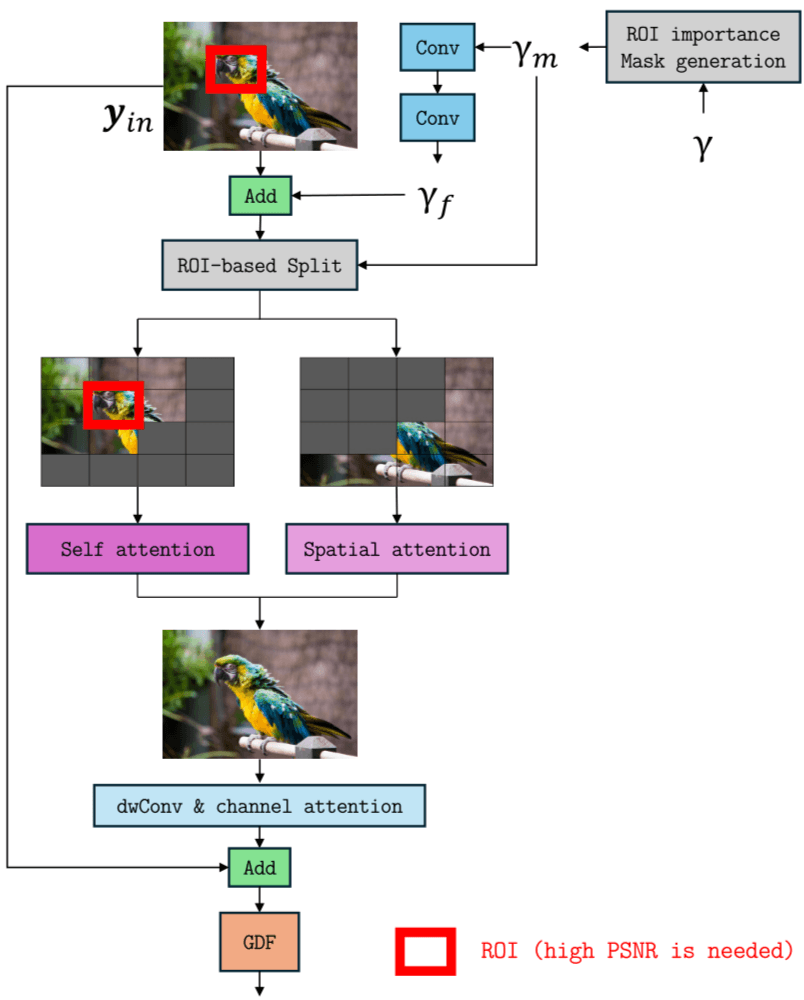
The remarkable aspect of this technology is that even if bits are corrupted due to poor communication, the overall ‘meaning’ remains intact.
This is professionally known as ‘Graceful Degradation.’
For example, during a video call, instead of sending entire pixels, it sends only the positional data (vectors) of the eyes, nose, and mouth.
_The AI on the receiving end uses this information to reconstruct the face (Rendering). This drastically reduces the amount of data (by about 1/1000).
5.2. Ultra-Compressed Transmission with Text and Sketches
It can even convert images into a few lines of text and sketch information for transmission.
The receiving end uses a generative model like Stable Diffusion to receive this information and ‘restore (generate)’ an image almost identical to the original.
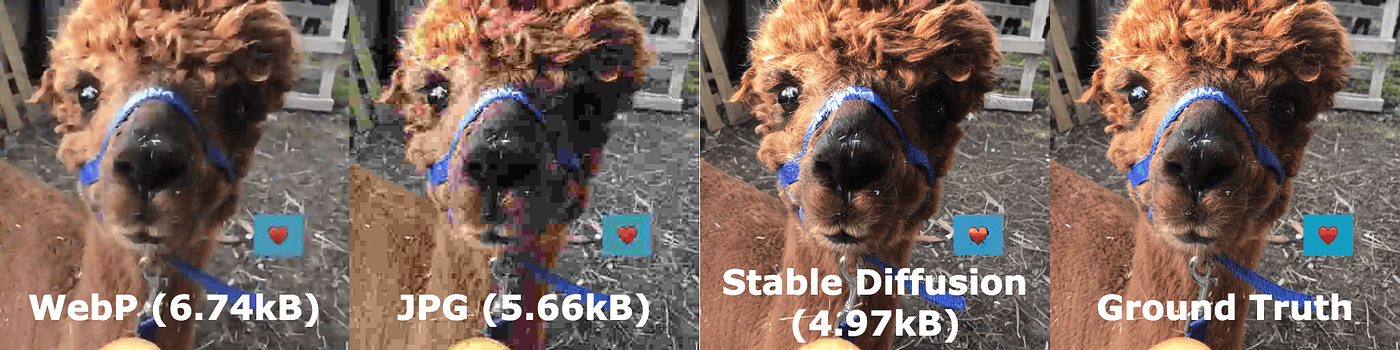
This is a revolutionary technology that enables high-definition content transmission even in areas with almost no internet connectivity or in satellite communication environments.
6. Core Technology III: Semantic Segmentation, Vision Supported by Hardware
The way we see the world also changes. Qualcomm’s Snapdragon AP, embedded in the Galaxy, features a ‘Cognitive ISP (Image Signal Processor)’ that understands meaning the moment it perceives something.
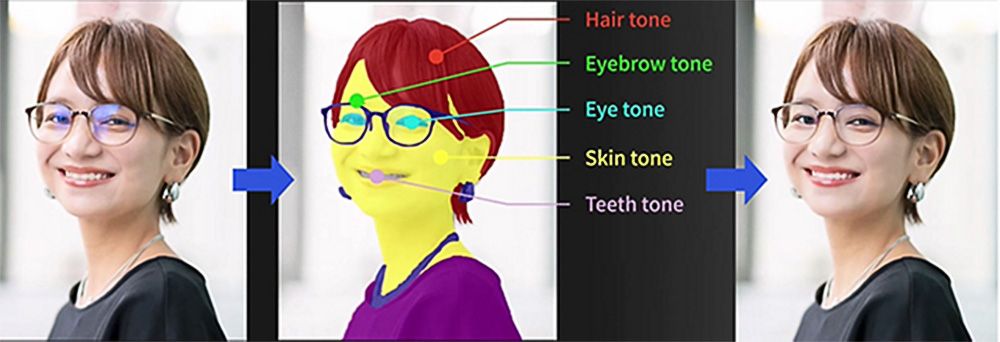
6.1. Segmenting Meaning in Real-Time
The video coming through the camera lens is segmented frame by frame (Segmentation) to recognize the sky, skin, hair, and buildings separately.
- “This area is the sky, so let’s emphasize its blueness.”
- “This area is skin, so let’s process the texture softly (make it look smoother).”
This is not simple filter correction.
It is a process of optimizing each object according to its meaning.
And this information (“The user is currently in the mountains”) is immediately sent to the knowledge graph, further strengthening the context of ‘hiking.’
7. Conclusion and Future Outlook: The Era of Agent AI is Coming
Samsung Electronics’ adoption of semantic technology and acquisition of RDFox should not be viewed as mere smartphone feature updates.
This marks a historic inflection point where the smartphone evolves from a ’tool to be touched’ when needed, into a ‘partner (Agent)’ that thinks and acts ahead of me.
The future AI war will not be about “who builds a bigger model.”
It will be a battle of “who understands the user more deeply and logically (Semantically).”
Beyond 2025, we will witness true ‘Agentic AI’ that judges and coordinates situations without separate user commands.
And Samsung Electronics’ acquisition of RDFox and its semantic strategy was the most powerful and logical ‘masterstroke’ to preempt that future.
"References"
- Samsung Launches Galaxy S25 Series with New AI Features Built on Technology from Oxford Semantic Technologies [Oxford Semantic Technologies Blog]
- Samsung Electronics Enhances AI Capabilities with Oxford Semantic Technologies Acquisition [BusinessKorea]
- Samsung acquires Oxford Semantic Technologies to improve AI [SamMobile]
- Deep Joint Source-Channel Coding for Semantic Communications [IEEE Xplore (H. Xie et al.)]
- The Mathematical Theory of Communication [C.E. Shannon & W. Weaver]
- RDFox: A Highly-Scalable RDF Store [Motik et al., Semantic Scholar]
- Difference between knowledge graphs and ontologies [Stack Overflow & Enterprise Knowledge]