
Introduction: The Illusion of $21 Billion and Two Worlds
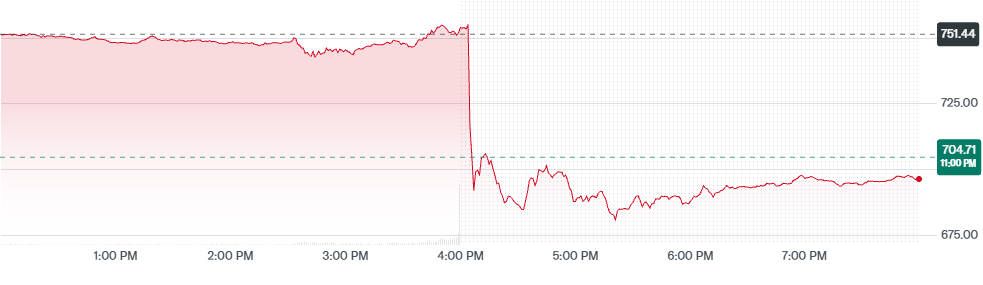
On the last night of October 2025, Wall Street screamed. Meta Platforms Inc.’s stock price plummeted by more than 9% in after-hours trading. In a single night, market capitalization worth approximately $200 billion, or hundreds of trillions of Korean won, vanished into thin air.
The superficial reason seemed clear: collapsing net income and soaring AI investment costs with no end in sight. To the market, Meta likely appeared as a reckless gambler, “pouring water into a leaky bucket.”
However, at that very moment, a different kind of thrill coursed through the deep research labs at Meta’s headquarters in Menlo Park.
This was because, where the massive capital that caused the stock price to crash flowed, the barrier of ‘Autonomous Reasoning’, a technological hurdle humanity had long dreamed of overcoming, was being dismantled.
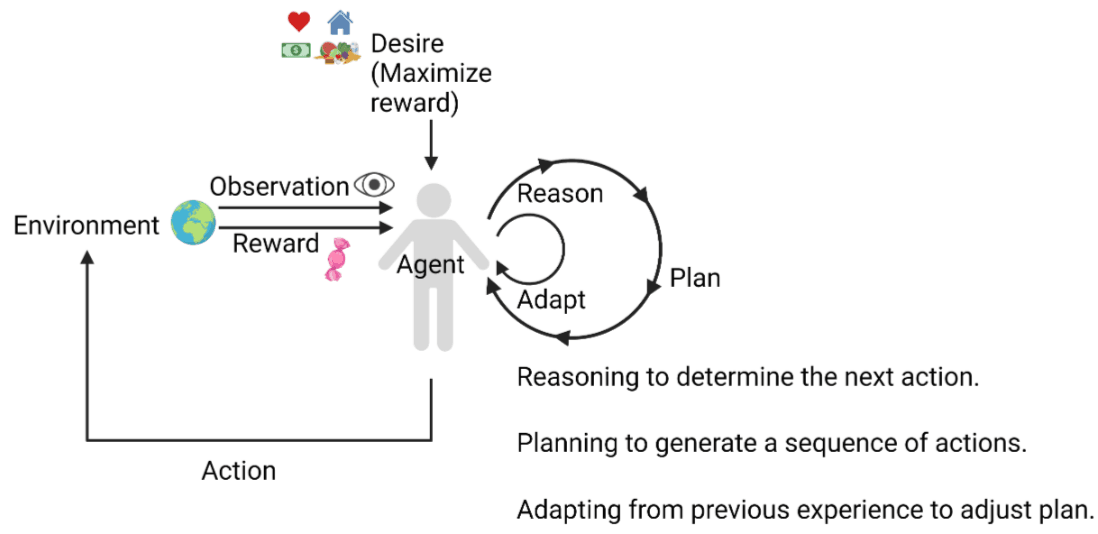
This article dissects the stark contrast between the fear in the financial markets and the elation in the tech world – the ‘Meta Paradox’.
We will uncover the truth hidden behind the $15.9 billion cost and delve into the reality of Mark Zuckerberg’s designed ‘Personal Superintelligence,’ down to the technical mechanisms (AZR, SPICE).
1. The Deception of Numbers: An Anatomization of Q3 2025 Earnings
While the market despises uncertainty, sometimes clear numbers can lead to greater misunderstandings. Meta’s Q3 2025 earnings report was precisely such an instance.
The Tax Bomb Named ‘One Big Beautiful Bill’
Was the $15.9 billion (approximately $21 trillion KRW) cost that sent investors into a panic a sign of the company’s downfall?
To put it bluntly, it was far from an indicator of fundamental deterioration.
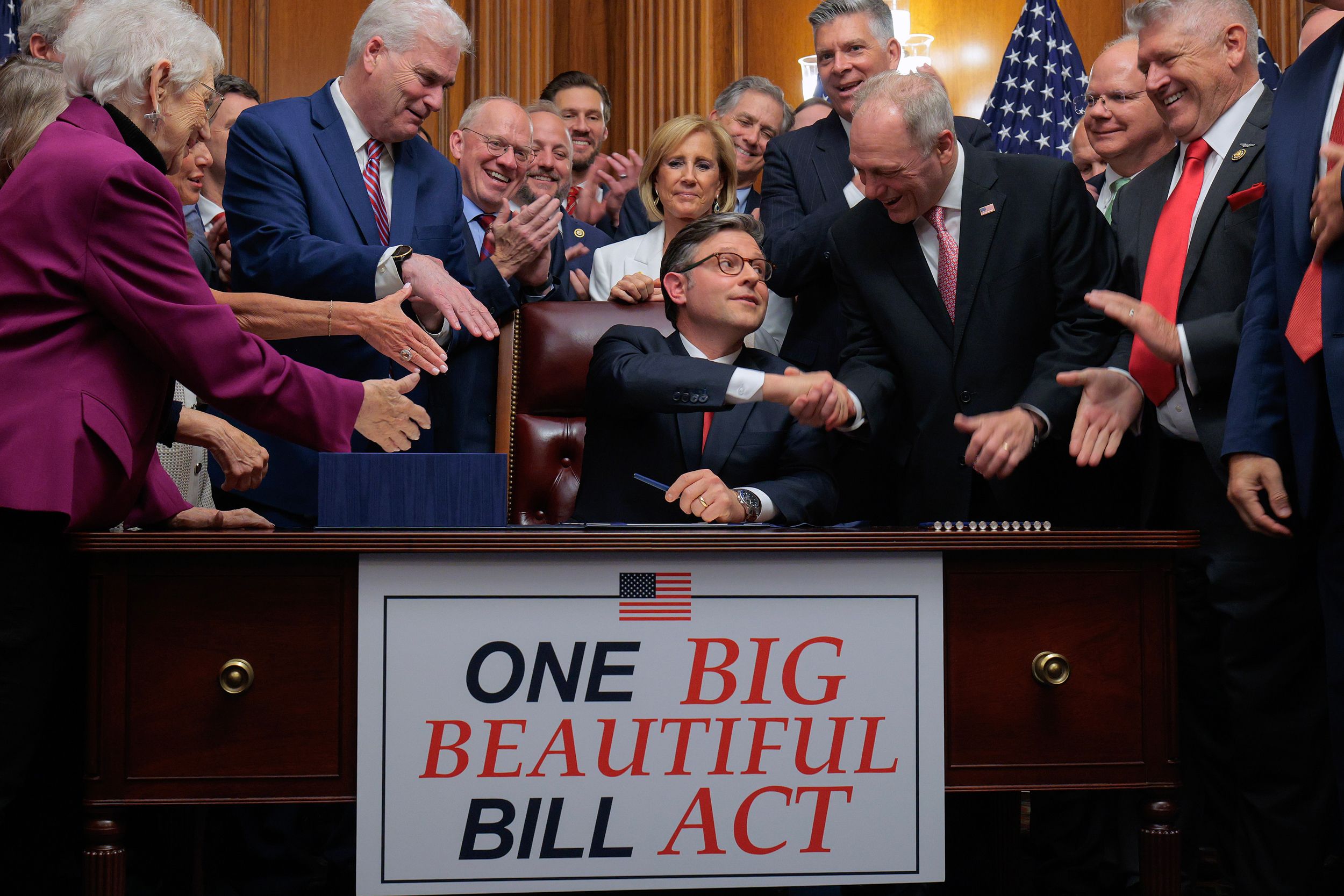
This was a one-time accounting adjustment due to a new corporate tax regulation enacted by the U.S. government, dubbed the ‘One Big Beautiful Bill Act’.
Consequently, net income, which was $15.7 billion in the same period last year, appeared to have plummeted by 83% to $2.7 billion. However, this is a balance sheet illusion.
Stripping away this non-cash expense, Meta’s adjusted earnings per share (EPS) was $7.25, significantly exceeding market expectations of $6.70.
$70 Billion CapEx: Cost or Entry Fee?
The real issue wasn’t taxes, but guidance.
Meta raised its capital expenditure (CapEx) forecast for 2025 to $70 billion to $72 billion and declared it would increase this “significantly” in 2026.
This astronomical sum is being invested in _acquiring NVIDIA’s H100 and next-generation Blackwell GPUs and constructing data centers_.
Wall Street asks: “When will it be profitable?”
However, Meta’s perspective differs.
They view this expense not as mere spending, but as the cost of building factories to produce future ‘Intelligence’ and a costly entry fee for transitioning to the next era.
2. Strategic Pivot: ‘Expansion,’ Not ‘Replacement’
While the CFO sweated to defend the financial statements, Mark Zuckerberg was changing the company’s DNA.
His memo, released in July 2025, clearly defines the future of AI that Meta aims for.
Declaration of Personal Superintelligence
While competitors focused on developing Artificial General Intelligence (AGI) that could replace humans, Meta championed ‘Personal Superintelligence’.
Zuckerberg’s vision is unwavering.
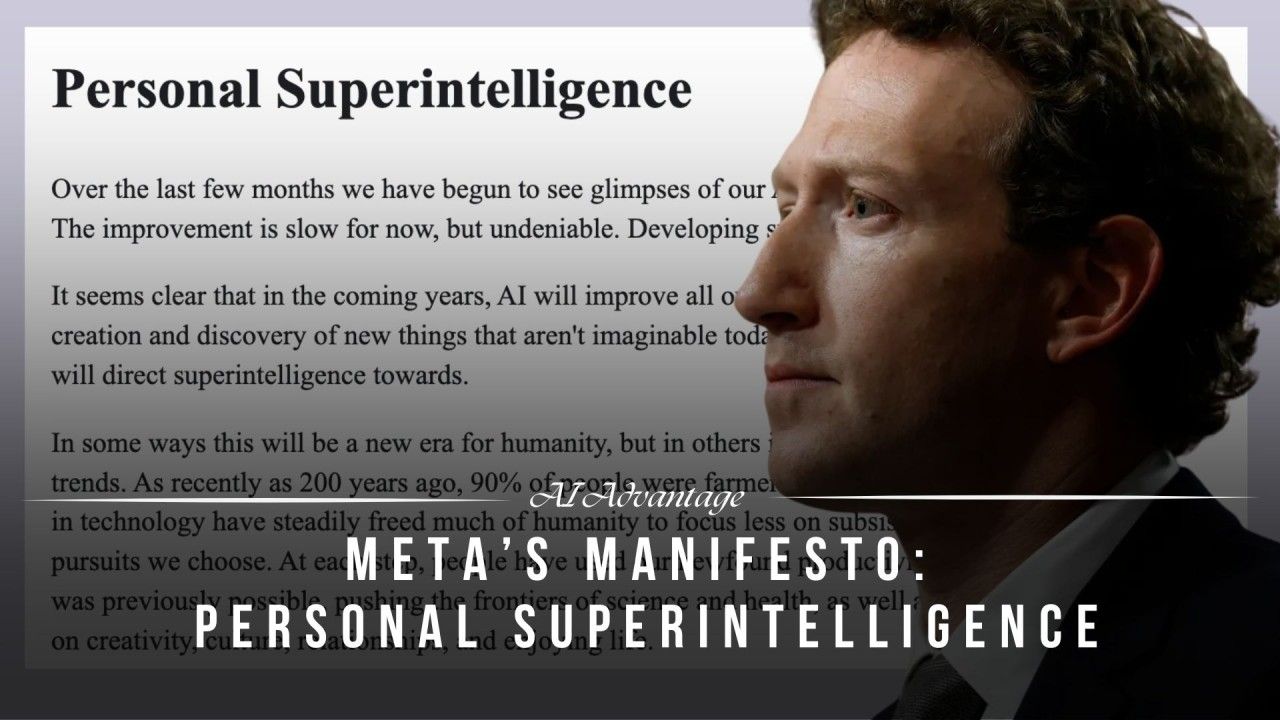
“AI should not be the exclusive domain of a few corporations, but a tool for every individual to achieve their goals and expand their creativity.”
This reflects Meta’s unique open-source philosophy that superintelligence, like smartphones, should be democratized.
The Economics of Inference-time
Why is Meta striving to secure 600,000 H100-class GPUs by the end of 2025?
The answer lies in ‘Agentic’ capabilities.
Unlike simple chatbots that answer questions (System 1 Thinking), agents that plan trips or write code on behalf of users must go through complex reasoning processes (System 2 Thinking).
This process requires significant ‘Inference-time’, involving thousands of simulations before the model provides an answer.
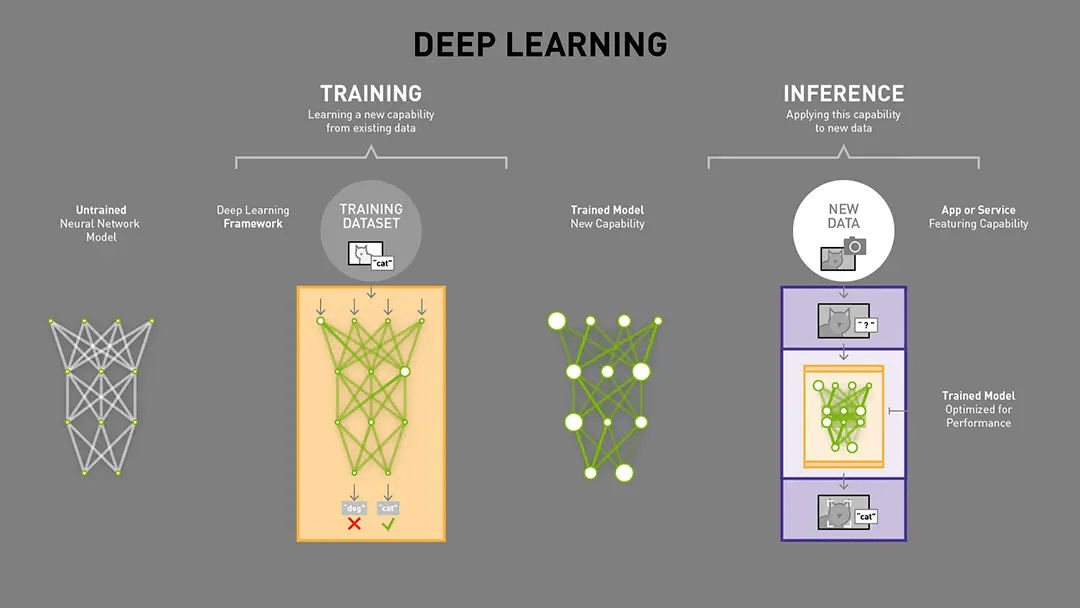
In essence, future AI competitiveness hinges not on ‘how fast it answers’ but ‘how deeply it can think’, making the vast computing power to support this a non-negotiable survival condition.
3. $100 Million Brains: Meta Superintelligence Lab (MSL)
If hardware is the body, software is the soul.
Meta has engaged in an industry-shaking ’talent war’ to breathe this soul into its creations.
- Recruitment of Alexandr Wang: Meta acquired Scale AI and appointed its founder and data mogul, Alexandr Wang, as the head of the ‘Meta Superintelligence Lab (MSL)’. This signifies Meta’s vertical integration of the data pipeline, the raw material for AI training.
- Daniel Gross & Trapit Bansal: Daniel Gross from SSI takes charge of safety, and Trapit Bansal, a key developer of OpenAI’s reasoning model ‘o1’, has joined.
Most notably, Trapit Bansal’s addition signals a significant shift in Meta’s research direction from simple Large Language Models (LLMs) to ‘Reinforcement Learning-based Autonomous Reasoning’.
4. Technological Singularity I: Absolute Zero (AZR)
Now, it’s time to discuss what Wall Street hasn’t seen – the story from deep within Meta’s labs.
The biggest threat in the current AI industry is the ‘Data Wall’ – because the supply of high-quality human data on the internet is dwindling.
Meta’s solution was radical.
Learning Without Humans: AZR (Absolute Zero)
Published in the paper *“Absolute Zero: Reinforced Self-play Reasoning with Zero Data”*, AZR is a methodology for models to grow independently without human intervention.
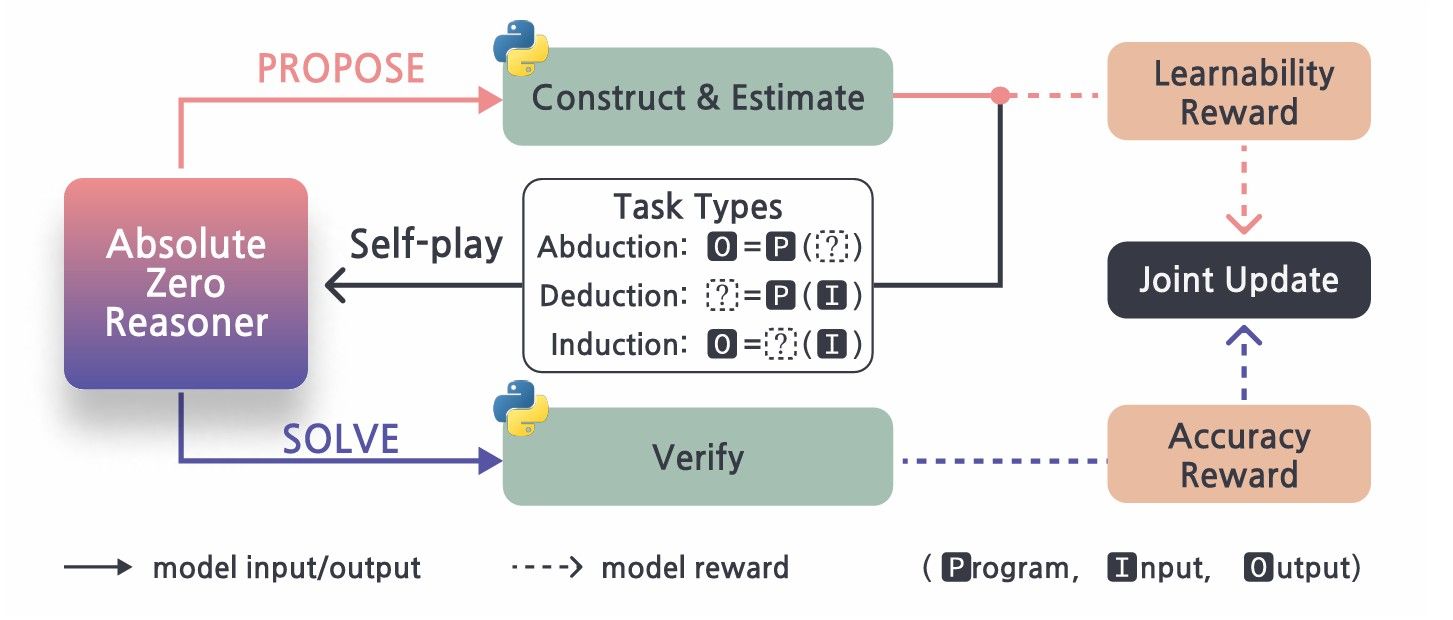
AZR’s Operational Mechanism (Dual-Role Mechanism):
- Proposer: Self-generates problems with a difficulty level that seems just beyond its current capabilities.
- Solver: Writes code and develops logic to solve the problem.
- Verifier: Mechanically determines correctness by actually executing the written code (Python Execution).
This process excludes human subjective evaluation.
If the code executes and produces the correct output, the model receives a reward; otherwise, it refines the code.
Remarkably, this logical reasoning capability, trained in the domain of coding, transfers to areas like mathematics and general reasoning.
5. Technological Singularity II: SPICE and Grounding
However, an AI trapped in its own thoughts is dangerous.
It can fall into ‘hallucinations,’ believing falsehoods as truth.
To prevent this, Meta has developed another safeguard: ‘SPICE’.
Information Asymmetry Game and Variance-Based Reward
If AZR represents ‘pure logic’, SPICE is responsible for ‘knowledge accuracy’. This model centers on Document Grounding and employs a unique game theory approach.
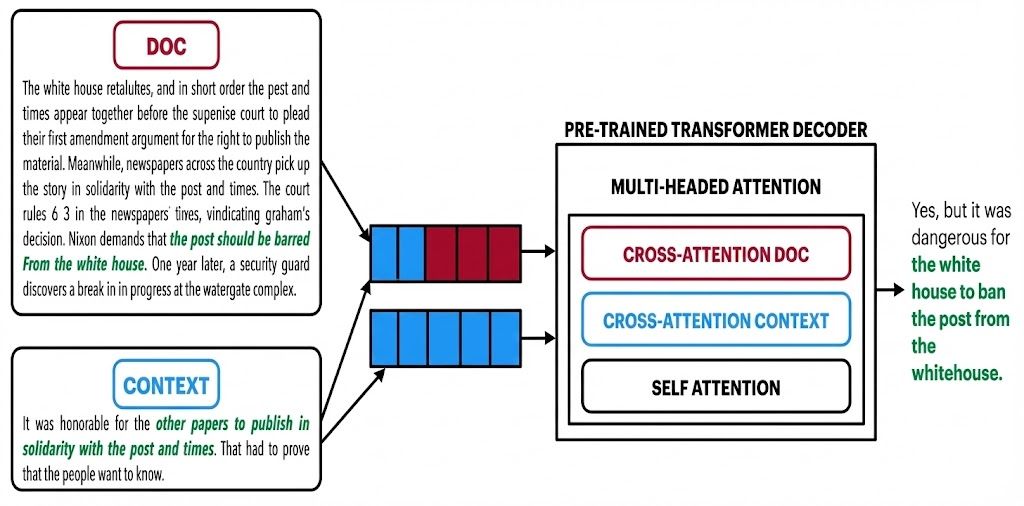
- Challenger: Views a document with the correct answer and creates a question.
- Reasoner: Without seeing the document, must find the answer using its own knowledge and logic.
The key here is the **Variance-Based Reward** function.
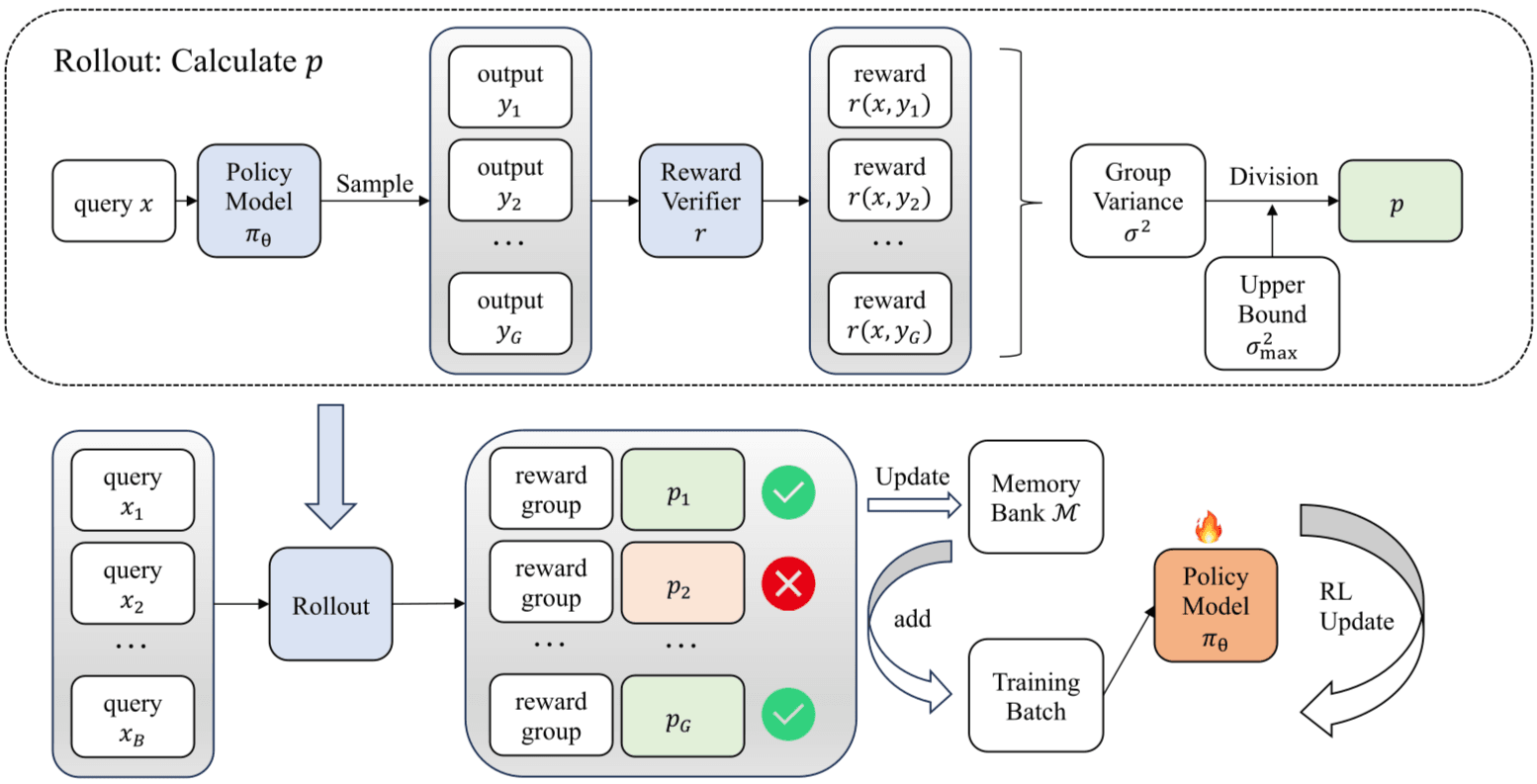
This function instructs the AI to “create problems that are neither too easy nor too difficult.”
The Challenger AI receives the highest reward when it poses a question that the Reasoner AI has a 50% chance of getting wrong.
This is a mathematical implementation of the educational theory of the ‘Zone of Proximal Development (ZPD)’, enabling the AI to autonomously create a curriculum for the most efficient knowledge acquisition and verification.
6. Conclusion: An Asymmetric Bet and Timeline Mismatch
All of Meta’s technological achievements are driving towards Llama 4, set to launch in 2026, and the project codenamed ‘Avocado’.
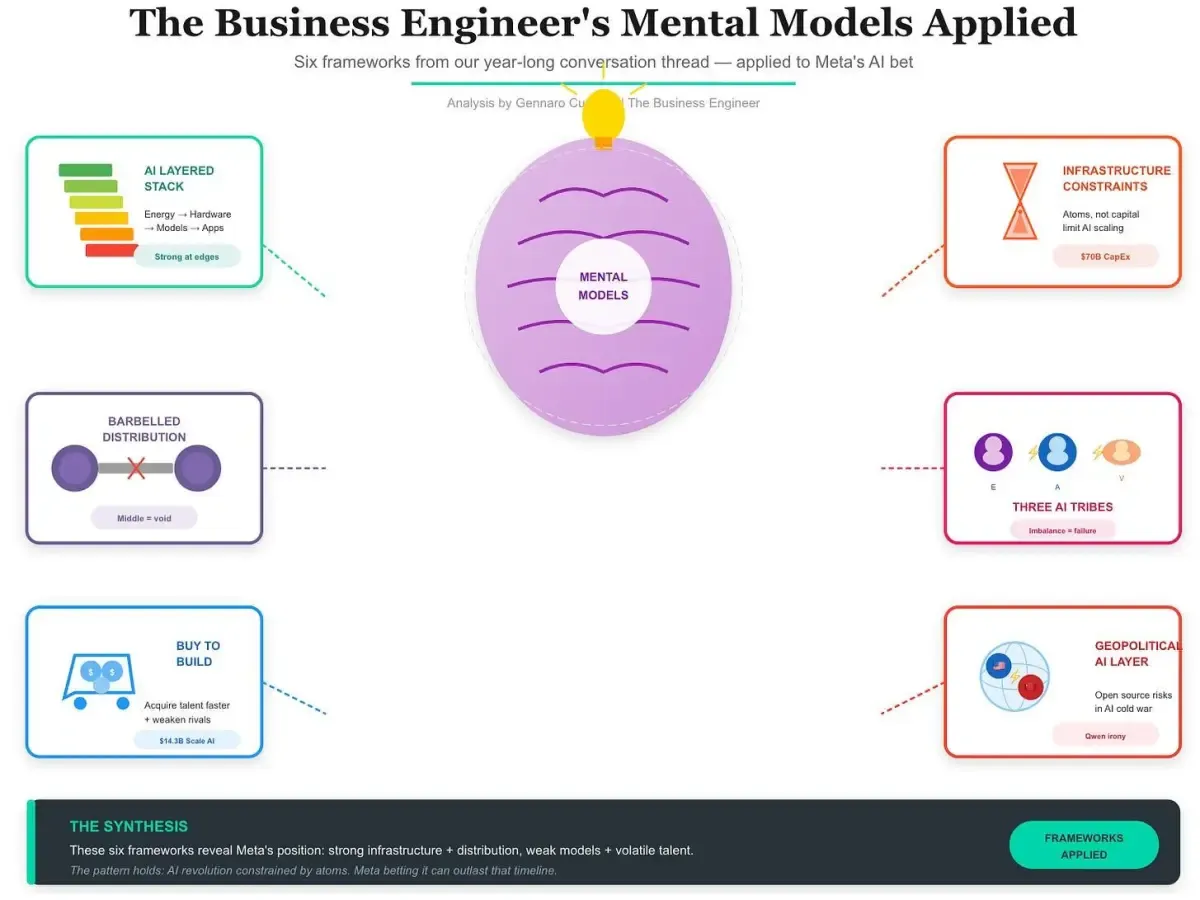
The current situation surrounding Meta is a classic ‘Asymmetric Bet’.
The financial markets are discounting the stock by focusing solely on the ‘certain pain’ of the $21 billion cost and $70 billion expenditure.
However, behind the scenes, Meta is exclusively securing the ‘Autonomous Reasoning capability’ and ‘Superintelligence Infrastructure’ – the scarcest resources of the future – through AZR and SPICE.
As competitors hit a wall due to data depletion, Meta’s AI, capable of generating, verifying, and evolving its own data, will gain an overwhelming competitive advantage.
The current stock decline might not be a crisis, but perhaps the necessary cost Meta is paying to traverse the Singularity.
Will you focus on the dropping chart before your eyes, or the birth of a colossal intelligence dawning beyond it?
References
- Meta Reports Third Quarter 2025 Results \[Meta Investor Relations\]
- Meta Stock Falls 9% After Q3 Earnings; Here’s Why \[INDmoney\]
- Absolute Zero: Reinforced Self-play Reasoning with Zero Data \[OpenReview\]
- SPICE: Self-Play In Corpus Environments Improves Reasoning \[arXiv/AlphaXiv\]
- Explained: Mark Zuckerberg’s ‘Personal Superintelligence’ \[AI Magazine\]
- Meet 29-year-old Alexandr Wang… hired by Mark Zuckerberg \[The Times of India\]