
Is the Grandpa We Know Really All There Is?
- The Real Life of KFC’s Colonel Sanders: The story hidden behind 1008 failures and a fiery temperament.
- KFC’s Entry into Korea: From Jongno in 1984 to the ‘Chibap’ culture, adapting to the Korean market.
- At the Frontlines of the Chicken War: The current state of KFC amidst four ownership changes and private equity ’exit’ strategies.
KFC is a familiar sight for us. The kind KFC Grandpa in a white suit and bow tie, with a gentle smile, has become a symbol of warm and delicious chicken in our memories. But have you ever thought about what kind of fire was hidden behind that soft smile and how arduous his journey was? The Colonel Sanders we know is merely a perfect symbol created by the corporation; his true self is a drama filled with unimaginable frustrations, failures, and indomitable will.
This article is not just a chronological listing of a company’s history. It is a time travel following two grand narratives. The first journey begins on the dusty rural roads of America during the Great Depression. We will delve into how an elderly man, bankrupt at the age of 65 after experiencing dozens of failures, became a global myth. The second journey starts in 1984, in the heart of Seoul, Jongno, filled with intense heat. We will analyze how KFC, which made a glamorous debut as a symbol of Western culture, struggles to survive in the world’s fiercest battlefield known as the ‘Chicken Republic’.
Part 1: Colonel Sanders Overcoming 1008 Failures
The Colonel Who Wasn’t a Colonel
The story begins by revealing the truth behind the title we use to call him, ‘Colonel’. Many people assume that the name ‘Colonel Sanders’ implies he was a military man who rose to a high rank. However, this is one of the biggest misconceptions about him. His real name is Harland David Sanders, and ‘Colonel’ was not a military rank.
This title was an honorary title awarded by the governor in 1935 for his contributions to the community through his cooking in Kentucky. In other words, he was not a soldier but received a glorious title given to ’the best chef recognized by the state of Kentucky’. Just this small fact begins to crack the image we had of him.
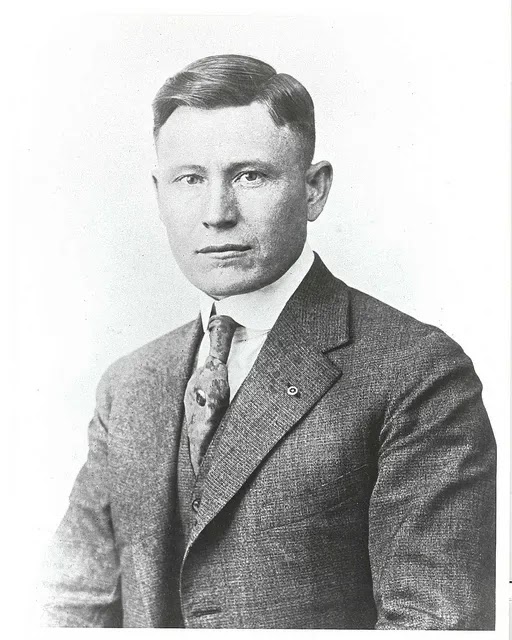
His life was far from successful. Rather, it was closer to a life filled with failures. Born in a poor farm family in Indiana in 1890, he lost his father at the age of six and began cooking at the age of seven to take care of his younger siblings. He dropped out of school in the seventh grade and had to work various jobs from the age of 14, including farm laborer and streetcar conductor. His resume was almost a list of failures: a steamboat sailor, insurance salesman (fired for insubordination), railroad fireman (fired after a fight with a colleague), lawyer (his career ended after a fistfight with a client in court), tire salesman, acetylene lamp manufacturing business (failed due to the spread of electricity), ferry business (failed when a bridge was built), and he faced setbacks in every venture he attempted.
On the surface, it may seem like just a story of a man who had bad luck. However, this arduous journey became a massive classroom teaching him everything about the world. Working as an insurance salesman, he learned how to persuade people; as a lawyer, he realized the importance of contracts; and while running a ferry, he learned the flow of business. No one knew that all these pieces of failures would later become the materials to complete a grand mosaic of success. His failures were not just endings but rather a long preparation process for the greatest success.
The ‘11 Secret Herbs’ Born at a Gas Station
The turning point in Sanders’ life came in 1930 when he was 40 years old, at a roadside gas station in Corbin, Kentucky, under the shadow of the Great Depression. Shell Oil recognized his diligence and offered him a gas station without rent, only taking a portion of the sales. He began selling meals for passing travelers. Initially, he only served six customers at a table behind the gas station, but as word spread about his Southern home-cooked meals, especially the chicken, it developed into a proper restaurant named Sanders Court & Café.
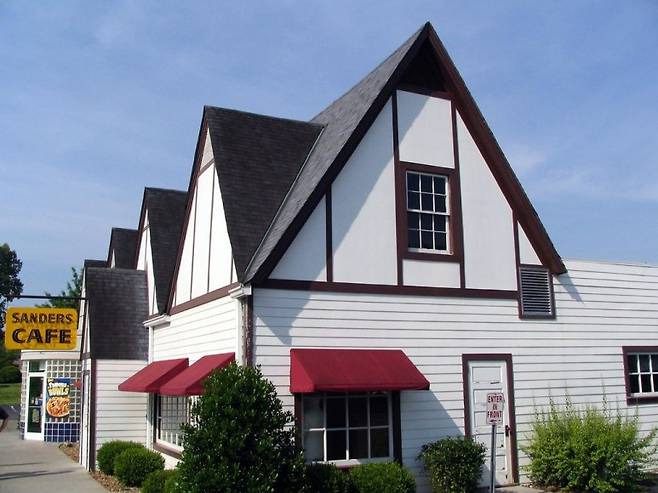
However, there was a problem. At that time, fried chicken was cooked in a pan, taking 30 minutes, which could not handle the influx of customers. It was at this moment that a fateful discovery changed his life. In 1940, he encountered a new invention called a ‘pressure cooker’ used for cooking vegetables. Sanders had the innovative idea of applying this machine to frying chicken. By frying the chicken at high temperature and pressure, the cooking time was reduced to just a few minutes, and the chicken’s juices were preserved, resulting in a more tender and moist flavor. This ‘pressure frying’ method became the key technology for KFC’s success.
In the kitchen of this gas station restaurant, after nine years of research, Sanders perfected the famous ‘secret recipe’ combining 11 herbs and spices.
However, his path to success was far from smooth. Contrary to the gentle grandpa image, he had a fiery temperament. When the owner of a competing gas station, Matt Stewart, painted over Sanders’ advertising sign, Sanders rushed to the scene with two Shell Oil employees. The argument quickly escalated into a gunfight, resulting in one Shell Oil employee being shot and killed by Stewart. Sanders also shot Stewart, injuring his shoulder. Stewart was sentenced to 18 years for murder, while Sanders was released on grounds of self-defense. This anecdote vividly shows the rough businessman who would not hesitate to use a gun to protect his own.
A Challenge at 65, an Old Car and a White Suit
Sanders Court & Café prospered day by day, gaining fame to the extent of being featured in the guidebook of famous food critic Duncan Hines. But trials came knocking once again. In the 1950s, a new highway (Interstate 75) was built, replacing Route 25, which cut off customers overnight. Ultimately, in 1955, at the age of 65, Sanders lost everything and went bankrupt. All he had left was an old car and a monthly social security pension of $105 from the government.
At an age when most people would have given up everything, Sanders was different. He embarked on his final challenge with his most valuable asset: the 11 secret recipes and the pressure frying technique. Instead of selling chicken directly, he decided to sell his ‘recipe’. Loading a pressure cooker and seasoning into his old Ford car, he began to wander across the United States. His proposal was simple: “Fry chicken using my recipe. In return, give me a royalty of 5 cents per piece of chicken.”
The results were dismal. His proposal was rejected 1008 times (or 1009 times). Then in 1952, a partner who recognized his passion appeared. Pete Harman, who ran a small restaurant called ‘Do Drop Inn’ in Salt Lake City, Utah, was impressed by the taste of the chicken Sanders personally fried and accepted his proposal, leading to the birth of the world’s first KFC franchise.
Interestingly, the iconic name ‘Kentucky Fried Chicken’ was not Sanders’ idea but came from Don Anderson, a sign maker hired by Harman.
This event is not just a success myth of an old man. The emergence of the highway destroyed his physical space, ‘Sanders Court’, but paradoxically forced him to innovate his business model. He separated his core asset, the ‘recipe’, from the physical space, thus creating the concept of modern franchising.
“This is God-damned Slop!”: The Critic Who Became a Creator
The KFC franchise grew at a terrifying pace. However, as the business became too large to handle, 73-year-old Sanders sold the company for $2 million to a group of investors led by John Y. Brown Jr. in 1964, with the condition that he would remain as a salaried ambassador for life.
And it is here that the most shocking ‘reality’ of KFC Grandpa emerges. The new owners, eager to maximize profits, began to cut costs by altering the recipe that Sanders had dedicated his life to perfecting. This is akin to a creator watching their artistic work being distorted by commercial logic. In fact, many brand founders express disappointment at the changed product philosophy after selling their companies. Sanders is the original example of this.
Sanders could not bear to watch his creation being ruined. He would visit KFC outlets nationwide without notice, and if the taste did not meet his standards, he would storm into the kitchen, curse, and throw food on the floor. In media interviews, he harshly criticized KFC’s new gravy sauce as “food my dog wouldn’t eat” and “pure wallpaper paste”, and he lambasted ‘Extra Crispy Chicken’ as “a god-damned lump of batter stuck to the chicken”. His most famous remark was “This is God-damned slop!”.
The conflict reached its peak, leading KFC headquarters to sue their founder and mascot Sanders for defamation. This is a perfect example of the inevitable tragic conflict between the founder’s craftsmanship and the corporation’s commercial logic. Ultimately, the smiling grandpa depicted on the bucket became the company’s most valuable asset, while the living Harland Sanders became the company’s biggest headache and harshest critic.
Part 2: The Entry into the Chicken Republic: KFC Knocks on Korea’s Door
Jongno in 1984, the ‘Real’ Emerges
Fast forward to 1984 in Seoul, South Korea. With the 86 Asian Games and the 88 Seoul Olympics approaching, Korean society was absorbing Western culture like a sponge. Amidst this tumultuous era, on April 25, 1984, the first KFC store opened in Jongno 2-ga, the heart of Seoul. This was not just the opening of a restaurant. This event, which garnered significant media attention, approached young people as a symbol of ‘American taste’ and sophisticated culture. KFC Jongno quickly rose to become the hottest ‘hot place’ in Gangbuk and formed the first fast-food battleground in South Korea.
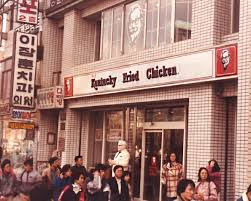
The status of KFC Jongno can also be confirmed in the popular drama ‘Reply 1994’. It was not just a chicken shop but a space filled with the memories and excitement of a generation. That symbolic first store closed its doors in 2022, after 38 years, fading into history.
Tower Burger and Chibap, the Power of K-Patch
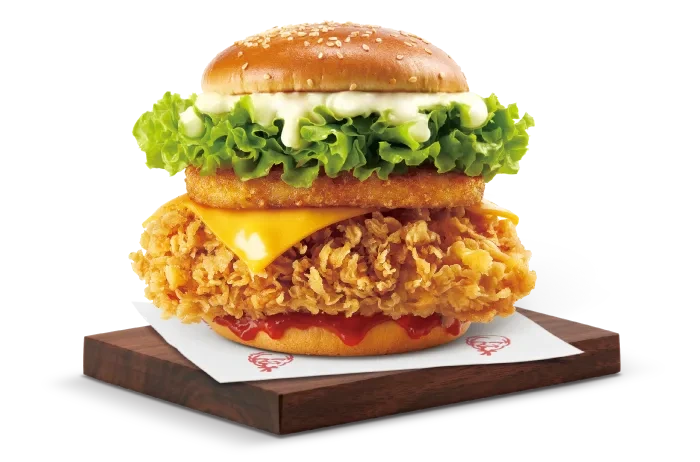
The key to the success of global brands is ’localization’. KFC Korea, even under the control of the American headquarters, produced hit products that penetrated the Korean market. At the pinnacle of this was the ‘Tower Burger’, launched in September 2000. This burger, featuring a thick whole breast fillet topped with hash browns and cheese, precisely targeted the Korean dining culture that prefers ‘generosity’, reigning as a signature menu for over 20 years.
An even more interesting phenomenon is the consumer-led localization, known as ‘Chibap’ culture. Korean consumers have reimagined KFC’s savory chicken as a ‘side dish’ to be eaten with rice. This was not something the company intended, but it is an example of how the product’s characteristics met local culture to create a new dining culture. This shows that localization is not just a top-down strategy from the company but a bottom-up cultural phenomenon created voluntarily by consumers.
Part 3: At the Frontlines of the Chicken War: A Portrait of Today’s KFC in Korea
The Truth Behind the ‘Small Chicken’ Debate
Today, there is a ‘small chicken’ debate in the Korean chicken market. Why should only Korean consumers pay more for smaller, undergrown chickens? The root of this issue lies in the structural characteristics of the Korean broiler industry, namely ‘vertical integration’ and maximizing productivity. A few large companies control everything from breeding to processing, and it has become standard to ship small chickens weighing around 1.5 kg after shortening the breeding period to 30-35 days. This ultimately leads to a unique consumption culture of ‘one chicken per person’, creating an irony where consumers complain about the quantity relative to the price while maintaining the system.
Comparison of Broiler Farming Methods Domestically and Internationally
| Feature | South Korea | USA / Europe |
|---|---|---|
| Average Breeding Period | 30-35 days | 45-55 days |
| Average Shipping Weight (Live) | About 1.5 kg | About 2.5-3.0 kg |
| Main Sales Unit | Whole Chicken | Grams (g) or Parts |
| Core Economic Driver | Speed / Turnover | Meat Yield / Quality |
KFC, too, has become a player that must adhere to the ‘small chicken’ rule of the Korean market within this vast ecosystem of the ‘Chicken Republic’, rather than opting for larger chickens, which are the global standard.
Four Ownership Changes, Returning from the Brink
KFC’s journey in the Korean market has been arduous. It struggled amidst fierce competition with powerful local brands, and ownership changed four times. Then in 2023, the domestic private equity firm Orchestra PE acquired KFC Korea, achieving a dramatic turnaround. Through aggressive promotions like ‘Chicken Night’, selling chicken at a 1+1 deal after 9 PM, and digital transformation, they achieved the highest performance in history.
However, behind this success myth lies the cold reality of business. Just two years after recording remarkable results, Orchestra PE put KFC Korea back on the market. This is a typical private equity ’exit strategy’, where undervalued companies are acquired, their value is raised in a short period, and then sold at a high price for profit. Such cases are often found in other domestic restaurant franchises, showcasing the characteristics of modern financial capital that focuses on short-term financial performance rather than long-term brand growth. Ultimately, the other ‘reality’ of today’s KFC in Korea is that it is not only a restaurant selling delicious chicken but also a financial investment product driven by cold financial capital.
Conclusion
What is the true legacy of KFC Grandpa, Colonel Sanders? His story goes beyond a simple success myth, showcasing the constant tension between quality and profit, craftsmanship and commercialism.
- A Complex Figure, Colonel Sanders: He was an indomitable businessman who rose after 1008 failures, but at the same time, he was a meticulous artisan who could not tolerate the distortion of his creation, crying out, “God-damned slop!”
- From an Icon of the Era to an Investment Product: KFC, which landed in Korea in 1984 and became a cultural center for a generation, has now become a brand seeking survival amidst fierce chicken wars and the logic of financial capital.
- The Tension Between Quality and Profit: The obsession with quality that Sanders sought to protect and the pressure for financial success that KFC currently faces prompts us to reflect on the complex economic systems hidden behind all the food we consume.
Next time you encounter the smiling grandpa in front of a KFC store, why not think about the 1008 failures and fiery cries hidden behind that smile?