
A story of how a humble block of instant noodles became a new cultural ‘rice’ for a generation.
- How instant ramen was born and came to Korea
- The process by which Jjapagetti and Jjapaghetti became cultural phenomena beyond simple food
- The significance of ramen in the lives and culture of modern Koreans
1. The Birth of a New Staple: Hunger, Innovation, and Cup Noodles
This chapter follows the journey of ramen from a revolutionary Japanese invention to a unique cultural staple encapsulated in the symbolic ‘bowl’ of Korea. To understand the history of Korean ramen, we must start from the beginning.
The Father of Instant Ramen: A Vision Born from Despair
The story begins with Taiwanese-Japanese entrepreneur Momofuku Ando. Witnessing food shortages in Japan after World War II, he became captivated by the idea of creating noodles that could be stored for long periods and cooked easily.
After a year of solitary research in a backyard shed, inspired by watching his wife fry, he invented the ‘flash-frying method’. This technique allowed hot water to quickly permeate the noodles through tiny holes created by frying them, leading to the birth of the world’s first instant ramen, ‘Chicken Ramen’, in 1958. His philosophy that “a full stomach brings peace to the world” embodied a spirit of service to humanity rather than just a product.

The ‘Cup’ that Conquered the World
Ando’s second brilliant idea came during a business trip to the U.S. in 1966, where he observed locals crushing Chicken Ramen into paper cups and adding hot water to eat with forks. He realized that for ramen to expand globally, it needed to overcome the cultural barriers of bowls and chopsticks.
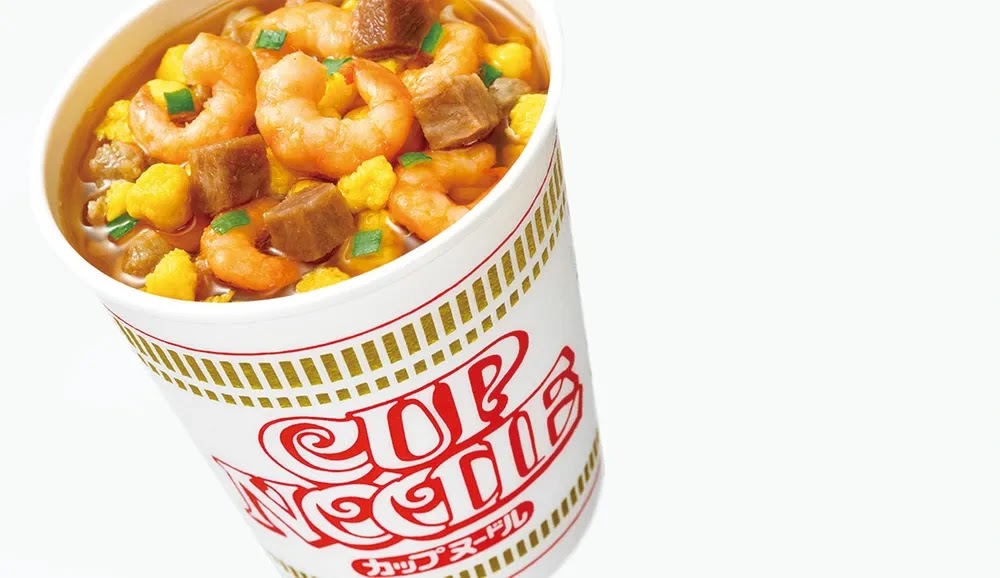
This led to the launch of ‘Cup Noodles’ in 1971. The packaging itself became a cooking tool and dish, epitomizing convenience. Initially struggling, it skyrocketed to fame after being featured in the live broadcast of the 1972 ‘Asama Mountain Lodge Incident’, where cold rescue workers were seen eating Cup Noodles, cementing its image as a perfect meal in any situation.
The Beginning of Korean Ramen and the Birth of ‘Bowl Noodles’
The transfer of ramen technology to Korea was not easy. Samyang Foods, after being denied technology transfer from Nissin, reached out to competitor Myojo Foods, which, understanding the post-war struggles of Korea, freely shared its technology, laying the foundation for the Korean ramen industry.
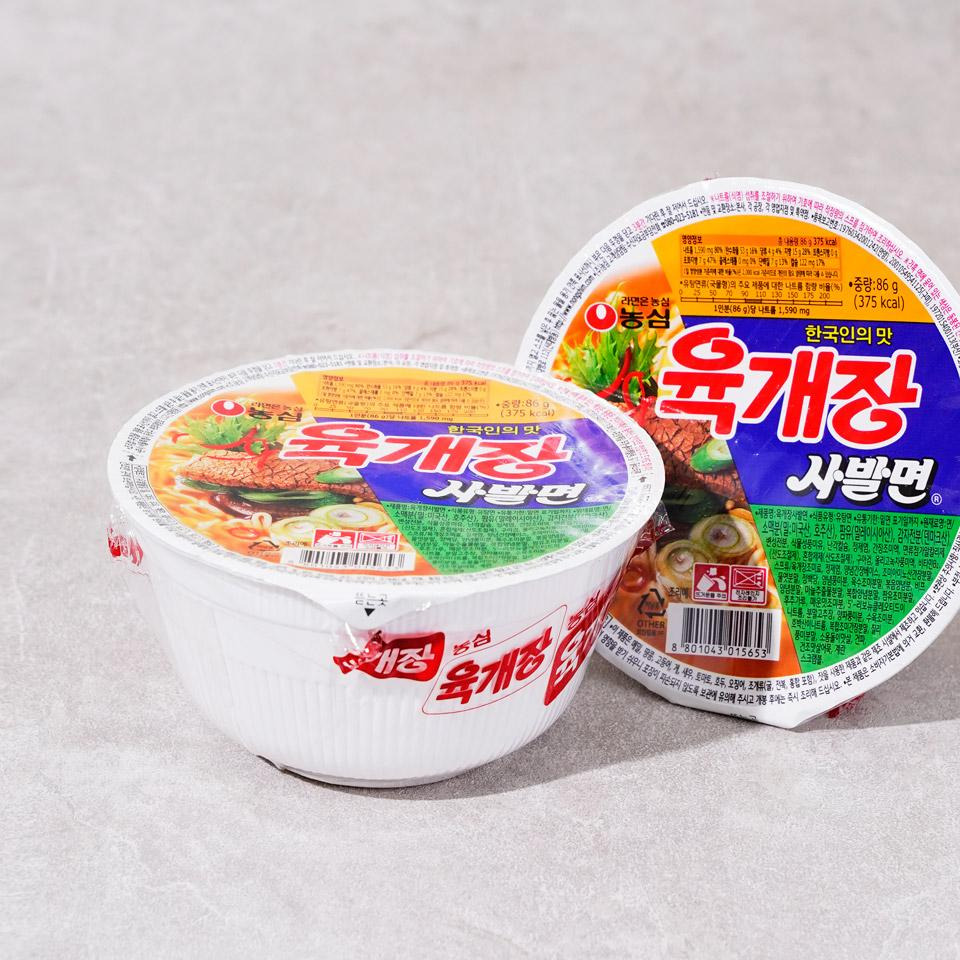
The 1980s marked a golden age for Korean ramen, fueled by economic growth and the Olympics. While Japan had ‘Cup Noodles’, Korea had ‘Yukgaejang Bowl Noodles’, launched by Nongshim in 1982. Choosing a wide ‘bowl’ shape instead of a narrow cup reflected Korea’s food culture of enjoying soup together. This was an excellent example of ‘glocalization’, making it feel like ‘our’ food from the start. As a result, Yukgaejang Bowl Noodles became the nation’s cup ramen, representing convenient food in Korea.
2. The Black Noodle War: The Power Struggle of Jajang Ramen
This chapter explores how ramen companies challenged one of Koreans’ favorite foods, Jajangmyeon, creating a new market and defining a cultural consciousness for a generation.
The Instant Revolution: Nongshim Jjapagetti
In the early 1970s, instant Jajangmyeon received criticism for being far from the taste of real Jajangmyeon. However, in 1984, Nongshim launched Jjapagetti, completely changing the market landscape. The secret to its success lay in three factors.
- Name: A clever combination of ‘Jajangmyeon’ and ‘Spaghetti’ piqued children’s curiosity.
- Sauce: The fine granulated sauce inspired by instant coffee easily and evenly coated the noodles.
- Flavor: Instead of imitating Chinese restaurant Jajangmyeon, it created a unique and addictive ‘Jjapagetti flavor’.
Powder vs. Liquid: The Counterattack of Jjajjaroni
In 1985, Samyang launched Jjajjaroni, combining ‘Jajangmyeon’ and ‘Macaroni’ to counterattack. The key differentiator of Jjajjaroni was its liquid sauce. Samyang claimed that the liquid sauce was closer to the ‘real’ taste of fried black bean sauce, giving rise to the two major factions of instant Jajangmyeon: ‘powder’ and ’liquid’.
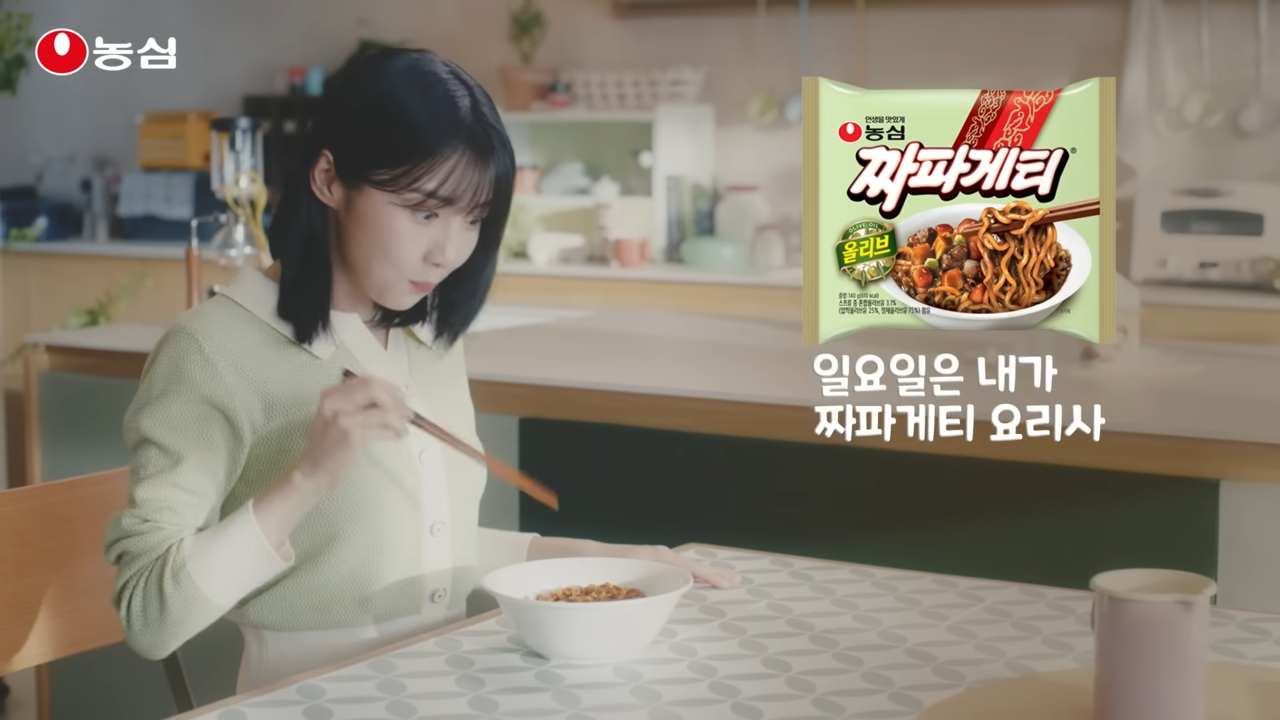
“Sundays, I’m the Jjapagetti Chef!”
The status of Jjapagetti solidified with one of the most iconic campaigns in Korean advertising history. The slogan “Sundays, I’m the Jjapagetti Chef!” transformed the act of cooking ramen into a family activity, making Jjapagetti a cultural icon of the weekend.
3. The Rise of the Modisumer Republic: Consumer-Led Ramen Recipes
This chapter discusses how consumers took the lead, prompting companies to follow, unleashing unprecedented creativity and competition in the modern ramen era.
The Premium Jajang Ramen War of 2015
In 2015, Nongshim challenged its own stronghold by launching a premium version of its product, Jjawang. With thick udon-like noodles and a rich flavor aimed at mimicking the quality of Chinese restaurant Jajangmyeon, Jjawang created a sensation in the market.
This opened the curtain on the ‘Premium Jajang Ramen War’. Ottogi introduced Jinjja Jang, boasting a ‘burnt flavor’, while Paldo presented Paldo Jajangmyeon featuring chef Lee Yeon-bok as its model, turning the market into a battleground of taste and technology.
Comparison of Three Premium Jajang Ramens
| Feature | Nongshim Jjawang | Ottogi Jinjja Jang | Paldo Jajangmyeon |
|---|---|---|---|
| Noodle | Chewy and thick 3mm noodles | Thick and flat noodles | Relatively thin 2.5mm noodles |
| Sauce | Powdered sauce (rich and sweet) | Liquid sauce (smoky ‘burnt flavor’) | Liquid sauce (balanced taste) |
| Flavor | Sweet and rich taste | Smoky and savory taste | Less stimulating and refined taste |
| Key Differentiator | Texture and richness of noodles | True ‘burnt flavor’ | Star chef marketing |
The Emergence of Modisumers and the Jjapaghetti Phenomenon
The true revolution began in the hands of consumers. The term modisumer, a blend of ‘modify’ and ‘consumer’, refers to consumers who create their own recipes. In my opinion, the ultimate example is Jjapaghetti.
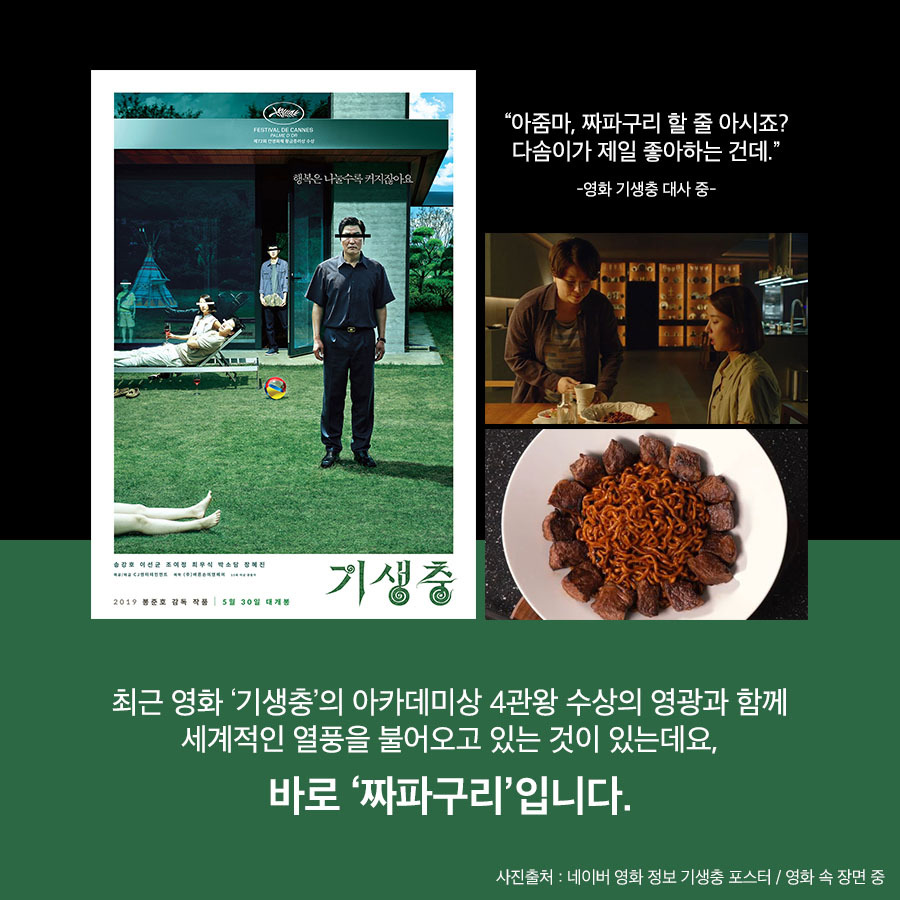
This recipe, mixing Jjapagetti and Neoguri, started in online communities and became a nationwide phenomenon through entertainment programs. In 2019, it gained global attention as a powerful symbol of class disparity when it appeared alongside premium Hanwoo beef in Bong Joon-ho’s film ‘Parasite’, colliding cheap common food with a symbol of wealth.
The modisumer trend has sparked innovations in flavors like ‘spicy Jjajang’, rose, and mala, and now companies are launching products following consumer creativity. The innovation in the modern ramen market has been democratized, and ‘modisumers’ have effectively become the massive R&D department of the entire industry. What is your special ramen combination?
4. Cup Noodles Become an Essential Part of Modern Life
The final chapter examines how cup noodles have permeated every aspect of modern Korean life, from late-night gaming to space travel.
The Science of 3 Minutes: The Technology Hidden in the Cup
The convenience of cup noodles is a remarkable product of food engineering.
- Floating Noodles: The ‘intermediate holding technology’ allows the noodle block to float in the middle of the container, enabling hot water and steam to circulate above and below, cooking the noodles evenly.
- Intelligent Containers: Environmentally friendly paper containers and microwave-safe containers have emerged, and even clips to secure the lids have become patent-worthy.
The Nation’s Fuel: Ramen in Daily Life
Ramen is inseparable from the lives of modern Koreans. In PC rooms, it is essential food for gamers, and for single-person households, it is the best convenience food. Additionally, during economic downturns, when dining out costs rise, it serves as a ‘recession food’, acting as a barometer of the economy.
The Final Frontier: Space Ramen
The ultimate proof of ramen’s adaptability is the space ramen developed for astronauts. It had to be cooked at a low water temperature of 70°C, and the broth had to be thickened to prevent it from scattering in microgravity.
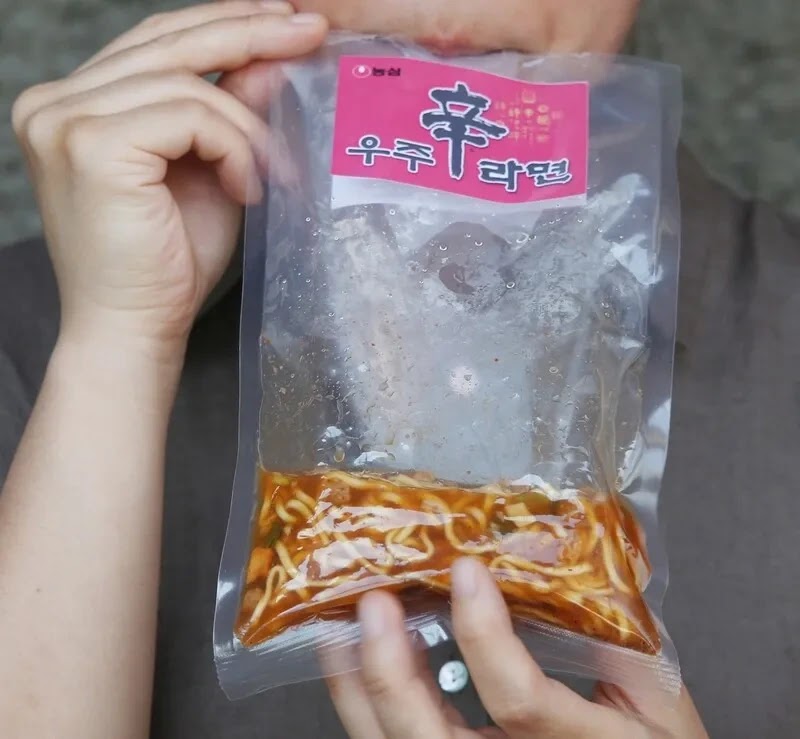
The history of ramen began with solving food shortages and has continuously provided ingenious solutions to evolving human needs, overcoming cultural barriers, environmental issues, and extreme constraints like microgravity. This shows that ramen is not just a food but a technological platform embodying human ingenuity and adaptability.
Conclusion: What is Your ‘Staple’?
Ramen is no longer just an instant food. As explored in this article, ramen tells the story of modern Korea.
Three Key Points:
- Icon of Innovation: Ramen began as a technological invention to solve post-war food shortages and transcended cultural barriers with cup noodles and bowl noodles.
- Cultural Canvas: Jjapagetti became a weekend ritual, and Jjapaghetti was reborn as a global symbol of class through consumer creativity and film.
- Modern Companion: From PC rooms to single-person households and even space, ramen has perfectly adapted to the busy and dynamic lives of modern people.
From a simple meal in a PC room to Jjapaghetti in the film ‘Parasite’, ramen has become the dynamic and endlessly innovative spirit of modern Korea, a new ‘staple’.