
Digital Currency Series · Part 1: What is a Stablecoin? · Part 2: Types and Lessons from Terra · Part 3: The War for Monetary Sovereignty · Part 4: Asset Tokenization (Current Post) · Part 5: The Regulatory Landscape · Part 6: Financial Literacy
Asset tokenization (RWA) involves taking assets that were previously difficult to divide and sell—such as real estate, government bonds, and copyrights—and turning them into blockchain tokens so they can be traded like stocks. Already, approximately $15.1 billion worth of U.S. Treasuries are circulating as tokens, and South Korea passed a token securities bill in the National Assembly in January 2026.
To buy a 5 billion won building, you need 5 billion won. This premise, so obvious that it was never questioned, is now being challenged. What if you could divide that same building into 50,000 pieces worth 100,000 won each?
While the previous Parts 1-3 covered “digital money” known as stablecoins, Part 4 is about what we will buy and sell with that money.
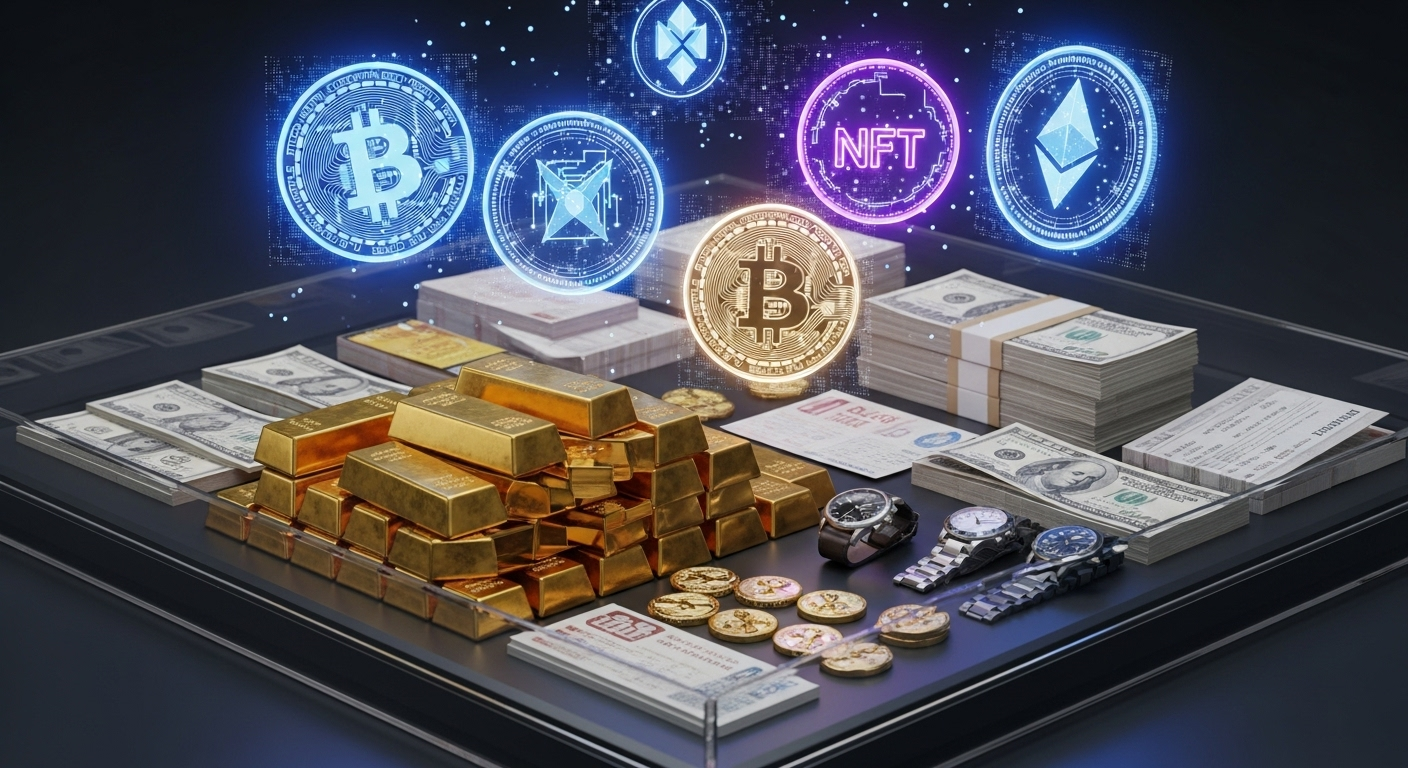
What is Asset Tokenization, and Why Start with Illiquid Assets?
Asset tokenization is the process of converting the rights to illiquid assets—assets that are difficult to convert into cash—into digital tokens, making them easier to divide and trade.
Stocks are already finely divided and traded daily. In contrast, buildings, artwork, and music copyrights are large in scale and take weeks or months to buy and sell. These are the assets that stand to gain the most from tokenization. The slower an asset is to trade, the greater the value created when it is divided and distributed.
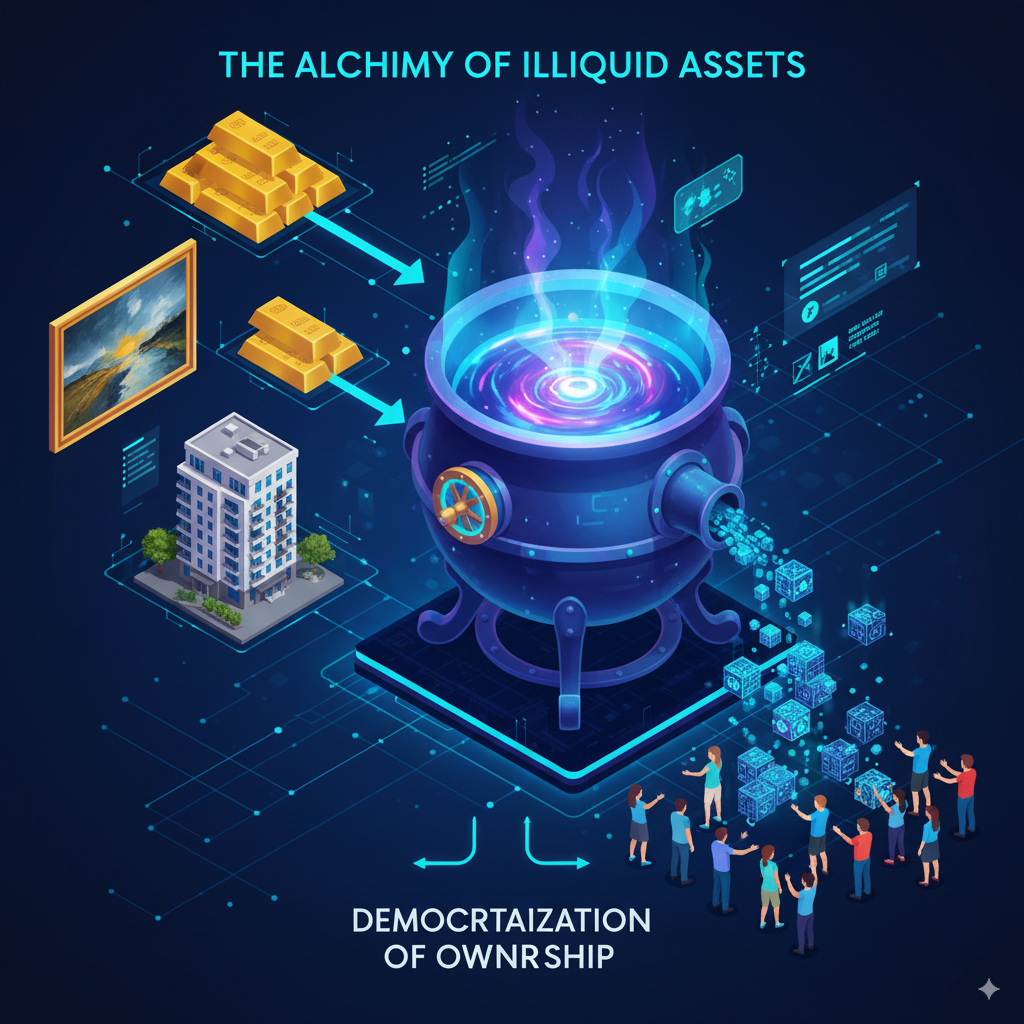
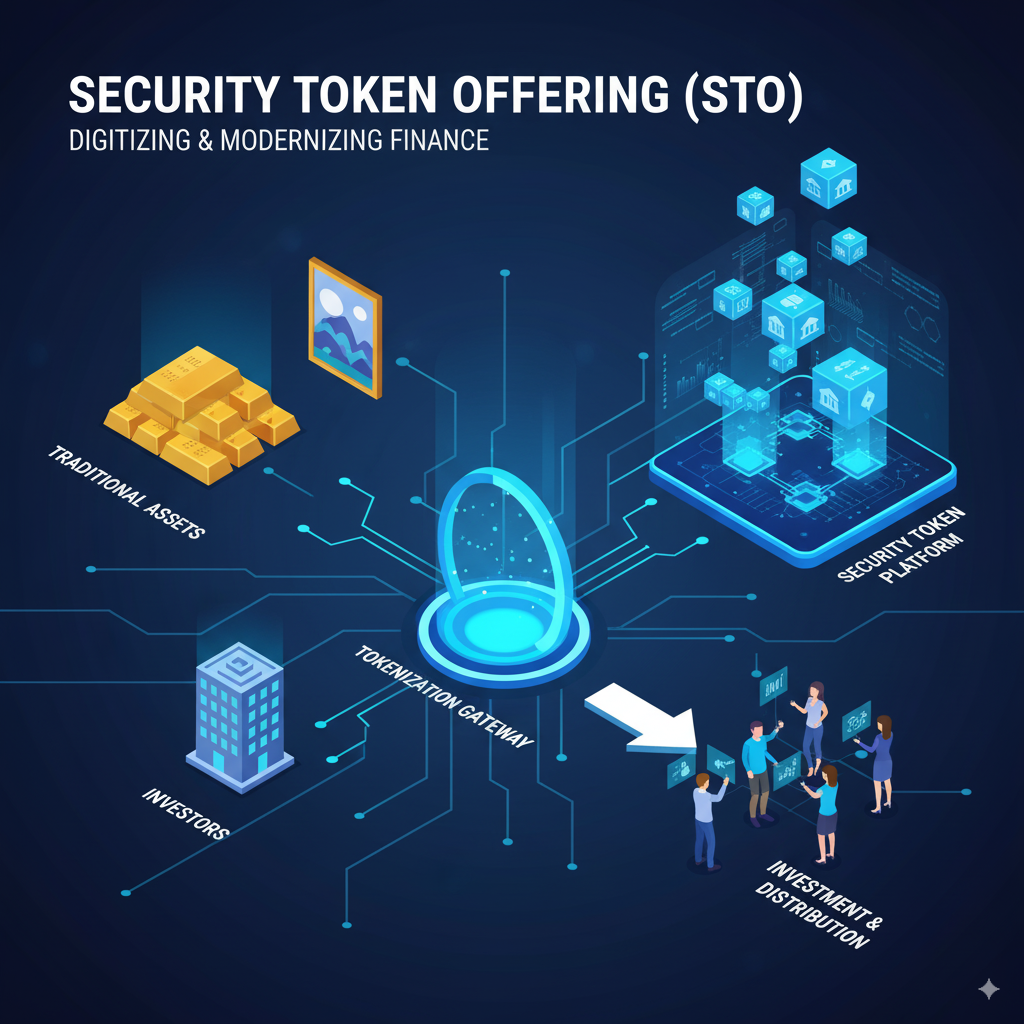
How are Security Token Offerings (STO) Structured?
Tokens containing legal rights, or Security Token Offerings (STO), are not realized through technology alone. Law, trusts, and asset valuation must work in tandem.
A commonly used structure works like this:
First, the asset is placed in a trust company to legally separate it. A Special Purpose Vehicle (SPV) established based on that asset then issues tokens representing ownership or profit rights. These tokens are not cryptocurrencies but “digitized securities” regulated under the Capital Markets Act, meaning they come with disclosure requirements and investor protections.
In South Korea, this structure now has a legal basis.
According to the Financial Services Commission, the amendments to the Electronic Securities Act and the Capital Markets Act passed the National Assembly plenary session on January 15, 2026. The core of this is incorporating token securities infrastructure, which manages the issuance and distribution of securities via distributed ledgers, into the Electronic Securities Act, and allowing investment contract securities to be distributed through securities firms. Implementation is tentatively scheduled for January 2027, one year after promulgation.
U.S. Treasuries Became Tokens Before Real Estate
The fastest-growing tokenized asset is not buildings, but U.S. Treasury bonds.
According to a report by The Crypto Times, the market for tokenized U.S. Treasuries grew to approximately $15.1–15.2 billion by May 2026. Compared to about $380 million in the first quarter of 2023, this is nearly a 40-fold increase in just over three years. The leader in this field is BUIDL, a tokenized treasury fund from the world’s largest asset manager, BlackRock, which reached $2.8 billion in size in August 2026.
The reason government bonds came first is simple: prices are transparent, legal rights are clear, and they are the assets that stablecoin issuers or DeFi services want to use to earn dollar-denominated interest. Real estate and copyrights are slower because their valuation and legal relationships are complex. The order of tokenization is being determined not by “which asset is attractive,” but by “which asset is legally simple.”
How Trading Changes with Tokenization: Four Scenarios
Below are hypothetical scenarios illustrating what becomes possible when tokenization is combined with smart contracts. These are not actual products, but examples to help understand the structure.
The “Robot Referee” for Second-hand Trading: A buyer deposits funds into a smart contract, and the moment the delivery system confirms “delivery complete,” the funds are automatically transferred to the seller. This is a method where code, rather than a central intermediary, acts as the escrow. However, who uploads the “delivery complete” data to the blockchain and whether that data can be trusted becomes a new point of trust.
“Streaming Money” for Freelancers: You can set it up so that payments are automatically deposited into your wallet whenever a promised stage is completed, such as submitting a design draft or finishing a prototype. This structure is particularly meaningful for gig economy workers who frequently experience payment delays.
The 100,000 Won “Digital Landlord”: Let’s say a 5 billion won cafe building in Seongsu-dong is divided into 50,000 “SSC (Seongsu Cafe)” tokens worth 100,000 won each. You can invest in commercial real estate with a small amount, receive monthly rent as dividends proportional to your stake, and sell the tokens whenever you want. Once the Korean Token Securities Act is implemented, a legal path for these products to be traded at securities firm counters will open.
“Fandom” Investment: If the right to receive a portion of an idol’s new song royalties is issued as an “IDS (Idol Song)” token, fans become entities investing in the success of the song rather than just consumers of the album. Every time streaming revenue occurs, the smart contract distributes a share to the token holders. Like stocks, the price can fluctuate significantly depending on popularity.
How Will Individual Asset Management Change with Asset Tokenization?
As tokenization expands, wallets will evolve from places that store money into places that manage money according to rules. Let’s look at two hypothetical individuals.
Assistant Manager Kim, who works at an IT company, receives his salary in USDC from U.S. clients, EURC from European clients, and digital won domestically. He sets rules in his wallet: “Deposit 50% of USDC into a lending protocol like Aave to earn dollar interest, put EURC into a tokenized winery stake in Europe, and use the digital won for living expenses and domestic real estate tokens.” In effect, his wallet becomes an automated investment hub and a personal currency exchange.
General Manager Park, who is nearing retirement, aims for a steady cash flow. He allocates funds into tokens for “Incheon Bridge toll revenue rights” guaranteed by the government, “data center building” tokens long-term leased to global IT firms, and “physical gold” tokens as a hedge against inflation. His plan is to build a dividend pipeline of real assets that are less sensitive to stock market fluctuations.
Both scenarios are attractive, but they rely on many premises: digital won and the corresponding token products must actually exist, rules for taxes, exchange, and custody must be established, and the wallet’s automated rules must be secure against hacking or code errors.
AMMs and Money Legos Supporting Token Trading: Opportunities and Risks
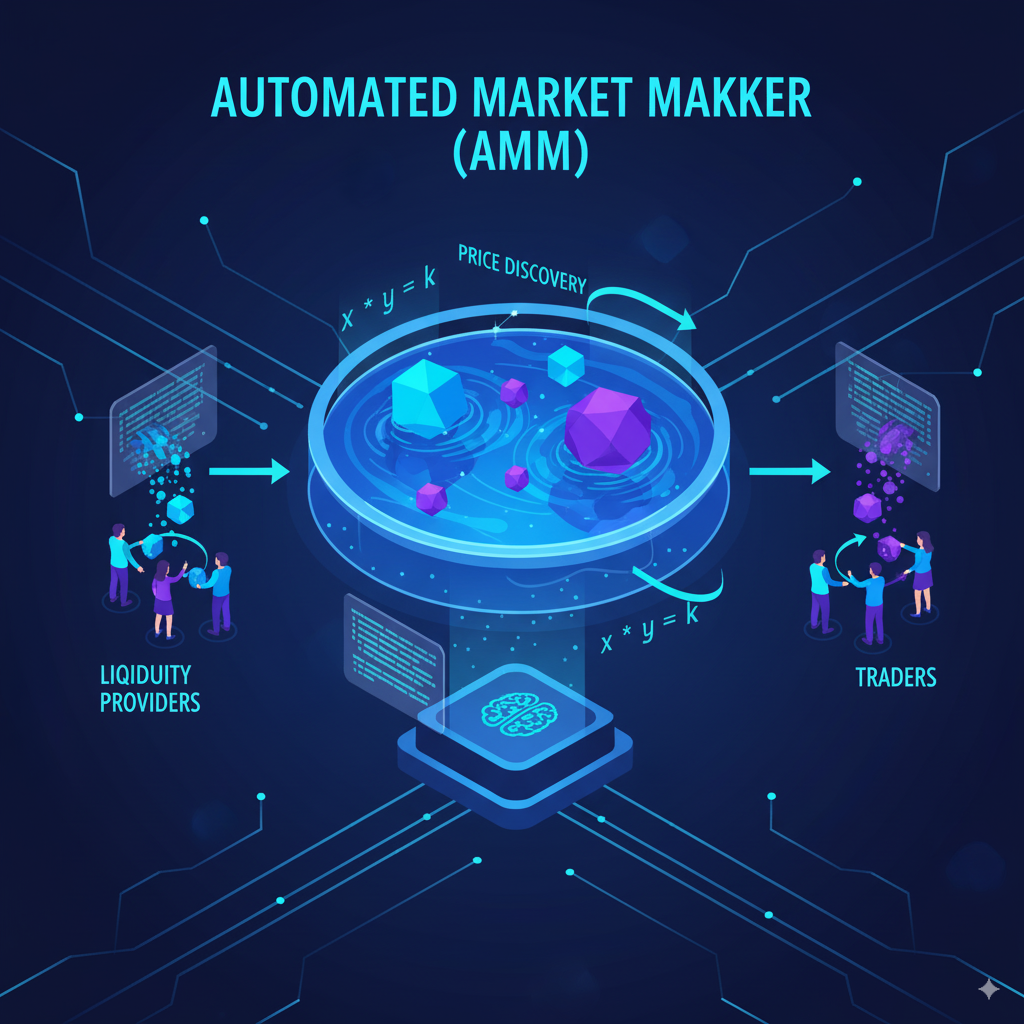
For finely divided tokens to be traded, there must be a counterparty to buy and sell. The Order Book method, where trades are executed only when buy and sell quotes match—like in the stock market—is difficult to use to create liquidity for assets that are traded infrequently.
An Automated Market Maker (AMM) is used as a solution to this problem. On decentralized exchanges (DEX) like Uniswap, anyone can become a liquidity provider by depositing token pairs—like “SSC Token-Won Stablecoin”—into a Liquidity Pool. Traders trade against this pool instead of another person, and prices are automatically determined by a formula (x×y=k) that ensures the product of the two token quantities remains constant. This is why even infrequently traded assets can be traded immediately, 24/7. However, if the pool is small, even a small trade can significantly move the price.
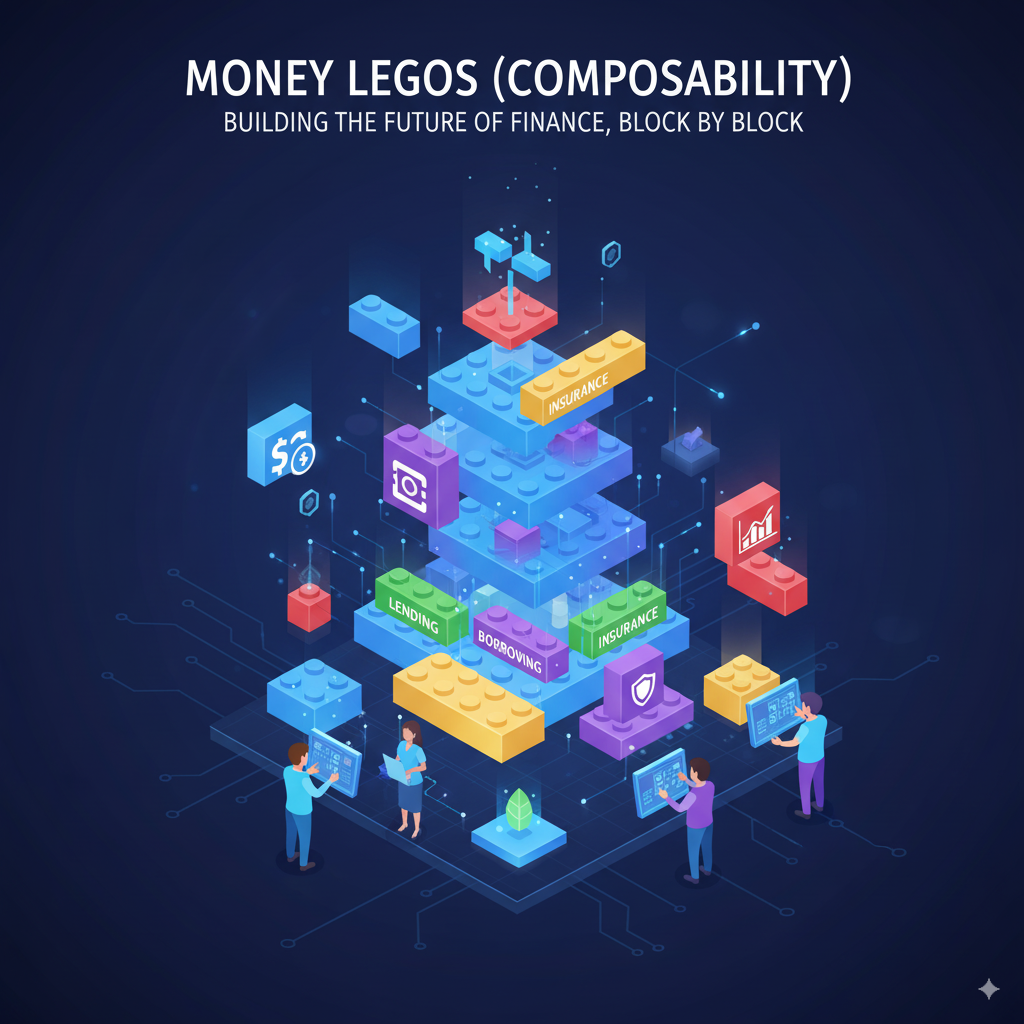
At the foundation of all this is Composability, often called Money Legos. This means that financial services and tokens fit together like Lego blocks. For example, a strategy is possible where you borrow stablecoins using Seongsu-dong cafe tokens as collateral, then put those stablecoins back into an AMM liquidity pool to earn fees.
Being able to leverage capital in multiple layers is both an opportunity and a risk. If one block collapses, the connected blocks can wobble in succession, creating Contagion Risk. The Terra-Luna collapse covered in Part 2 was a case where this chain reaction became reality. Why regulation becomes necessary as tokenized assets become intertwined with DeFi will be continued in the next part.
Next post: Part 5: The Regulatory Gauntlet, From the Wild West to an Era of Order
Notice: This article is general information based on public data available at the time of writing and does not recommend the purchase or sale of any specific virtual assets or financial products. Virtual assets and token securities carry the risk of principal loss. (Last checked: 2026-09-28)