
The sorrow of forced wars, rightful anger, cunning diplomacy, and bitter victories… We confront the tumult of the times through the voices of four individuals.
- Historical context of four major overseas deployments (Japanese expedition, Tsushima conquest, Battle of Sarhu, invasion of Tsushima)
- The hidden personal anguish and national dilemmas behind the wars
- Lessons from past military decisions that resonate with us today
Voices of History: Records from Across the Sea
In the depths of dusty archives, there are not only historical texts penned with brushes. Between the lines lie the shouts of nameless soldiers, the anguish of generals, and the decisions of kings. The ‘Mongol-Japanese expedition’, ‘Tsushima conquest’, ‘invasion of Tsushima’… The dry letters in books merely list events, but when we extract the vivid stories hidden behind them, history finally speaks to us.
Here are the stories of four individuals who experienced the tumult of their times. A young soldier from Goryeo swept away by the ambitions of a great empire, a general from the late Goryeo who drew his sword to punish the pirates ravaging his country, a scholar from Joseon who served a doomed monarch caught between two great powers, and a military officer from Joseon who had to use the sword he raised for revenge against his enemy.
Through their voices, we can glimpse the true nature of the sorrow of forced wars, rightful anger, cunning diplomacy, and bitter victories. This is not a tale of heroes, but a requiem for the countless souls who perished under the great wheel of history, posing a heavy question to us living today. Before we begin the stories, let’s first look at an overview of the wars they experienced.
Table 1: Summary of Major Overseas Deployments in Goryeo and Joseon
| Deployment Name | Year/Dynasty | Major Outcomes |
|---|---|---|
| Mongol-Japanese Expedition (1st) | 1274 / Goryeo | Failure due to a typhoon, massive loss of life |
| Mongol-Japanese Expedition (2nd) | 1281 / Goryeo | Catastrophic failure due to a typhoon |
| Park Wi’s Tsushima Conquest | 1389 / Goryeo | Victory, destruction of pirate fleet and rescue of captives |
| Lee Jong-mu’s Tsushima Conquest | 1419 / Joseon | Strategic victory, background for the signing of the Gyehae Treaty |
| Deployment for the Battle of Sarhu | 1619 / Joseon | Strategic surrender after defeat of Ming forces, pretext for the Injo Restoration |
| Invasion of Tsushima (1st, 2nd) | 1654, 1658 / Joseon | Decisive victory for Qing-Joseon allied forces |
Chapter 1: The Ambitions of the Great Khan and the Tears of Goryeo - A Young Soldier’s Reminiscence (1274, 1281)
My name is… What use is a name now? I was just one of the many young men from Goryeo swept away by the ambitions of the Great Khan. After decades of fighting the Mongols, the land had turned to ashes. I returned from Ganghwa Island to Gaegyeong, but the country was no longer ours. We were a vassal state of the Yuan dynasty, and Emperor Kublai Khan’s greed extended across the sea to Japan.
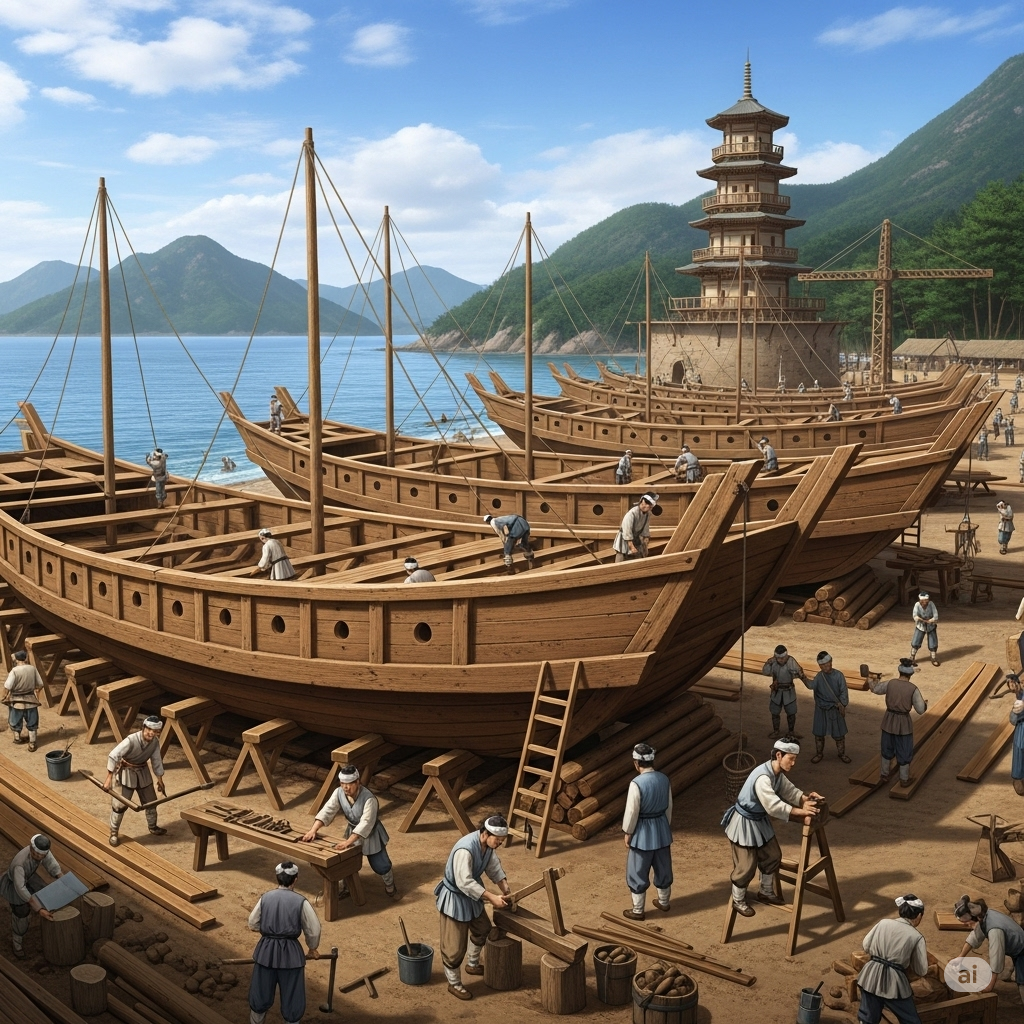
The Despair of the Shipyard
One day, a conscription order was issued. Men like me were dragged to the southern coast of Happo, now Changwon. What I saw there was an endless lumberyard. Kublai wanted to attack Japan, and Goryeo was ordered to build 900 ships. A total of 35,500 workers were mobilized from across the country. We cut down trees and nailed boards together in hunger. As people began to collapse, the Yuan dynasty had to send 20,000 sacks of grain. It was not cooperation but exploitation. What began in January 1274 ended in four months. People said it was done ’like the wind and lightning,’ but those four months were hell for me. We were building ships that would push us into tragedy with our own hands.
The Fury of the Divine Wind and Two Hellish Expeditions (1274, 1281)
I sailed out to sea on the ships I had built. 25,000 Mongol troops and 8,000 of our Goryeo army, along with 6,700 sailors and workers. A total of 40,000 troops. What happened at Tsushima and Ikido was not a battle but a massacre.
Our Goryeo bows were small yet powerful, and the poison on the arrowheads was deadly even with a mere scratch. When we landed in Hakata Bay, victory was within our grasp.
But that evening, the Mongol command suddenly ordered a retreat. General Kim Bang-gyeong strongly opposed it, but it was useless. With a heavy heart, I boarded the ship, and hell arrived that night. A storm tore through the sky, and the ships crashed into each other and were destroyed. In one night, over 200 ships sank, and more than 13,500 comrades disappeared beneath the sea. The Japanese called it ‘kamikaze’ and thanked the gods.
Yet Kublai’s ambitions were not quelled. Seven years later, he raised an even larger expeditionary force. A total of 140,000 troops. Goryeo had to squeeze out another 900 warships and 110,000 sacks of grain. The second expedition was troubled from the start. Japan built defensive walls along the coast and resisted fiercely, and a plague broke out in our camp. Just as we were growing weary waiting for the promised troops from Gangnam, another typhoon struck as soon as they arrived. Nearly 4,000 ships were wrecked, and the Gangnam troops reportedly lost almost all of their 100,000 soldiers. We sacrificed tens of thousands of lives and national strength in two expeditions but gained nothing.
Chapter 2: Sweeping Away the Disaster of the Southern Sea - A Goryeo General’s Reminiscence (1389, 1419)
My name is Park Wi. I was born a warrior of Goryeo and witnessed the founding of Joseon. In my youth, the country groaned under the shadow of the Yuan dynasty, but even after they were driven north, the sea was not quiet. The Japanese pirates, the Wokou, became a new disaster, ravaging our coasts. While the soldiers during the Japanese expedition were dragged away against the will of the nation, we took up arms ourselves to protect my family and my country.
Swift Punishment (1389)
By the late Goryeo period, the plundering of the Wokou reached its peak, and their lair was Tsushima. In 1389, the court finally made a decision, and I was to lead a fleet of 100 ships into battle. The morale of our troops was sky-high. We swiftly raided Tsushima and burned over 300 enemy ships and trampled their lair. The greatest achievement was rescuing over 100 of our people who had been captured by the Wokou. This exhilarating victory significantly weakened the Wokou’s power, and we clearly showed who the masters of our sea were.
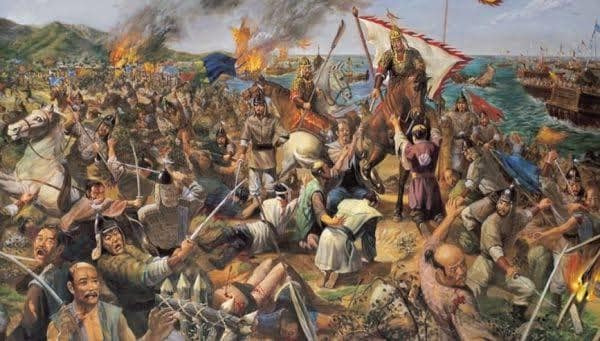
The Anger of the Deposed King and the Majesty of a New Dynasty (1419)
As time passed, Goryeo faded, and Joseon emerged. In the first year of King Sejong’s reign, 1419, starving Wokou invaded our Chungcheong-do Biin-hyeon. At that time, military power was held by the retired King Taejong, and his anger was tremendous. “Tsushima must be empty now; immediately strike their empty houses, and the main force returning must annihilate them at sea.”
Thus began the ‘Gyehae Eastern Expedition.’ A fleet of 227 ships and over 17,000 soldiers led by General Lee Jong-mu was mobilized. On June 20, we landed on Tsushima and burned over 1,940 enemy houses and 129 ships, rescuing 131 Chinese captives.
The Harmony of Strength and Diplomacy
At that time, dramatic news arrived that the main force of the Wokou that had gone to Liaodong was annihilated by the Ming army. King Taejong immediately ordered the troops to withdraw and shifted to diplomatic pressure. “Tsushima has been our land since ancient times; choose whether to show the courtesy of a vassal or continue to be our enemy.” Eventually, the Tsushima lord knelt and swore allegiance. Subsequently, through the ‘Gyehae Treaty,’ a peaceful order was established. I learned through this experience that true victory lies not just in subduing the enemy by force but in creating a peaceful order based on that strength.
Chapter 3: Between Two Dragons - The Agony of a Scholar (1619)
I was a scholar who served closely with King Gwanghaegun. The Battle of Sarhu that I experienced was not a war fought only with swords and spears. It was a truly painful war where righteousness and practicality, loyalty and survival met on a narrow bridge.
A Kingdom on the Edge of a Blade
At that time, Joseon was walking on thin ice. In the north, the Later Jin established by Nurhaci was rising, and the Ming dynasty, which had helped us during the Imjin War, was like a setting sun. Yet the Ming demanded that we send troops to repay their ‘grace of reconstruction.’ The officials shouted that ‘we cannot betray our parent country,’ but King Gwanghaegun thought differently. “The survival of the nation is at stake; how can we take risks for the sake of loyalty?”
A Secret Order to the General
Ultimately, he decided to send troops, appointing General Gang Hong-rip as the commander. On the night before the expedition, the king issued a secret order to General Gang Hong-rip. The content was to “carefully observe the situation, but if the Ming army shows signs of defeat, do not fight foolishly and perish, but negotiate with the Later Jin to preserve the troops.” This was a painful decision by the monarch to minimize the sacrifice of our people.
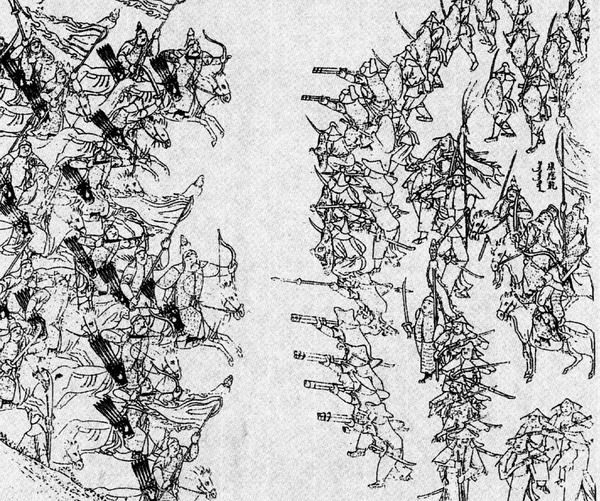
Calculated Surrender and Political Disaster
The 13,000-strong Joseon army crossed the Amnok River. Upon witnessing the annihilation of the Ming main force on the battlefield of Sarhu, General Gang Hong-rip made a decision. He surrendered to the Later Jin, allowing most of the Joseon army to save their lives. Militarily, it was a defeat, but diplomatically, it was a success. However, politically, it was a disaster. Opponents vehemently criticized this act as ‘betraying the parent country by surrendering to the barbarians,’ and ultimately, this justification became the pretext for the Injo Restoration. The wise monarch who chose practicality was ousted, and a regime that only emphasized righteousness took over, leading Joseon to endure two horrific invasions.
Chapter 4: The Strange Journey of the Northern Expedition - A Reminiscence of a Gun Instructor (1654, 1658)
I was an instructor training an elite gun unit for the Northern Expedition under King Hyojong’s orders. The dream of the king to wash away the humiliation of the Byeongja Invasion and conquer the Qing dynasty was our dream. We secretly expanded our military capabilities, especially focusing on training gunmen.
An Ironic Call
However, in 1654, an absurd demand came from the Qing dynasty. The Russians, known as the ‘Nasen,’ were causing trouble in the northern Heilongjiang region, and they requested that Joseon send its elite gun unit. Isn’t it ridiculous! To have the army we painstakingly trained to fight against the Qing dynasty, fight for that very Qing dynasty. But we were a vassal state of the Qing, and we could not defy the emperor’s orders.
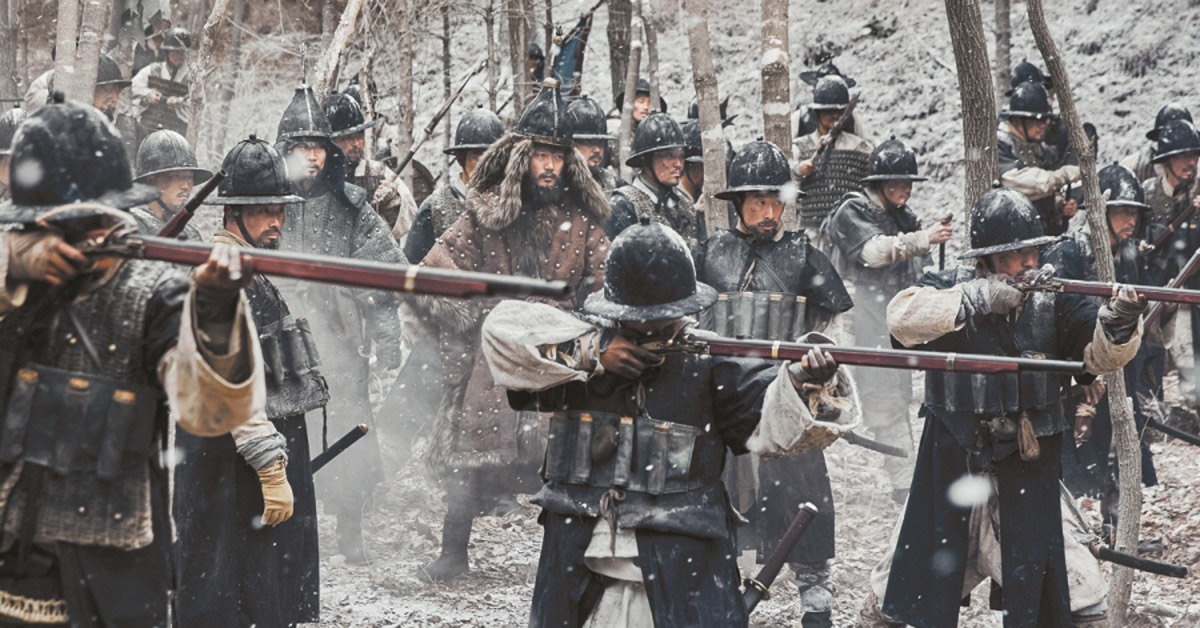
Clash in Heilongjiang
In 1654 and 1658, our gun units were dispatched twice. The results of the battles in Heilongjiang were astonishing. The large Nasen soldiers were armed with modern firearms, but they were no match for our gunmen. ‘Bang! Bang! Bang!’ In a volley, the Nasen soldiers fell like autumn leaves. In both battles, the Russian army was nearly annihilated, but our casualties were only 8 dead and 25 wounded. This battle proved the outstanding capabilities of the Joseon gun units to be at a world-class level. I was filled with mixed emotions as I welcomed the returning soldiers. Their military achievements were a source of pride, but the fact that that victory was for our enemy, the Qing dynasty, was heart-wrenching.
What Was Different About the Four Overseas Deployments?
The four overseas deployments each had different characteristics. Comparing the motivations and outcomes of each war makes the lessons of history even clearer.
- Mongol-Japanese Expedition:
- Motivation: Imperial ambitions of the Yuan dynasty
- Agency: Forced mobilization unrelated to Goryeo’s will
- Outcome: Massive loss of life and resources, deepening internal interference
- Tsushima Conquest:
- Motivation: Active defense against Wokou plundering
- Agency: Autonomous decision to protect the nation and its people
- Outcome: Weakened Wokou power and establishment of peace through diplomatic advantage
- Deployment for the Battle of Sarhu:
- Motivation: Diplomatic pressure from the Ming’s demand for troops and the rise of Later Jin
- Agency: Strategic choice (pragmatic diplomacy) for national interest
- Outcome: Preservation of lives amid military defeat, but led to a political disaster domestically
- Invasion of Tsushima:
- Motivation: Military mobilization order from the suzerain Qing dynasty
- Agency: Mandatory deployment that could not be refused
- Outcome: Proved the excellence of the Joseon army, but the dream of the Northern Expedition was ironically thwarted
Conclusion: Lessons from the Echoes of History
The stories of these four individuals, while differing in times and circumstances, ultimately converge on one question: ‘How should the power of the state be used?’ From their voices, we can derive the following key lessons:
- The misuse of power leads to tragedy: The story of the young soldier swept away by the Great Khan’s ambitions illustrates how wielding power without wisdom can lead to great disasters.
- Power and wisdom must harmonize: The Tsushima conquest is the best example of building peace through diplomatic gains based on military strength.
- Competence shines even amid the ironies of history: Although we had to fight for our enemy, the capabilities demonstrated by the Joseon gun units in the invasion of Tsushima highlight the importance of being prepared.
What significance do you think these historical lessons hold for us living in today’s rapidly changing international landscape? We need to reflect on our current position by looking back at the history of overseas deployments.