
The Soul of Korean-Chinese Cuisine: A Portrait of Chinese Immigrants’ History and Korean Culture in Two Dishes
Korean-Chinese Cuisine as Soul Food
Jajangmyeon and jjamppong are not just popular dishes; they are cultural symbols deeply rooted in the lives and history of Koreans. With an average of 6 million bowls sold daily, jajangmyeon is considered Korea’s ‘soul food,’ while jjamppong is cherished for its spicy broth. Although we refer to these dishes as ‘Chinese cuisine,’ it is difficult to find the origins of jajangmyeon and jjamppong in China or Japan.
The history of these two dishes exemplifies how immigrant communities creatively adapted their culture to new environments. This article will trace the origins of jajangmyeon and jjamppong and follow their dramatic transformations as they settled in Korean society. This narrative goes beyond mere food history; it is a grand epic of the survival, adaptation, and creativity of Chinese immigrants (華僑) in Korea from the late Joseon period to the present.
The Origin of Jajangmyeon: From Salty to Sweet Comfort
Prototype: Chinese Zha Jiang Mian (炸醬麵)
The roots of Korean jajangmyeon lie in the Chinese Zha Jiang Mian (炸醬麵). As the name suggests, it consists of noodles topped with a sauce made from fermented soybeans.
The Shandong-style Zha Jiang Mian, which is the ancestor of Korean jajangmyeon, uses a fermented soybean paste called Chuanmianjiang (甛麵醬), and its basic flavor is not sweetness but ‘salty and savory’. The sauce is thick, similar to Korea’s ssamjang, and is mixed with a small amount of noodles.
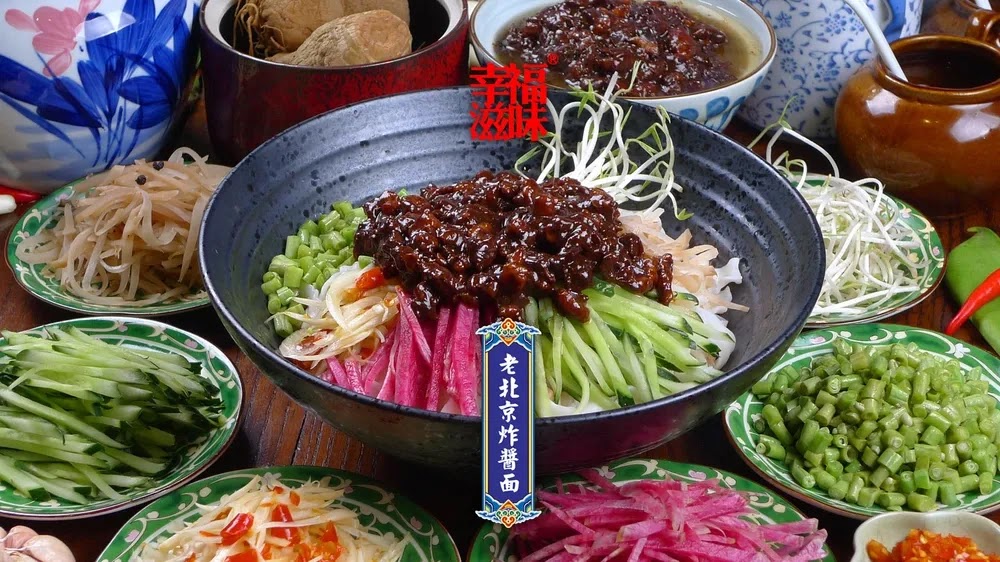
The biggest difference lies in the toppings. Chinese Zha Jiang Mian is often served with generous amounts of sliced fresh vegetables like cucumber and celery, allowing diners to mix them themselves. This emphasizes ’the joy of combination’ and ’textural contrast,’ while Korean jajangmyeon prioritizes ‘immediate flavor delivery’ and ‘integrated taste’ with all ingredients stir-fried together.
Comparison of Korean Jajangmyeon vs Chinese Zha Jiang Mian
| Feature | Korean Jajangmyeon | Chinese Zha Jiang Mian (Shandong Style) |
|---|---|---|
| Sauce (Jiang) | Caramelized Chunjang | Chuanmianjiang (甛麵醬) |
| Color | Black | Dark brown or yellowish brown |
| Main Flavor | Sweet and savory | Salty and savory |
| Viscosity | Thick and watery (starch) | Thick and less watery (paste) |
| Main Vegetables | Onion (stir-fried) | Cucumber, various fresh vegetables (served separately) |
| Serving Style | Sauce poured over noodles | Sauce and toppings served separately |
Birth: A History Beginning at Incheon Port
The history of Korean jajangmyeon began with the opening of Incheon Port in 1883. Chinese merchants and laborers from Shandong, who settled in the Qing concession, started making and eating Zha Jiang Mian as they longed for the tastes of their hometown.
Initially, Zha Jiang Mian was a cheap and convenient meal for dockworkers in Incheon. It was more of a street food where noodles were cut with a knife and topped with sauce rather than a formal dish.
The restaurant ‘Gonghwachun (共和春)’ (opened in 1905), often cited as the original jajangmyeon, is viewed by scholars not as the first to develop jajangmyeon but as a symbolic restaurant that greatly contributed to its popularization. The designation of ‘original’ was emphasized later during Incheon’s development of Chinatown as a tourist destination, and the old Gonghwachun building is now used as a jajangmyeon museum.
Transformation: Capturing the Korean Palate
The taste of jajangmyeon as we know it today was perfected in the mid-20th century through three key elements.
First is the ‘Caramel Revolution’ of 1948. Chinese immigrant Wang Song-san mixed caramel into the existing Chuanmianjiang to develop ‘Sajapyo Chunjang.’ This innovation made the jajang sauce black and glossy, reducing the salty taste while enhancing sweetness and umami, capturing the Korean palate.
Second is the ‘Trinity of Ingredients.’ In the 1950s, a large influx of flour from American aid, combined with the government’s encouragement of mixed and snack foods, led to a surge in demand for noodle dishes. Additionally, from the 1960s, the mass cultivation of onions made this cheap, sweet ingredient a primary component of the sauce.
Third is the introduction of water starch. By adding water starch when stir-frying the sauce, the thick paste transformed into a viscous liquid sauce. This increased the amount of sauce, neutralized the salty taste, and provided insulation that kept the dish warm during delivery, optimizing it for the delivery culture.
Culture: Becoming a National Dish
Jajangmyeon has become a special food for celebrating family occasions due to its affordability and uniqueness.
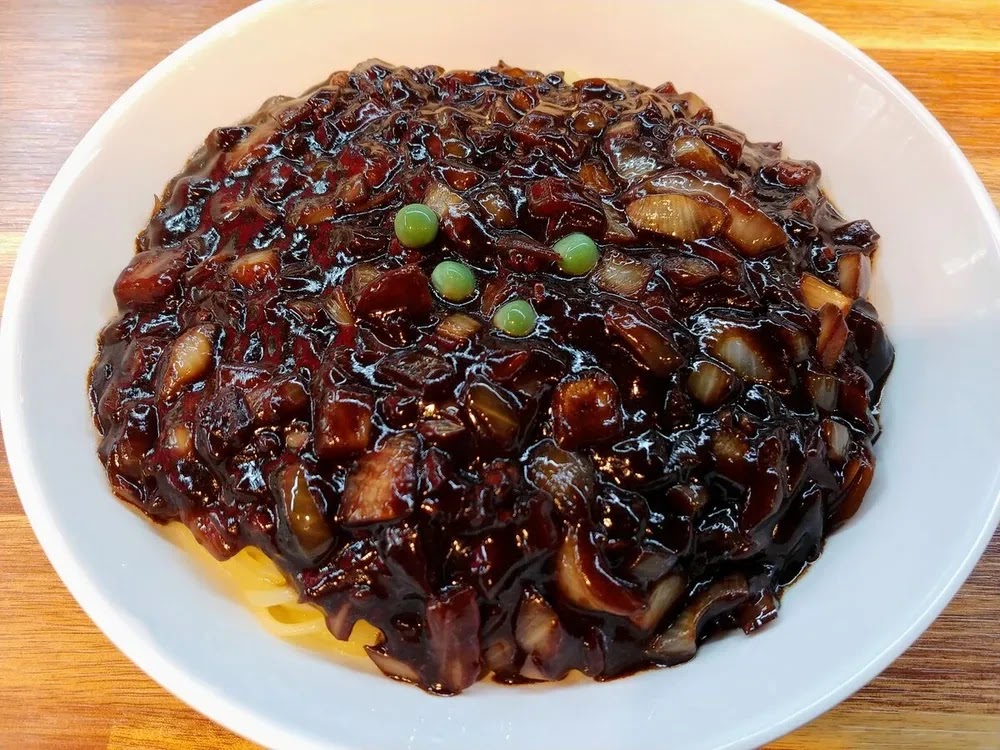
Especially, eating jajangmyeon on ‘graduation day’ and ‘moving day’ is a unique Korean culture. On graduation day, it serves as the best reward and celebration for children, while on moving day, it is the perfect solution for a quick and easy meal when the kitchen cannot be used.
The popularization of jajangmyeon was significantly aided by the introduction of the ‘iron delivery bag’ in the 1970s. This technological innovation met the demands of the ‘quick quick’ culture, and the heat-retaining properties of jajangmyeon made it the ideal menu for this system. Thus, jajangmyeon established itself as a ‘ritual’ marking the cycles of Korean life.
The Origin of Jjamppong: From White Broth to Red Passion
Roots: Two Competing Theories
The origin of jjamppong is much more complex than that of jajangmyeon, and there are two main competing theories.
- Japanese Transmission Theory: This theory claims that ‘Nagasaki Jjamppong (ちゃんぽん)’ from Nagasaki, Japan, was transmitted to Korea. The very name ‘jjamppong’ is believed to derive from the Japanese word ‘chanpon,’ which is the strongest evidence.
- Direct Chinese Origin Theory: Similar to jajangmyeon, this theory suggests that jjamppong originated directly from ‘Choma Mian (炒碼麵)’ brought by immigrants from Shandong. ‘Choma Mian’ means ’noodles made by stir-frying various ingredients (碼).’
The most convincing scenario is the ‘fusion theory,’ which posits that the dish’s foundation came from Shandong-style ‘Choma Mian,’ but the name was borrowed from ‘Nagasaki Jjamppong,’ which had significant cultural influence during the Japanese occupation.
Comparison of Jjamppong Origins
| Feature | Korean Jjamppong (Modern) | Nagasaki Jjamppong |
|---|---|---|
| Broth Flavor | Spicy and refreshing | Rich and savory |
| Broth Color | Red | Milky white |
| Broth Base | Seafood, chicken broth, etc. | Pork bone, chicken broth |
| Main Ingredients | Various seafood, vegetables | Pork, cabbage, fish cake |
| Noodle Texture | Chewy and elastic | Soft and less elastic |
Birth: The Red Jjamppong Baptized by Fire
The most dramatic moment in jjamppong’s history is the transformation of its white broth into a red one, known as the ‘Baptism of Fire.’ Until the 1960s, ‘Choma Mian’ or ‘jjamppong’ was a non-spicy white broth dish.
The ‘Red Revolution’ occurred from the late 1960s to the 1970s. This was a deliberate innovation by Chinese chefs to target the Korean palate, which favored spicy flavors. By using red pepper powder and chili oil when stir-frying the ingredients, they fundamentally changed the nature of the broth. This new red jjamppong quickly gained popularity as a spicy and refreshing dish known for its hangover-curing properties.
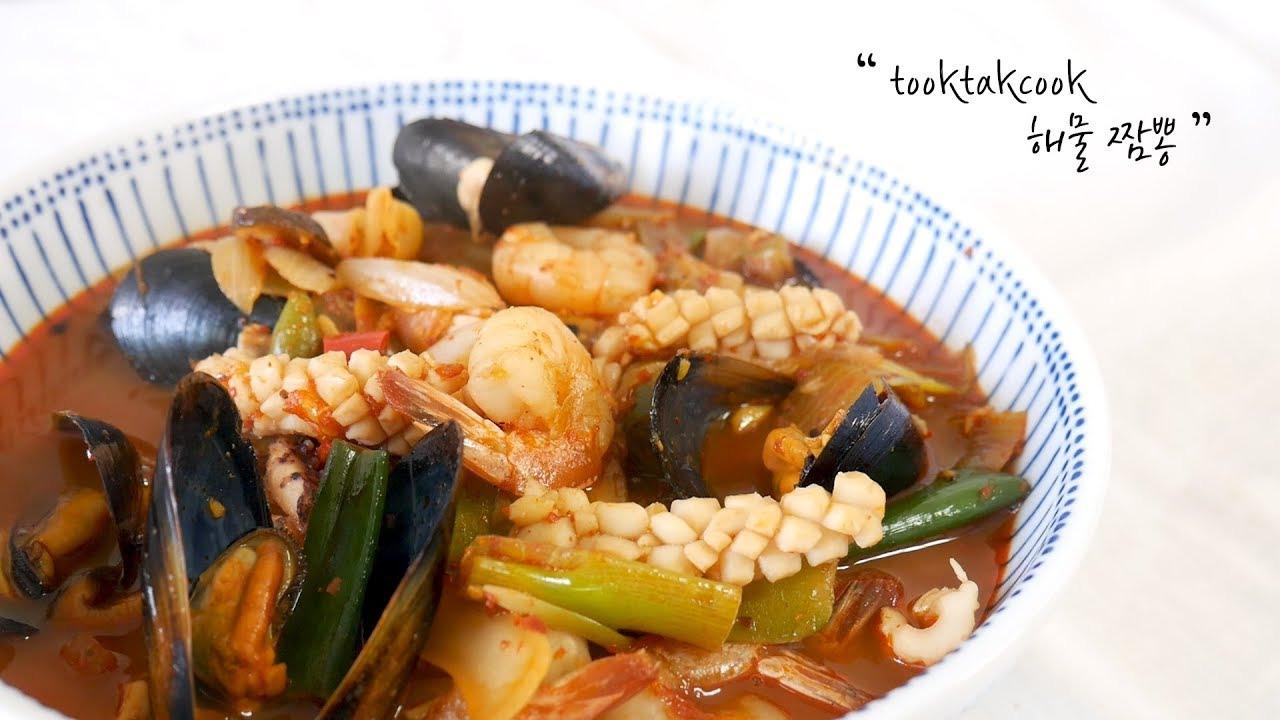
There are testimonies suggesting that the port city of Gunsan is likely the birthplace of red jjamppong. In the early 1970s, a Chinese chef in Gunsan developed red jjamppong by adding chili to the existing Choma Mian to counter its greasiness.
Present: A Symphony of Flavors and Various Variations
Modern jjamppong has evolved to emphasize the ‘refreshing’ taste derived from seafood. As its popularity has grown, various variations have emerged.
- Samsun Jjamppong (三鮮짬뽕): Originally meaning three precious ingredients from heaven, earth, and sea, it is now used as a marketing term to indicate ‘premium’ or ‘special,’ meaning it contains more abundant seafood like shrimp and squid.
- Spicy Jjamppong: This menu maximizes the core identity of spiciness, targeting enthusiasts seeking extreme heat by adding Cheongyang peppers and others.
Jajangmyeon vs Jjamppong: Differences in Localization Strategies
The evolution of jajangmyeon and jjamppong showcases the remarkable insights of Chinese chefs who understood the Korean market. The two dishes captured the Korean palate with opposing flavor strategies.
- Jajangmyeon’s Strategy: Sweetness and Abundance
- Maximized sweetness with caramelized Chunjang.
- Positioned as a cheap and hearty meal using American aid flour and onions.
- This strategy accurately tapped into the public’s desire for sweet and greasy food during times of hunger.
- Jjamppong’s Strategy: Spiciness and Refreshing Taste
- Created a spicy and refreshing flavor using red pepper powder and chili oil.
- Targeted the unique Korean food culture that seeks relief from stress and hangovers.
- This was a clever adaptation that continued the lineage of ‘spicy and hot’ broth dishes preferred by Koreans.
Conclusion: A Portrait of Korean Culture in Two Bowls
I also have vivid memories of eating jajangmyeon on graduation day. What do jajangmyeon and jjamppong mean to you? Through the histories of these two dishes, we can discover three key insights.
- Jajangmyeon is the ‘History of Sweetness.’ It became a cheap luxury and a nostalgic dish born from the innovation of a businessman meeting national economic policies.
- Jjamppong is the ‘History of Spiciness.’ It symbolizes intense comfort, completed by the fiery Korean palate, a product of complex East Asian exchanges.
- Both dishes are ‘Naturalized Korean Foods.’ They are dynamic dramas of migration and adaptation, born from the creative efforts of Chinese immigrants meeting modern Korean history.
Next time you visit a Chinese restaurant, why not recall the fascinating histories behind these dishes?
Evolution Timeline of Jajangmyeon and Jjamppong
| Period | Major Events | Evolution of Jajangmyeon/Jjamppong |
|---|---|---|
| Late 19th Century | Opening of Incheon Port, Influx of Shandong Immigrants | Introduction of Zha Jiang Mian, Choma Mian (Laborer Food) |
| Early 20th Century | Opening of restaurants like Gonghwachun | Settling into restaurant menus (maintaining original form) |
| Post-Liberation | Development of caramel Chunjang; flour aid | Jajangmyeon: Transformed into sweet and black |
| 1960-70s | Encouragement of mixed and snack foods; expansion of delivery culture | Jjamppong: Transformed into red and spicy |
| Modern Era | Diversification of dining culture | Cultural ritualization, menu segmentation |
References
- Yonhap News [New Book] What is the Origin of Jajangmyeon?… ‘Birth of Korean Chinese Cuisine’
- Outsourcing Times [CEO Column by Jeon Dae-gil] Jajangmyeon and Zha Jiang Mian (炸醬麵)
- Gokorea Changes More Delicious than the Original, Foods Koreanized
- Living Sense Korean Cuisine Completed, Jjamppong
- Seoul Economy [Books &] The Taste of the Continent, Localized to Be Eaten
- Center for Korean Studies Korean Chinese and the Koreanization of Jajangmyeon
- Encyclopedia of Korean Folklore Jajangmyeon
- Pulmuone Official Blog Intense Comparison Analysis!! ‘Chinese Zha Jiang Mian vs Korean Jajangmyeon’
- Joongang Daily [Cooking & Food] On Graduation and Moving Days, Why Do We Naturally Think of ‘Jajangmyeon’…
- Chosun Biz [History of Delicious Food] Jjamppong
- Local N Culture Jjamppong with Chili Powder Added to White Choma Mian