
Introduction: The Illusion of Prediction
Imagine planning the perfect summer vacation. You book your flights, reserve a hotel, and even check the weather forecast for the next ten days. You’ve predicted and controlled everything visible. However, you cannot foresee a sudden volcanic eruption in Iceland that cancels all flights in Europe, an unannounced airline strike, or a personal emergency. The predictable aspects of your plan were perfect, but it was the unpredictable parts that determined the overall experience. This is a microcosm of how the world operates.
This leads to a key paradox explored in Morgan Housel’s book ‘The Psychology of Money’. We are remarkably good at predicting that tomorrow will be much like today. We can reasonably accurately predict traffic patterns, quarterly earnings, and voter turnout. The problem is that history is driven not by the 99% of predictable events, but by the 1% of complete surprises. This is the paradox of prediction. We instinctively crave certainty and want to believe the world is a predictable and controllable place. Thus, people are more swayed by experts who promise certainty than by those who provide accurate information.
At this point, Nassim Taleb’s concept of the ‘Black Swan’ becomes a perfect metaphor for unpredictable events that change the game. A Black Swan is extremely rare but, once it appears, it delivers a tremendous shock and is rationalized afterward as if it were predictable all along. The real dangers are born not from what we can foresee but from the subtle gray areas of what we don’t even know we don’t know.
This article will take a journey through recent history to uncover this ‘invisible risk’. We will examine how moments of peak confidence about the future were completely overturned by unforeseen events. Through financial crises, technological revolutions, and global shocks, we will come to understand this recurring pattern.
Chapter 1: Cracks in the ‘Unsinkable Ship’: When Optimism Blinds Us
This chapter will show how overwhelming optimism and a focus on visible positive trends create a collective blindness to fatal structural flaws.
1.1 The Invisible Illness of the Asian Tiger (1997)
Predictable Future: Let’s picture South Korea in the mid-1990s. Known as the ‘Asian Tiger’ and experiencing the ‘Miracle on the Han River’, the economy was booming, conglomerates were expanding globally, and the country was on the verge of joining the ranks of developed nations. The prevailing belief at the time was that this rapid growth would last forever, with even rosy forecasts suggesting it would soon surpass Japan. This was the predictable future everyone saw.

Invisible Risk: However, the fatal flaws were invisible to most observers and were, in fact, a secondary effect of the boom itself. To fuel rapid growth, Korean companies and banks borrowed massive amounts of money from abroad. Crucially, this debt was mostly short-term foreign debt with repayment periods of less than one year. This created a massive maturity mismatch where long-term projects were funded with short-term loans. It was an invisible time bomb that could only withstand as long as foreign investors maintained their confidence. The essence of the problem lay in the management practices of conglomerates built on astronomical debts and the maturity structure mismatch of foreign assets and liabilities caused by universal financial companies.
Collapse: When the Thai baht collapsed in 1997, a wave of panic swept across Asia. Suddenly anxious foreign creditors refused to extend the maturities of the short-term loans they had given to Korea. In an instant, the ‘invisible’ risk became a reality. The country’s foreign reserves were depleted, leading to a national bankruptcy and an IMF bailout. The then-IMF president accurately pointed out that the starting point of the problem was the conglomerates built on astronomical debts like Kia, Jinro, and Hanbo.
The crisis of 1997 shows that the most fatal risks can be hidden behind growth. The confidence and optimism created by the success narrative of the ‘Asian Tiger’ fueled reckless borrowing that led to its downfall. The visible high GDP growth rate created a powerful narrative of success, which led to overconfidence that growth would never stop. This overconfidence encouraged companies to borrow more short-term foreign debt under the assumption that they could easily repay it with future profits. As long as trust was maintained, this structural vulnerability remained hidden, but once the external shock of the Thai crisis punctured the optimism, it turned into a fatal weakness that brought down the entire system.
1.2 The ‘Controllable’ Fire Burns the World (2008)
Predictable Future: The early 2000s were referred to as the ‘Great Moderation’, as the global economy appeared stable. Housing prices only went up, and financial innovations were believed to have dispersed risks, making the world safer. The world’s top financial experts were brimming with confidence. You could hear this confidence in the words of then-Chairman of the Federal Reserve, Ben Bernanke. In 2007, he asserted that the problems in the subprime mortgage market would be ‘contained’ and that he did not expect the issues to spread seriously to the rest of the economy or financial system.
Invisible Risk: The real risk was not the subprime mortgage loans themselves but the financial alchemy used to package them, namely Collateralized Debt Obligations (CDOs). Imagine a product that magically divides thousands of risky mortgages (with a high likelihood of default) into ‘safe (AAA-rated)’ pieces and ‘risky’ pieces. Theoretically, it was believed that diversification would make it safe because not all mortgages would default at once. But this was an illusion. The risks were not dispersed; they were cleverly hidden and concentrated within a system where no one knew who was holding the ticking time bomb. It was like mixing one excellent talent into a team of ten underperformers, leading to the illusion that the entire team was competent. Furthermore, institutions like AIG provided credit default swaps (CDS) on these toxic assets, leading financial institutions to take even more reckless bets.
Collapse: As U.S. housing prices began to fall, the ‘impossible’ happened. Waves of defaults swept across the nation. The entire foundation of the CDO structure collapsed. The ‘safe’ AAA-rated securities turned into worthless pieces of paper overnight. Because these CDOs had been sold worldwide, the ‘contained’ fire in the U.S. subprime market quickly turned into a wildfire that engulfed the globe. Lehman Brothers went bankrupt, and the global financial system froze. Central banks around the world had to lower interest rates to near zero to prevent a complete collapse.
The 2008 financial crisis demonstrated that complexity and opacity are perfect breeding grounds for invisible risks. The financial system did not become safer through innovation; it became so complex that no one could understand the true level of risk, resulting in a fragile system built on collective delusion. The visible goal of creating ‘safe’ high-yield investments was realized through securitization, particularly via CDOs. This process led to immense complexity, which in turn resulted in opacity. Credit rating agencies stamped these opaque products with a false sense of certainty, assigning them AAA ratings based on models that relied on a past where nationwide housing price declines had never occurred. The invisible risk was actually ‘correlation risk’. The models assumed that defaults would be individual events, but a nationwide decline in housing prices caused all loans to default simultaneously. This was the Black Swan.
Chapter 2: “This is a Toy”: When the Future Arrives Unannounced
This chapter explores how experts, judging new inventions by the standards of the existing world, completely miss the ‘invisible’ innovations that change paradigms.
2.1 A Phone Without a Keyboard (2007)
Predictable Future: Let’s think about the mobile phone market in 2007. The market was dominated by business devices with Nokia’s robust hardware and BlackBerry’s iconic physical keyboards. The consensus among experts was clear: a successful ‘smartphone’ must have a physical keyboard for email writing, 3G for fast data communication, and a replaceable battery. This was the established formula for success.
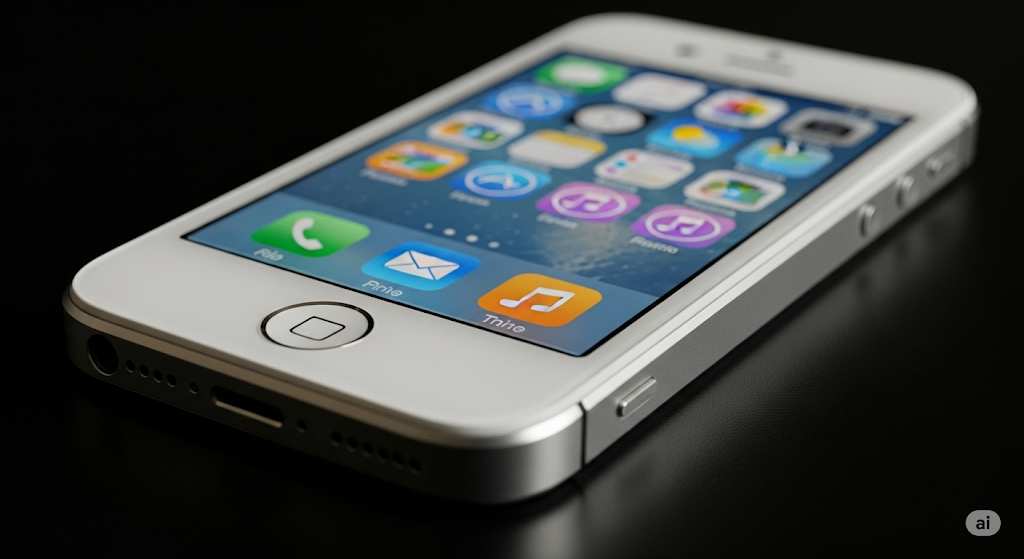
Skeptical Reactions: When Steve Jobs unveiled the first iPhone, expert reviews were highly skeptical and almost dismissive. They focused on everything the iPhone lacked according to existing rules. “No keyboard?”, “No 3G?”, “Battery life is a joke,”, “It’s too expensive,”, “This will fail” were among the harsh criticisms. These reviews are a perfect historical record of how experts judged the future by past standards. They viewed the iPhone as a flawed product that could not compete with BlackBerry in email functionality or Nokia in call quality.
Invisible Risk (to competitors): However, the true revolution was not the phone itself. It was the single icon on the screen that Jobs almost mentioned in passing: the App Store. This was the Black Swan. Critics evaluated the iPhone as a static piece of hardware. They failed to see that the iPhone was a gateway into a dynamic and ever-expanding ecosystem of software and services. The risk to Nokia and BlackBerry was not a better phone but a completely new business model that would render their business models obsolete overnight. The reason business scholars are excited about Apple is not because of products like the iPhone or iPad, but because of the ‘App Store’ that created a new mobile content market. Apple did not just sell software; it created a platform where millions of developers could build their businesses. Apple created a system where the world innovated for Apple without needing to innovate everything itself.
Aftermath: The growth of the App Store was explosive and unpredictable. It started with 500 apps in July 2008 and reached 10 million downloads in just three days, surpassing 100 million downloads in two months and 1 billion downloads in nine months. This exponential growth birthed the ‘app economy’, while Nokia and BlackBerry, still trying to create better keyboards, faded into history.
True technological disruption does not come from improving existing features but from completely changing the game. The risk was not in the visible product but in the invisible business model. Competitors focused on linear battles over hardware features like keyboard quality, call reception sensitivity, and battery life. The iPhone was evaluated by these metrics and deemed lacking by many experts. But the invisible factor was the App Store as a platform. This introduced non-linear and exponential elements into the equation. The value of the iPhone was not fixed at the point of purchase. As millions of third-party developers added new apps, its value grew daily. This created a powerful network effect. More users attracted more developers, which created more apps, which in turn attracted more users. Nokia and BlackBerry were not just competing with Apple; they were competing against an army of millions of developers. They were doomed to fail because while they fought over features, Apple had started a war over ecosystems.
Chapter 3: When Maps Become Useless: Shocks That Upend the Entire System
This chapter examines fundamental shocks that render existing worldviews useless.
3.1 An Empire Rotting from Within (Collapse of the Soviet Union)
Predictable Future: For 40 years, the world was defined by the Cold War. The Soviet Union was one of the two superpowers. Western analyses, including those from intelligence agencies like the CIA, overwhelmingly focused on visible measures of Soviet power: nuclear weapons, military size, tanks, and geopolitical influence. The predictable future was a continued stalemate or, at worst, military conflict.
Invisible Risk: The real threat to the Soviet Union was not external but internal. Decades of focusing solely on military spending in a centrally planned economy left the civilian economy hollow. Basic necessities were chronically in short supply, the system was rife with corruption, and beneath the surface of forced integration, deep ethnic tensions simmered. The empire was rotting from within.
Collapse: The collapse came with shocking speed. When Mikhail Gorbachev introduced the policies of glasnost (openness) and perestroika (reform), he did not fix the system but merely lifted the lid off a boiling pot. The authority of the state crumbled, republics declared independence, and in 1991, the once-powerful Soviet Union quietly vanished with a whimper rather than a bang. The world’s top experts were astonished. Even a CIA report from 1989 failed to grasp the speed and completeness of the impending collapse. They predicted instability but did not foresee disintegration. A 1998 report even incorrectly predicted that North Korea would collapse within five years, illustrating how difficult such predictions can be.
Focusing on visible and traditional measures of power, like military strength, can blind us to invisible non-traditional weaknesses such as economic and social cohesion. A system may appear strong on the outside but be suffering from a fatal illness on the inside. The dominant and visible measure of national power during the Cold War was military strength. Therefore, Western analyses and intelligence activities were heavily skewed toward counting tanks, missiles, and spies. This diverted attention from less visible metrics like economic health or social morale. The slow and gradual failure of the Soviet consumer economy was underestimated because it was not as dramatic as new missile developments. The invisible risk was that the legitimacy of the Soviet regime depended not on military power but on the promise of a better life, a promise that had utterly failed. Gorbachev’s reforms acted as a catalyst that made the previously invisible corruption visible, leading to a rapid loss of trust and system collapse that could not be stopped by military might.
3.2 The Pandemic and the Broken Chains (COVID-19)
Predictable Future: The world knew that pandemics posed a risk. The World Health Organization (WHO) and various governments had detailed pandemic preparedness plans. These plans were meticulously crafted based on decades of experience with existing pathogens like influenza, focusing on disease surveillance, vaccine development, and healthcare capacity. The risk of a pandemic was not a Black Swan; it was a known and predicted threat.
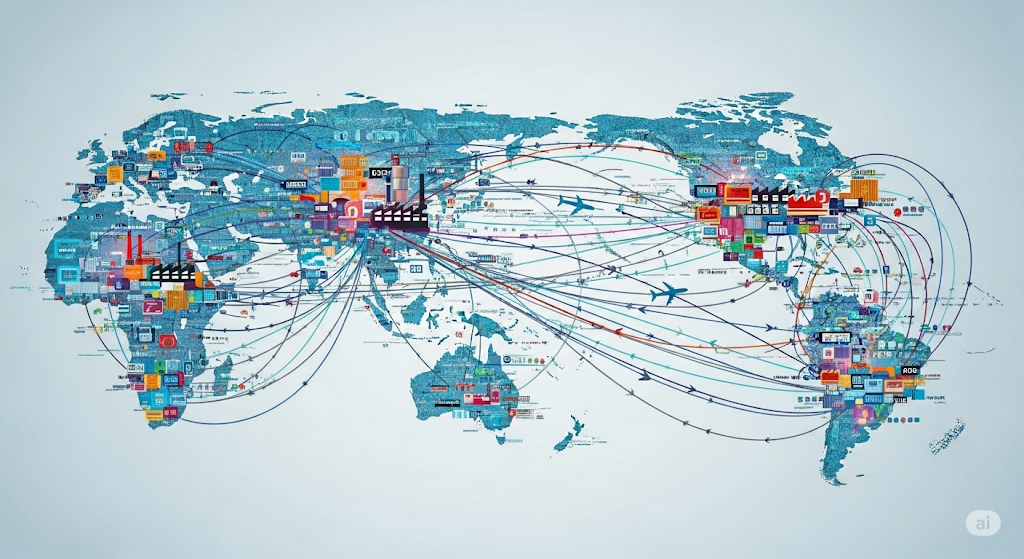
Invisible Risk: The Black Swan was not the virus itself but the collision of a new, highly contagious virus with a global economic system perfectly optimized for uninterrupted operation. The hidden vulnerability was the Just-In-Time (JIT) global supply chain. For decades, companies had pursued efficiency by minimizing inventory and sourcing parts from the cheapest locations, creating a fragile and hyper-connected web. If a single factory in Wuhan stopped, it could halt car production in Germany.
Collapse: When COVID-19 hit, the pandemic plans for influenza-type viruses were inadequate. But the real shock was the immediate and total paralysis of the global economy. The JIT system, designed with perfect predictability in mind, shattered. Suddenly, masks, computer chips, and car parts disappeared. The pursuit of efficiency eliminated all buffers and safety margins. This supply chain management strategy exposed tremendous weaknesses during the pandemic. The world learned that a system optimized for the best-case scenario was tragically unprepared for the worst-case scenario.
Extreme optimization for a predictable world leads to catastrophic failures in an unpredictable world. For the past 30 years, the visible and praised goal of modern business has been efficiency, represented by the JIT model. This model works perfectly in a stable and predictable world. However, the invisible consequence of this optimization was the removal of buffers, redundancies, and margins of safety. It became a vulnerable system with no safety margins. Pandemic plans existed, but they were mostly medical and public health documents that completely failed to integrate the secondary risks of how a pandemic would interact with this fragile economic structure. The shock of COVID-19 revealed this hidden vulnerability. The failures were not just a health crisis but a supply chain crisis, logistics crisis, and economic crisis due to the system’s complete lack of resilience to absorb shocks.
Conclusion: How to Live with the Invisible
Let’s revisit the common thread in all these stories. In 2008, we took financial stability for granted and became blind to the risks of complexity. In 2007, we took the mobile industry’s rules for granted and failed to see the risks of new business models. In 1991, we took military power as a measure for granted and overlooked the risks of internal decay. In 2020, we took the efficiency of global trade for granted and missed the risks of its fragility. The greatest risks never make the headlines. They lie within assumptions we don’t even realize we are making.
Lessons from the Past: The Gap Between Prediction and Reality
| Event | Predictable Future (Dominant View) | Invisible Risk (Black Swan) |
|---|---|---|
| 2008 Financial Crisis | “The housing market is stable, and subprime risks are contained.” | The complex and interconnected web of opaque derivatives (CDOs) spreading risk globally. |
| iPhone Launch (2007) | “A successful phone must have a physical keyboard and 3G.” | The App Store as a new business model and software ecosystem. |
| COVID-19 Pandemic | “Pandemics are known risks, and we have (influenza) preparedness plans.” | The collision of a hyper-efficient but fragile global supply chain with a novel virus. |
| Collapse of the Soviet Union | “The Soviet Union is a permanent military superpower defined by nuclear weapons.” | Fatal internal economic decay and simmering ethnic divisions. |
Our goal is not to better predict Black Swans. That is impossible. The goal is to build systems and lives that can survive when Black Swans strike. This means recognizing the importance of adaptability, humility, and balancing short-term and long-term thinking. Nassim Taleb’s investment strategy can serve as a metaphor for life: keep 90% of your assets in safe places and invest 10% in high-risk, high-reward ‘Black Swans’. This means laying a solid and resilient foundation while leaving room for unexpected opportunities and shocks.
The future will always be full of surprises. The most important question is not “What will happen next?” but “Can we survive when our predictions are wrong?” The answer lies in embracing humility, avoiding excessive optimization, and always, always leaving room for error. That is the only enduring lesson we can gain in a world filled with surprises, and it will continue to be so in the future.
Sources
- ['The Psychology of Money' Key Insights (Morgan Housel) -](https://brunch.co.kr/@designup/126)
- The Psychology of Money / Morgan Housel / Summary -
- [Book Review] The Psychology of Money_Morgan Housel/Summary -
- Nassim Nicholas Taleb ‘Black Swan’ -
- Black Swan Theory, Black Swan -
- The IMF and the East Asian Financial Crisis [Special Contribution] -
- 1997 Asian Financial Crisis -
- 1997 Foreign Exchange Crisis -
- 1997 Foreign Exchange Crisis (r1899 version) -
- Foreign Exchange Crisis (外換危機) -
- Federal Reserve Chairman Ben Bernanke’s remarks - Mar. 28, 2007 -
- Federal Reserve Board Chairman Ben Bernanke’s Greatest Hits -
- The Housing Market and Subprime Lending -
- Collateralized Debt Obligation (CDO): What It Is and How It Works -
- Collateralized debt obligation: Explained |
- What Are Collateralized Debt Obligations (CDO)? -
- Collateralized debt obligation -
- What Is a Collateralized Debt Obligation (CDO)? -
- Collateralized Debt Obligation (CDO) -
- What are MBS, CDO, CDS? -
- Subprime Mortgage Crisis -
- Subprime Mortgage Crisis (Subprime Mortgage Crisis) -
- IV. Current Status of the Financial Crisis and Policy Responses -
- The Return of Nokia and BlackBerry, Will It Work? -
- ‘Email in Your Hand’ Beloved BlackBerry, How Did It Fall? -
- Snap Judgments! The Early iPhone Skepticism -
- 10 Years Later: My Original (and Epic) Apple iPhone Review -
- ‘The iPhone will fail’ and other hot takes on the original iPhone -
- Apple iPhone review: Apple iPhone -
- [Professor Kim Byung-do’s Management Issues] Apple, Success through Technological Innovation?… In Fact, Business … -
- App Store - Choosing a Business Model -
- Proposal for Redefining Platform Products and Business Models -
- Hardware also spreads the App Store business model -
- App Store Developer Revenue Generation Guide: The Profit Secrets of the iOS Ecosystem -
- Complete Analysis of the Apple Ecosystem: From Platform Composition to the Strategic Role of Third Parties and the App Store -
- Analysis of the Operating Principles of the Apple Ecosystem and the Strategic Importance of the App Store -
- Types, Categories, and Revenue Models of Platforms You Should Know Before Developing a Platform -
- A Global Perspective on the Apple App Store Ecosystem -
- The App Store turns 10 -
- Ten billion downloads and counting: The history of Apple’s App Store, and its all-time top apps |
- Pondering the Impact of the App Store at 10 -
- 10 Years of App Store: A Timeline of Changes -
- App Market Growth and Saturation: Key Statistics | 2025 -
- The Nuclear Superpower Soviet Union Collapsed Due to Economic Problems -
- Causes of the Collapse of the Soviet Union -
- Collapse of the Soviet Union (r961 version) -
- [The Scent of Books] Two Years Before the Collapse of the Soviet Union, the U.S. CIA Report -
- ‘KBS Special’ CIA Report Predicting North Korean Collapse Broadcast -
- [Health Industry Brief Vol. 363] Current Status and Suggestions for Digital Health Introduced in Response to the Global COVID-19 Pandemic -
- KCDC Conducts Safety Training, Preparing for the Next Pandemic! -
- THE WHO PANDEMIC PHASES - Pandemic Influenza Preparedness and Response -
- National Pandemic Strategy -
- Pandemic predictions and preparations prior to the COVID-19 pandemic -
- Pandemic prevention, preparedness and response agreement -
- Looking Forward: How is the WHO Strengthening Pandemic Preparedness Measures? -
- There Was a Pandemic Strategy and Plan -
- Change in Supply Chain Paradigm: Just In Time → Just In Case -
- Does Just-in-Case Supply Chain Still Apply? -
- Global Institutions Analyze the Impact of COVID-19 on the Automotive Industry -
- What is a Just-In-Time (JIT) Inventory System and What Are Its Benefits? -
- Changes in Global Supply Chain Due to COVID-19 -
- The Impact of Global Supply Chain Shocks and Uncertainties During the COVID-19 Pandemic on Prices and Macroeconomics -
- Future Global Supply Chain Risks and Implications | Domestic Research Materials |