
‘My OTT subscription budget is 50,000 won this month.’ Even those who don’t keep a household ledger have these mental compartments.
Behavioral economics calls this mental accounting.
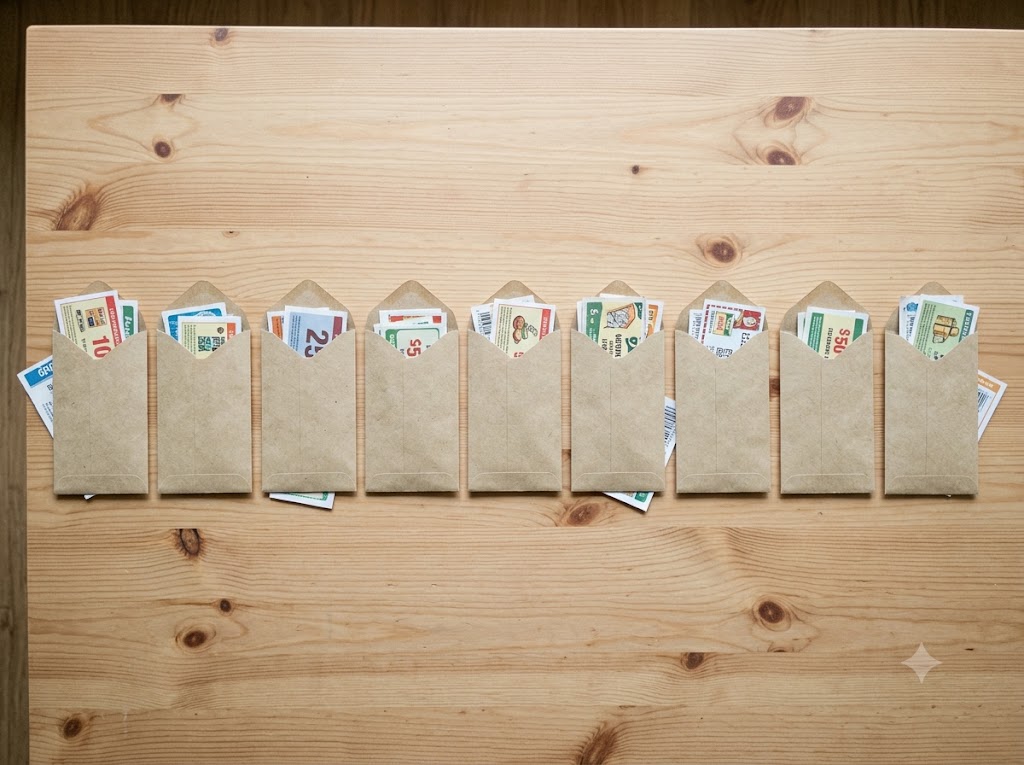
Those who received 100 coupons in a single envelope used an average of 42.62, while those who received them in 10 separate envelopes used only 16.44.
Mental accounting, how does your mental ledger work?
Mental accounting is the phenomenon where we treat money as a single pool physically but manage it in various accounts within our minds.
Just as we create multiple bank accounts for different purposes, we mentally draw up compartments for food, transportation, tuition, and savings.
This concept was named and formalized by economist Richard Thaler in a 1985 paper.
The hallmark of this mental ledger is that it is highly flexible. You can create, delete, or move accounts as you please. For example, “I’m short on clothing money this month, so I’ll take it from the dining-out budget.” This flexibility is a double-edged sword.
Since the criteria for moving money between accounts depend on your mood at the moment, it’s far too easy to pull from one bucket when another runs dry. While convenient for adjustments, this same reason leads to overspending or failing to spend when necessary.
Interestingly, despite moving money around, there is a strange sense of resistance when it comes to breaking an account once it has been named.
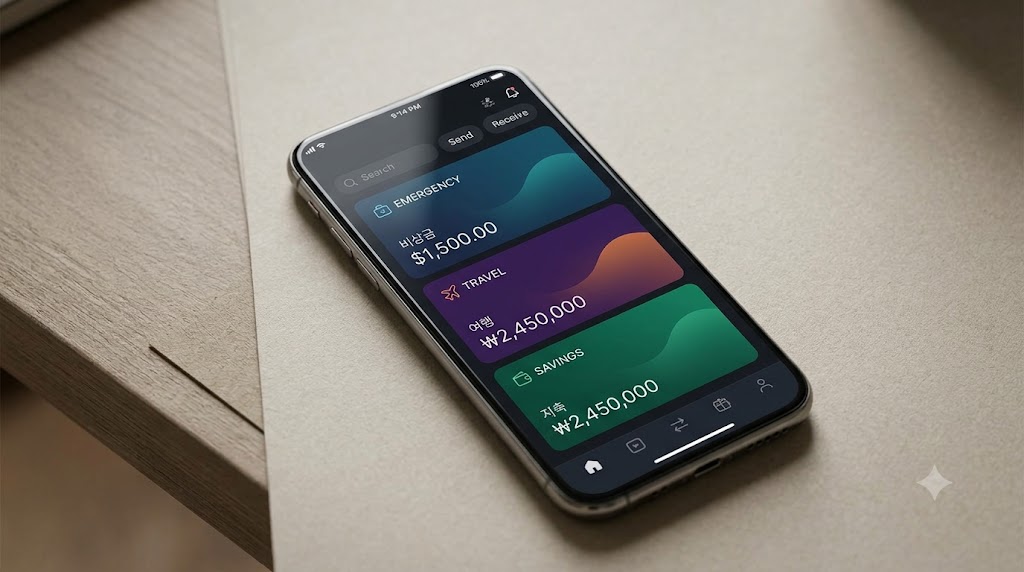
Think about the uneasy feeling you get when you have to spend money saved in your ‘Travel Savings’ fund for daily living expenses. It’s the same money in your bank balance, but it feels uncomfortable to peel off the ‘Travel’ label attached to it.
A mental accounting experiment based on the number of envelopes
There is an experiment that demonstrates just how strong this resistance is.
Amar Cheema and Dilip Soman from the University of Toronto studied how many coupons participants used after giving them 100 coupons in three different ways. The study was published in a marketing journal in 2008.
Mental accounting experiment: Average usage of 100 coupons based on the number of envelopes
| Packaging Method | Coupons per Envelope | Average Usage |
|---|---|---|
| 1 Envelope | 100 | 42.62 |
| 4 Envelopes | 25 | 25.50 |
| 10 Envelopes | 10 | 16.44 |
Even though the number of coupons was the same at 100, the more envelopes there were, the less they were used. The difference between the group that received one envelope and the group that received ten is more than 2.5 times. They didn’t receive more or fewer coupons; only the packaging changed. When divided into 4 envelopes, usage already decreased by about 40%, and when divided into 10, it dropped significantly again. It is worth noting that the effect compounds as the number of compartments increases.
Why breaking a mental accounting bucket leads to the ‘what the hell’ effect
Why does this difference occur?
People perceive each envelope as a separate account. And once an account is created, they want to protect it as much as possible. Opening an envelope means breaking an account, which makes you hesitate before doing so.
However, once an account is broken, the story changes.
You think, ‘Whatever, let’s just use it.’
If you open one envelope containing 100 coupons, the entire account collapses at once, leading to a spree.
It’s a different story with ten envelopes. You might open and use one or two, but you will hesitate again before the remaining ones. Each envelope acts as a small threshold, and the more envelopes you have, the more thresholds you have to cross.
I feel this point is similar to stories about dieting. The structure is identical to the psychology of giving up on the rest of the day’s meals the moment you feel you’ve ‘ruined’ your diet. Ultimately, the size of the account matters. If the account is large, the amount lost when it collapses is large; if the account is small, the damage is contained within that specific compartment.
First salary and windfall gains, mental accounting based on the source of money
Mental accounting also considers where the money came from.
First salaries are often used to buy gifts for parents or long-lasting souvenirs. Because it carries the meaning of being the first money earned through work, it feels uncomfortable to spend it recklessly.
On the other side are windfall gains. This is money that comes unexpectedly. Year-end tax refunds or unforeseen side income fall into this category.
Because such money is labeled as ‘free money,’ it is much more easily spent on lottery tickets or expensive items you would usually hesitate to buy. Even though the numbers for your salary and your tax refund look identical in your bank account, we treat them differently.
Why does this happen?
Your salary is already allocated to accounts like rent, food, and credit card bills before it even arrives.
On the other hand, windfall money arrives without belonging to any account. Since it floats like ownerless money, it’s easy to think of it as ‘money I didn’t originally have,’ which lowers the threshold for spending.
If you use this in reverse, you can find a strategy. If you transfer your tax refund to a savings account or emergency fund the day it arrives and re-label it, the ‘free money’ instantly turns into an ‘account too precious to break.’
Marketing mental accounting by splitting a 3% discount
Companies are well aware of this psychology.
Online shopping malls often show a ‘3% discount’ not as one coupon, but as ‘Member level discount 1% + Coupon 1% + Reward points 1%.’ The result is the same 3%, but it feels like receiving three separate benefits. This is because consumers feel each discount as a gain from a different account. This is why several small discounts often feel more attractive than one large one.
Splitting accounts is also used to rationalize expensive purchases.
When a 200,000 won blouse feels burdensome, the seller might suggest:
Wear it layered under a dress on Monday, under a jacket on Tuesday, and as a point piece over a sweatshirt on Wednesday. Then, without realizing it, the consumer calculates the cost-effectiveness as ‘30,000 won for work, 30,000 won for dates, 30,000 won for casual wear.’
The price remains 200,000 won, but the receipt in your heart is written as a much more reasonable purchase.
How to make your mental ledger work for you
Since mental accounting is a habit you can’t eliminate, it’s better to turn it to your advantage.
In saving, splitting is powerful. If you have 1 million won, you are less likely to spend it if you divide it into multiple accounts—like 200,000, 300,000, and 500,000 won—rather than putting it all in one. Following the same principle as the 10-envelope experiment, each account creates a threshold. If you name your accounts ‘Emergency’ or ‘Travel,’ you can borrow the power of those labels.
Before spending, try putting the split parts back together.
Asking questions like, ‘Are these discounts really separate benefits?’ or ‘Will I really wear this clothes for this many purposes?’ helps return the split accounts back to one.
Finally, intangible money like mobile payments, cryptocurrency, and stocks is abstract, so there is less psychological pain when spending it.
There is a clear sensory difference between handing over cash, swiping a card, and paying with a phone. After paying digitally, a habit of checking receipts and usage history can help recover the realization that you have ‘spent real money.’
The next time you resolve that ‘coffee costs are limited to 50,000 won this month,’ I hope you remember that it’s not just a budget, but the act of creating an envelope.
References
- [Park Jung-ho's Economic Stories in Daily Life] Mental Ledgers and Spending Behavior
- Mental Accounting
- The Effect of Partitions on Controlling Consumption
- Mental accounting matters
- Mental Accounting and decision making: a systematic literature review
- What is mental accounting and its real-world impact?
- Why do we think less about some purchases than others?
- How Mental Accounting Shapes Our Financial Choices
- Mental accounting explained: why you keep money in separate mental buckets