
It seemed strange to ship liquid hydrogen by sea
Every time the hydrogen economy was discussed, one point always bothered me. To turn hydrogen into a liquid, it must be cooled to -253°C. I questioned whether it was technically feasible to maintain such a cryogenic state during a maritime voyage lasting several weeks. In reality, I found that due to current shipbuilding technology, this method is neither economically viable nor stable. Instead, commercialization relies on a different detour: rather than shipping hydrogen as-is, it is converted into a completely different substance for transport.
That substance is ammonia.
I thought the rise of EVs would distance us from the Middle East
I believed that as internal combustion engine vehicles decreased and electric vehicles increased, the demand for crude oil would drop, naturally loosening the relationship between South Korea and the Middle East. This is especially true as Chinese EVs are rapidly gaining ground. However, when synthesizing various analyses, the narrative flows in the opposite direction. As the fossil fuel axis disappears and a new clean energy axis takes its place, many experts predict that the ties between the two regions will actually grow stronger. Since this contradicts my initial expectations, I had to take a closer look.
The Middle East’s two cards: Sunshine and depleted oil fields
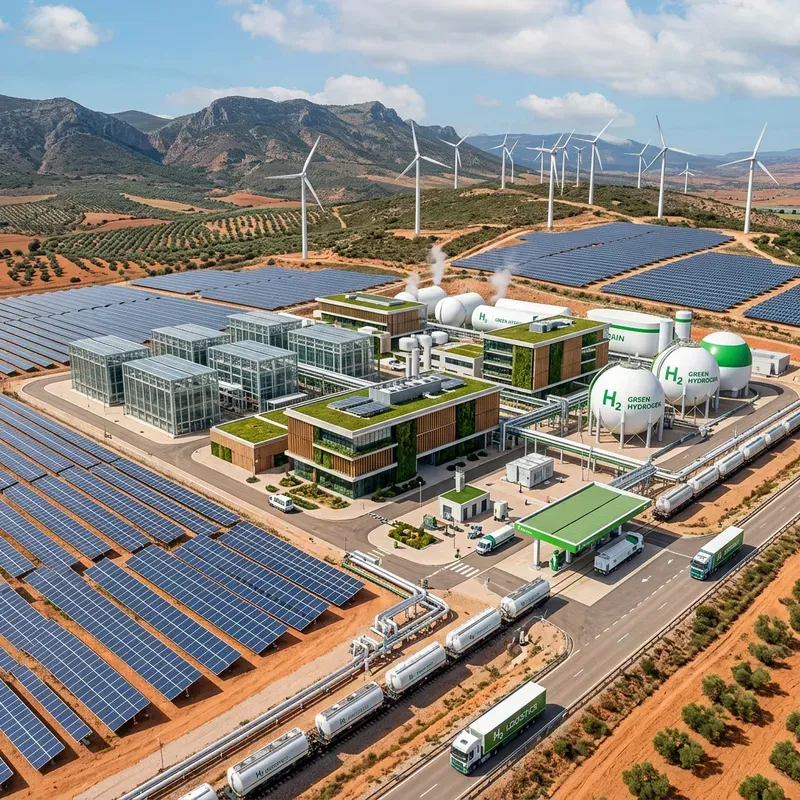
With overwhelming annual sunlight, the Middle East is optimized for solar power generation. Furthermore, the region possesses depleted oil fields that have already been tapped, which provide the perfect geological conditions for Carbon Capture and Storage (CCS). By generating electricity via solar power, using that electricity to split water into hydrogen (green hydrogen), and burying the carbon generated during natural gas-based hydrogen production into these depleted fields (blue hydrogen), the region creates the conditions to mass-produce clean hydrogen at the lowest cost in the world.
South Korea is in the opposite position. Because the country is small and mountainous, calculations show that even if solar panels were installed across the entire nation, they could only cover about 15% of the country’s total energy demand. To actually run a hydrogen economy, importing clean energy in large quantities and in a stable manner from abroad is the only way. The Middle East is a place that can produce it; South Korea is a place that cannot. This asymmetry becomes the very reason for a new partnership.
Convert to ammonia, transport, and convert back to hydrogen
This is the detour that has emerged: clean hydrogen produced in the Middle East is combined with nitrogen to synthesize liquid ammonia. Ammonia can remain in a liquid state even in near-room temperature conditions, allowing it to be transported using existing standard chemical tankers. This means there is no need to develop new cryogenic storage facilities. Once the ammonia arrives in South Korea, it is broken down in precision chemical plants and converted back into hydrogen.
While it sounds simple, this is ultimately a detour strategy: “Hydrogen is hard to move, so change it into an easier form, then change it back.” While it may seem inefficient, the consensus is that this is the most realistic answer at the current level of technology. The logic is that improving the chemical processes for synthesizing and decomposing ammonia is far faster for commercialization than building new liquid hydrogen carriers.
Visualizing the flow
Since following the steps through text alone can be confusing, I have organized the supply chain flow into a diagram.
Green hydrogen vs. blue hydrogen: What’s the difference?
It is easy to get confused between green and blue hydrogen. Green hydrogen is extracted by electrolyzing water with electricity generated from renewable sources like solar or wind power. It produces almost no carbon during production. Blue hydrogen is extracted by reforming natural gas, but the carbon dioxide generated in this process is captured and buried underground rather than being released into the atmosphere. While not completely carbon-free, it is much cleaner than traditional fossil-fuel-based hydrogen (gray hydrogen). The Middle East’s advantage lies in possessing both: they can produce green hydrogen via solar power and blue hydrogen via CCS using depleted oil fields, both at a low cost.
We must also address the issue of production costs. Currently, the production cost of clean hydrogen is still higher than that of fossil-fuel-based hydrogen, and how quickly this gap narrows will determine the speed of commercialization. The reason domestic companies are preemptively securing contracts—such as POSCO International’s long-term ammonia import agreement or the hydrogen/ammonia business initiatives of SK affiliates—can be read as a move to secure a spot in the supply chain before costs drop further. The bottom line is that price is the key.
Korea isn’t the only country in line
It is only fair to point out that South Korea is not the only country eyeing this market. Japan is pursuing multiple contracts for importing clean hydrogen from the Middle East and Australia, and European countries, including Germany, are rushing to cooperate with the UAE and Saudi Arabia on green hydrogen. Everyone faces the same problem of being unable to achieve energy self-sufficiency, which makes it look like many nations are lining up for the Middle East’s production capacity. Even if South Korea has an edge in precision chemical infrastructure and existing trust, it is difficult to see this competition easing. It is becoming more of a race to see who can sign large-scale long-term contracts and complete port and plant infrastructure first.
Beyond converting back to hydrogen, there’s direct combustion
Ammonia’s utility isn’t limited to being converted back into hydrogen. One method recently discussed in the domestic power generation industry is ‘co-firing,’ where coal and ammonia are burned together in coal-fired power plants. This method reduces carbon emissions by using ammonia as a fuel without necessarily converting it back into hydrogen, and it is considered a transitional alternative because it can be applied without significant changes to existing power generation facilities. Until the infrastructure for hydrogen reconversion is complete, this co-firing method may serve as a bridge to create early demand for ammonia.
So, what’s next for the fossil fuel alliance?
Once this structure is complete, South Korea’s role will shift from refining technology that turns low-cost crude oil into high-value petroleum products to precision chemical technology that turns ammonia back into hydrogen. The Middle East’s role will move from crude oil supply to supplying clean energy based on solar power and CCS. The nature of the relationship itself changes from an ‘alliance to buy and sell crude oil’ to an ‘alliance to jointly operate a clean energy supply chain.’
However, how quickly and at what scale this will be realized remains an open question. The completion of this picture will depend on the speed of securing ammonia carriers, the conversion costs of domestic precision chemical plants, and above all, how much the production costs of green and blue hydrogen actually fall. At this stage, it is cautious to say with certainty what will happen in a few years. However, the direction itself, at least based on the data currently available, seems quite clear.
Looking at the history of the refining industry, South Korea has survived for half a century on the ability to import raw materials cheaply, process them precisely, and resell them. The skills required in the hydrogen/ammonia value chain are essentially of a similar nature. Precision chemical processes of importing in one form and converting back to the required form. As crude oil turns into hydrogen and refineries turn into chemical plants, the essence of what Korea has done well doesn’t seem to have changed much. Of course, this is close to a conjecture at this point, and we will have to wait a few more years to see if it actually plays out that way.
One thing is certain: this transition will not be completed by a unilateral decision from either side. Even if the Middle East produces clean hydrogen as cheaply as possible, it is useless if there is no infrastructure to receive and convert it; conversely, no matter how much precision chemical technology South Korea possesses, it is useless if it cannot stably secure the raw materials. Ultimately, this future is a picture that can only be completed when both regions continue to align their respective roles, and that is why the initial assumption that ’the relationship will cool as EVs increase’ feels less persuasive now.
References
- Analysis of Middle East energy transition by Professor Park Hyun-do, Sogang University Euro-MENA Institute
- UAE Government 2050 Energy Strategy and Post-Oil Roadmap
- International Energy Agency (IEA) Hydrogen and Low-Carbon Ammonia Report
- Korea Institute of Energy Research (KIER) Hydrogen/Ammonia Supply Chain Research Data
- Ministry of Trade, Industry and Energy Hydrogen Economy Activation Roadmap
- Korea Gas Corporation (KOGAS) Clean Hydrogen Generation and Introduction Plan
- SK Innovation/SK Gas Ammonia & Hydrogen Business Presentation Materials
- POSCO International Ammonia Import Contract Disclosure
- Korea National Oil Corporation (KNOC) Renewable Energy Cooperation Status
- Saudi Aramco & ADNOC Blue Hydrogen & CCS Project Data
- Korea International Trade Association (KITA) Hydrogen/Ammonia Trade Statistics
- International Renewable Energy Agency (IRENA) Gulf Region Solar Potential Data
- Korean Register (KR) Ammonia Carrier Technical Standards
- Ministry of Environment Carbon Neutrality Scenario Data
- Korea Energy Economics Institute (KEEI) Middle East Clean Energy Cooperation Outlook Report