
“You can tell a person by their shoes”
- How shoes reflected the ancient worldview of the afterlife
- How footwear in the Joseon Dynasty represented a strict class order
- The revolutionary meaning of rubber shoes in Korean society
The history of Korean footwear is a grand narrative that goes beyond mere protection, encapsulating the identity, life, and spirit of the times of its wearers. In the Joseon era, the encounter between a scholar wearing delicate taesahye (太史鞋) and a farmer in muddy jipsin (짚신) silently illustrated the gap in social status. Thus, shoes became the most evident symbols of the wearer’s identity.
This article traces the footprints of our history, from the golden shoes of Silla to the class system of Joseon, and finally to the rubber shoes that embraced everyone’s feet equally.
Three Kingdoms: Golden Steps into the Afterlife
The most splendid shoes in our history were made not for the living but for the dead. The gold and bronze shoes (金銅神發) discovered in royal tombs of the Three Kingdoms served as sacred ritual items, illuminating the path for souls to the afterlife.
Symbol of the Dead: Gold and Bronze Shoes
About 56 gold and bronze shoes unearthed so far have only been found in the tombs of the highest elite. The most notable feature of these shoes is that they were made so that one could not actually walk in them. The thin gold and bronze plates had long nails densely embedded, making walking impossible.
This clearly shows that the gold and bronze shoes were pure symbols and funerary items meant for the journey after death, not for life on earth. The fact that they were only found in the tombs of supreme rulers proves that they symbolized the absolute power that wished for gold and exquisite craftsmanship to continue into the afterlife.
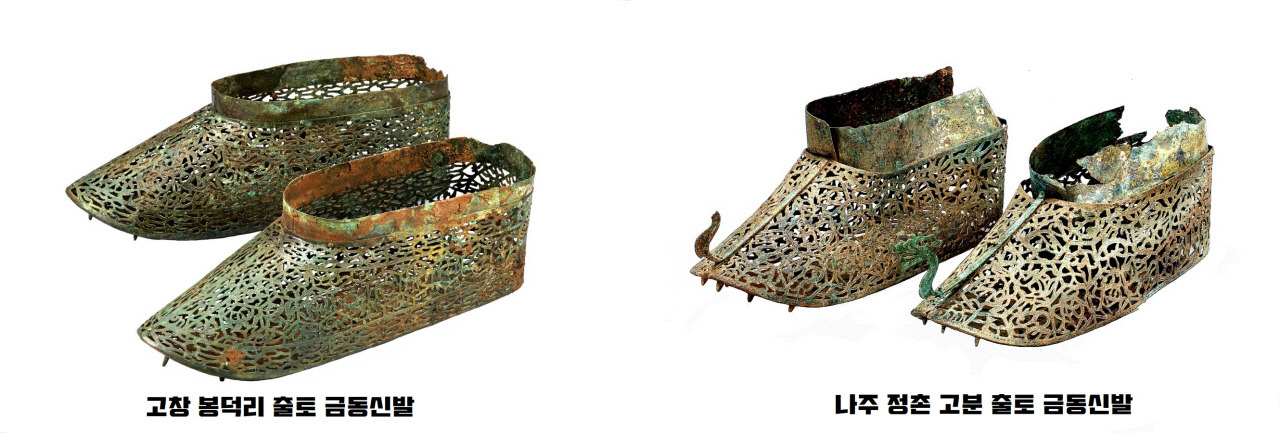
The Cosmic Map for Souls: Symbolism of Patterns
The patterns on the surface of the gold and bronze shoes were not mere decorations but a cosmic map for the soul. Patterns resembling turtle shells (龜甲文), dragons (龍), phoenixes (鳳凰), and lotus flowers were intricately engraved.
The combination of these symbols acted as a ‘cosmic navigation’ guiding the soul on its journey.
- Hexagonal Pattern: Longevity and immortality, order of the universe
- Lotus: Purity and rebirth (Buddhist meaning)
- Bird: Messenger of the soul connecting the earthly and celestial realms
- Dragon and Phoenix: Absolute authority of the king
Thus, the gold and bronze shoes were powerful talismans proclaiming that the soul of the deceased was destined to be reborn into eternal life under the protection of sacred animals.
Goryeo and Joseon: A Society Divided by Footwear
While the shoes of the Three Kingdoms looked towards the afterlife, those of Goryeo and Joseon reflected the order of the present world. Especially during the Joseon Dynasty, where Confucian class systems dominated society, shoes became one of the clearest dress codes defining an individual’s social position.
Shoes of the Ruling Class: Symbols of Authority and Leisure
- Hwa (靴): A long boot form primarily worn by male officials with their official attire. It was a symbol of state-sanctioned power.
- Taesahye (太史鞋): Low-cut shoes made of leather or silk, with elegant curves and decorations clearly indicating that the wearer belonged to the ruling class, not engaged in manual labor. I was quite surprised to learn that a pair of taesahye at that time cost as much as a sack of rice.
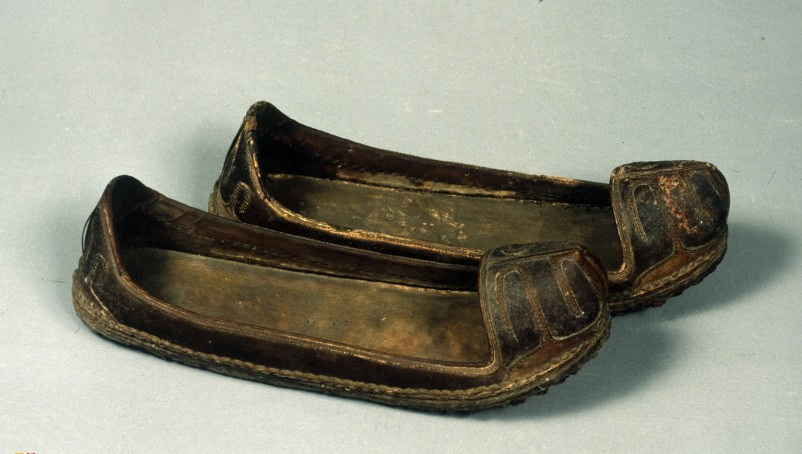
- Danghye (唐鞋) and Unhye (雲鞋): ‘Flower shoes’ for noble women, made from the finest silk with elaborate embroidery. Their delicate and impractical forms showed that their feet were not for transportation but for admiration, resembling a piece of art rather than footwear. This hints at how restricted women’s lives were at that time.
Shoes of the Common People: Tools for Survival and Practicality
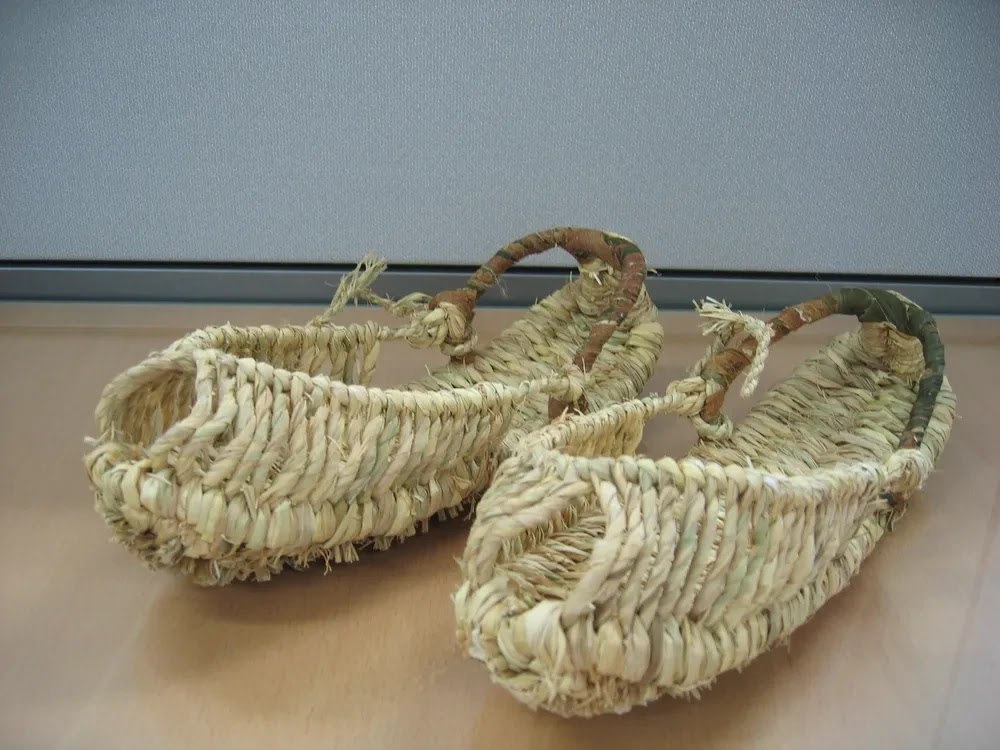
- Jipsin (짚신): The most common shoes made from rice straw, which were not durable and lasted only about a month. They represented the harsh economic reality of the common people.
- Mituri: Made from hemp or hanji (Korean paper), sturdier than jipsin, primarily worn by the middle class or travelers.
- Namaksin: Shoes made from carved logs for rainy days. However, the nickname ’ttalkkakbari’ derived from the sound they made, became a term for poor scholars who could not afford leather shoes and had to wear namaksin even on sunny days.
Comparison of Shoes by Class in the Joseon Dynasty
| Shoe Name | Main Material | Main Wearer and Situation |
|---|---|---|
| Hwa (靴) | Leather, Silk | Male Officials (when wearing official attire) |
| Taesahye (太史鞋) | Leather, Silk | Male Yangban (in everyday wear) |
| Danghye/Unhye (唐鞋/雲鞋) | Silk, Leather | Female Yangban |
| Mituri (미투리) | Hemp, Paper String | Middle Class, Travelers |
| Jipsin (짚신) | Rice Straw | Commoners, Farmers, Laborers |
| Namaksin (나막신) | Wood | All Classes (on rainy days) |
The Rubber Shoe Revolution: Modernization and the Democratization of Footwear
The most dramatic change in the history of Korean footwear was the emergence of ‘rubber shoes.’ These black, sturdy shoes instantly dismantled the class order that had persisted for centuries. If you lived in an era where only jipsin were worn, how would you have felt the first time you saw rubber shoes?
The era of rubber shoes began with the establishment of the Daeryuk Rubber Company in 1919. Initially a luxury item, their practicality—being durable and waterproof—made them immensely popular as symbols of modernity.
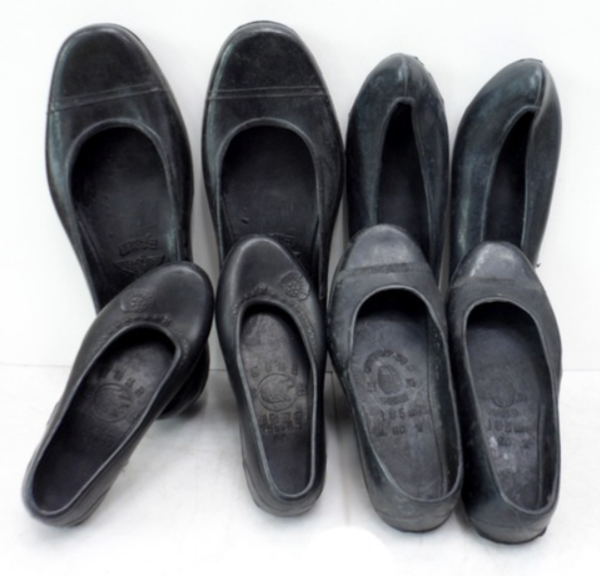
As mass production lowered prices, rubber shoes became the standard footwear for the entire nation. This brought about a tremendous ‘democratization’ effect in Korean society. The era when one could tell social status just by looking at shoes was over. Footwear that once solidified social classes became a tool for their dismantling.
Moreover, the idiom “to wear rubber shoes upside down” symbolizes the changes in relationships while waiting for military service, reflecting a collective experience and culture of a bygone era.
Conclusion
Shoes are a mirror reflecting the times. The history of Korean footwear vividly illustrates the path our people have walked.
- Gold and Bronze Shoes of the Three Kingdoms: Embodying aspirations for the afterlife and the authority of rulers.
- Shoes of the Joseon Dynasty: Taesahye and jipsin defined the strict order of the class society from the ground up.
- Modern Rubber Shoes: Breaking down class barriers and instilling the value of equality in everyone’s feet.
Thus, this small object at the tips of our feet serves as a precious historical record that compressively shows the thoughts, structures, and changes of an era. Next time you visit a museum, why not take a moment to glance at the old shoes quietly holding their place among the splendid artifacts? You might discover the true history of our ancestors, who walked step by step on this earth.