

“Isn’t Google Finished?”
In May 2025, tech news headlines were dominated by the shocking news: “Google Search Market Share Collapses Below 90%”.
Elon Musk boasted that AI would replace search, and even Jensen Huang of Nvidia admitted to using ‘Perplexity’ instead of Google.
For those accustomed to the clear-cut answers provided by generative AI like ChatGPT, Google, which merely throws links at you, may have seemed like an old, ailing dinosaur.
However, even as we discuss “Google’s Demise” on our smartphone screens,
a counterattack that defies the laws of physics is being prepared deep within Google’s data centers.
The apparent drop in market share is merely the tip of the iceberg.
Beneath the surface lies a massive entity comprising overwhelming hardware, revolutionary algorithms, and unparalleled data.
Let’s delve into the abyss to understand why Google’s crisis is merely an ‘illusion’ and what hidden trump cards they hold.
1. Hardware Rebellion: Why Doesn’t Google Use Nvidia?
The AI war is essentially a ‘chip’ war.
Currently, most companies are lining up to acquire Nvidia’s GPUs.
But Google is different. They have rejected the beaten path and forged their own.
GPUs: ‘SUVs’, TPUs: ‘F1 Racing Cars’
Nvidia’s GPUs are excellent.
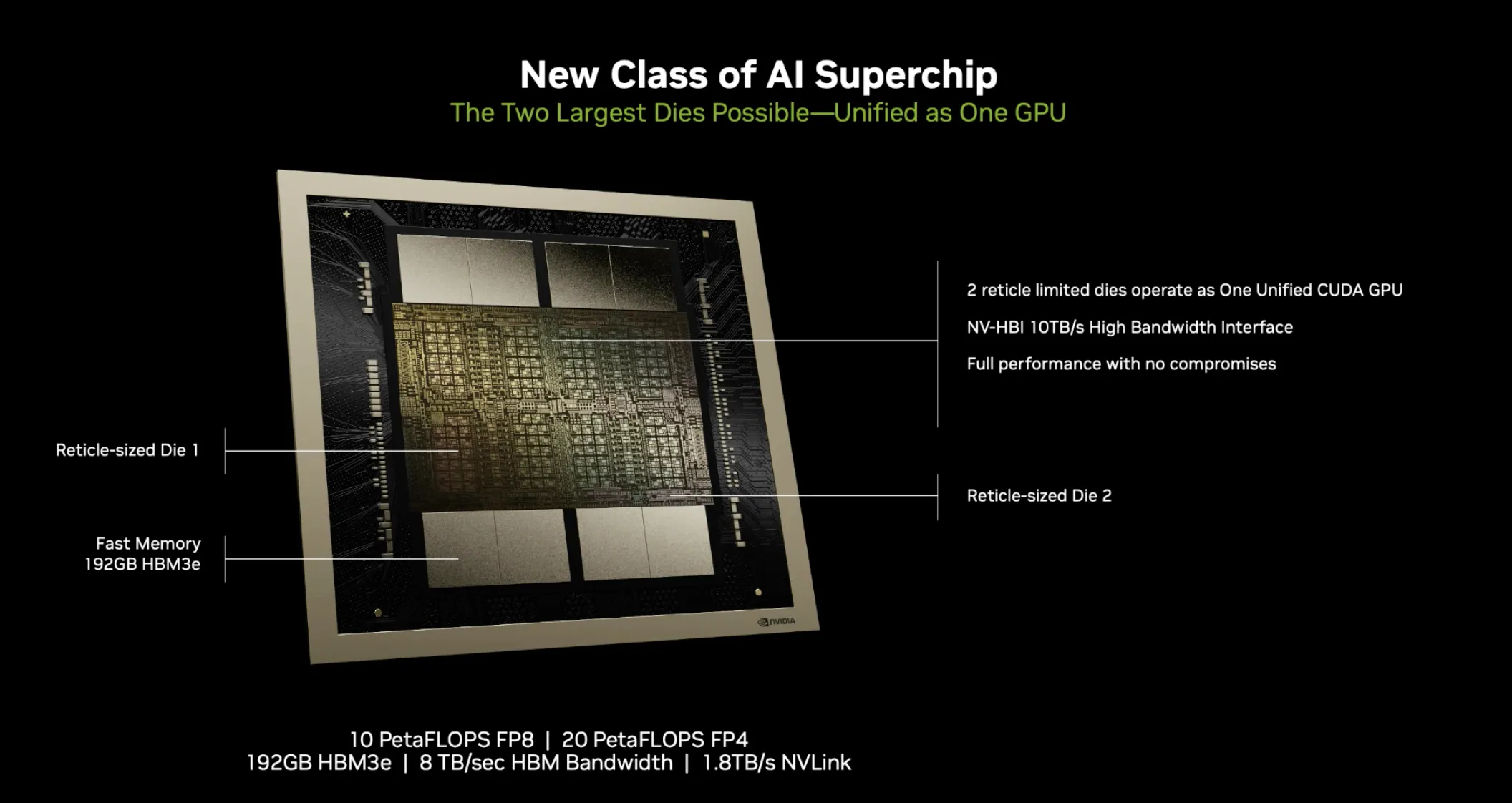
They can handle gaming, graphic design, and AI computations.
They are like high-end SUVs that can drive on both unpaved roads and highways – highly versatile.
However, 99% of AI computation, especially that required for a search engine, involves ‘Matrix Multiplication’.
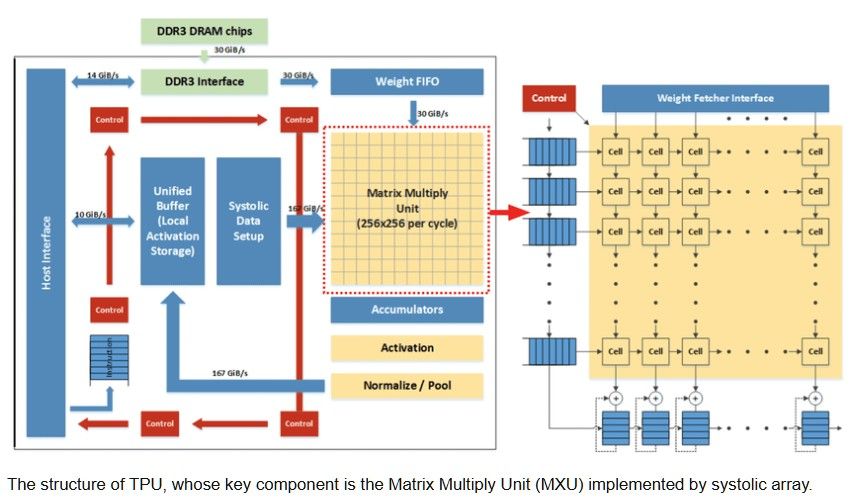
Google thought, “What if we created a chip that’s incredibly good at just matrix multiplication?”
The result is the TPU (Tensor Processing Unit).
GPU: Complex and power-hungry to perform various functions (focus on versatility).
TPU: Stripped of unnecessary functions, it maximizes AI computation efficiency (focus on specialized purpose).
Google’s TPU may be cramped and lack air conditioning, but on the circuit (AI computation), it’s an ‘F1 racing car’ that no one can match.
Thanks to this, Google can run AI with significantly less power and cost than its competitors.
The Heartbeat of Data: Systolic Array
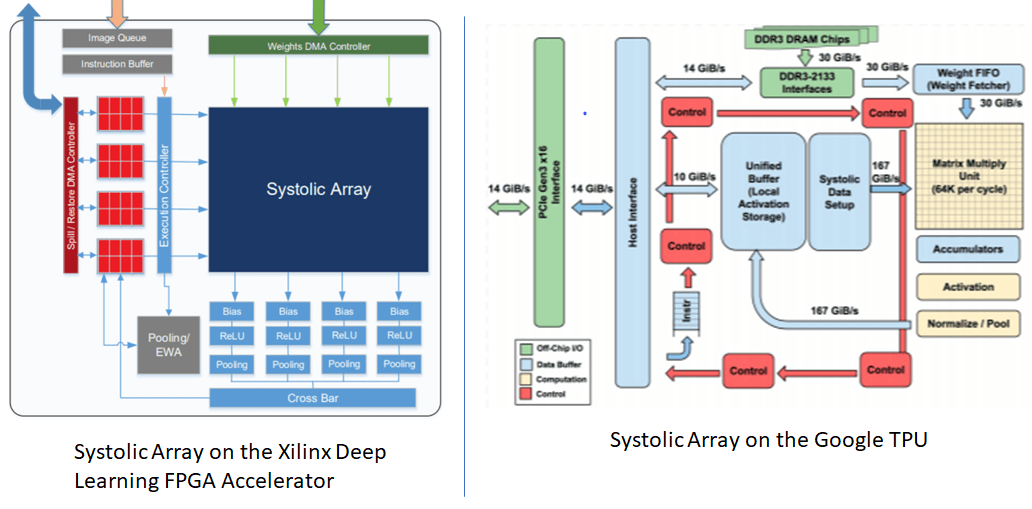
The core secret of TPU lies in its ‘Systolic Array’ architecture.
In traditional GPU methods, when computing data, numbers are repeatedly fetched from and returned to the warehouse (memory).
This is called a ‘memory bottleneck,’ which wastes enormous amounts of time and energy.
In contrast, the TPU’s systolic array allows data to flow like waves within the chip.
Data enters the first processing unit. ⇒ The calculated results and data are passed to the adjacent unit (just like the heart pumping blood)
Data is reused until all computations are completed within the chip, without needing to repeatedly access the warehouse (memory).
This technology has allowed Google to dramatically reduce AI search costs.
The technological gap is so vast that even OpenAI is reportedly coveting Google’s TPUs.
2. Speed Revolution: Abandoning the ‘Typewriter’ for ‘Woodblock Printing’
If hardware is the ‘body,’ then the algorithms running on it are the ‘brain.’
Google has unveiled a new weapon to overcome the fundamental limitation of current AI chatbots – ‘slow speed.’
The Limitation of the ‘Typewriter’ AI (Autoregressive Model)
Today’s ChatGPT and Gemini models use the ‘Autoregressive’ method.
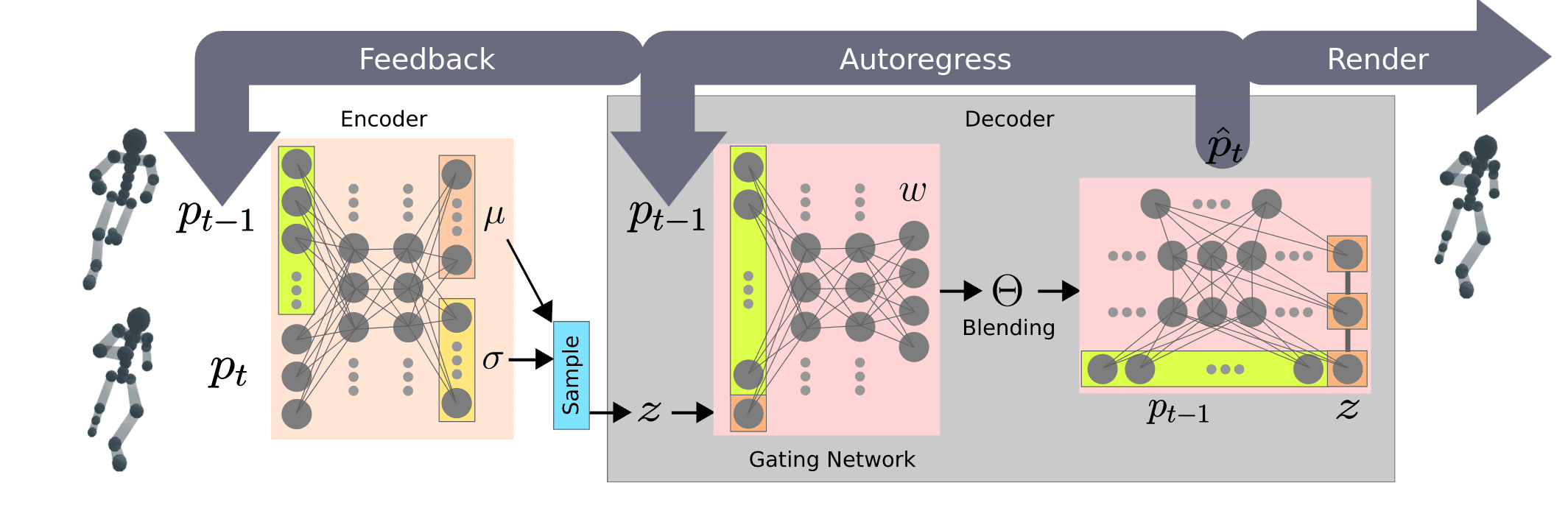
“Hello” ⇒ “There” ⇒ “I”…
The model can only predict the next word after the previous word is generated.
It’s like typing one character at a time on a typewriter.
As the sentence gets longer, the time taken increases proportionally.
If search results are delayed by even a second, users will leave.
This is the biggest dilemma of current AI search.
The Future, 7x Faster: MDLM (Masked Diffusion Language Model)
Inspired by image generation AI (like Midjourney), the Google Research team developed MDLM (Masked Diffusion Language Model).
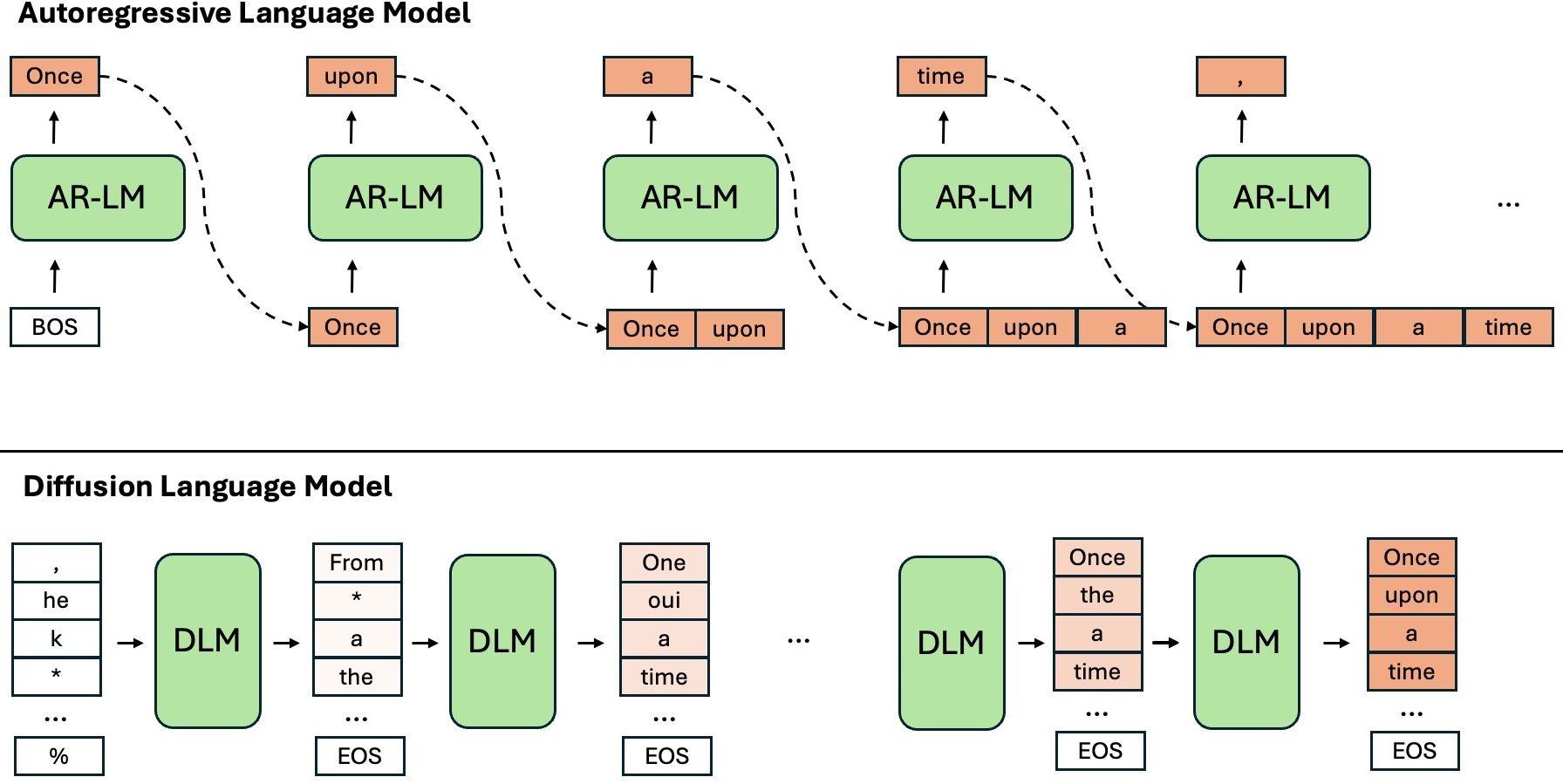
This model generates text in a completely different way.
Masking: Several parts of a sentence are covered with ink.
Simultaneous Restoration: The AI considers the surrounding context simultaneously and fills in the masked blanks all at once.
Instead of typing text like a typewriter, it’s now like printing it all at once, like ‘woodblock printing.’
Initial experimental results show this method is over 7 times faster than existing methods.
Imagine a world where, the moment you ask a question in the Google search bar, a complete answer appears in 0.1 seconds without any waiting.
This is the future Google is preparing beyond ‘Gemini 2.5.’
3. Economies of Scale: 13.7 Billion Queries and the Power of Free
Even with advanced technology, data is ultimately what makes AI intelligent.
Here, Google possesses a ‘great wall’ that startups cannot overcome.
Master of the Long Tail
Perplexity: 780 Million Queries/Month / Google: 13.7 Billion Queries/Day
It’s not just about quantity. Common questions like “What’s the weather today?” can be answered by anyone.
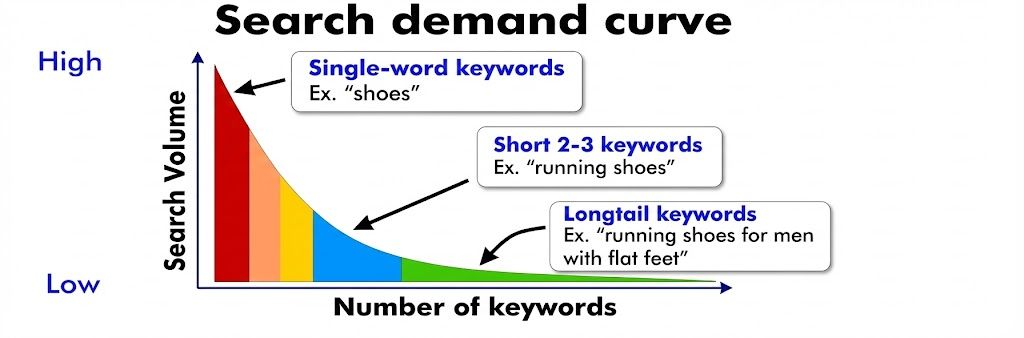
However, for rare and specific queries (long-tail keywords) like “Noise coming from the radiator of a 2004 Honda Civic only on rainy days,” without sufficient data, the AI will hallucinate (lie).
Google holds trillions of rare search records left by 8 billion people worldwide over the past 25 years.
This ‘depth of data’ creates the difference in AI intelligence.
Winner of the Chicken Game: Intelligence per Dollar
Currently, AI search startups are burning through investment capital, operating at a loss.
But Google, backed by overwhelming advertising revenue and the efficiency of TPUs, ‘produces intelligence at the lowest cost.’
What if Google makes AI search completely free while maintaining its advertising model?
Competitors who have to bear expensive GPU and cloud costs will inevitably wither away.
‘Switching Cost’ cannot be ignored either.
The ecosystem connected by Chrome browser, Android, and Gmail reduces the user’s effort to install a new search app and enter payment information.
Conclusion: The Sleeping Giant Has Already Awakened
The decline in Google’s market share served as a wake-up call.
But the awakened giant, instead of engaging in loud marketing, has begun the most fundamental evolution by refining chips (TPUs) and rewriting mathematical formulas (MDLM).
What we will witness soon is not Google’s downfall.
It will be the rebirth of Google as a ‘high-speed AI assistant’ that has learned from the world’s data, breaking free from the shell of the search bar.
The revolution will infiltrate our daily lives, silently but powerfully.
Will you remain with a search engine that uses a ’typewriter’,
or will you embrace the speed of the future with ‘woodblock printing’?
References
1. Park Chan, "Google Search Market Share Falls Below 90% for the First Time in 10 Years," Industrial News, 2025.-
Jouppi, N. P. et al., “In-datacenter performance analysis of a TPU”, ISCA, 2017.
-
Subham Sekhar Sahoo et al., “Simple and Effective Masked Diffusion Language Models”, NeurIPS, 2024.
-
Danny Goodwin, “Perplexity grows to 780 million monthly queries”, SearchEngineLand, 2025.
-
Peter Thiel, “Zero to One”, Crown Business.