
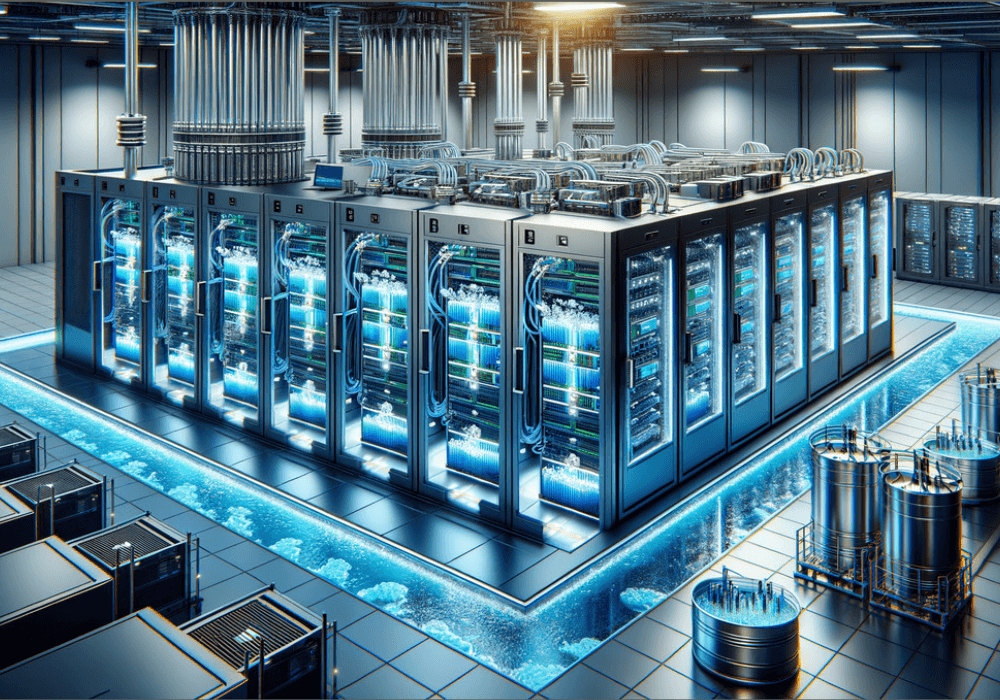
Imagine for a moment asking ChatGPT, “What is the meaning of life?”
Somewhere, in a data center, a silent but fierce battle is underway.
Thousands of GPUs simultaneously wake up and begin intense computations to process your single question.
What’s generated is not just ‘information.’ It inevitably comes with formidable ‘heat.’
A single NVIDIA H100 chip emits over 700 watts (W) of heat. (This is comparable to running a high-performance hair dryer 24/7 at its highest temperature setting.)
What happens if dozens, even hundreds, of these chips are packed into a single server rack? If this isn’t solved, the chips will melt, and the AI we’re so excited about will stop.
This is the _‘Thermal Wall’_ humanity faces.
Into this heated battlefield, two leading South Korean companies, LG Electronics and SK Group, have rolled up their sleeves.
Who will be able to cool the AI’s heart most effectively and efficiently?
1. The Dawn of Crisis: When Air Stops, AI Stops
For decades, data centers have relied on ‘air.’
Air cooling, which involves circulating cool air with large fans and expelling hot air, was the absolute ‘standard.’
However, the emergence of generative AI, a true giant, has shattered this peaceful order.
Standing at the ‘Thermal Cliff’
Frankly, air has a woefully insufficient capacity to transfer heat. Compared to water, its thermal conductivity is only 1/24th.
- Soaring Power Density: Power density per rack is exceeding 50kW and heading towards 100kW.
- Vicious Cycle of Inefficiency: To cool the chips, stronger airflow is needed, which in turn requires a tremendous amount of electricity.
- The Tail Wags the Dog: Ultimately, over 40% of a data center’s total power is spent solely on ‘cooling.’
The industry calls this the ‘Thermal Cliff’. It’s like standing at a precipice, unable to advance further with air cooling.
2. LG Electronics’ Strategy: A Maestro Conducting the Great Winds
Faced with this cliff, LG Electronics has chosen to build a new bridge.
They are focusing on ‘realistic optimization’ and ‘harmony of the entire building.’
Leveraging their world-class technology and experience from the home appliance and commercial air conditioning (HVAC) markets, they have begun to control the breathing of massive data center buildings.
Make the Entire Building Breathe: High-Tech Chiller
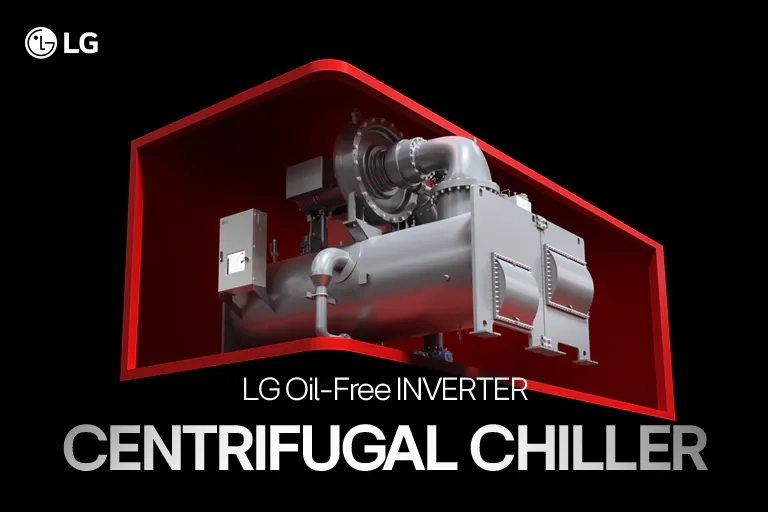
The core of LG Electronics’ strategy is the ‘Chiller’.
A chiller is like a giant heart that creates cold water using refrigerant. However, LG’s chiller is not just an ordinary air conditioner outdoor unit.
- Inverter Scroll Chiller: Data center heat loads are not constant. They increase when users are active and cool down at night. LG’s inverter technology freely controls motor speed to supply just the right amount of cooling, fundamentally preventing energy waste.
- Oil-Free Magnetic Bearing Chiller: This is the pinnacle of technology. The motor shaft is levitated and rotated using electromagnetic force.
- Zero Friction: With no friction, it boasts overwhelming efficiency (IPLV 12.1).
- Oil-Free: No lubricant is needed, eliminating maintenance hassles.
One LG: A Perfect Orchestra from Chip to Battery
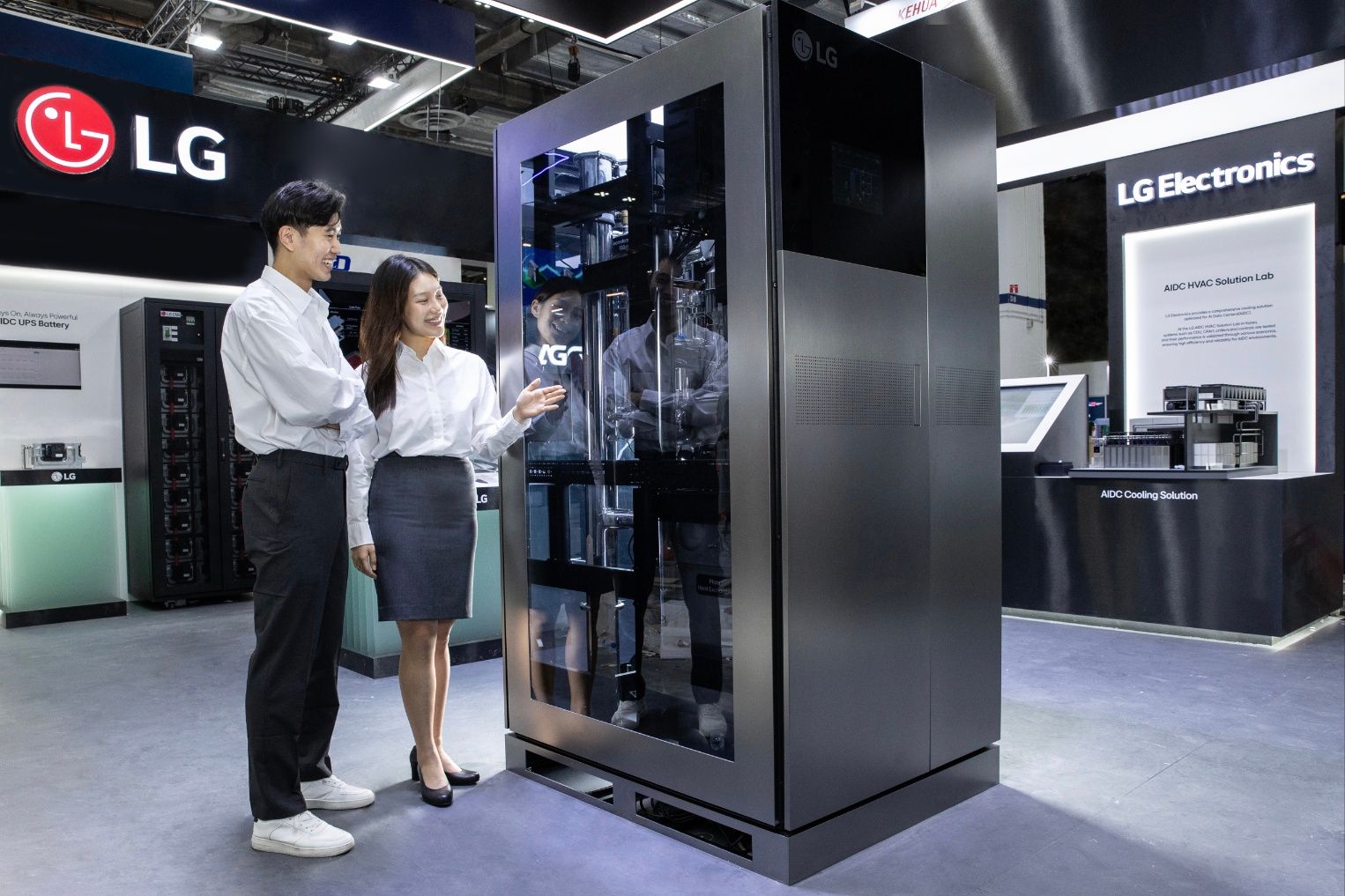
Interestingly, LG Electronics isn’t just selling chillers. They are conducting a grand orchestra called ‘One LG.’
“Leave the troublesome cooling and power issues entirely to us.”
- LG CNS: AI-based data center management system
- LG Energy Solution: ESS (Energy Storage System) batteries
- LG Electronics: Racks and HVAC equipment
Their recent entry into the modular data center market through a partnership with Flex shows their ambition to expand this strategy globally.
3. SK Group’s Strategy: The Alchemist Who Dived into Oil, Abandoning Water
While LG took a direct approach by maximizing air efficiency, SK Group decided to rewrite the laws of physics.
“If air doesn’t work… why not just immerse it in liquid?”
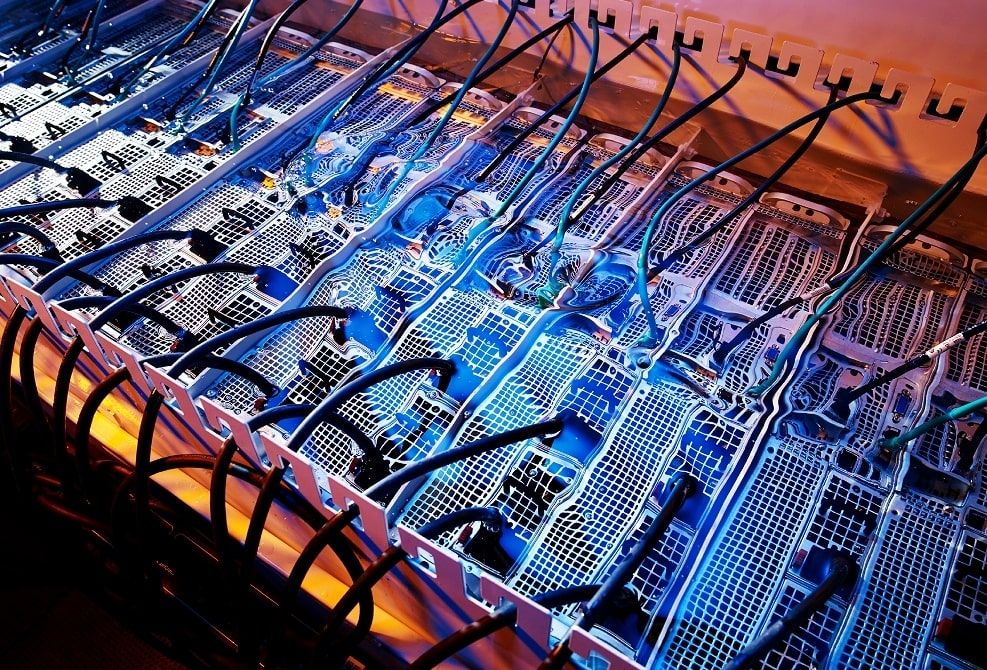
Immersion Cooling, spearheaded by SK Enmove and SK Telecom, is truly revolutionary.
The Aesthetics of Counter-Intuition: Electrically Non-Conductive Liquid
The idea of immersing servers in liquid sounds crazy at first.
Water would cause short circuits and fry everything. But SK Enmove makes a ‘divine move’ here.
They developed a special dielectric fluid that does not conduct electricity.
This is where their expertise in the world’s leading base oil market shines.
- Silent Operation: No need to run noisy fans.
- High Efficiency: Heat is immediately transferred to the liquid. There is no fire risk.
- PUE 1.02: Power Usage Effectiveness (PUE) can be reduced to a near-perfect 1.02.
Dominate the Ecosystem: SK Inside
SK is not acting alone.
They are crafting a scenario to dominate the ecosystem, aiming for all high-performance data centers of the future to be submerged in SK’s oil.
- GRC Collaboration: They made a bold investment in GRC, a global leader in immersion cooling tank technology.
- Dell Partnership: They joined forces with server manufacturer Dell, verifying that their servers operate without issues within SK’s fluids.
- Iceotope: In collaboration with the British company, they have secured precision liquid cooling technology.
4. The Battlefield: Reviving Dying Data Centers (Retrofit)
These two companies’ technologies clash most fiercely, and yet strangely cooperate, in the ‘Retrofit’ market.
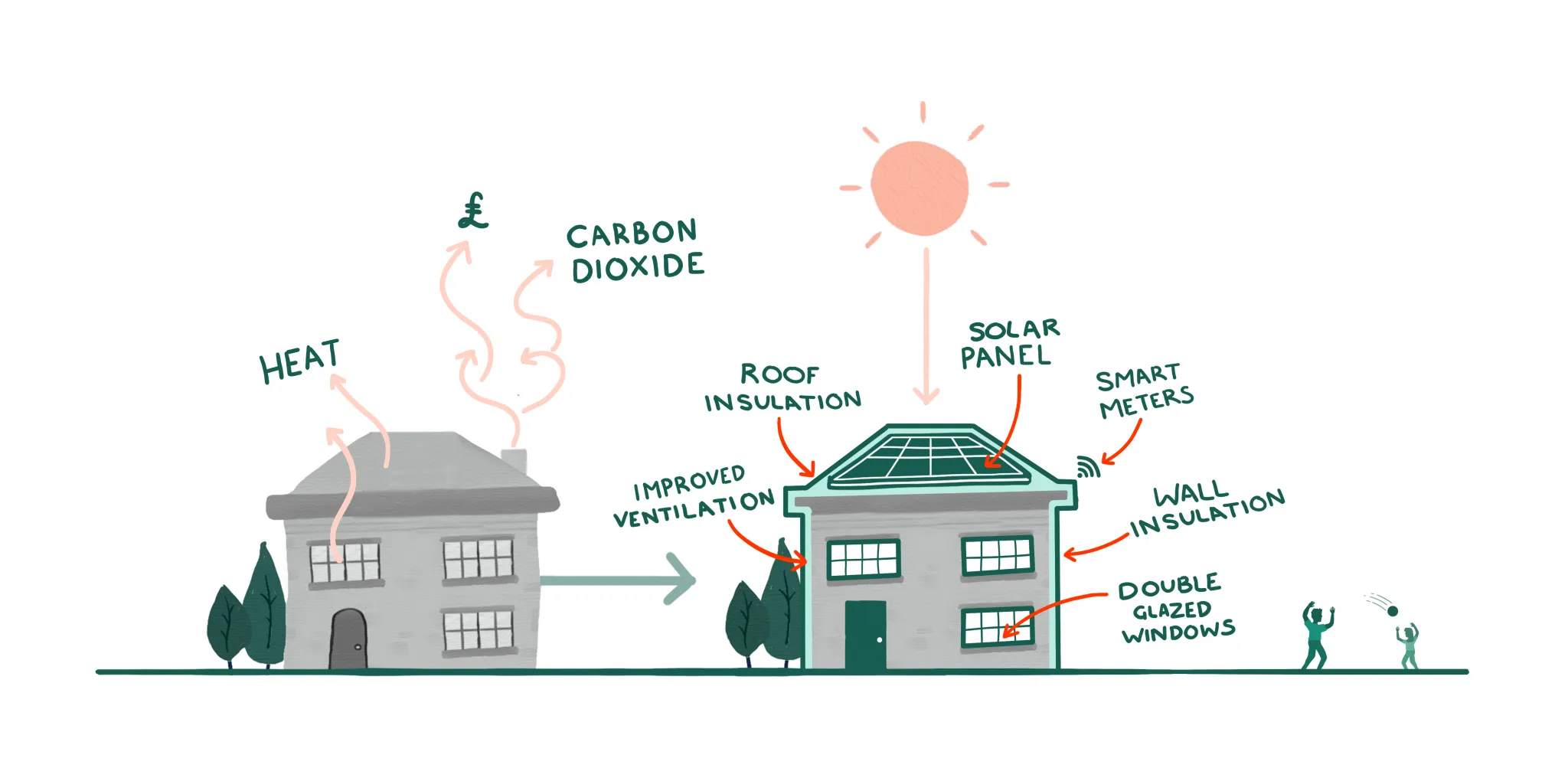
There are countless older data centers scattered across the globe.
These are so-called ‘Stranded Assets’ – facilities with ample power and space, but insufficient cooling capacity to house the latest AI servers.
| Category | LG Electronics’ Solution | SK Group’s Solution |
|---|---|---|
| Approach | Building Optimization | Maximizing Space Density |
| Solution | High-efficiency chiller replacement, Rear Door Heat Exchanger (RDHx) installation | Immersion cooling tank installation, Chassis-based liquid cooling adoption |
| Advantage | Minimal structural changes, rapid deployment possible | High-density server operation in confined spaces possible |
Ultimately, these technologies breathe new life into dormant assets, creating trillions of won in economic value.
5. Future Prospects: To the Sea, to Space, and Back to Us
The evolution of cooling technology doesn’t stop here. As liquid cooling becomes commonplace, data centers will no longer need to occupy expensive land.
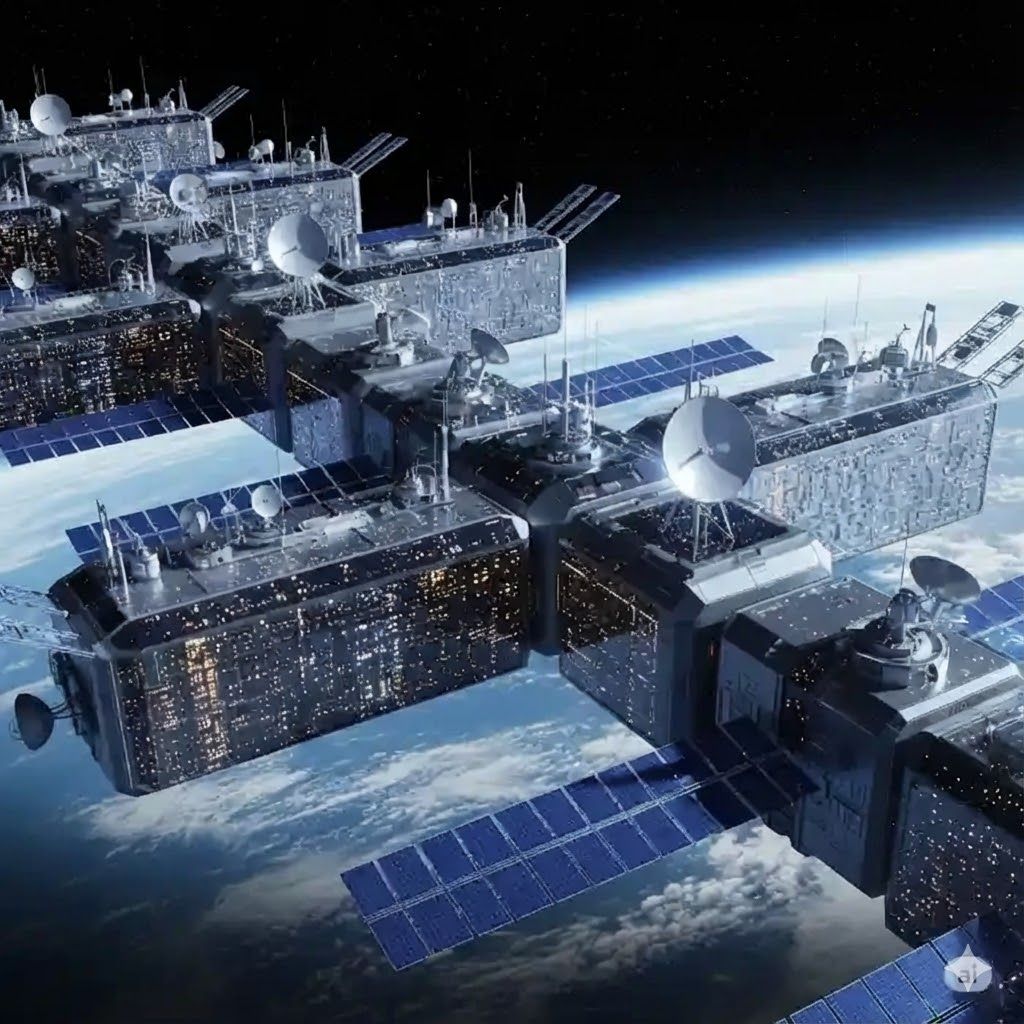
- Spatial Expansion: Discussions are underway to expand data centers underwater (Microsoft’s Natick project) or into sub-zero space environments, where cooling is easier.
- Heat Reuse: Instead of simply discarding the heated cooling water, it can be used for heating nearby apartments or warming greenhouses for smart farms.
Data centers are transforming from facilities to be avoided into eco-friendly facilities that share energy.
Conclusion: Cool Heads Create a Hot Future
If data is the ‘oil of the 21st century’ in the AI era,
then the technology to cool the heat generated while processing that data is the ‘oil refinery equipment of the 21st century.’
LG Electronics aims to dominate the current market with ‘stability and integration,’ while SK Group seeks to preempt future standards with ‘material innovation and disruptive technology.’
Their approaches differ, but their goal is the same:
“More Intelligence with Less Energy.”
Whoever can cool the intense heat of AI will hold the hegemony of the coming future.
It is time to pay attention to how this ‘Cold Revolution’, led by South Korean companies, will reshape the global data center landscape.
References
- AI Datacenter Liquid Cooling Market Analysis Report - 2035 \[Future Market Insights\]
- Data Center Cooling Market Size & Industry Report, 2030 \[Grand View Research\]
- Air vs Liquid vs Immersion: Best Cooling for Your Data Center \[Onfra.io\]
- LG Expands Availability of Next-Gen Air-Cooled Inverter Scroll Chiller \[LG Electronics Newsroom\]
- Immersion Cooling Fluids Business Overview \[SK Enmove\]
- Sustainable by design: Next-generation datacenters consume zero water for cooling \[Microsoft Cloud Blog\]