

Conflict is not something to avoid, but a starting point to discover new opportunities.
Why do we so easily crumble in the face of conflict? When you think about it, we often collapse amidst the daily friction of absurd instructions from a boss or trivial issues like taking out the trash with a spouse.
But here’s the thing. The reason we crumble isn’t due to the ‘facts’ or ‘unreasonableness’ of the problem. It’s because we get consumed by the intense ’emotion’ that flares up because of it. Conflict becomes uncontrollable not because of the problem itself, but because of our ’emotion’ in experiencing it.
I know from experience that people who easily get discouraged even by minor conflicts are actually being deceived by their own emotions, which magnify the problem.
To resolve this chaos, there’s a surprisingly simple three-step rule: the ‘Emotion-Reason-Intuition’ (E-R-I) model.
- Step 1 (E): Control Emotion. This is the absolute ‘first priority.’ When you’re swayed by emotions, you can’t see the essence of the problem. Controlling heightened emotions is like stepping out of the chaotic scene and obtaining your ’ticket’ to problem-solving.
- Step 2 (R): Apply Reason. Once the emotional storm subsides, introduce logic and analysis. This step involves finding the true cause of the conflict, considering various alternatives, and deciding on the right strategy for the current situation.
- Step 3 (I): Use Intuition. When logical analysis hits a dead end. Or more precisely, when you need to find new possibilities that transcend existing logic, that’s when you use intuition.
The goal of this column? To argue that we shouldn’t just see the E-R-I model as a sequential 1-2-3 process. My goal is to prove that the E-R-I model is a highly dynamic ‘cognitive framework’ that leads to (1) creative problem-solving, (2) strategic imagination, and (3) expert insight. This model starts with the raw material of chaos called E (Emotion), goes through the refined structure of R (Reason), and achieves the leap of insight called I (Intuition)… Wow, it’s akin to the ‘alchemy of conflict’.
Part 1. Brainstorming and Creative Problem Solving: The E-R-I Secret Found in ‘Oranges’ and ‘Post-it Notes’
The true power of the E-R-I model lies in its ability to help us observe the problem like an outsider, understand its ‘root cause,’ and think of ‘alternatives’ rather than acting defensively in conflict situations. This is the first step in transforming conflict from a ‘crisis’ into an opportunity for ‘creative problem-solving.’ The real goal of brainstorming isn’t painful ‘compromise,’ but ‘creation’ of a third way.
Anecdote 1: “The Two Sisters and the Orange” - What Blocks the Best Solution?
You all know the famous negotiation fable, “The Two Sisters and the Orange”, right?
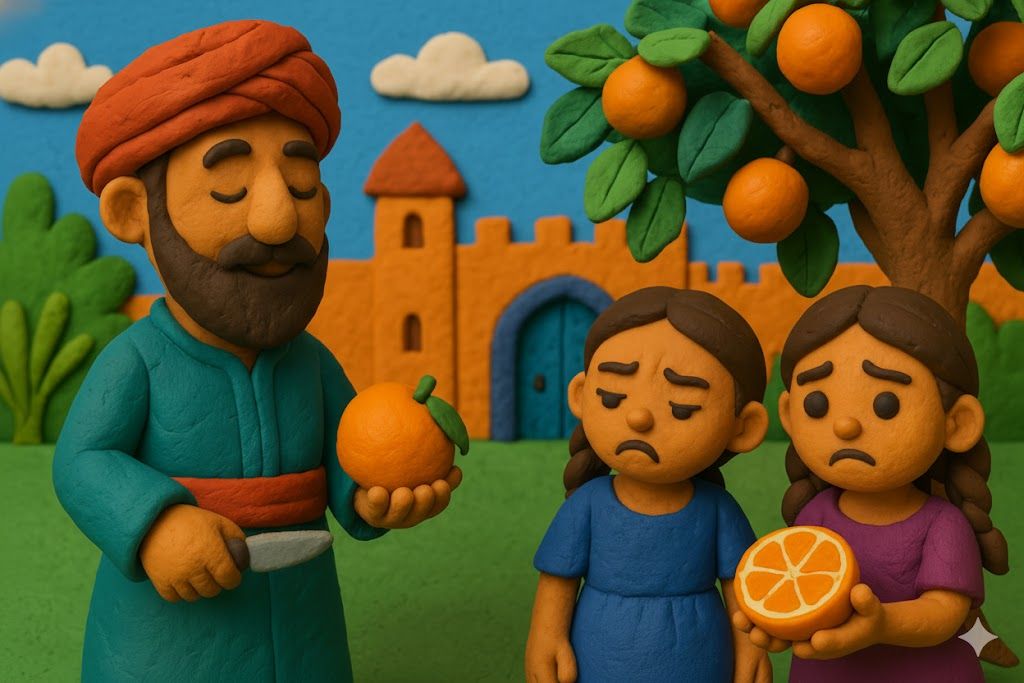
This perfectly illustrates how the E-R-I model works. Two sisters fight fiercely over a single orange. Both want the ’entire’ orange.
E-R-I Analysis (Failed Brainstorming: Compromise)
- E (Emotion): “I want it all!” Both sisters are emotionally fixated on their ‘Position’ of wanting the ’entire orange.’ The other person is simply an ‘opponent’ to be defeated.
- R (Reason - 1st Pass): The parent intervenes with a ‘fair’ solution. “Let’s cut it in half equally.” On the surface, it’s rational and ‘reasonable.’ However, this is just a ‘Compromising’ conflict resolution style. It’s a method where both leave with 50% dissatisfaction. Unfortunately, most brainstorming stops here.
E-R-I Analysis (Successful Brainstorming: Creation)
- R (Reason - 2nd Pass): A wise mediator (or someone trained in E-R-I) asks, “Why (Why) do you need the orange?”
- This question. Ah, this ‘why?’ question. It’s the switch that forcibly shifts the focus from the emotional ‘Position’ (E) to the rational ‘Interest’ (R).
- I (Intuition/Creativity): The answers to the ‘why’ question were surprising. One sister needed the ‘fruit’ for juice, and the other needed the ‘peel’ for baking. The moment the answers ‘fruit’ and ‘peel’ emerged, the ‘intuition’ that “We can satisfy both 100%!” struck.
Insight: Creative problem-solving goes beyond the rational (R) step of dividing ‘one pie’ (One Orange) to a leap into the intuitive (I) step of discovering ’two pies’ (Peel & Fruit). In the E-R-I model, ‘Reason’ isn’t just a calculator but a tool for inquiry asking “Why?”, and ‘Intuition’ is the engine of innovation that creates new resources from the answers.
If you’re stuck on ‘Positions,’ you’ll only achieve ‘Compromise,’ but if you ask about ‘Interests,’ ‘Creation’ becomes possible.
Anecdote 2: “3M Post-it Notes” - The Emotion of ‘Failure’ Becomes the Intuition of ‘Innovation’
While the orange story showed how to find hidden resources, the invention story of 3M Post-it Notes illustrates the E-R-I cycle of transforming ‘failure’ into a resource.
E-R-I Analysis (The E-R-I Cycle of Innovation)
- R (Reason - 1st Pass / ‘Failed Data’): 3M scientist Spencer Silver aimed to create a ‘super-strong adhesive’ but accidentally developed a substance that was ‘weakly adhesive and non-sticky.’ The ‘reason’ of the time clearly labeled this as a ‘failure.’ This ‘failed’ R data went straight into storage.
- E (Emotion / ‘Problem Identification’): Years later, another 3M employee, Art Fry, was practicing hymns and kept having his bookmarks fall out. Ah, how frustrating that must have been. He experienced considerable ‘frustration’ and ‘inconvenience.’ This is a powerful starting point for the E-R-I model: an ’emotional problem statement’ (E).
- R (Reason - 2nd Pass / ‘Exploration’): To solve this ‘frustration’ (E), Fry engaged his ‘reason’ (R). _“I need something that can stick and unstick without damaging the book…”
- I (Intuition / ‘Creative Connection’): At that very moment! Fry’s ‘intuition’ (I) kicked in. He made a lightning-fast connection between Silver’s ‘failed’ adhesive from years ago (R data 1) and his own ‘frustration’ (E data).
Insight: Post-it Notes are a perfect corporate example of the E-R-I model. (Emotion: Fry’s frustration) posed the problem to be solved, R (Reason: Silver’s failed data) provided the material, and I (Intuition) connected the two to redefine ‘failure’ as ‘innovation’. The famous 3M ‘15% rule’ (spending 15% of work time on side projects) was precisely the mechanism that allowed this E-R-I cycle to flow freely within the organization. Frankly, it’s astonishing.
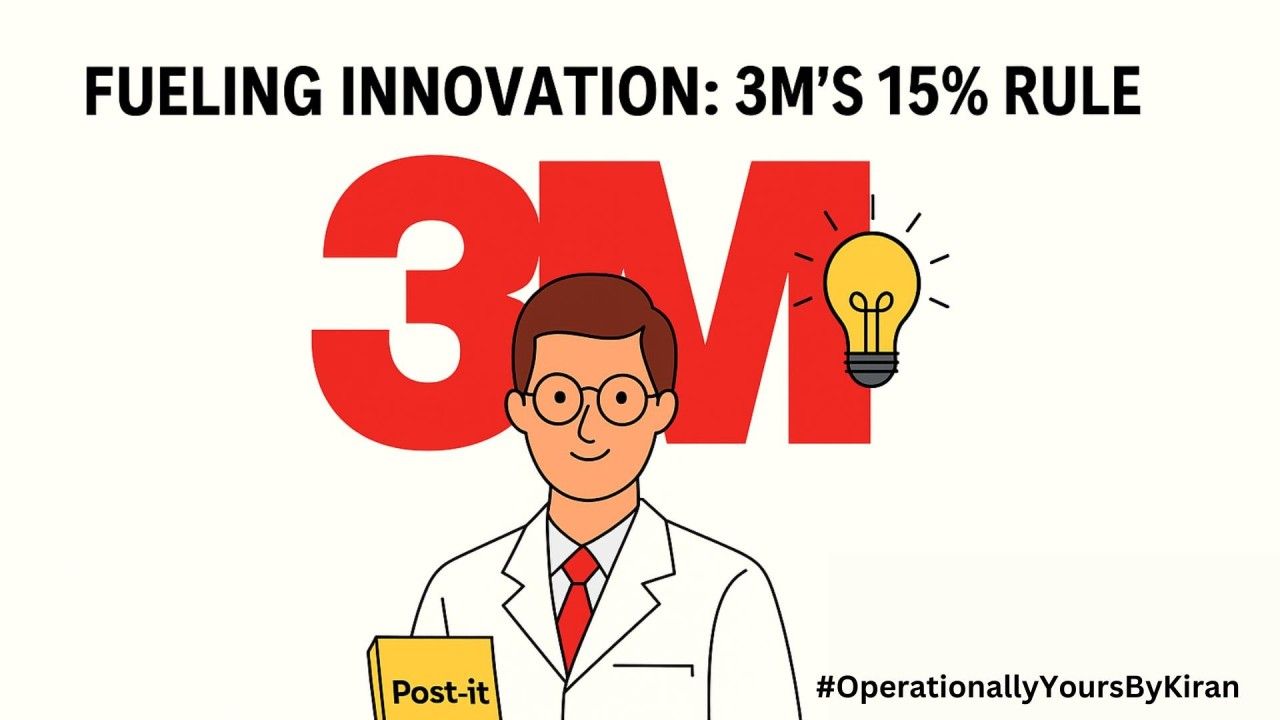
Data of ‘failure’ (R) met the emotion of ‘frustration’ (E) to achieve ‘innovation’ (I).
Part 2. Using Imagination to Choose a Conflict Resolution Style: Your ‘Reason’ Has 5 Weapons
So, what is the second step of E-R-I, ‘Reason’ (R)? It’s not just about logical reasoning. The book warns against the trap of ‘only talking about oneself’ in this stage, swayed by emotion. Instead, it emphasizes the need to identify ‘5 conflict styles’ and learn the ‘appropriate response’ for each situation.
Deep Dive Theory: The 5 Conflict Styles - The Thomas-Kilmann Model
The 5 styles mentioned in the book are concretized by Thomas-Kilmann’s (TKI) conflict management model. This model is a toolbox of 5 powerful strategic tools we can use in the R (Reason) stage.
This model divides the 5 strategies along two axes: ‘Self-Interest Assertion’ and ‘Other-Interest Consideration.’ After controlling E (Emotion), we must ‘rationally’ choose one of these 5 strategy cards.
| Style | Axes (Self-Interest / Other-Interest) | Outcome (Win/Lose) | Metaphor | When to Use | | | :———– | :———————————— | :—————– | :———— | :—————————————————————————————————— | | | Competing | High / Low | Win-Lose | Bulldozer | When quick decisions are needed, or on critical issues where you are 100% certain you are right. | | | Accommodating| Low / High | Lose-Win | Doormat | When the issue is less important to you, or to maintain harmony or build trust for the future. | | | Avoiding | Low / Low | Lose-Lose | Turtle | When the issue is very trivial, or when emotions are high and a cooling-off period is needed. | | | Compromising | Medium / Medium | (Mini-Win / Mini-Lose) | Pie Cutting | When time is short and a quick temporary solution is needed, or when both parties have equal power. (e.g., cutting an orange in half) | | | Collaborating| High / High | Win-Win | Pie Growing | When creative solutions are needed, or when complete agreement from both parties is absolutely crucial. (e.g., finding the orange peel and fruit) | |
Key Analysis: ‘Imagination’ is the Ability to Simulate These 5 Tools
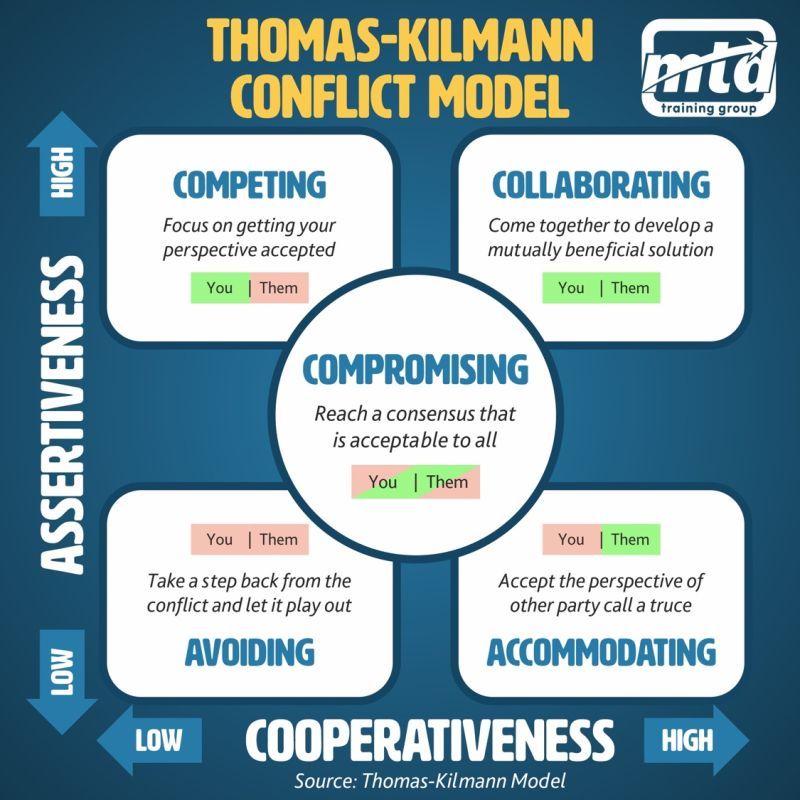
The ‘Reason’ (R) stage of the E-R-I model isn’t about memorizing these 5 styles. The true core of this stage is using the keyword: ‘Imagination.’ Folks, this is really important.
‘Imagination’ is the core engine of the R (Reason) stage and an essential bridge to the I (Intuition) stage. After controlling E (Emotion), our brains start simulating these 5 scenarios through ‘imagination.’
- E (Emotion Control): “I’m angry. But I’ll stop for now.”
- R (Reason/Imagination Activation): “Wait, I have 5 cards I can play here (R).
- If I (1) Compete? I might win now, but the relationship with that team will be ruined.
- If I (2) Avoid? It’s easier now, but that problem will explode twofold next quarter.
- If I (3) Compromise? If we ‘cut the orange in half,’ both will be only 50% satisfied and leave feeling uneasy.
- If I (4) Collaborate…? Is collaboration possible? What is that person’s real ‘interest’ that makes them hold onto their ‘position’ so rigidly?”
- I (Intuition Leap): This intense simulation through ‘imagination,’ especially the act of imagining ’the other person’s position’ by asking, “What is their real interest?” is the only path to finding the intuitive solution (I) of ‘Collaboration (Win-Win)’.
Part 3. Deciding What to Do Using Instinct or Intuition: When ‘Reason’ Accumulates, ‘Intuition’ Explodes
Finally, we reach the last step of E-R-I: I (Intuition). The book warns that people who ‘analyze everything to the end,’ who are solely engrossed in the logical calculations of R (Reason), cannot reach this creative stage. Intuition (I) complements and surpasses Reason (R) to open the door to new possibilities.
So, what is this ‘intuition’? Is it just a ‘hunch’? Mystical inspiration? No, in the context of the E-R-I model, ‘intuition’ is much deeper and more powerful: it is ’the distillation of trained reason’.
Anecdote 3: Kekulé’s Snake - When ‘Reason’ Hits Its Limit
In the 19th century, chemist Kekulé struggled to unravel the molecular structure of benzene (C₆H₆), a complex problem at the time. He intensely studied the benzene structure ‘day and night’ for months using ‘reason’ (R), but all linear structures led to contradictions.
- R (Reason / Overload): Kekulé’s ‘reason’ (R) explored all logical paths but reached its limit. His brain was overloaded with data.
- I (Intuition / Dream): Exhausted, he dozed off by the stove, and in his dream, an image of a ‘snake biting its own tail and spinning in circles’ (Ouroboros) appeared. Waking up, Kekulé had the idea, “Could the benzene structure be circular, like a snake?” This discovery changed the history of organic chemistry.
Insight: Kekulé’s intuition didn’t skip R (Reason). It was the ‘result’ of extreme ‘rational immersion’ (R) pouring a vast amount of data into his subconscious. ‘Intuition’ (I) is a higher-order output of the brain that solves problems, which conscious reason (R) could not, through ‘pattern recognition’ in the subconscious.

Kekulé’s intuition was ‘subconscious pattern recognition’ that transcended the limits of reason.
Theory 2: Kahneman’s ‘System 1’ and ‘System 2’ - Intuition Is Not Lazy Thinking
Explaining the E-R-I model with Nobel laureate Daniel Kahneman’s ’two thinking systems’ from “Thinking, Fast and Slow” makes it clearer.
- System 1 (Intuition/Instinct): Fast, automatic, emotional, and requires little effort. This is the ‘immature System 1’ response in the ‘E (Emotion)’ stage of E-R-I, which flares up instantly in conflict situations.
- System 2 (Reason): Slow, effortful, logical, and calculative. This is the act of consciously activating ‘System 2’ in the ‘R (Reason)’ stage of E-R-I to analyze the situation and simulate the 5 styles.
Reinterpreting the E-R-I Model: So, what is I (Intuition)? The E-R-I model is a highly advanced cognitive training process that consciously controls and analyzes the automatic responses of ‘immature System 1’ (E) with ‘System 2’ (R), and then passes this analyzed data back to ‘skilled System 1’ (I) for final judgment. In other words, the I (Intuition) of E-R-I is not instinct like E (Emotion), but ’expert intuition’ that results from the accumulation of countless R (Reason) trainings. It’s on a different level from E.
Anecdote 4: Howard Schultz in Milan - When ‘Reason’ Opposes ‘Intuition’
Sometimes, R (Reason/Data) says ’no,’ but I (Intuition/Vision) needs to say ‘yes.’ This is exactly what happened to Starbucks’ Howard Schultz during his trip to Milan in 1983.
- E (Emotion/Experience): Schultz ’experienced’ the ‘deep connection and romance between people’ in a small espresso bar in Milan. It wasn’t just coffee; it was a ‘culture.’
- R (Reason / ‘Data Opposition’): When he tried to bring this ’experience’ (E) to Seattle, the then-founders of Starbucks vehemently opposed it with ‘reason’ (R). “Howard, we’re coffee bean retailers, not a cafe selling beverages.” All R (Reason/Data) pointed to ‘opposition.’
- I (Intuition / ‘Vision’): Schultz followed his ‘intuition’ (I), which stemmed from E (Experience), not R (Data). It was a powerful ‘vision’ of a ‘Third Place’ between home and work.
Starbucks Third Place
Insight: Schultz’s intuition was a sensory insight (I) that read the market’s ’emotion’ (E), not data analysis (R). The E-R-I model sometimes takes the form of a vision where E → I connects directly, overpowering R.
Anecdote 5 & Theory 3/4: The ‘Miracle on the Hudson’ - Ultimate Intuition Is ‘Compressed Reason’
The ultimate culmination of the E-R-I model is seen in the decision-making of Captain Sully Sullenberger, who created the ‘Miracle on the Hudson’ in 2009. Two minutes after takeoff, the plane hit a flock of birds, and both engines failed.
E-R-I Analysis (Extreme Decision-Making)
- E (Emotion / Crisis): “Loss of both engines.” Immediate fear and crisis situation (E).
- R (Reason / ‘ATC Procedure’): Air Traffic Control (ATC) presented the ‘rational’ (R) procedure according to the manual. “Return to runway 31 at the nearest airport, LaGuardia.”
- I (Intuition / ‘Pilot’s Decision’): Sully rejected ATC’s ‘rational’ instruction in a second. “We can’t do it… We’re gonna be in the Hudson.” Based on his 42 years of flying experience, he ‘intuitively’ calculated that with the current altitude and speed, he could never reach the airport.
Insight: But how was Sully’s intuition (I) more accurate than ATC’s reason (R)?
This was not simple ‘instinct.’ Two profound neuroscientific principles were at play:
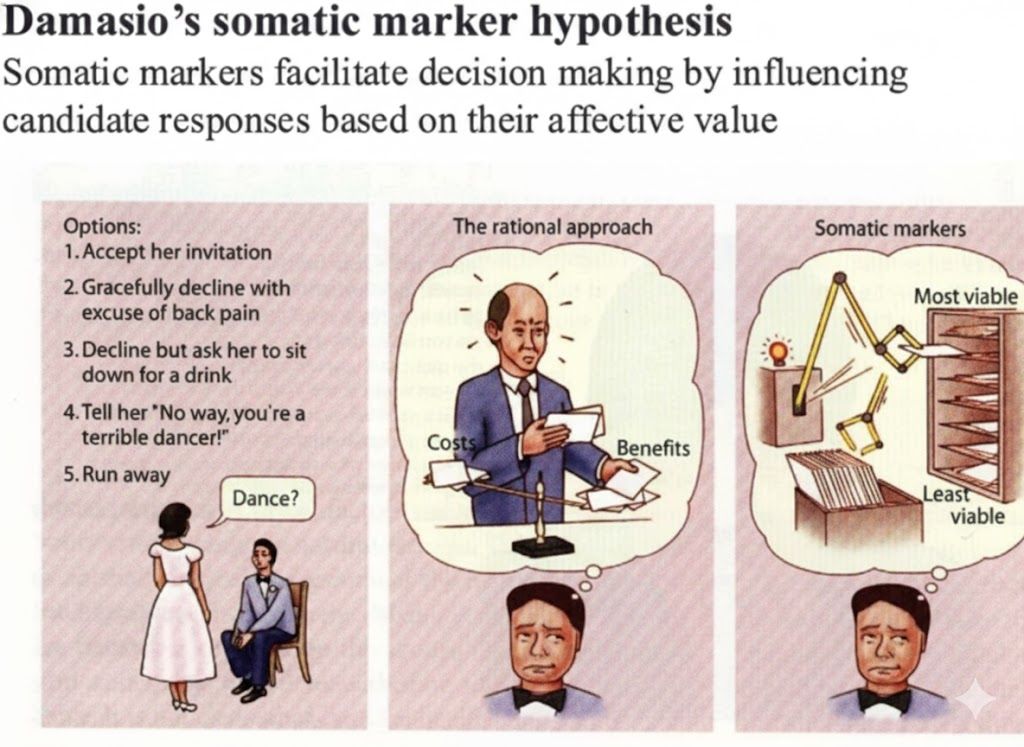
- Damasio’s ‘Somatic Marker Hypothesis’
Somatic Marker
According to neuroscientist Damasio, our ‘gut feeling’ is not mystical. It’s a ‘somatic marker’ stored in the brain, combining past experiences and emotions. Sully’s 42 years of accumulated R (Reason/training) were stored as ‘somatic markers’ in his brain and body. When the option of R (returning to LaGuardia) was presented, his brain sent a strong negative ‘bodily signal’ (Gut Feeling) (E) that ’this will fail.’ Conversely, the Hudson River sent a positive signal of ‘survival possibility.’ Sully’s I (intuition) was the ‘bodily conclusion’ of 42 years of compressed R (Reason). - Gigerenzer’s ‘Fast & Frugal Heuristics’
Fast & Frugal Heuristics
According to psychologist Gigerenzer, in situations with extremely limited time and high uncertainty, like Sully’s, there’s no time for Kahneman’s slow ‘System 2’ (R) to operate. In such cases, experts use simple, fast ‘heuristics’ (I), deliberately ignoring some information, instead of complex calculations (R). Sully had learned a powerful ‘heuristic’ from his 42 years of experience (R): ‘If the runway appears to be rising from view, you cannot reach that runway.’ This ’expert intuition’ (I) was a much more accurate and ecologically rational decision at that moment and in that environment than ATC’s ’logical reason’ (R) attempting to calculate all variables.
Captain Sully’s ‘intuition’ was the essence of expert heuristics, compressed from 42 years of ‘reason.’
Conclusion of Part 3? Intuition (I) is not mysticism. It is ’the essence of expertise,’ or rather, ’the ultimate level of expertise,’ that either (1) breaks through reason overload (Kekulé), (2) presents an emotional vision (Schultz), or (3) explodes as ultra-fast ‘heuristics’ (I) where vast reason (R) combines with ‘somatic markers’ (E) (Sully).
E-R-I: The Alchemy That Transforms Conflict into Growth Opportunities
So, let’s summarize. The E-R-I (Emotion-Reason-Intuition) model from “Smart Mistakes You Didn’t Know You Were Making 2.” We’ve confirmed that this is not just a simple three-step conflict resolution method, but a profound cognitive process from which human creativity and expertise emerge.
- E (Emotion) is no longer an ’enemy’ to be controlled. It’s a welcome signal that provides us with the ‘problems’ and ‘data’ to be solved, like Arthur Fry’s ‘frustration,’ Howard Schultz’s ’experience,’ and Captain Sully’s ‘somatic markers.’
- R (Reason) is not merely an act of ‘arguing.’ It’s a deep inquiry asking “Why?” in the ‘Orange Fable,’ and a strategy of simulating Thomas-Kilmann’s 5 weapons through ‘imagination.’
- I (Intuition) is not an unfounded ‘instinct.’ It is the most brilliant essence of trained reason, exploding as Carmen’s ’expert System 1’ and Gigerenzer’s ‘heuristics’ after reason (R) has accumulated to its limit (Kekulé).
Conflict is not a ‘mistake.’ Through the alchemy of E-R-I, it is a truly ‘smart opportunity’ to transform cheap lead called ’emotion’ into noble gold called ‘intuition.’
Training with this E-R-I model will be the most powerful path to transform us from helpless victims of conflict into designers of problem-solving.
Don’t you think so too?
References
- Smart Mistakes You Didn’t Know You Were Making 2 (Jenni Graham Scott / Bulgyo Newspaper)
- Smart Mistakes You Didn’t Know You Were Making 2 (Jenni Graham Scott / Suseong University E-book Library)
- Smart Mistakes You Didn’t Know You Were Making 2 (Jenni Graham Scott / Aladdin)
- [E-book] Smart Mistakes You Didn’t Know You Were Making 2 (Jenni Graham Scott / Aladdin)
- Smart Mistakes You Didn’t Know You Were Making 2 (Jenni Graham Scott / Kyobo Bookstore)
- Mediation and the Infamous Orange Story (Jaburg Wilk)
- The art of negotiation - dividing up an orange without cutting it in half (Catching the Curveball)
- Integrative Negotiation – Tale of two sisters and an ORANGE (Business Concepts Applied)
- 5 Types of Behavior When Conflict Arises (TKI Model / Daum Brunch)
- Two sisters were fighting over an orange (Lingwood Mediation)
- Two Girls and an Orange (YouTube)
- [Global Biz Leader] 20th Century’s Top 10 Product ‘Post-it Notes’ Are the Product of Failure (Hankook Ilbo)
- Smart Mistakes You Didn’t Know You Were Making 2 (Jenni Graham Scott / Yeungnam Theological University E-book Library)
- Kekulé’s Benzene Ring Discovery (Chosun Ilbo)
- The Dream of Saving Dreams (Neuroscience Study / Tistory)
- Thinking, Fast and Slow: System 1 and System 2 (Daniel Kahneman / Daum Brunch)
- 2 Modes of Thinking (System 1, System 2) (Medium)
- Thinking, Fast and Slow - Daniel Kahneman (1/2) (Meeting My Life. / Tistory)
- System 1 and System 2 Thinking (The Decision Lab)
- Thinking, Fast and Slow (Wikipedia)
- Inspired by Italy, reimagined in Seattle (Starbucks Stories)
- How one trip to Italy shaped the coffee industry around the world! (Rossa)
- From Milan Alley to $35B Empire: Howard Schultz’s Starbucks Story (The Storytelling for Entrepreneurs Newsletter)
- Sully: Miracle on the Hudson (Daesoon Jinrihoe Webzine)
- Somatic Marker Hypothesis (The Decision Lab)
- Somatic marker hypothesis (Wikipedia)
- The somatic marker hypothesis and the possible functions of the prefrontal cortex (Royal Society Publishing)
- What are some of the key ideas associated with the work of Gerd Gigerenzer? (Tutor2u)
- The power of simplicity: a fast-and-frugal heuristics approach to performance science (Frontiers in Psychology)
- Fast and Frugal Heuristics for Making Decisions Under Uncertainty (Serendipitism)