
A few days ago, my niece grumbled, “Aunt, they say I have to stay at school until 3 PM.” I wondered what she was talking about, and it turned out to be news she heard. Currently, first and second graders in elementary school usually finish around 1 PM, but the National Education Commission is reconsidering a plan to extend this until 3 PM. At the same time, another news story was circulating about a complete overhaul of the CSAT (College Scholastic Ability Test), specifically moving to absolute grading and introducing essay-type questions. Both policies share the goal of “reducing private education,” yet the reaction from parents seems to be one of growing concern. I dug into why these policies feel so misaligned.
Elementary 3 PM Dismissal: Why the Controversy?
First, let’s look at the 3 PM dismissal. This isn’t actually a new idea. The Presidential Committee on Ageing Society and Population Policy proposed a similar plan in 2018, which was scrapped, and it surfaced again during the 2025 presidential race, only to be dismissed as “not an official campaign pledge.” Back then, a survey showed that 71.2% of elementary students opposed mandatory 3 PM dismissal. In short, the kids themselves don’t want it.
This time, the spark was the National Education Commission hosting a forum at the National Assembly to gather opinions on delaying the dismissal time for 1st and 2nd graders to 3 PM. Teacher unions are strongly opposing this, arguing that the plan aims to expand the regular curriculum simply to fill the gap in childcare. It makes sense, too; a survey by the Elementary School Teachers’ Union found that an overwhelming majority of students want to play or spend time with their families after school, with only 3.7% responding that they were fine with studying more in the classroom.
Interestingly, the perspective of parents is a bit different. Looking at community reactions, there are voices of expectation, such as “school is safer than private academies” or “public education could bridge the gap in arts, physical education, and English.” Ultimately, it’s a triangular conflict: the children are tired, teachers feel the burden is being dumped on them without support, and some parents think it might actually be better. The Ministry of Education already introduced a plan last April to provide 2 hours of customized childcare programs daily for 1st and 2nd graders to effectively guarantee a “3 PM dismissal,” but the fact that the debate over extending regular class hours has reignited suggests that the childcare gap issue is proving harder to solve than expected.
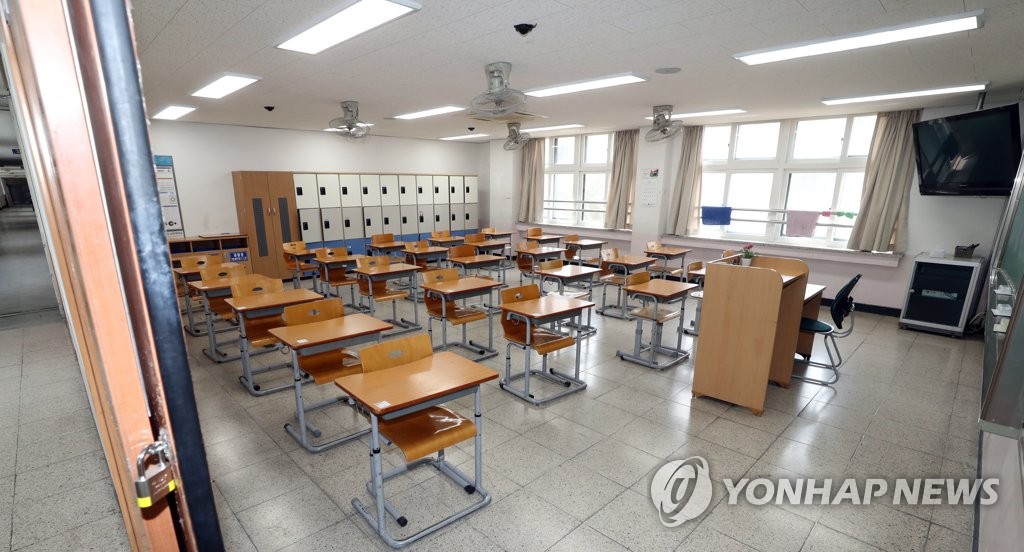
CSAT Essay-Type and Absolute Grading: Is It Really Finalized?
On the college admissions front, the scale is different. The issue grew when the National Education Commission stated in its presidential report in early August that it is reviewing a transition to absolute grading for all CSAT subjects and the introduction of essay-type evaluations. President Lee Jae-myung remarked, “Adults are ruining children just to make grading easier for themselves,” and the Minister of Education also expressed agreement with the need for a phased approach.
However, if you look at the timeline, it is clear that it is still in the ‘review’ stage. On August 3rd, the Commission issued a separate explanatory document, drawing a line that the introduction of absolute grading and essay-type questions is merely an agenda item being discussed by the special committee on college admissions, not a concluded decision. The schedule plans for public deliberation in the second half of this year and the finalization of the reform plan by March next year, with the likely target being the 2033 college admissions class, currently 6th graders. In other words, the current flood of news is closer to noise generated during the public opinion gathering process than an official announcement.
I understand the intent. Currently, only English, Korean History, and second foreign languages use absolute grading, while Korean, Math, and Inquiry subjects use 9-tier relative grading where only the top 4% get a grade 1. Changing these to absolute grading and adding essay-type questions could help move away from the “ranking” system of multiple-choice tests. But this is exactly where parents’ concerns begin.
The Real Reason 64% of Parents Are Worried
In a survey of 905 parents with preschool or elementary school children by the education firm Yoon’s, 45.2% of respondents cited the introduction of essay-type evaluations as the most critical issue in the college admissions reform. Interestingly, while more than half agreed with the intent, their reasons for viewing it negatively were clear.
Among parents negative about the introduction of essay-type tests, 63.7% cited the risk that it would “lead to a further intensification of private education costs” as the primary reason. Concerns about the fairness of grading or difficulty adjustment were secondary. The transition to absolute grading is similar; while the top reason for approval was “reducing stress on students,” 54.9% of concerned parents worried about “increased burden of university-specific admissions processes like interviews.” The calculation is that if you relieve the burden of being ranked by a single CSAT, that burden will simply shift to university-specific essay or interview requirements. It’s a textbook case of the balloon effect.
In other words, parents are worried less about the “change in testing method” itself and more about the fact that “they will likely have to rely on private education again to handle that method.” It’s natural to expect that since grading criteria for essay-type tests are not as clear as multiple-choice, private tutoring services offering “specialized coaching” will emerge first, and if university-specific tests increase, it’s a foregone conclusion that demand for essay academies will follow.
That is why what parents want most from education authorities is a “phased introduction starting from school education before full implementation.” This was the top response, at 30.9%. They are asking not to flip the system all at once, but to give public education time to digest it first.
How Is Private Education Spending Actually Moving?
I think we should briefly look at the numbers here. Aside from policy discussions, private education spending statistics have shown an unusual trend recently.
In 2025, the total expenditure on private education for elementary, middle, and high school students was approximately 27.5 trillion won, a decrease of 1.7 trillion won (5.7%) from the previous year’s 29.2 trillion won. This is said to be the first decrease in five years since 2020. At first glance, it looks like a sign that the burden of private education is easing. But there is a catch.
While the average monthly private education expenditure per student decreased by 3.5% to 458,000 won, for students who actually participate in private education, the cost actually increased by 2.0% to 604,000 won. The decrease in the total amount and participation rate means that more children are not receiving private education at all, but the households that do send their children to academies are spending even more. Even if the overall market pie has shrunk, the spending intent of those who participate has not wavered.
By school level, the average for participating students was 512,000 won for elementary, 632,000 won for middle, and 793,000 won for high school. The trend of the burden increasing as the grade level rises remains the same. The participation rate itself fell by 4.3%p from the previous year to 75.7%, and the weekly participation time decreased by 0.4 hours to 7.1 hours, but I think it’s too early to say the burden has lightened just by looking at these numbers.
Key Indicators of the 2025 Elementary, Middle, and High School Private Education Survey
| Category | 2025 | Change from Previous Year |
| — | — | — |
| Total Private Education Spending | 27.5 Trillion KRW | 5.7% Decrease |
| Private Education Participation Rate | 75.7% | 4.3%p Decrease |
| Weekly Participation Time | 7.1 Hours | 0.4 Hours Decrease |
| Avg. Monthly Cost per Total Student | 458,000 KRW | 3.5% Decrease |
| Avg. Monthly Cost per Participating Student | 604,000 KRW | 2.0% Increase |
Between Policy and Perception: What Is Misaligned?
Things seem to clarify at this point. The 3 PM dismissal and the CSAT reform both share the justification that “schools should take on more to reduce dependence on private education.” However, the actual direction they are moving is slightly different.
3 PM dismissal is a way for schools to absorb the childcare gap, and teachers are pushing back, claiming they are being given the responsibility without the necessary conditions. The CSAT reform is an attempt to reduce the pressure of competition by changing the evaluation method, but parents believe that the pressure isn’t disappearing; it’s simply shifting elsewhere—to university-specific admissions and essay-type private tutoring. Neither policy has yet provided enough assurance to reverse the reality shown by private education statistics: that “households that use it keep spending more.”
Of course, nothing is set in stone yet. The 3 PM dismissal is in the opinion-gathering stage at forums, and the CSAT reform plan will only be finalized next March. Since there will be regional debates and discussions by the National Participation Committee until then, the current reactions are more like sketches than the final picture. However, it is worth noting that parents repeatedly demand a “phased introduction.” The direction might be right, but there is a profound lack of trust in the speed and conditions. Honestly, I don’t know what the final reform plan will actually look like either.
References
- National Data Agency, 2025 Private Education Survey Results for Elementary, Middle, and High Schools
- Korea Policy Briefing, 2025 Private Education Survey Results for Elementary, Middle, and High Schools
- Kukmin Ilbo, Is the CSAT Changing Completely? Reviewing Absolute Grading and Essay-Type for All Subjects
- KBS, CSAT Absolute Grading and Essay-Type Introduction, Public Deliberation in Second Half... Reform Plan Finalized Next March
- Nate News, 'Multiple Choice' CSAT Overhaul Expected... Reviewing Absolute Grading and Essay-Type
- Reflecting on Education, National Education Commission's 'Absolute Grading for All CSAT Subjects'... 'Review Stage', Not Finalized
- Financial News, 'Agree with CSAT Reform Intent, But Worried About Rising Private Education Costs' 64% of Parents Concerned
- Korea Economic Daily, National Education Commission Revives '3 PM Dismissal' for Lower Elementary Grades... Teacher Unions Oppose
- Youth Daily, Pushing for '3 PM Dismissal' for Lower Elementary Grades... Teacher Unions Oppose, 'Ignoring Educational Environment'
- EduPress, '3 PM Dismissal, Not Childcare But Torture', Education Sector in Uproar
- EduPress, Education Sector Shocked by 'Elementary 3 PM Dismissal' Review... Democratic Party Says, 'Not True'