
Do you remember the ‘MERS (Middle East Respiratory Syndrome) Outbreak’ that swept through South Korea in 2015? It was quite a chaotic time. Despite the Korea Centers for Disease Control and Prevention announcing ‘rational’ data and stating they were controlling the spread… well, society moved in a completely different direction. In short, fear consumed reason.
As soon as unconfirmed reports like “A self-quarantined woman in her 50s went golfing” emerged, social media instantly became a megaphone for ’emotion,’ paralyzing reason.
This didn’t stop at just criticizing that one woman. Personal information was leaked, along with her husband’s profession (unrelated), the elementary school her children supposedly attended… and even completely absurd, granular rumors like “The child of the neighbor living across the street attends D Elementary School.” It spread uncontrollably.
The result? System paralysis. Schools, amidst an atmosphere where “no matter how much we explain, it won’t be accepted as is,” were bombarded with a barrage of complaint calls from parents. Ultimately, three elementary schools in the Daechi-dong area and numerous cram schools had to shut down, succumbing to that ‘irrational fear.’
This is a crucial point: this disaster wasn’t caused by a lack of ‘rational’ information. It was a disaster caused by the raging flames of ’emotion’ burning through the very circuits of ‘reason.’
This is precisely where Dr. Gini Graham Scott’s three-step conflict resolution model offers a powerful insight. The model she proposes is ‘Emotion - Reason - Intuition,’ or the ‘E-R-I’ model.
The core of this model is that ‘Reason (R)’ is not placed in the first step. Dr. Scott states bluntly: The top priority in conflict resolution is ‘Emotion Management (E).’ We saw this in the MERS outbreak, didn’t we? When the ‘flames of emotion (E)’ are out of control, ‘reason (R)’ merely becomes fuel (the act of ‘rationally’ searching and sharing rumors) or burns helplessly.
This is precisely the state where psychologist Daniel Kahneman’s fast, emotional ‘System 1’ completely takes over the slow, analytical ‘System 2.’ Dr. Scott’s E-R-I model is a highly practical manual for recognizing the runaway ‘System 1’ (E) and consciously switching to ‘System 2’ (R).
Therefore, this article will explore how the second pillar of this powerful three-step law, specifically the cold command in Part 1, Chapter 2, “Use Your Reason,” resolves all conflicts, from our petty squabbles to crises threatening organizational survival.
1. What Causes Conflict? (Reason’s ‘Diagnosis’)
Reason (R)’s first task, surprisingly, is not ‘resolution.’ It is ‘diagnosis.’ As the subtitle suggests, “What are the causes of conflict?” reason must target the core of the problem, not its superficial appearance.
The author argues that the true causes of conflict are not visible discrepancies like money or work methods. Instead, they lie behind them: ‘fundamental needs and desires,’ and ‘hidden fears.’ Reason’s role is like a detective, clearing away the fog of emotion to uncover these ’true causes.’
There’s a textbook example of how ‘reason’s’ diagnosis can fail disastrously: Coca-Cola’s ‘New Coke’ disaster in 1985.
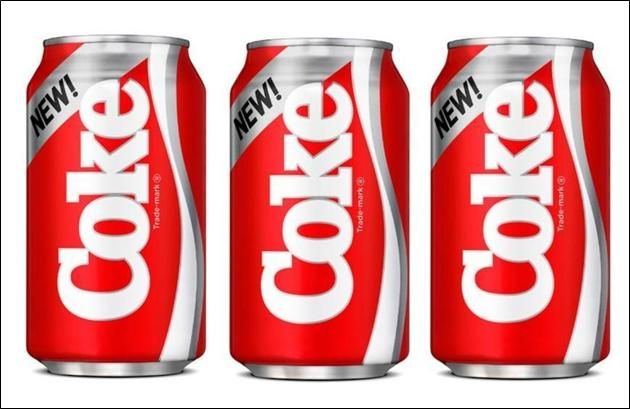
At the time, Coca-Cola faced a significant conflict, or rather a crisis, called the ‘Pepsi Challenge.’ They ‘rationally’ diagnosed the cause of this conflict as ’taste.’ To support this diagnosis, they mobilized the ‘greatest reason’ of the era. They dedicated two years, spent $4 million, and conducted blind tests on a staggering 200,000 consumers.
The data was overwhelming. It was ‘rationally’ proven that the new product, ‘New Coke,’ ’tasted better’ than Pepsi, and even better than the original Coke.
At the moment when all ‘rational’ indicators screamed “This is it!” and pointed to success, Coca-Cola launched New Coke and… experienced one of the worst marketing failures in history. Consumer protests weren’t about ’taste.’ They felt ‘betrayed,’ and eventually, Coca-Cola had to make a humiliating retreat by reviving ‘Coca-Cola Classic.’
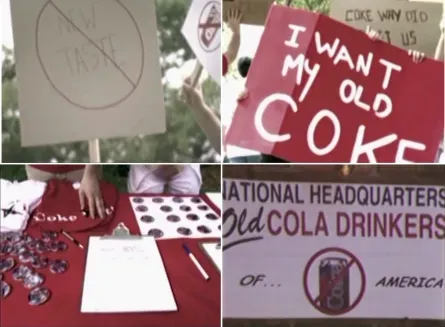
What exactly did their ‘reason’ miss? Coca-Cola’s reason completely misdiagnosed the ’true cause’ of the conflict. While measuring the ’taste’ (function) of 200,000 people, they failed to see the ’emotional attachment’ and ‘identity’—the ‘hidden desires’ in the hearts of hundreds of millions.
This is a ‘data trap’ and the ‘arrogance of reason.’ The ‘rational’ data from 200,000 people merely became a tool for ‘confirmation bias,’ justifying management’s ‘belief’ that “the new product will succeed.” They made the fatal mistake of completely excluding the domain of ’emotion (E)’—the fact that “people ’love’ Coke”—from the scope of ‘reason (R)’ analysis.
According to Dr. Scott’s model, reason’s first task is not to find the ‘answer.’ It is to ask the ‘right question.’ Instead of asking, “How can we make a better-tasting cola? (R),” they should have asked, “Why on earth do people drink our cola? (E+R)” Reason, failing to grasp hidden desires, merely commits ‘smart mistakes.’
2. Mastering Appropriate Strategies (Reason’s ‘Design’)
Once the true cause of conflict is identified, reason (R)’s second task is to formulate a ‘strategy.’ This is a systematic approach where, instead of lamenting “Oh no, what do we do?” amidst the storm of emotion (E), you design “What, how, and in what order?”
If the MERS panic was a case where ‘reason’ succumbed to ’emotion,’ here is a perfect counterpoint where ‘reason’ triumphed over extreme ’emotion’ (fear): the ‘successful failure’ of Apollo 13.
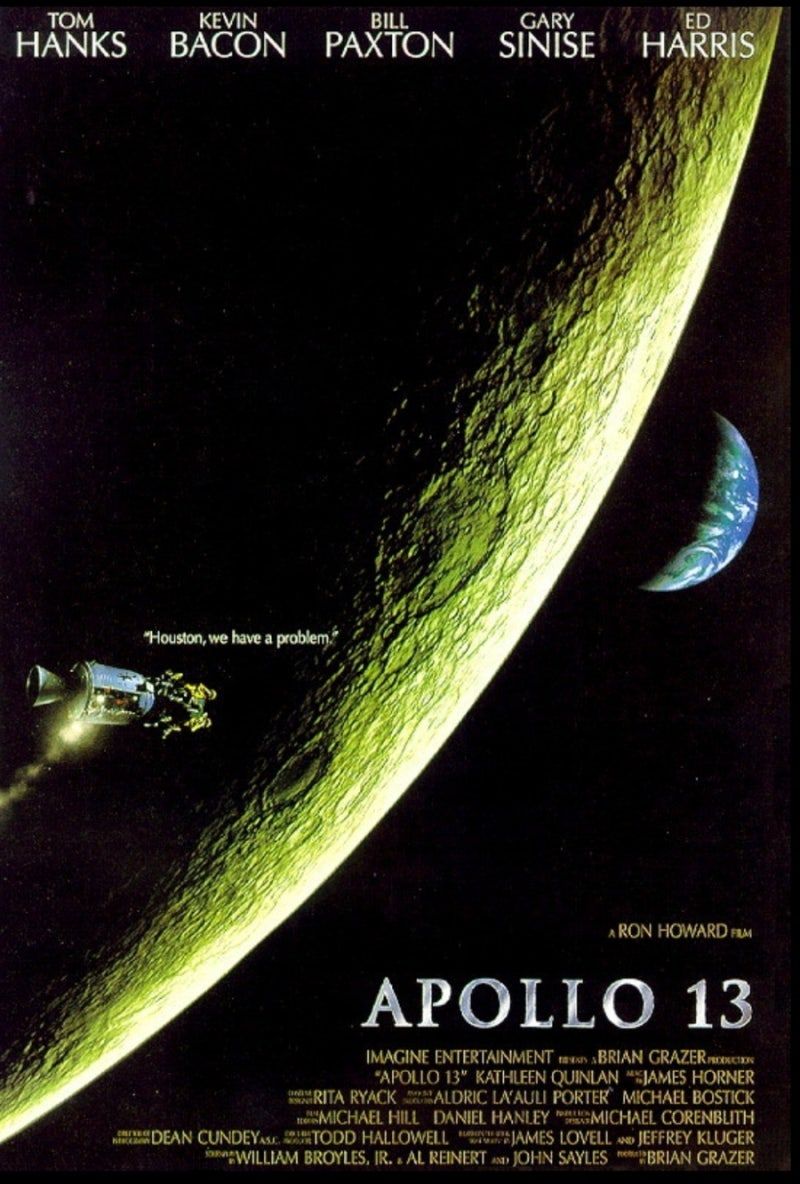
“Houston, we’ve had a problem.” We all know that line. An oxygen tank exploded, forcing the three astronauts to evacuate to the Lunar Module (LM). However, with three people in a two-person LM, carbon dioxide levels rose rapidly, bringing the deadly grip of fear (E).
The cause of the conflict was clear: a ‘square’ CO2 filter from the command module needed to be fitted into a ‘round’ opening in the lunar module. It seemed impossible. At the moment when the emotion of ‘impossibility’ (E) threatened to overwhelm everything, the engineers at Houston did not panic. They immediately engaged ‘reason (R).
Their ‘strategy’ wasn’t some stroke of genius. Rather, it was a remarkably ‘rational process.’
- Facing Reality (Defining the Problem): We need to connect a ‘square’ to a ‘round’ hole.
- Identifying Constraints: “Solve this using only items available inside the spacecraft.” Engineers dumped identical items (plastic bags, cardboard, tape, etc.) on the ground.
- Ground Testing (Design and Verification): They designed a solution called the “mailbox” using these ‘scrap materials’ and repeatedly tested it on the ground until it worked perfectly.
- Clear Communication (Process Execution): Since photo transmission was impossible, every step had to be communicated ‘verbally’ without a single error.
As a result, the astronauts survived by following these cold ‘rational’ instructions. The miracle of Apollo 13 is a perfect testament to the E-R-I model. They did not deny the emotion of “We’re going to die (E).” Instead, they transformed that emotion into the ‘rational’ problem of “We need to lower the CO2 levels (R).”
A ‘smart strategy’ is not asking “What do I do? (E)” in a conflict situation, but rather a ‘systematic procedure’ that asks, “What resources do we have? (R)” “What are our constraints? (R)” and “What is the first step to execute? (R).” This is precisely how Kahneman’s ‘System 2’ (conscious, analytical thinking that overcomes E’s interference) actually works, and it is the essence of reason in navigating survival amidst the flames of emotion.
3. Realizing When to Use Each Mode (Reason’s ‘Judgment’)
Reason (R) is not a universal hammer that responds identically to all conflicts. “Realizing when to use each mode” requires reason’s third task: ‘situational judgment.’
We often ’emotionally (E)’ misunderstand that ‘collaboration (win-win)’ is the most ideal, and ‘avoidance’ or ‘accommodation’ are bad or defeatist. However, ‘reason (R)’ provides a different answer. The core of reason is ‘selection and focus.’
The advice Warren Buffett, the oracle of investing, gave to his pilot, Mike Flint, is a prime example of the art of ‘rational letting go.’
- Buffett asked Flint to list “the 25 most important career goals you have.”
- Then, he asked him to circle only the ‘Top 5 most important.’
- When Flint replied, “I’ll focus on the Top 5 and tackle the other 20 when I have spare time,”
- Buffett firmly stated: “No, that’s wrong. Those 20 you didn’t circle are the ‘Avoid-At-All-Cost list.’”
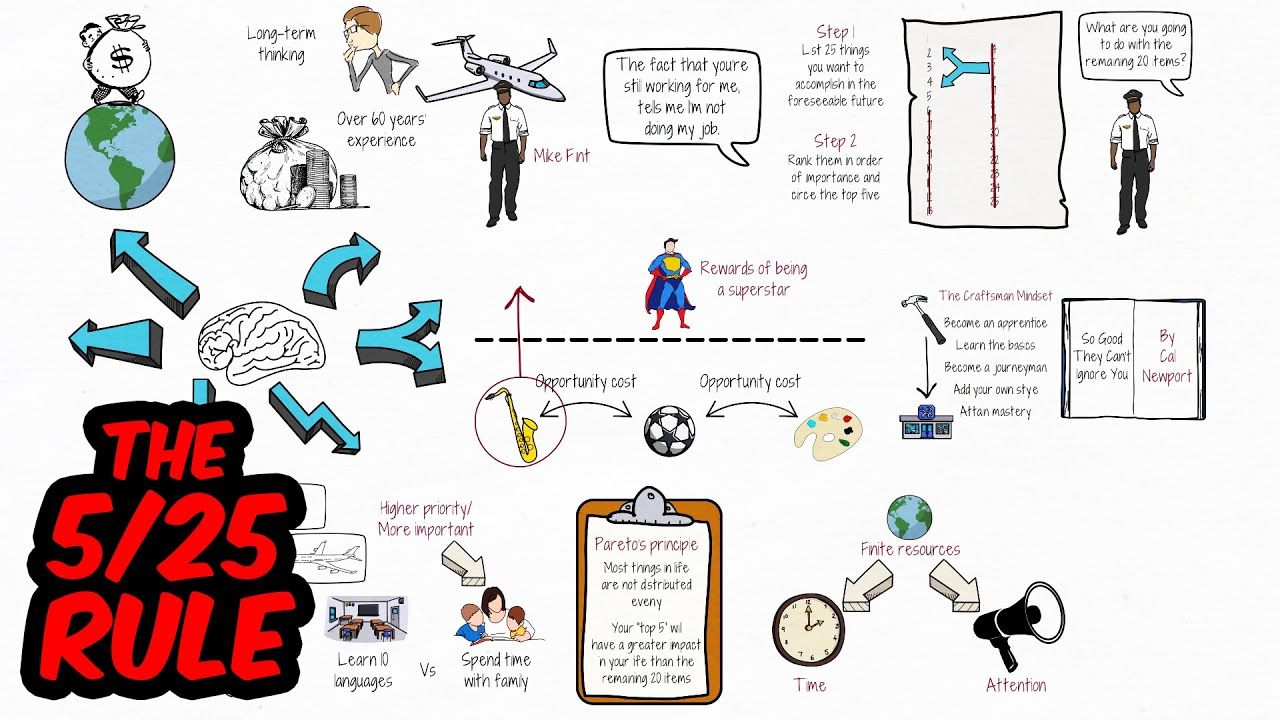
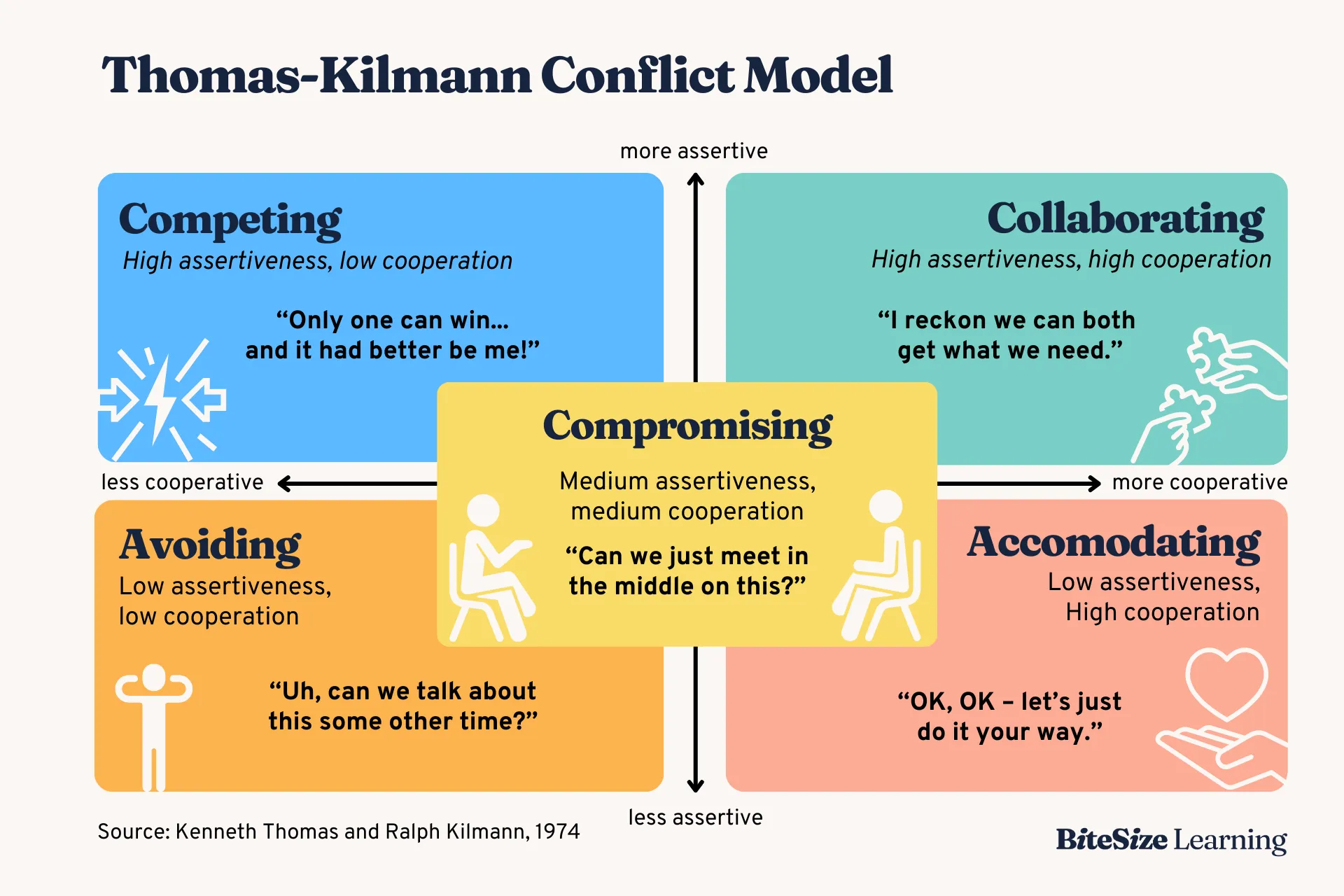
This is how to ‘rationally’ apply Scott’s five conflict modes:
- Top 5 (Most Important 5): This is where you must invest 100% of your energy in conflict. These are issues involving your core interests, and you must employ ‘competing (win)’ or ‘collaborating (optimal win-win)’ strategies.
- Bottom 20 (Avoid): This is where you should ‘strategically’ use ‘avoiding’ or ‘accommodating.’ These issues are not important in themselves, but rather they are the ‘most dangerous enemies’ and ‘attention thieves’ that hinder your ‘Top 5.’
The reason most people exhaust their energy on conflicts is that they pour immense emotion (E) and resources, suitable for ‘Top 5’ (competing), into ‘Bottom 20’ issues (e.g., petty ego battles, meaningless online arguments).
“Using your reason (R)” does not mean engaging in every conflict and fighting. Rather, it is a cold command to ‘avoid’ most conflicts. Reason is more powerful when deciding ‘what not to do’ than ‘what to do.’
Here are the five main modes of dealing with conflict using reason (Thomas-Kilmann Conflict Mode Instrument, TKI):
Competing / Collaborating / Avoiding / Accommodating / Compromising.
4. Considering Your Own and Others’ Approaches (Reason’s ‘Strategic Empathy’)
Conflict doesn’t happen in a vacuum, does it? It always arises within a ‘relationship.’ Therefore, reason (R)’s fourth task is to step outside our own ‘rational’ logical circuits and analyze the other person’s world.
“Considering your own and others’ approaches” is not just ethical advice like “Let’s be considerate of others.” It is a ‘strategic’ command to ‘rationally’ analyze the other’s perspective and communication style, using it as leverage for conflict resolution.
Nelson Mandela’s anecdote dramatically shows how reason’s highest form can transcend ’engineering problem-solving’ (Apollo 13) or ‘calculating priorities’ (Warren Buffett) to reach ‘strategic empathy.’
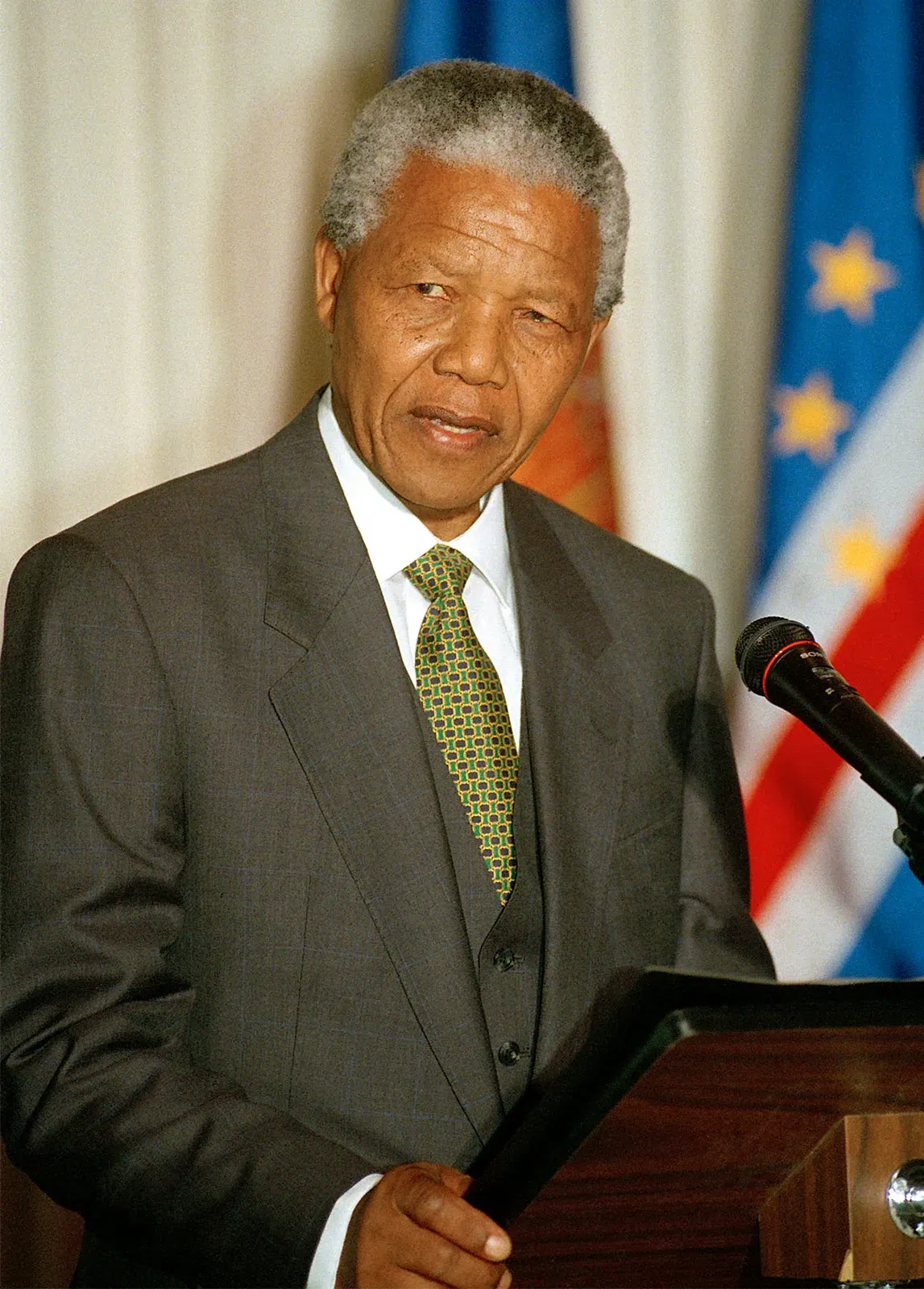
Mandela was imprisoned for 27 years fighting against apartheid (racial discrimination) in South Africa. Based on ’emotion (E),’ the white people (Afrikaners) who oppressed him and their language (Afrikaans) were truly objects of hatred that should disappear from the earth.
However, Mandela activated ‘reason (R)’ in prison. He decided to learn the ’enemy’s language,’ Afrikaans. Fellow inmates criticized him, asking, “Are you submitting?” But Mandela’s ‘rational’ goal was clear:
- To know the enemy: He learned their language “to understand their worldview.”
- To prepare for negotiation: “Because I knew I would fight or negotiate with them someday.”
- To win hearts: He didn’t just learn the language. He studied their history, their poetry, and even the rugby they were fanatically fond of.
His ‘reason’ yielded remarkable results. He won over the guards, turning them to his side, and years later, during his first secret negotiation with President P.W. Botha, the very heart of apartheid, he led the conversation fluently in Afrikaans, “completely disarming him.” Mandela ‘rationally’ mastered “how to speak to the opponent’s heart (emotion), not their brain (reason).”
This is the crucial difference between the ‘New Coke’ incident and Mandela’s decision. Coca-Cola executives failed miserably by not using ‘reason (R)’ to understand the ’emotion (E)’ of their ‘customers.’ Nelson Mandela mobilized ‘reason (R)’ to understand the ’emotion (E)’ of his ’enemies,’ thereby changing the world.
The true meaning of “Consider others’ approaches” is to coldly analyze not only the opponent’s ’logic (Logos)’ but also their ’emotions (Pathos)’ with my ‘reason (R).’ The moment you understand why the other person is acting so irrationally (E) and what their ‘hidden desires and fears’ are, conflict finally shows a glimmer of resolution.
5. Other Considerations (Reason’s ‘Self-Censorship’)
The final “other considerations” in the advice “Use Your Reason” might be the most important. This is because it’s a warning about the most fatal danger of ‘reason’ itself: ’the trap of reason.’
The moment we most strongly believe ourselves to be ‘rational,’ we can actually be the most ‘irrational.’
Human ‘reason (R)’ is not a noble ‘judge’ seeking objective truth. In many cases, frankly, in most cases, our ‘reason’ acts like a skilled ’lawyer’ hired to justify conclusions already reached by our ’emotion (E)’ (existing beliefs, prejudices, pride).
This is ‘confirmation bias.’ We ‘selectively’ seek information that confirms our beliefs (R), ‘interpret’ ambiguous information in our favor (R), and ‘remember’ only what aligns with our beliefs (R).

Let’s re-examine the anecdotes discussed earlier through the lens of ‘confirmation bias.’
- MERS Panic: People ‘rationally’ chose and shared ‘SNS rumors (biased information)’ that ‘confirmed’ their ‘anxiety (E)’ over ‘government announcements (rational data).’ Their reason became a servant of fear.
- New Coke Incident: Management relied solely on ‘blind tests (biased R)’ that ‘confirmed’ their ‘belief (E)’ that “taste is the problem,” ignoring data like “brand loyalty (contradictory information).”
- Nelson Mandela: Mandela’s greatness lies in overcoming this trap ‘rationally.’ Instead of information that ‘confirmed’ his ‘hatred (E)’ (the atrocities of white people), he intentionally studied ‘opposing information’ for ‘understanding’ (the enemy’s language, history, culture).
The smarter (Smart) people are, the more sophisticated their ‘rational’ logic becomes in justifying their emotional biases, leading them to commit more fatal mistakes (Mistakes). This is the most dangerous moment when ‘reason (R)’ is recaptured by ’emotion (E)’ in the E-R-I model, and when ’emotion (E)’ appears wearing the mask of ‘reason (R).’
Therefore, the most crucial “other consideration” in the advice “Use Your Reason” is this:
“Constantly question whether your reason is creating excuses for your emotions.”
True reason must first turn inward, towards oneself, before it turns towards others.
Conclusion: When the Coldest ‘Reason’ Meets the Hottest ‘Intuition’
Gini Graham Scott’s E-R-I model is like a lighthouse illuminating the challenging journey of conflict resolution.
All conflicts begin with a fire of ’emotion (E).’ In this blaze (MERS panic), we lose our way.
‘Reason (R)’ is the ‘firefighting system’ that controls this blaze. Reason analyzes the ’true cause’ of the fire (New Coke), devises a ‘strategy’ to extinguish it with ’limited resources’ (Apollo 13), ‘selects which fires’ to focus on (Warren Buffett), even understands ’the opponent’s fire’ (Nelson Mandela), and constantly checks if ‘my system’ is malfunctioning (confirmation bias).
However, ‘reason (R)’ is not the destination in itself. As Dr. Scott suggests, reason is the ’essential bridge’ to the third stage, ‘intuition (I).’
_ ‘Intuition’ devoid of ‘reason’ is merely another name for ’emotion (E).’ It is mere stubbornness or blind faith._
But when we utilize ‘reason (R)’ to its extreme—perfectly analyzing and controlling the causes of conflict, strategies, priorities, the opponent’s mindset, and even our own biases—the ‘optimal solution’ to complex problems transcends the realm of ‘calculation’ and enters the domain of clear ‘insight.’
This is what Dr. Scott calls ‘intuition (I).’
“Use your reason” does not mean becoming a cold machine. It is the most powerful and practical invitation to gain the qualification to reach ‘intuition’s’ wisdom, without becoming a slave to ’emotion.’
References
- Smart Mistakes You Didn’t Know You Were Making 2 (Gini Graham Scott)
- I’m Still Upset Today: Relationship Psychology for Ones Hurt by Others (Gini Graham Scott)
- ‘Irrational Fear’ Revealed in Daechi Elementary School Closure Incident [Maeil Business Newspaper]
- Training for Two Modes of Thinking: Strategies for Overcoming Cognitive Bias [JJKim Blog]
- Two Modes of Thinking (System 1, System 2) [Medium]
- Coca-Cola Failure Case [Daum Cafe Millennium Coke]
- Coca-Cola’s Dark History… Do You Know ‘New Coke’? [Hankook Ilbo]
- Lessons Learned from Failed Market Research Cases: The Data Trap and Consumers [K-Trendy News]
- Confirmation Bias [Wikipedia]
- Understanding Confirmation Bias: How the Brain Processes Information and How to Overcome It [The Brain of Psychology]
- Apollo 13 Infographic: How did they make that CO2 scrubber [Space Center Houston]
- Apollo 13 [Wikipedia]
- A Successful Failure: A Brief History of the Apollo 13 Mission [Bell Museum]
- Putting a Square Peg in a Round Hole [NASA]
- Warren Buffett’s 5/25 Rule Will Help You Focus On The Things That Matter [Medium]
- Warren Buffett’s “2 List” Strategy [James Clear]
- What is the Eisenhower Matrix? [IdeaScale]
- Eisenhower Matrix: How to Prioritize Your To-Do List [Asana]
- The story of Nelson Mandela [Canadian Museum for Human Rights]
- Learning the Language of the Enemy: 1962 to 1985 [Nelson Mandela Foundation]
- Nelson Mandela: the freedom fighter who embraced his enemies [The Guardian]
- Mandela: His 8 Lessons of Leadership [TIME]
- How Nelson Mandela used language to build a nation [John Sadowsky]
- Nelson Mandela meets President P.W. Botha [South African History Online]
- (Clue) Limits of Human Cognition and the Age of AI [Hi Jisoo Tistory]
- Overcoming One’s Own Biases [Harvard Business Review HBR]