
Redefining Conflict from ‘Event’ to ‘Signal’
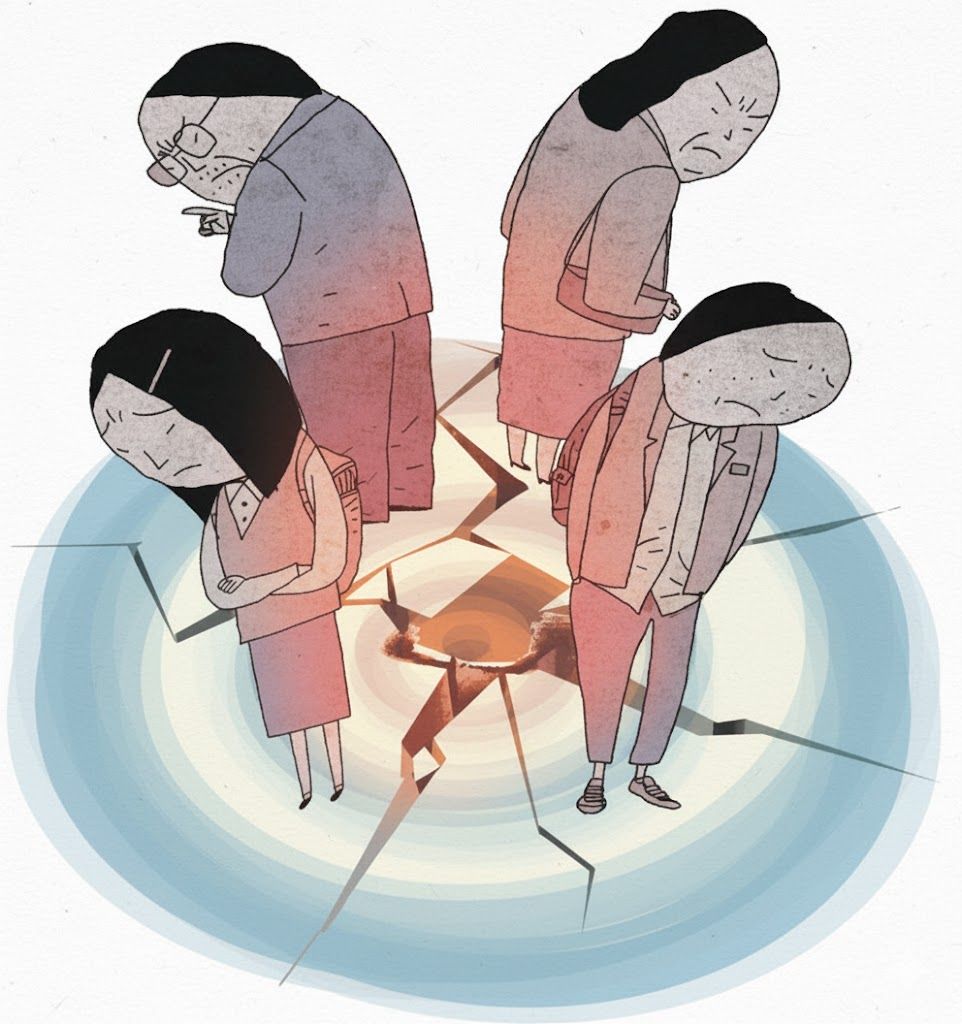
When we think of ‘fights’ or ‘conflicts,’ we usually remember them as ’events.’ Like, “The time that person yelled at me in the meeting,” “Those words she used to belittle my family,” or “The incident where my child lied again.”
But honestly, those are just the surface – the ‘symptoms’ that are revealed externally. The real problem isn’t the ’event’ itself, but the ’emotions’ hidden beneath it bursting forth.
Psychologist Dr. Jennie Graham Scott points this out with great sharpness.
Especially, you know those people who ‘just explode’? They are prime examples of not being able to control their emotions. They let their feelings dictate and escalate things.
He says that to overcome this seemingly insurmountable mountain of ’emotional control,’ it surprisingly starts with ‘identifying the root cause of the conflict.’
In other words, he’s not saying to suppress or just feel your emotions when trying to control them, but rather to analyze them coldly.
When you think about it, people who ’explode’ are people who have completely failed to find out where their current emotion started, the true root of that emotion, that is, what they ‘wanted’ (their needs) that led to this.
So, in this post, we will delve deep into the 5 steps of ‘identifying conflict causes.’
We’ll thoroughly examine everything from the surface appearance (event) of the conflict you’re experiencing to its deep inner feelings (needs).
You might realize, “Ah, the human mind works like this,” rather than learning mere arguing techniques.
Let’s unpack this 5-step process using the story of a married couple, Mina and Junho.
Their ’event’ was this: Husband Junho flatly stated he was buying an expensive professional camera. Wife Mina, already worried about money, yelled, “Are you out of your mind?” Junho retorted, “Have you ever respected me once!” and slammed the door as he left.
Beneath the emotions that erupted in ’explosions,’ how are the 5 steps of their inner feelings (needs) hidden? Let’s step into their minds now.
Part 1. Understanding Basic Needs and Desires: Why Do We Clash? (Step 1 Analysis)
The first key to resolving conflict starts with accepting a rather simple fact: all fights ultimately arise from the collision of ‘what I want’ and ‘what you want.’
Conflict isn’t inherently bad. It’s simply a powerful ‘signal’ sent by someone’s very important feelings, saying, ‘Please, just recognize me!’
The real problem is that we fail to see that ‘signal’ and instead cling to the other person’s ‘behavior’ or ‘personality.’ Saying things like, “Why are you like that?”
1-1. Does the Human Mind Have ‘Layers’? (Maslow’s Story)
Here, we need to borrow briefly from the famous psychologist ‘Maslow’ and his ‘Hierarchy of Needs.’ It’s not difficult. It simply means that there’s an order to what humans desire. It’s a kind of ’layer of the mind.’
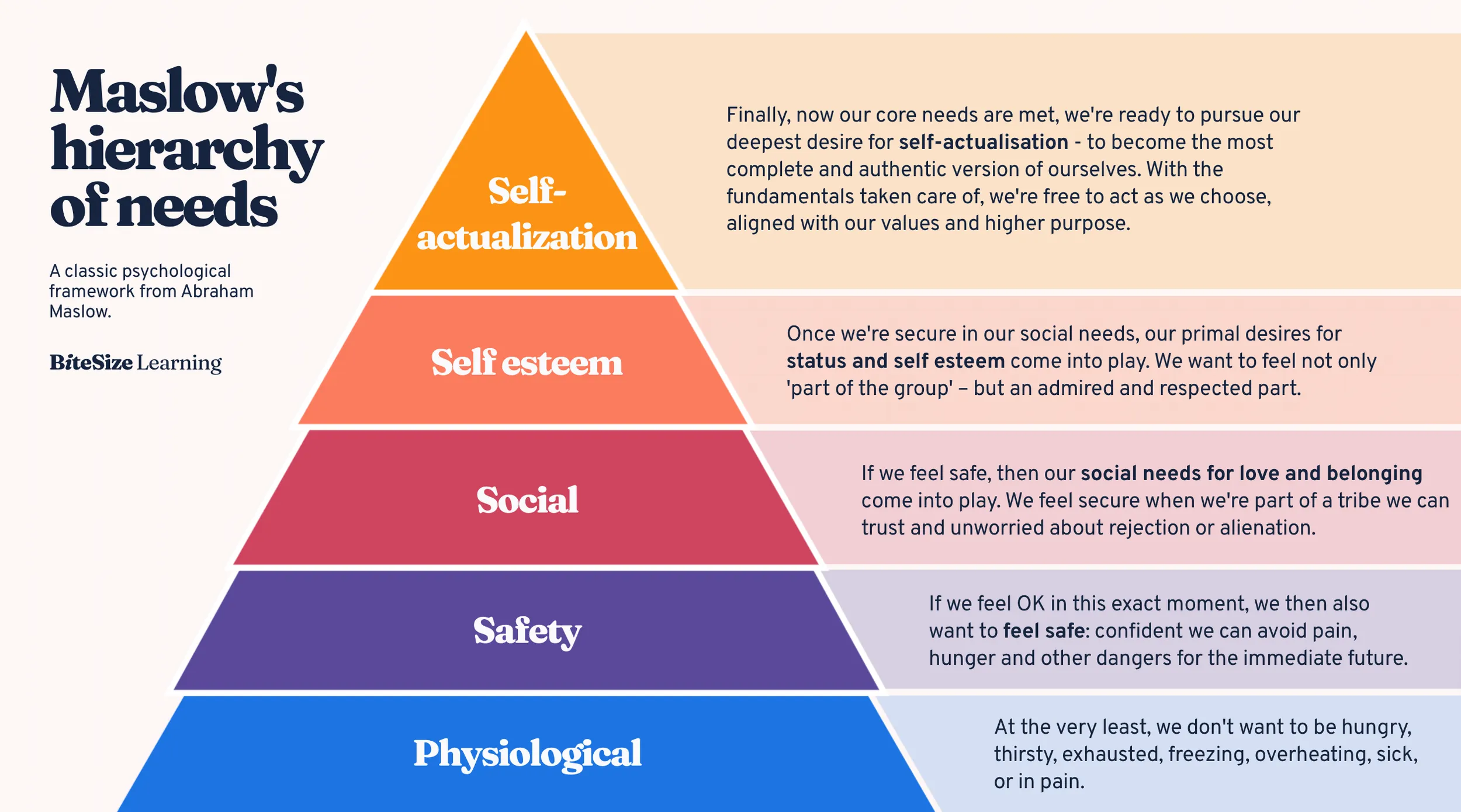
- 1st Layer (Physiological Needs): Eating, sleeping, breathing – the absolute basics for survival.
- 2nd Layer (Safety Needs): The desire to be unharmed, worry less about money, and live safely.
- 3rd Layer (Love and Belonging Needs): The desire to be loved by family and friends, to have ‘my people’ by my side.
- 4th Layer (Esteem Needs): The desire to be recognized by others, hearing “You’re cool,” “You’re doing well.”
- 5th Layer (Self-Actualization Needs): The desire to fully express one’s potential, saying, “This is me!”
We often think conflict arises because we want different things, “I want this, you want that,” but the reason fights become truly intense is different.
It’s because we are shouting our needs from ‘different layers.’
1-2. Real Case 1: The Urgency of ‘Layer 1’ vs. The Pleasure of ‘Layer 5’ (ADHD Husband and Pregnant Wife)
I saw a story recently on an online community that perfectly illustrates this clash of ’layers.’
It was a conflict between an ADHD husband and his pregnant wife. The wife was despairing because her husband was using loud power tools late at night or setting dozens of alarms every morning, preventing her from sleeping.
- Wife’s feelings (Needs): She’s pregnant. Her most urgent needs right now are ‘Layer 1: Please let me sleep (sleep)’ and ‘Layer 2: I want to rest securely (safety).’ This is a matter of survival.
- Husband’s feelings (Inferred): The husband might have been seeking ‘Layer 5: My hobby time (self-actualization)’ or ‘Layer 4: Acknowledge my way of doing things (respect).’
Now, if this husband said to his wife, about needs from Layer 3 (love) or Layer 4 (respect), for example, “We still love each other, right?” or “Respect my hobby too”… would she even hear him? Not at all. It would just sound like words from another planet.
For someone whose survival needs of Layers 1 and 2 are being destroyed, dreams of Layer 5 or talk of love can only sound like a luxury.
This is the same principle as a child whose ‘safety (Layer 2)’ is shattered by parental violence, failing to feel ’love (Layer 3)’ properly and becoming estranged.
1-3. Real Case 2: Layer Conflict at Work (Team Leader and Team Member)
These mismatched ’layer’ conversations happen all the time at work.
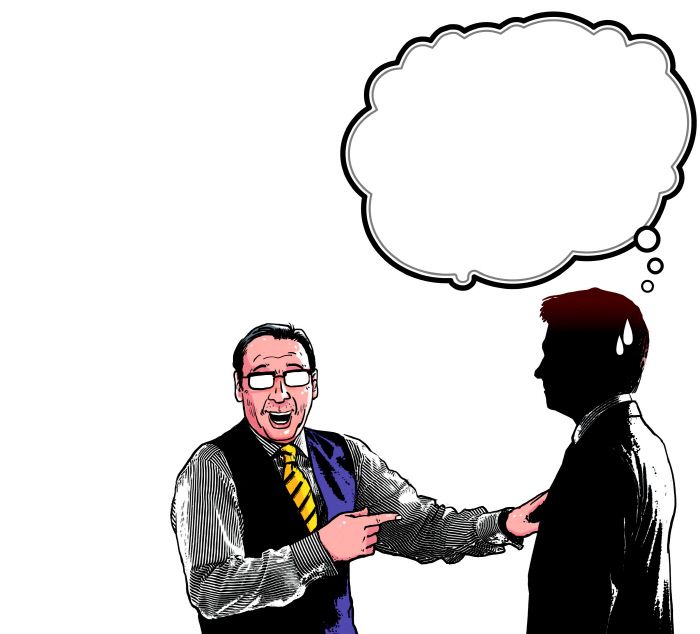
The ambitious Team Leader A wants to ensure the project’s success, even if it means working on weekends.
Why? Because they want ‘Layer 4: Recognition (respect)’ and want to ‘Layer 5: Prove my abilities (self-actualization).’
But what about the team members? They want ‘Layer 1: Rest (relaxation)’ and to protect ‘Layer 2: Their lives (work-life balance, health).’
For Team Leader A, this project is an opportunity for ‘growth,’ but for the team members, it’s a threat to their ‘survival.’
The reason team members are indifferent when the team leader shouts, “Let’s all pull together!” invoking ‘Layer 3: We are a team (belonging)’ is…
It’s because their more fundamental needs of Layers 1 and 2 are being ignored.
1-4. So, What About Mina and Junho?
Let’s return to the story of Mina and Junho. Let’s dissect their fight using the ’layers of the mind.’

-
Mina’s reason for ’exploding’: When she yelled, “Are you out of your mind?” it’s because her mind was firmly held by ‘Layer 2: Safety Needs.’
Having recently seen her parents’ significant medical expenses, she was trembling with financial anxiety (safety), thinking, ‘What if something happens? We don’t have emergency savings…’
-
Junho’s reason for ’exploding’: On the other hand, Junho’s outburst occurred because his ‘Layer 4: Esteem Needs’ were threatened.
For him, the camera wasn’t just an ’expensive item.’ He saw it as a ‘investment’ – a way to gain recognition (respect) from his wife as a photographer and perhaps start something new with it (Layer 5: Self-actualization).
Their fight wasn’t ultimately about the ‘camera.’ It was about Mina’s urgency of ‘I’m anxious! We need money for safety! (Layer 2)’ colliding head-on with Junho’s urgency of ‘Recognize me! I want to prove my worth! (Layer 4)’… each shouting from different layers.
Survival issues of Layer 2 make dreams of Layer 4 appear as nothing more than ‘childish extravagance.’
Part 2. Identifying Needs and Fears: Behind Every Need Lies a Fear (Step 2 Analysis)
Now that we know from Step 1 that their desires clash, Step 2 involves peeling back another layer of their minds.
It’s about looking at the flip side of those ‘desired feelings.’
What we truly need to understand is that the ‘desired feeling (need)’ and the ‘feared feeling’ are actually two sides of the same coin, inseparable.
2-1. The Front (Need) and Back (Fear) of a Coin
This is really, really important.
- Behind the desire to ‘be loved’ (Layer 3 Need)… lies the fear of ‘What if I’m abandoned?’
- Behind the desire to ‘be recognized’ (Layer 4 Need)… lies the fear of ‘What if I’m seen as useless?’
- Behind the desire to ’live safely’ (Layer 2 Need)… lies the fear of ‘What if I lose everything?’
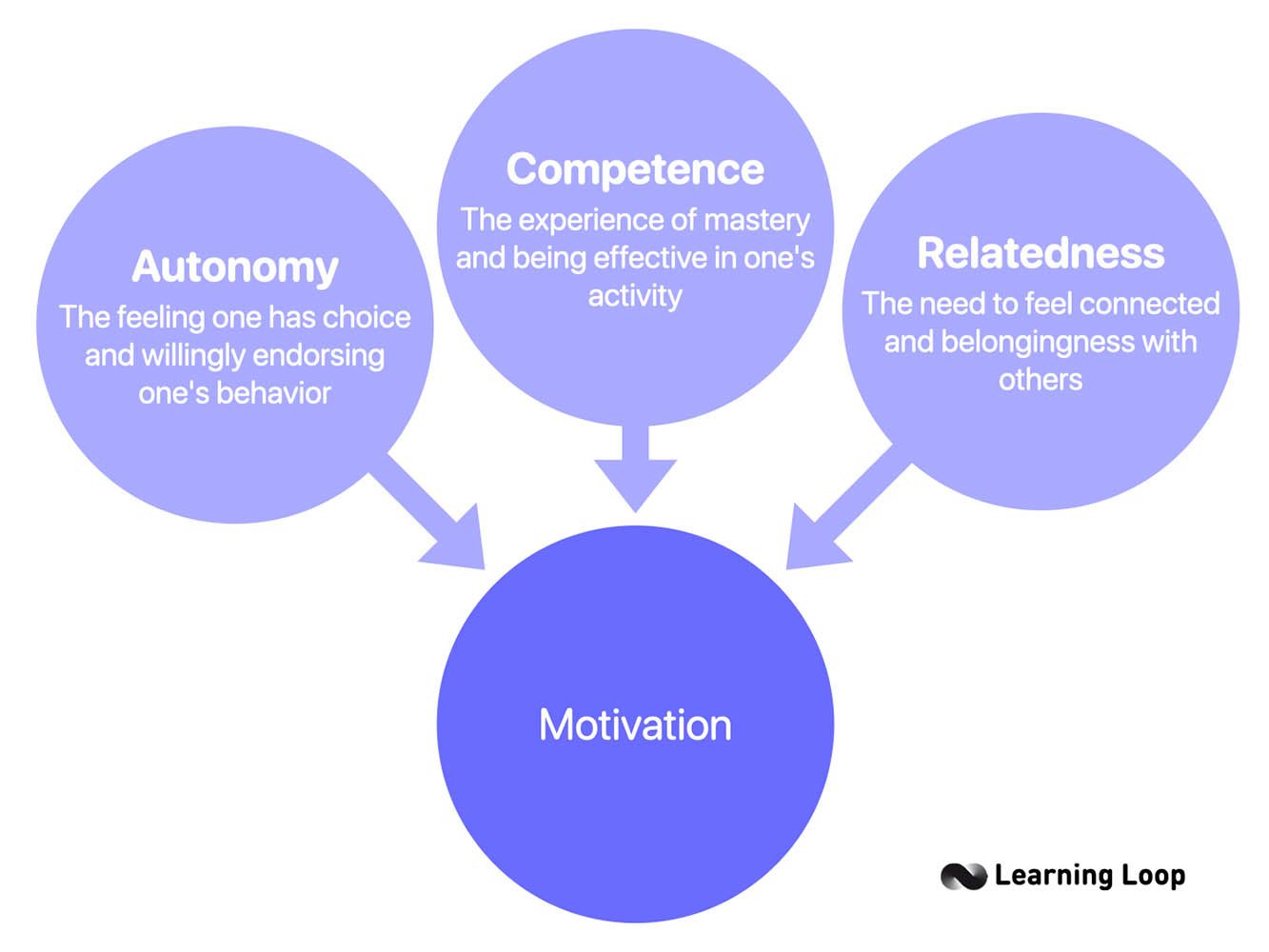
There’s a psychological theory called ‘Self-Determination Theory,’ which, despite its complex name, is simple in content.
It states that everyone has three basic psychological needs: ’the desire to act of one’s own free will (autonomy),’ ’the feeling of competence (competence),’ and ’the desire to connect with others (relatedness).’
Conflict arises precisely when these needs are ‘frustrated.’ And this frustration creates painful emotions in our minds like ‘fear,’ ‘anxiety,’ and ‘I’m useless.’
2-2. The Real Reason for ‘Exploding’: Are We Scared?
This is where the secret of the ’exploding’ person lies.
Anger, or ’exploding,’ isn’t because that person is powerful. It’s quite the opposite.
It’s a desperate shield and attack deployed to hide the ‘fear’ that arises from the frustration of one’s cherished ’needs.’
‘Fear’ and ‘anxiety’ are emotions that feel most painful and ‘weak,’ aren’t they?
So, a ‘psychological defense mechanism’ kicks in. It’s to cover up this vulnerable inner self. The fastest and most powerful shield among them is ‘aggression (anger).’
Therefore, an ’exploding’ person isn’t strong; they are actually yelling ‘because they are so scared.’ Their anger is equivalent to a scream of **“Help me!”
2-3. Real Case 3: When a Child Suddenly Yells (Hidden Fear)
Consider a teenager who yells, “Just stop it all!” “Leave me alone!” whenever they get their report card.
- Outward Behavior (Explosion): They get irritated and angry when parents ask questions.
- Outward Need: “Don’t interfere!” (Need for autonomy – ‘I want to do it my way!’)
- But the Real Feeling Hidden Inside (Fear): “Oh no… if my grades are bad again, Mom and Dad will be disappointed,” “Maybe I’m just not smart enough”… there’s the fear of ‘I’m not good enough (frustration of competence)’ and the terrifying fear of ‘I’m useless.’
If parents only see this anger (shield) and fail to see the fear within, responding with their own anger (shield) by saying, “How dare you talk back to your parents!”…
The child’s fear is confirmed as ‘real,’ and the relationship is simply broken.
2-4. Mina and Junho’s True Fears
Now, back to Mina and Junho.
-
Mina’s Fear: Behind Mina’s desire to ’live safely (Layer 2)’ lay a ‘deep-seated fear of becoming poor.’
She had clearly witnessed her parents struggling financially during her childhood. For her, the terror that “one wrong choice can ruin everything” was almost ingrained like her skin. Junho’s camera… felt like it had pressed the ‘start button for ruin’ for her.
-
Junho’s Fear: Then what about Junho? Behind his desire to ‘be recognized (Layer 4)’ was an ’extreme fear of becoming useless.’
In reality, at his company, his ideas were repeatedly rejected, leading him to feel a daily sense of frustration, thinking, ‘Am I only this capable?’ The camera felt like the only lifeline saving him from this swamp of ‘uselessness.’
Let’s revisit the moment of their fight. When Mina snapped, “Are you out of your mind?” Junho didn’t hear his wife’s ‘concern.’
He felt like he had received confirmation of the very voice he feared most, “You are useless”… spoken by his wife. That’s why he uncontrollably ’exploded’ so fiercely, saying, **“Just respect me!”
Part 3. Fulfilling Mutual Needs: Turning a ‘Zero-Sum Game’ into a ‘Win-Win Game’ (Step 3 Analysis)
Okay, in Step 1 we learned that ’they want different things,’ and in Step 2 we discovered that ’they are both actually afraid.’ So what is Step 3? It’s finding a ‘path where both can be satisfied.’
This is neither ‘winning’ (competition) by only looking out for my needs, nor ’losing’ (accommodation) by only meeting the other’s needs. This stage is about moving towards ‘winning together (collaboration)’ by finding a way to be satisfied together ‘without giving up.’
3-1. ‘Stated Claims’ vs. ‘True Underlying Needs’
But why does most fighting not lead to ‘winning together,’ resulting in one party exploding or festering?
It’s because we fight clinging only to ‘stated claims (positions)’ rather than our ’true underlying needs (desires).
- Claim (Position / Strategy): The ‘solution’ I want right now. (e.g., “I’m buying the camera!” vs. “Absolutely not!”)
- Underlying Need (Desire / Interest): The real ‘reason’ I’m insisting on that ‘claim.’ (e.g., “I want recognition” vs. “I’m anxious”)
This is the conclusion from decades of research by the Harvard Negotiation Project.
Successful negotiation is only possible when focusing on the ‘interests’ hidden behind the ‘claims,’ that is, the ‘underlying needs (desires),’ not the claims themselves.
There can be hundreds of claims, but the underlying needs we truly desire are few and universal.
3-2. A Safe Way to Communicate ‘Underlying Needs’ (Nonviolent Communication, NVC)
There’s something called ‘Nonviolent Communication (NVC).’
Although the name sounds grand, it’s a very concrete and powerful communication method that translates stated ‘claims’ into ’true underlying needs,’ opening the path for mutual win-win.
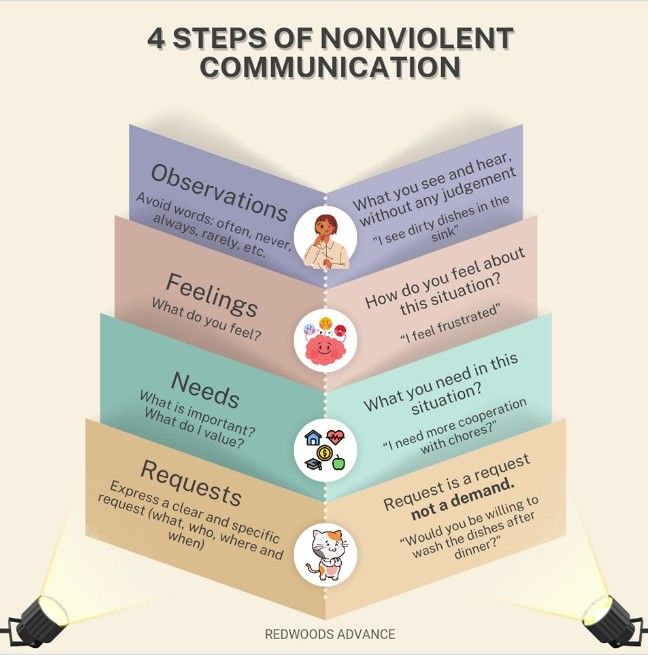
Created by Marshall Rosenberg, it has 4 steps: Observation, Feeling, Need, Request.
These 4 steps perfectly align with the flow of the mind we analyzed in Parts 1 and 2 (Event → Emotion → Cause/Need).
- Observation: State only the ‘facts’ that occurred, without judgment or criticism.
- (X) “You’re always late!” (This is a judgment)
- (O) “We agreed to meet at 7, and you arrived at 7:30.” (This is a fact)
- Feeling: State ‘my emotions’ about that fact. (Not ‘judgments’ about the other person)
- (X) “You ruined my mood.” (Judgment)
- (O) “I felt disappointed and a bit lonely.” (My feeling)
- Need: State the ‘underlying need’ that wasn’t met, causing my emotion.
- (O) “Because it’s really important to me that we keep the promises we make.” (My underlying need)
- Request: Ask for a ‘specific action’ you want from the other person to meet that underlying need.
- (X) “Don’t be late anymore.” (This is a command)
- (O) “If you think you might be late next time, could you let me know 20 minutes in advance?” (Specific request)
NVC helps us say, instead of “You’re so irresponsible! (criticism)” something like, “I’m feeling very anxious right now. Because safety is really important to me [underlying need].”
The other person, instead of putting up defenses, can listen with empathy, thinking, ‘Ah, I see.’
This is the magic key to turning a ‘you die, I live’ game into a ‘you live, I live too’ win-win game.
Honestly, it’s not as easy as it sounds. It takes a lot of practice!!!
3-3. Real Case 4: Even NVC Can Become ‘Violent’ Communication if Used Incorrectly (Dishwashing Fight)
But NVC is just a tool. The ‘intention’ behind using it is far more important.
- Failed NVC (Criticism disguised as NVC):
- “You didn’t do the dishes last night [Observation], and seeing them this morning made me really annoyed [Feeling]. Because a clean environment is important to me [Need]. Do the dishes right now [Request].”
- → Analysis: On the surface, it looks like NVC, but expressing ‘annoyance’ or demanding ‘do it now’ is simply criticism. The other person will immediately prepare to defend themselves. This is because it’s not sharing ‘underlying needs’ but attacking to change ‘behavior.’
- Successful NVC (Communication for True ‘Connection’):
- “When I saw the dishes piled up last night [Observation], I felt really exhausted and a bit lonely [Feeling]. Because it’s really important to me to feel like we’re a ’team’ helping each other, not just me doing all the chores [Need for partnership]. Could we perhaps talk for just 10 minutes this evening about how we can share the chores? [Request]”
- → Analysis: There’s no criticism here. Instead, the honest feeling of ‘I’m exhausted’ and the core underlying need of ‘We’re a team’ are conveyed. The other person is much, much more likely to perceive this as ‘a request for help’ rather than ‘an attack.’
3-4. What if Mina and Junho Tried NVC?
Let’s imagine Mina and Junho, after cooling down for a few days, try NVC.
-
Mina (Instead of criticism): “(Clears throat) Junho, when you said yesterday that you wanted to buy a 2 million won camera [Observation],
I… honestly, I was really scared [Feeling].
Having ’emergency savings’ that we can rely on if something unexpected happens is really important to me [Need].
Could you… listen to me fully when I explain why I’m so worried about this issue? [Request]”
-
Mina (Instead of defense): “Hearing you say that… I didn’t realize my plan would make you so scared.
Honestly, I was also very frustrated and angry when you spoke yesterday [Feeling].
Because… for me, that camera isn’t just an object; it felt like an ‘opportunity’ to prove my worth and start something new [Need].
I want you to recognize how important this is to me [Need].”
For the first time, Mina and Junho will hear each other’s true feelings – not about the ‘camera (claim),’ but about ‘safety (Mina’s underlying need)’ and ‘proving worth (Junho’s underlying need).’
Part 4. Finding Hidden Needs and Fears: The Power of Listening That ‘Reads Between the Lines’ (Step 4 Analysis)
Well, having reached Step 3 (NVC) and shared their underlying needs with each other… let’s go one step further.
It’s about finding ‘hidden’ needs and fears.
What does this mean? It refers to the deeper inner feelings that lie beyond what the other person consciously knows and expresses, as they did in Step 3 – those that are too difficult to articulate, or more accurately, that they themselves are not fully aware of.
4-1. Why Are Underlying Needs ‘Hidden’?
If they are underlying needs, why are they hidden?
- Fear of Appearing Too Weak: Because saying “Actually… I want to be loved” feels too weak and embarrassing. (Vulnerability)
- Not Knowing Oneself: Sometimes you just feel ‘annoyed’ for no reason. You don’t know the identity of your own feelings. (Unconsciousness)
- Too Complex: Various feelings are tangled together, making it impossible to explain in a single sentence. (Complexity)
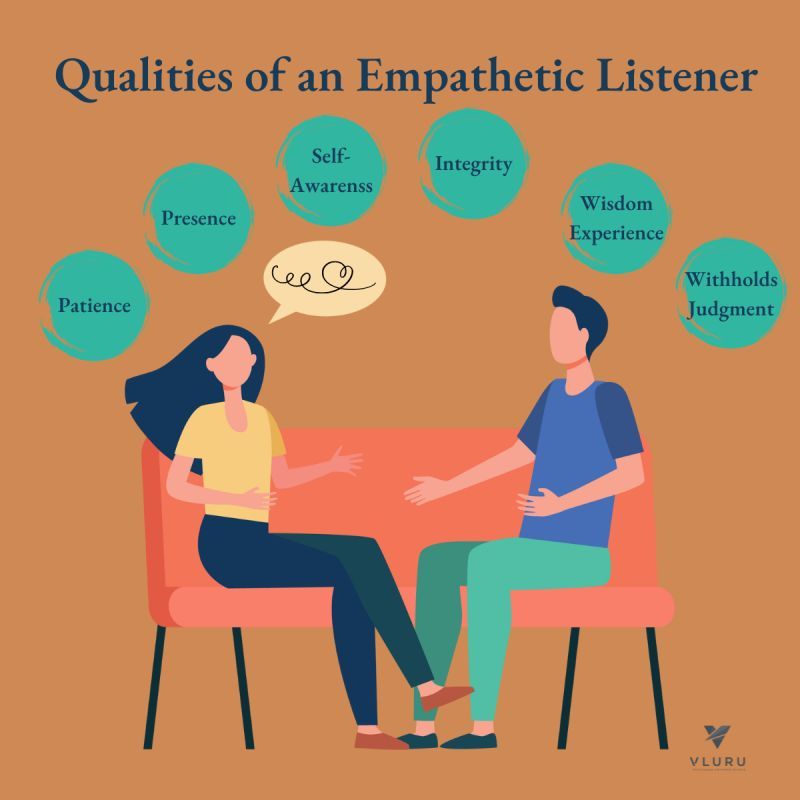
The only tool to discover these ‘deeply hidden inner feelings’ is… yes, ‘good listening (empathy).’
4-2. Are You Just ‘Pretending to Listen’? (The 5 Stages of Listening)
Stephen Covey, the author of “The 7 Habits of Highly Effective People,” explains how much we misunderstand the word ’listen’ with his ‘5 Stages of Listening.’ This is truly remarkable.
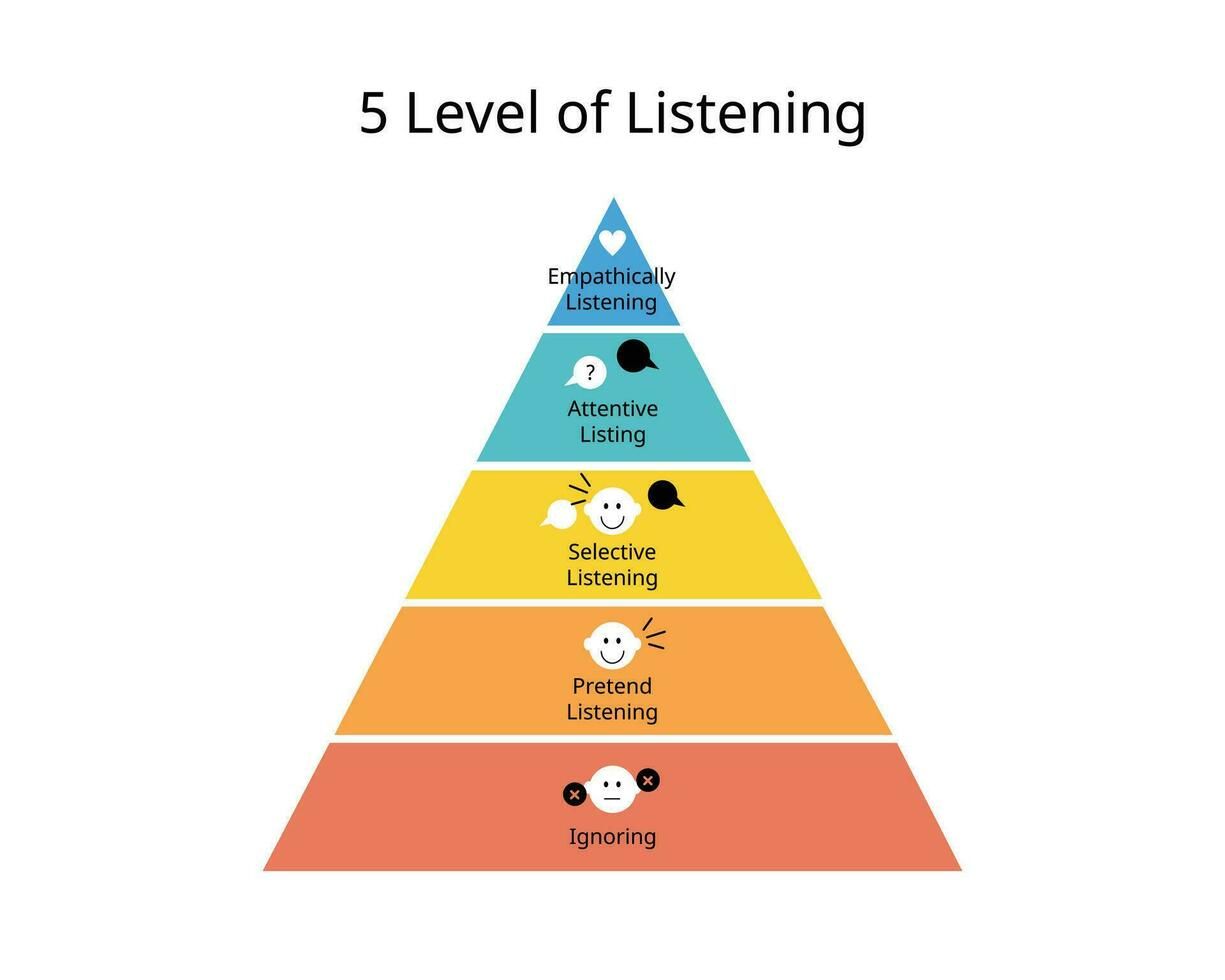
[Table 1: The 5 Stages of Listening That Dominate Conflict]
| Level | Name | Focus (Who are you listening for?) | Goal | Impact on Conflict |
|---|---|---|---|---|
| Level 1 | Ignoring | Self | Not listening | Conflict explosion |
| Level 2 | Pretending | Self | Formal responses (“Mm,” “Ah”) | Escalates the other’s frustration |
| Level 3 | Selective Listening | Self | Listening only to parts beneficial to me (preparing to rebut) | Where most conflicts reside |
| Level 4 | Attentive Listening | Other (Words) | Understanding the Content | Understands the problem, but misses the emotions |
| Level 5 | Empathic Listening | Other (Heart) | Understanding Feelings and Meaning | Discovers hidden needs |
Do you see what this table is telling us?
Shockingly, most people mistakenly believe they are at least at Level 4 (Attentive Listening).
But in reality? They’re stuck at Level 3 (Selective Listening).
In other words, they are listening not to ‘understand,’ but to ‘find something to rebut.’
‘Hidden inner feelings’ cannot be found even by listening only to ’the content of words’ at Level 4.
Only when we follow the ‘waves of emotion’ and the ‘real message’ carried by the words, not the words (content) themselves, through ’empathic listening (Level 5)’ can we barely perceive them.
The original meaning of ‘understand’ is ’to stand under.’
It means that only when we try to see ‘What is the world like from your perspective?’ from a more humble, lower position than the other person’s eye level, can we truly see that ‘hidden feeling.’
4-3. Real Case 5: This is What ‘True Listening’ Looks Like (A Friend’s Complaint)
When a friend complains, “I really want to quit my job. My boss is completely clueless!” what stage is your response at?
- Level 1 (Ignoring): (Looking at phone) “Oh, really? But I’m hungry.”
- Level 2 (Pretending): “Oh, really? What happened?” (Without sincerity)
- Level 3 (Selective): “The boss? Hey, my boss is no joke either. Yesterday, you know…” (Changes the topic to my story)
- Level 4 (Attentive): “What did the boss assign you to do this time? Tell me the specifics.” (Focuses only on the ‘content’ of the event)
- Level 5 (Empathic): “Listening to your voice… you sound really exhausted. It feels like… you worked hard but weren’t recognized? [Interpreting feelings and true meaning]”
Now, how would your friend react if you responded at Level 5? “Exactly! Recognition, my foot… Actually, I submitted proposal A…” (The real story about ‘wanting recognition,’ the ‘hidden inner feeling,’ finally begins to unfold.)
4-4. Mina Finally Discovers Junho’s ‘True Underlying Need’
Back to Mina’s story. Although they had a conversation using NVC in Part 3, Mina still couldn’t fully understand why Junho, who wanted to ‘prove his worth,’ had to buy a ‘camera’ of all things.
She stops at Step 3 (preparing to rebut with “See, it’s just extravagance after all”) and attempts Step 5 (‘Empathic Listening’).
“This ‘proving worth’ you mentioned… I want to hear more about it. At work… do you feel disrespected? Did something happen?”
After a long hesitation, Junho confesses the real ’event’ that happened a few days ago. A junior colleague had a breakthrough with a project using new AI technology, and he felt like he was stuck with outdated technology… feeling a sense of ‘defeat’ and ‘anxiety.’
Discovery of the ‘Hidden Underlying Need’:
Junho’s ‘hidden underlying need’ went beyond simple ‘recognition (Layer 4)’ to the problem of ‘I want to be a useful person too (competence)’ and ‘If I fall behind like this, it’s the end (survival).’
He felt the ‘hidden fear’ of ‘I’ll soon be obsolete in the AI era.’ The camera felt like his only escape route to maintain ‘his own expertise,’ independent of AI.
Isn’t it truly surprising? Digging as deep as Level 4 revealed that Junho’s underlying need was, in essence, the same as Mina’s desire to ’live safely (Layer 2)’ – a ’need for survival and security (Layer 2).’
He was simply expressing the same fear as his wife, just in a different way.
Part 5. Prioritizing the Other’s Needs: It’s Not ‘Losing,’ It’s ‘Choosing’ (Step 5 Analysis)
Finally, the last Step 5. It’s about ‘prioritizing the other’s needs.’
… Ah, hearing this might lead to the misunderstanding, “What? After all that effort in the first 4 steps, are we finally told to let one person just endure?” I thought so too at first. But it’s not like that.
This is not about ‘sacrifice.’ Looking at ‘Thomas-Kilmann,’ another name that sounds difficult but is a useful ‘5 Conflict Management Styles (TKI Model),’ we can understand the strategic meaning of this final piece of advice.
5-1. We Choose One of Five When We Fight
The TKI model views us as falling into 5 types based on how much we assert ‘our claims’ and how much we cooperate with ’the other’ when conflict erupts.
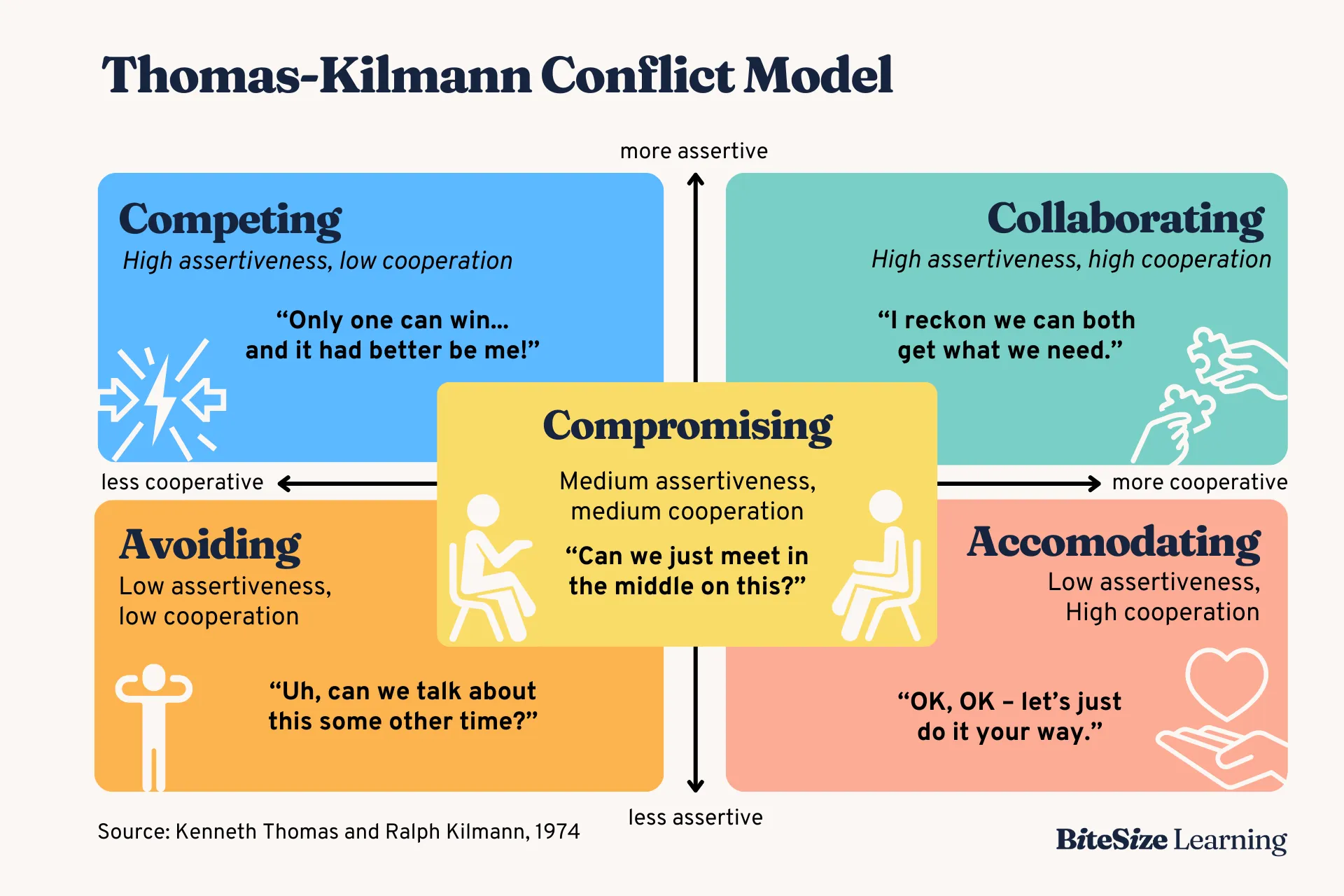
- Competing (Assertiveness ↑, Cooperativeness ↓): “Forget it, do it my way!” (Only I win, Win-Lose) → The ’exploding’ person’s method
- Avoiding (Assertiveness ↓, Cooperativeness ↓): “Ah, I don’t know… just avoid it.” (Both lose, Lose-Lose)
- Accommodating (Assertiveness ↓, Cooperativeness ↑): “Okay… I’ll do as you say.” (I concede, Lose-Win)
- Compromising (Moderate, Moderate): “Then you get this, and I get that. Let’s compromise halfway.” (Both lose a little, Draw)
- Collaborating (Assertiveness ↑, Cooperativeness ↑): “Let’s not give up on what you want or what I want!” (Both win, Win-Win)
5-2. ‘Pretending to Lose’ is the Best Strategy for ‘Winning Together’
Now, looking at this table, the advice of ‘prioritizing the other’s needs’ in Step 5 can be interpreted in two very high-level ‘strategic’ ways.
-
Interpretation A: Genuinely ‘Accommodating’ (Accommodating)
This is literally letting the other person win.Why is this a strategy? When the subject of the fight isn’t very important to you (e.g., What should we eat for dinner?), or when the damage of the relationship breaking down due to the fight is greater, you wisely step back ‘strategically.’
This isn’t ’enduring’; it’s ‘choosing’ for the sake of the relationship.
-
Interpretation B: The Gateway to ‘Collaborating’ (Winning Together)
However, if we have completed Step 4 (understanding hidden underlying needs), we can move towards a much better ‘Collaborating’ (Winning Together) outcome.‘Collaborating’ is the optimal state where both your claim and the other’s claim are high, meaning neither your underlying needs nor their underlying needs are abandoned.
In this context, the true meaning of ‘prioritizing the other’s needs’ is adopting an ‘attitude’ of first acknowledging and empathizing with the other’s ‘hidden underlying need’ identified in Step 4, in order to reach the destination of ‘collaboration.’
Why is this important? Because it doesn’t mean ‘abandoning (giving up)’ my needs.
It’s the most sophisticated ‘strategy’ to ‘open up mental space’ for the other person to hear my story.
People, at the very moment they feel, “Ah… they understood my feelings,” finally lower their shields and prepare to listen to my story.
5-3. Mina and Junho’s Final Conversation: Finding a Path Where Both Win
This is the final conversation between Mina and Junho. Mina understood Junho’s ‘hidden fear (What if I become obsolete?)’ in Step 4. And she realized, ‘Ah, this person, just like me, was anxious because they wanted to live with ‘security.’’
Mina opts for the Step 5 strategy for ‘winning together (B)’ instead of ‘accommodating (A)’ (Fine, just buy the camera!) or ‘competing’ (“Absolutely not!”).
Mina (Acknowledging the other’s underlying need first - Step 5): “I really didn’t know… you were so afraid of ‘falling behind’ at work.
I’m sorry for making you bear that anxious feeling alone.
Your sense of security from having your own expertise is really important to me too [Acknowledging the other’s underlying need first].”
Mina (Asserting my own underlying need as well - Collaboration): “And… at the same time, my desire for our family’s financial security is also very important [Asserting my own underlying need].”
At this very moment, they completely let go of the ‘claim’ of the ‘camera.’
And they begin to find new ways to satisfy both core goals: ‘Ensuring Junho’s expertise (Junho’s underlying need)’ and ‘Family’s financial security (Mina’s underlying need).’
-
Final Solution (Win-Win): They decide to postpone the camera purchase for six months. Instead, starting this month, they agree to enroll in a government-supported ‘Professional AI and Photo Editing Course’ (immediately satisfying Junho’s need for ’expertise/survival’).
And Mina, while slightly lowering her emergency fund goal, agrees that they will sit down together every weekend, review their budget, and cut unnecessary expenses (immediately satisfying Mina’s need for ‘security’).
This is ‘collaboration.’
Final Conclusion: Conflict is Not the End, But the Beginning of Deepest Understanding
This ‘5-step conflict root cause analysis’ is… honestly, it’s not a simple arguing technique.
It’s a long journey that starts with the outward appearance of conflict (event), goes through the storm of ’exploding’ emotions, and reaches…
the deepest part where we meet our true inner selves: ‘I wanted this, and you wanted this too,’ and ‘Actually, we were both afraid.’
Think about it. If Mina and Junho had clung only to the ‘claim’ of the ‘camera,’ they would have scratched and clawed trying to ‘win,’ or one would have ’endured’ and become sick inside.
But through the 5 steps, they realized that their deepest ‘underlying need’ (to live securely) was actually looking in the same direction.
A ‘hot-tempered’ person is someone who yells because they don’t know why they’re angry, what they want, or what they fear. And what about a ‘patient’ person? They might be someone who doesn’t even have the courage to look into their own inner feelings, let alone the other person’s.
When we ‘genuinely listen with empathy’ to the ’true underlying feelings’ hidden behind their anger or our silence (Step 4), and ’truly empathize’ (Step 5), conflict transforms from a ‘war’ into an ‘opportunity’ for the deepest mutual understanding.
Right now, at what stage does your conflict reside?