
In the courtyard of a former official’s house in Yangyang, a glowing object the size of a washbasin rose into the air.
The Gwanghaegun UFO record is a report compiled by Gangwon Governor Yi Hyeong-uk, documenting eyewitness accounts from five districts in Gangwon-do on the 25th day of the 8th lunar month, 1609. While four of these locations describe a large daytime bolide (fireball), the account from Yangyang does not quite fit that pattern.
Who recorded the Gwanghaegun UFO and how?
The report reached the royal court one month after the incident, recorded in the Annals of King Gwanghaegun, dated the 25th day of the 9th lunar month, in the first year of his reign. The Gangwon Governor compiled reports from districts within the province, and the royal historian recorded them as they were. This record is distinguished from other folklore by its inclusion of dates, times (based on the 12 zodiac signs), district names, and the social status of the witnesses.
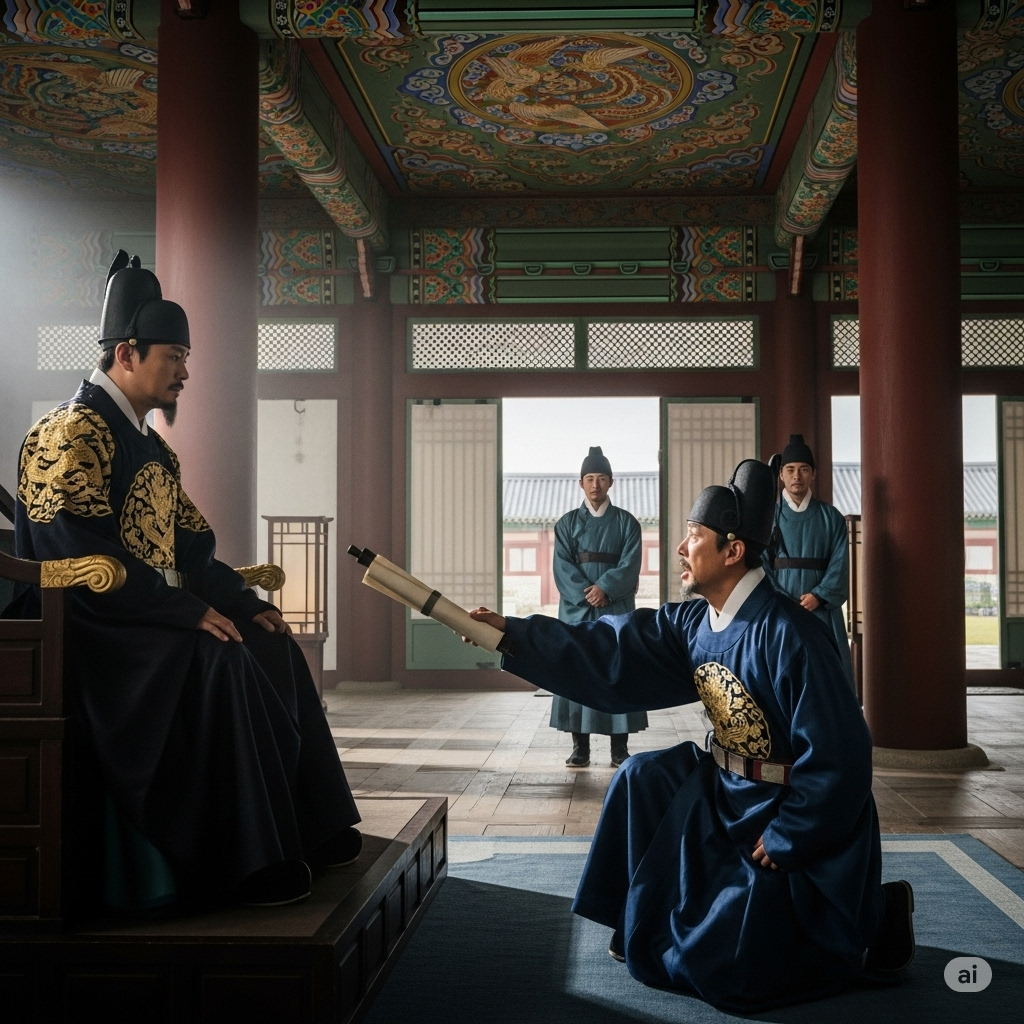
The reason the Joseon dynasty meticulously recorded such events lies in the philosophy of Heaven-Human Interaction (Cheon-in-gam-eung). Celestial anomalies, or ‘jaei’ (disasters and strange phenomena), were interpreted as Heaven’s assessment of the King’s governance. In his first year of reign, facing post-war public sentiment and questions about his legitimacy, Gwanghaegun could not afford to dismiss such celestial signs lightly. The political stakes were precisely why the records had to be accurate.
Comparing the five eyewitness accounts: Gwanghaegun’s Gangwon UFO
The observations from the five Gangwon-do districts in the Annals are summarized chronologically below.
| District (Modern) | Time | Appearance | Sound | Movement |
|---|---|---|---|---|
| Ganseong (Goseong) | Sa-si (9-11 AM) | Two streaks of smoke-like energy | Thunder, drum sounds | Moved then stopped |
| Wonju | Sa-si (9-11 AM) | Like a spread red cloth | Loud thunder | From south to north |
| Gangneung | Sa-si (9-11 AM) | Large gourd shape, very red | Thunder | Descended and grew to 3-4 jang (approx. 9-12m), left white trail |
| Chuncheon | O-si (11 AM-1 PM) | Large basin-like fireball | Thunder | Like an arrow to the north, smoke tail |
| Yangyang | Mi-si (1-3 PM) | Round and glowing like a washbasin | Drum sound (at end) | Rose, changed color, split in two |
The first four districts share clear commonalities: clear skies, red light, long tails or white smoke trails, delayed thunder, and a trajectory from south to north.

The Bolide Hypothesis: Four districts explained
A bolide is a meteoroid significantly brighter than an ordinary shooting star, visible even in daylight. As it enters the atmosphere, burns, and breaks apart, it leaves a smoke trail, and the sonic boom reaches the ground several seconds to minutes later. The 2013 Chelyabinsk meteor over Russia is a prime example, leaving a long white smoke trail in the morning sky followed by a deafening roar and shockwave.
The accounts from Ganseong, Wonju, Gangneung, and Chuncheon align closely with this phenomenon. The description of the object in Gangneung “growing larger as it fell” is a common perception for an approaching meteor, and the snake-like smoke tail in Chuncheon is interpreted as the meteor’s trail scattering in high-altitude winds. The fact that each region used different descriptions—‘cloth,’ ‘gourd,’ ‘basin’—actually serves as proof that these were independent, uncolluded eyewitness accounts.
However, there is a limitation. A single bolide passes within seconds. The fact that the recorded times span from Sa-si to Mi-si suggests that either the times were recorded roughly, or multiple objects fell. The Annals alone cannot determine which is the case.
Kim Mun-wi’s courtyard in Yangyang: The core of the Gwanghaegun UFO record
The Yangyang account is different in nature.
During Mi-si, in the courtyard of former official Kim Mun-wi, a round, glowing object like a washbasin appeared above the ground under the eaves. It initially seemed to descend, then rose about one gil (approx. 3m). The Annals record, “It was as if some energy were lifting it into the air.” It was about an arm’s span in size and roughly half a bolt of cloth in length.
The colors are also specific: white on the east side, blue in the center, and red on the west. As it rose back into the sky, the whole object turned red, split into two in mid-air; one part disappeared like smoke, while the other scattered into white clouds with a sound like a drum.
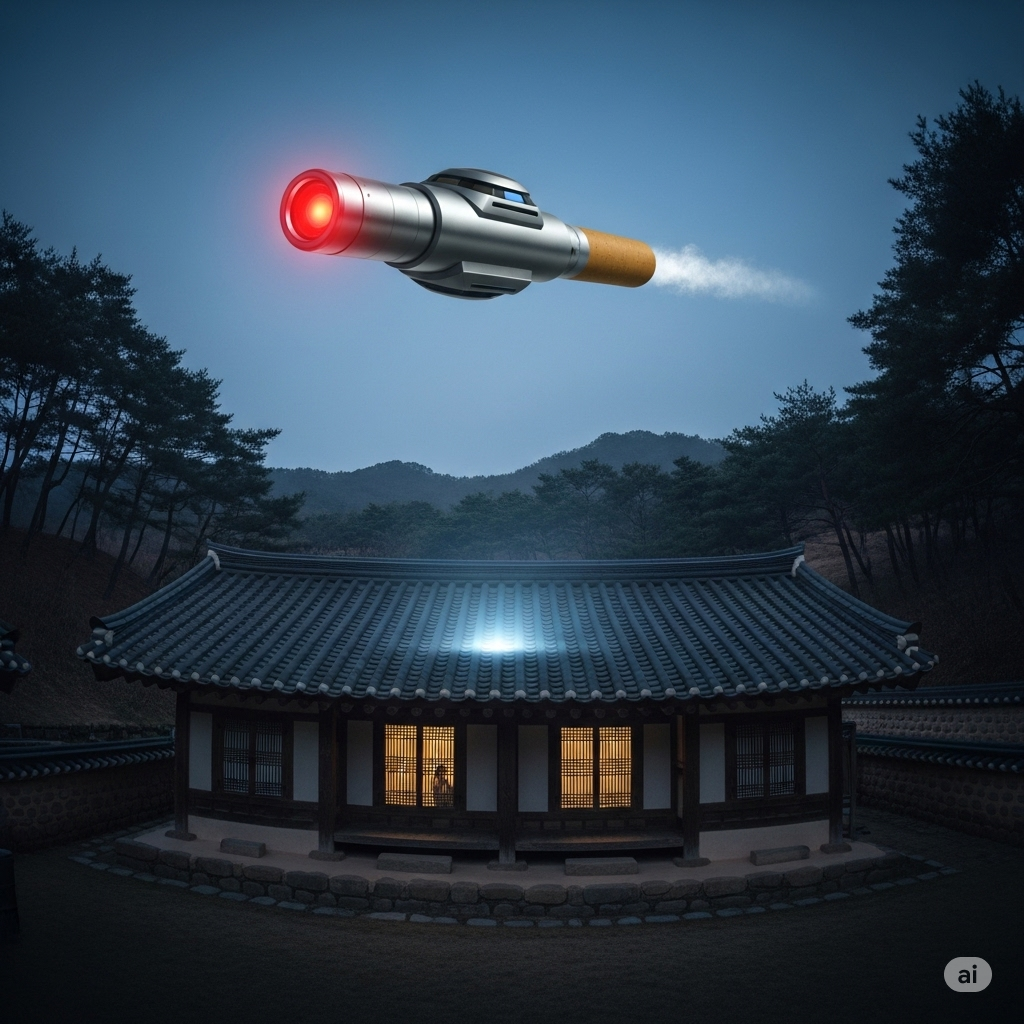
Even the ‘splitting’ and ‘drum sound’ could be explained by a bolide. The issue is the movement rising from near the ground. A falling meteor cannot rise again from a courtyard height. Some view this as two separate events: the morning bolide, and a separate, unrelated phenomenon in Yangyang hours later. The possibility of rare atmospheric luminous phenomena like ball lightning, or an exaggerated account on a day when the whole province was looking at the sky, cannot be ruled out.
Why it remains unsolved after 400 years
Science can account for the observations up to the four morning districts. The Yangyang account involves witnesses from a single household, and there are no other regional records to cross-verify it. Unless further evidence emerges, it is more honest to label it ‘undetermined’ rather than ‘unexplainable.’
Nevertheless, the value of this record is clear.
Officials did not turn what they saw into stories of dragons or immortals, but instead compared them to familiar, tangible household items like gourds, basins, and washbasins.
Because they recorded the time, direction, color, and sound for each district, we are able to apply the bolide hypothesis 400 years later. This tradition of observation continued with the astronomical and meteorological records of the Gwangsang-gam (Bureau of Astronomy), and the political situation Gwanghaegun faced early in his reign can be explored further in Gwanghaegun Assessment: The Light of Neutral Diplomacy and the Shadow of Removing the Queen and Killing the Brother. How an anxious era interpreted signs from the heavens is also worth reading alongside Why ‘Jeonggamrok’ Became a Hope for the People.
References
- National Institute of Korean History, Annals of the Joseon Dynasty, Records of King Gwanghaegun (Draft) 1st Year, 9th Month, 25th Day
- National Institute of Korean History, Annals of the Joseon Dynasty, Records of King Gwanghaegun (Original Draft) 1st Year, 9th Month, 25th Day
- Gangwon Ilbo, Thunder Sounded in the Skies of Gangwon-do in 1609 (2023-03)
- Korea UFO Investigation and Analysis Center, Investigation of Joseon Dynasty UFO Records