
About the Invisible Scars We All Have
Questions That Stop Hasty Judgments: The Wounds of Others
A colleague who explodes in anger over a minor mistake, a customer who snaps at a service worker for no reason. When we encounter such scenes, we often judge the other person rather than consider their wounds. We might think, ‘Why is their personality like that?’ or ‘They have no patience.’ But have you ever paused to ask yourself these questions?
“What has that person experienced that I have not, leading them to hold such views? If I had gone through similar experiences, would I think the same way?”
These two questions serve as a compass, guiding us from the swamp of judgment to the path of empathy. They point to an important truth in our lives: “Wounds heal, but scars remain.” The ‘wound’ of an event may heal over time, but the memories, the changed thoughts, and the new perceptions of the world—the ‘scars’—remain forever, altering how we live.
The poem ‘You Only Know When You Experience It’ by writer Kim Hong-shin illustrates this truth clearly: “You know hunger when you’ve been hungry; you know health is a great asset when you’ve been sick; you know something is precious only after you’ve lost it.”
Abstract knowledge is cheap, but experiential knowledge is gained through pain and loss. This poem perfectly explains why we cannot fully understand another’s perspective without understanding their ‘scars.’ Experience is the only teacher that imparts value.
The experiences of hardship and loss we endure are like assets that cannot be fully conveyed to others. Just as Helen Keller imagined the value of seeing the world from her perspective in her piece ‘If I Could See the World for Three Days,’ we cannot directly ‘know’ another’s experiences. We can only think we do.
Ultimately, each of us carries a unique portfolio of wisdom gained from our own ‘scars’ that cannot be transferred. To judge someone hastily is to disregard the precious portfolio they have earned through suffering. We need to reinterpret another’s ‘prickliness’ or ‘sensitivity’ not as a character flaw but as a rational response based on their unique experiential data.
The Scar of Inexperience: “Why Is It So Difficult?”
One of the most common errors in judgment we make stems from not understanding why something easy for us is so difficult for someone else. This is because we fail to see that the ‘scar tissue’ they carry can turn even the simplest tasks into monumental challenges.
The Scar of Panic – Fear of Water
For someone who loves water, an adult who fears swimming pool water may seem incomprehensible. The advice, “Just relax and float!” is useless to someone who bears the scar of nearly drowning.
Stories of those who have overcome aquaphobia vividly illustrate how deep and powerful this scar can be. The feeling of uncontrollable panic the moment their feet leave the ground, and the process of learning basic breathing techniques to overcome this fear is a struggle in itself.

The process of overcoming a fear of water is not merely about acquiring a skill; it is more about reconciling with oneself.
This journey is not just about learning to swim; it is a journey of reconciling with water and oneself. The moment we understand this scar, our perspective shifts from “Why are they so fearful?” to “What must it feel like to stand before deep water with that fear?”
The Scar of Frustration – The Silent Instrument
Watching a beautiful performance might make one think, “Should I give it a try?” But when they finally pick up an instrument, they become frustrated by the gap between the melody in their head and the noise their fingers produce. This is the moment when the scar of humility is etched.
Self-teaching an instrument makes it difficult to diagnose ‘what is wrong,’ and one easily falls into the temptation of skipping boring foundational practice. However, neglecting that foundation will inevitably catch up with them later, like karma.

The scar left by this experience is a deep reverence for ‘mastery.’ Anyone who has truly tried to learn an instrument will never again conclude that a professional musician is simply ’talented.’ They come to understand the thousands of hours of frustration and repetition hidden behind that smooth performance, the invisible scar tissue.
The Scar of Stumbling – The Humble Bicycle
Learning to ride a bicycle as an adult is a grueling training process that requires overcoming fear and embarrassment. The advice, “Just pedal hard!” is lost on a beginner overwhelmed by the fear of falling and the shame of others’ gazes.
The stumbles and falls, the scraped knees are small scars, but they teach us the ordinary truth that confidence is built on the experience of overcoming instability. Thus, the process of learning physical skills is a ‘hidden curriculum’ that teaches us patience, humility, and the importance of good guidance.
The Scar of Broken Beliefs: “That Wasn’t It”
Now, let’s move beyond physical skills to the world of intellectual and emotional beliefs. Here, the ‘scars’ are the remnants left when our biases and preconceptions shatter.
The Scar of Reality – The Truth Behind the Postcard
We embark on journeys filled with sparkling photos and romantic fantasies. However, travel is never just highlights. It includes discomfort, hardship, and culture shock.
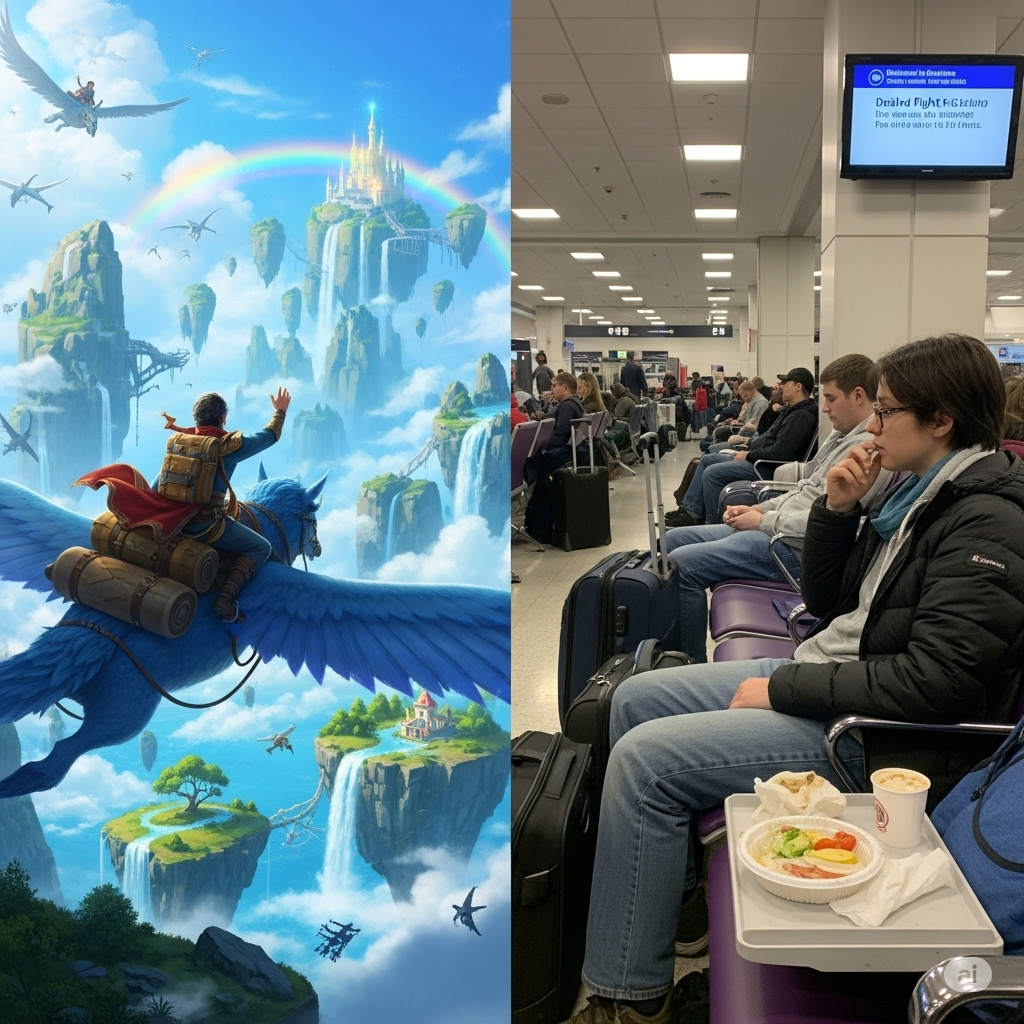
Experiencing traffic jams behind beautiful temples in Southeast Asia, or feeling the culture shock of paid restrooms in Europe alongside freedom, leads to ‘wounds’ from the clash between expectations and reality. The ‘scar’ left behind is a permanent skepticism towards simple narratives. Those who have truly traveled no longer see the world in black and white.
The Scar of Emotional Labor – Never an Easy ‘Easy Task’
“What’s so hard about just answering phones all day?” Such careless thoughts about service jobs hide immense emotional exhaustion. Customer service representatives often bear the pressure of becoming the company’s ’emotional trash can.’

Those who have experienced such jobs develop a lasting empathy for service workers. They understand that the forced smiles of employees are not genuine but rather a professional shield to protect themselves from constant emotional attacks. This ongoing emotional pressure can easily lead to what is commonly referred to as burnout syndrome, leaving deep scars on an individual’s mental health.
The Amusing Scar – The Betrayal of JPEG Files
Online shopping fails are familiar to us all. The absurdity of receiving a hat that was clearly mint green on the screen but turned out to be ‘green latte’ in reality. This amusing failure also leaves a small but significant scar: ‘healthy skepticism.’ This experience teaches us not to trust appearances alone and to carefully check additional information like detailed measurements or purchase reviews.

Once a scar forms, our perspective changes permanently. Someone’s ‘cynical’ or ‘critical’ attitude may not be a negative personality trait but rather a learned defense mechanism left by the scars of experience.
Scars That Reshape the Heart
Now, let’s talk about the deepest scars that change not just how we think but who we are.
The Eternal Echo – The Ghost of First Love
People say you never forget your first love. Whether it’s a beautiful memory or a painful scar, that experience leaves an eternal echo in our hearts, becoming a ‘scar’ that shapes future relationships.
The scar of first love becomes a ‘reference point.’ It sets our expectations for intimacy, vulnerability, and the pain of heartbreak. When we meet someone who is wary or cynical about love, asking, “What was their first love like?” can be the key to understanding them.
The Beautiful Burden – Learning the World Again Through a Child’s Eyes
Becoming a parent is one of the most revolutionary experiences in life. It inflicts deep wounds on your past ‘self’—your freedom, sleep, and identity. However, the scars left behind create a new and infinite space for love and patience.

Parenting is a journey where parents learn from their children. As we raise our kids, we realize that “losing our temper” is not a tool for discipline but a failure of self-control, and that a child is not a project to be molded but a complete individual deserving understanding.
This is perhaps the ultimate scar that redefines a person. Here, the ‘wound’ is the death of a self-centered individual. The ‘scar’ that remains is the new identity of ‘parent.’ When we see overly cautious or weary-looking parents, we can never understand their choices without imagining the weight of love and responsibility they carry.
Conclusion
From small wounds to deep scars that reshape the heart, we have confirmed that everyone’s perspective is a mosaic of unique experiences.
Just as Helen Keller ‘saw’ the essence of the world without sight or hearing, we can strive to ‘feel’ the scars of others without directly experiencing their journeys. This is also a core element of emotional intelligence (EQ). Practicing the question, “What has that person experienced?” is an attempt to develop a new vision that sees with the heart.
- Key Point 1: Behind everyone’s ‘prickliness’ or unique perspective lies an invisible scar of experience.
- Key Point 2: From acquiring physical skills to emotional labor and deep relationships, every experience permanently changes us.
- Key Point 3: The question, “What has that person experienced?” is the first step toward halting hasty judgments and moving toward empathy.
Next time you encounter someone difficult to understand, why not pause and imagine their invisible scars? Your small question could be the key to opening the door to a relationship.
References
- You Only Know When You Experience It, Kim Hong-shin - Brunch
- Helen Keller - Namu Wiki
- If I Could See the World for Three Days - Mokjang Dream News
- Overcoming Fear of Water through Freediving - Brunch
- Overcoming Fear of Water - Seokcheon Sports Review
- Self-Teaching Piano as an Office Worker (3-Month Review) - Brunch
- How to Easily Learn Bicycling for Adults - Brunch
- The Symbolic Motorcycle Culture of Vietnam - Brunch
- Call Center/Customer Service Work Review - Personal Blog
- Weekly Punch (467) Emotional Labor Diary - Institute for a New Society
- Why Your Shopping Fails - Ohmynews
- Life Lessons Left by First Love. Thank you. - Brunch
- Oh Eun-young: “Don’t Mistake Discipline for Education” - Channel Yes
- Changes After a Father Starts Parenting - Ridi