
How to Overcome Yourself
Introduction: The Mystery of Unworn Shoes and Unused Gym Memberships
Let’s be honest. Deep in your closet, there’s a pair of shoes you bought because they were 70% off, but you’ve only worn them once. Next to them is a yoga mat you purchased in a fit of New Year’s resolution enthusiasm, still in its plastic wrap. Why do smart and capable people like us consistently make decisions that our future selves will regret? Why do our actions often diverge from our best intentions?

To answer this question, we need to meet two types of humans. One is the perfectly logical robot imagined by traditional economics, ‘Homo Economicus’. The other is the complex, emotional, and sometimes messy real ‘human’ we see in the mirror every morning.
This article is not just a list of amusing human mistakes. It’s about predictable and systematic patterns of irrationality. Behavioral economics is the science of decoding these patterns, akin to a ‘user manual for the human brain’. Let’s embark on a journey into the intellectual world of Nobel laureates, the sites of colossal failures that cost billions, and finally, a practical toolbox for becoming the ‘CEO of your own brain’.
Part 1: The Perfectly Logical Robot That Doesn’t Exist (Apologies to Economists!)
The Ideal Human
The world depicted in economics textbooks is built on the ideal human figure known as ‘Homo Economicus’. This economic human is like a supercomputer. It possesses perfect information, unwavering willpower, and moves solely to maximize personal benefit (utility). This model is elegant and mathematically beautiful, simplifying a complex world, which is why economists have cherished it for so long.
Early Cracks
However, even Adam Smith, known as the father of economics, understood that humans are not that simple. In both The Wealth of Nations and The Theory of Moral Sentiments, he described humans as complex beings capable of empathizing with others’ emotions and making moral judgments. In the early 20th century, institutional economists argued that human decisions are influenced more by social ‘habits’ or ‘conventions’ than by rational calculations.
The Decisive Crack: Herbert Simon
But the person who truly challenged the assumption of perfect rationality was the versatile genius named Herbert Simon. His argument was clear: humans are not optimizers but rather ‘satisficers’.
Consider the situation of choosing a restaurant. An optimizing ‘Homo Economicus’ would research every restaurant in the city, perfectly comparing reviews, menus, and prices to find the single best restaurant. In contrast, we, as satisficers, might walk down the street, spot a restaurant that looks decent and has available seats, and simply go in. We are not looking for the ‘best’ but rather something ‘good enough’.
Simon won the Nobel Prize in Economics for his concept of ‘bounded rationality’, but at the time, mainstream economics dismissed his ideas as insightful yet mathematically imprecise. To penetrate the robust mathematical fortress of mainstream economics, philosophical insights alone were insufficient. Someone needed to mathematically and experimentally prove that human irrationality is not merely a mistake but a predictable pattern. This is where psychologists come into play.
Part 2: Brain Hackers: Psychologists Who Won the Nobel Prize in Economics
A Partnership of Illusion
The seeds sown by Herbert Simon sprouted in the minds of two Israeli psychologists, Daniel Kahneman and Amos Tversky. The core contribution of this legendary intellectual partnership was to rigorously demonstrate through strict experiments that human judgment ‘errors’ are not random mistakes but systematic and predictable ‘biases’ arising from the way our brains operate.
A Bridge to the Mainstream
While Kahneman and Tversky were uncovering the secrets of the human mind in the laboratory, young economist Richard Thaler was collecting bizarre phenomena (‘anomalies’) in the real world that traditional theories could not explain. Even his intelligent colleagues were puzzled as to why people repeatedly made such irrational economic choices, and he found the answers in Kahneman and Tversky’s research. Thaler’s role was to build a crucial ‘bridge’ between psychological discoveries and economic theory. He translated psychological insights into the language of economics, applying them to real economic phenomena like ‘endowment effect’ and ‘mental accounting’.
From Heretics to Mainstream
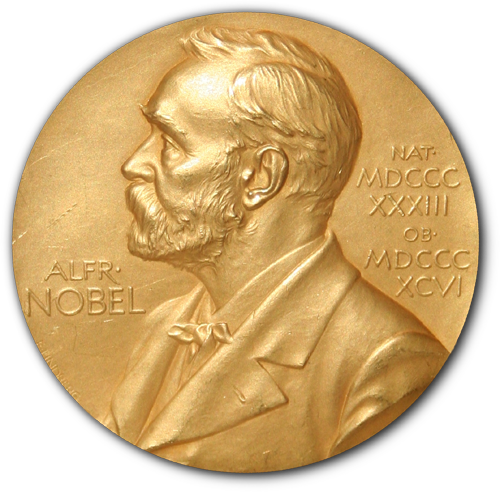
Their journey resembled a drama. The philosophical challenges posed by Simon, the psychological proofs by Kahneman and Tversky, and the economic integration by Thaler were essential for behavioral economics to take root successfully. After their key papers were published in the late 1970s, related research exploded, and what was once considered a ‘heretical’ field became a mainstream discipline taught in top universities worldwide, significantly influencing government policy and corporate management. The three Nobel Prizes awarded to Simon (1978), Kahneman (2002), and Thaler (2017) officially marked a historical milestone recognizing that behavioral economics had moved from the periphery to the core of economics.
Part 3: The Secret Rules of Your Mind: A User Guide
Prospect Theory: The Pain of Loss is Greater than the Joy of Gain
The most fundamental theory in behavioral economics, Prospect Theory, explains how we actually make decisions in uncertain situations. It serves as a powerful alternative to the traditional economic theory of expected utility.
- Reference Points: We do not feel happiness based on the absolute amount of money we have (e.g., a bank balance of 50 million won) but rather respond to ‘changes’ from specific reference points. Consider someone whose salary decreases from 40 million won to 38 million won versus someone whose salary increases from 28 million won to 30 million won. The absolute amount is much higher for the former, but the latter experiences greater happiness due to the ‘reference point’ of their previous salary, leading one to experience a ‘loss’ and the other an ‘gain’.
- Loss Aversion: This is the crux of Prospect Theory. The joy of gaining 100,000 won feels significantly less than the pain of losing 100,000 won. Research indicates that the pain is about 2 to 2.5 times stronger than the joy. This powerful psychological mechanism explains why we find it so hard to give up what we currently have (endowment effect) and why we dislike change (status quo bias).
A famous example that starkly illustrates these psychological principles is Kahneman and Tversky’s ‘Asian Disease Problem’ experiment.
Story: The Asian Disease Problem
Imagine you are the head of public health. A rare Asian disease is spreading, threatening to kill 600 people. You have two options:
Frame 1 (Gain):
- Option A: ‘Save 200 lives for sure’.
- Option B: ‘Save all 600 lives with a 1/3 probability, and a 2/3 probability of saving no one**’.
Frame 2 (Loss):
- Option C: ‘400 people will definitely die’.
- Option D: ‘No one will die with a 1/3 probability, and a 2/3 probability that all 600 will die**’.
Mathematically, Options A and C yield the same result (200 saved, 400 dead), and Options B and D also imply the same outcome. However, the results were shocking. In the ‘gain’ frame, 72% of people chose Option A for the sure gain (saving 200 lives). In contrast, in the ‘loss’ frame, only 22% chose Option C, while 78% opted for the uncertain gamble, Option D.
This aligns perfectly with the predictions of Prospect Theory. When it comes to protecting gains, people avoid risks (choosing Option A), while when it comes to avoiding losses, they take greater risks to recover losses (choosing Option D). Our choices are dramatically influenced not by objective facts but by how those facts are framed.
Heuristics and Biases: The Lazy yet Dangerous Shortcuts of the Brain
Our brains use mental shortcuts, or heuristics, to make quick and efficient judgments instead of perfectly analyzing all information to navigate a complex world. However, these shortcuts can sometimes lead to systematic errors, or biases.
- Anchoring: This phenomenon occurs when the first piece of information we hear anchors itself in our minds and influences subsequent judgments. For example, the initial price presented in negotiations significantly impacts the final price, or stores show a high ‘regular price’ alongside a ‘discounted price’ to make the discount appear larger.
- Availability: This tendency relies on how easily examples come to mind when judging the frequency of an event. When the media extensively covers airplane accidents, we tend to overestimate the risk of airplane accidents compared to statistically much riskier car accidents.
- Framing: As seen in the Asian Disease Problem, the way information is presented can change our choices, even if the content is the same. A yogurt labeled ‘5% fat’ feels less healthy than one labeled ‘95% fat-free’ due to this effect.
The Tug of War Within: Planner vs. Doer
Within us coexist a rational ‘planner’ who makes long-term plans and an impulsive ‘doer’ who seeks immediate gratification. This conflict leads us to exhibit ‘present bias’, where we prefer current pleasures over greater future rewards. This is why long-term goals like dieting, quitting smoking, or saving often fail.
Adding to this is the peculiar habit of ‘mental accounting’. Economically, all money is interchangeable (fungibility), but we mentally label our money. We may save our hard-earned ‘salary’ but easily spend ‘found money’. This leads to irrational consumption and investment decisions.
Loss aversion, status quo bias, and the power of default options are closely interconnected. For instance, consider why we resist changing default settings. It’s not just laziness; changing the current state is perceived as an act of potentially losing the familiar state we currently have. According to the principle of loss aversion, we feel the pain of that ’loss’ more acutely, leading us to resist change and remain in the status quo. Thus, the theories of behavioral economics interlock to provide a multidimensional explanation of the complex decision-making processes of humans.
Part 4: The Great Failures: What Happens When Human Psychology is Ignored
Theories gain powerful strength only when proven in reality. Through dramatic failure cases that show the heavy costs incurred by ignoring insights from behavioral economics, we witness the tragedy created by the gap between optimization models and reality.
The Disaster of Sunk Costs: The Tragedy of Concorde and Kodak
What is the Sunk Cost Fallacy? It is the irrational decision-making error of continuing a course of action because of the time, effort, or money already invested (sunk costs), even when it is clear that further losses will occur. It’s a psychological trap of thinking, ‘How can we give up after all the money spent so far?’
Story 1: The Swan that Flew, Concorde In the 1960s, the British and French governments embarked on the most ambitious aviation project in human history: the development of the supersonic passenger aircraft, Concorde. It was a dream plane that would reduce flight time from Paris to New York to just three hours. However, the project exceeded its budget from the start, and warnings about technical issues, excessive noise, and lack of economic viability followed. A rational judgment would have led to an early termination of the project. However, the two governments did not stop. Why? Because the enormous money, time, and national pride already invested as ‘sunk costs’ blinded them. The reasoning of ‘We can’t give up after all the money spent so far’ paralyzed their rationality. Ultimately, Concorde exited in 2003 after an astronomical expenditure of 19 billion dollars.

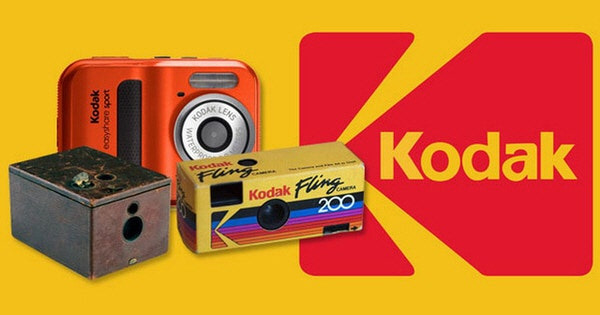
Story 2: The Company Bankrupted by Its Own Invention, Kodak An even more tragic story unfolded at Kodak. Surprisingly, the world’s first digital camera was invented in 1975 by Kodak’s young engineer, Steve Sasson. It was a crude device the size of a toaster that stored black-and-white images on cassette tape, but it was undoubtedly the future. However, Kodak’s management was horrified by this invention. Instead of welcoming the technology, they buried it. At that time, Kodak was making enormous profits from film and paper sales, and this revenue model was everything for the company. The digital camera was akin to killing their golden goose. Kodak’s management fell prey to two powerful psychological biases. The first was ‘status quo bias’. They wanted to believe that their current successful business model would last forever. The second was the ‘sunk cost fallacy’. They were reluctant to transition to new technology due to the billions invested in film factories and chemical technologies over decades. Rather than accepting the future they had invented, they tried to preserve their past glory and lost everything. This was not a technological failure but a catastrophic failure of human psychology.
The Paradox of “Honesty is the Worst Policy”: JC Penney’s Self-Destruction
Story 3: JC Penney’s ‘Fair and Square’ Pricing Policy In 2011, struggling American department store JC Penney hired Ron Johnson, who had written the success story of the Apple Store, as CEO. His diagnosis was logical: “Constant discounts and endless coupons are deceptive ‘fake prices’. We should honestly implement a ‘Fair and Square’ everyday low pricing policy.” He believed that customers were rational ‘Homo Economicus’. However, the result was catastrophic. Sales plummeted by 25% within a year, and the company recorded nearly a billion dollars in losses. Ron Johnson was ousted after just 17 months. What went wrong?
Ron Johnson ignored the most fundamental principles of human psychology.
- The Disappearance of Anchors: Buying a product originally priced at 100 dollars for 50 dollars feels entirely different from buying a product that has always been 50 dollars. When the high ‘regular price’ anchor disappeared, the ‘fair’ price no longer felt ‘cheap’. Customers lost the thrill of the ‘win’ that comes with discounts.
- The Backlash of Loss Aversion: Customers felt the pain of losing the coupons and sales events they loved much more acutely than the gain of a ‘fair price’.
- The Deprivation of the Game: Ron Johnson failed to realize that he was not just selling clothes but also selling the enjoyable experience of ‘getting good items at a low price’. He eliminated the game, and customers left the arena.
When Nudges Aren’t Enough: The Limits of Soft Interventions
Story 4: The Failure of COVID-19 Vaccine Lotteries Insights from behavioral economics led to policies that use ‘nudges’ to positively influence people’s behavior. However, nudges are not a panacea. During the COVID-19 pandemic, many governments introduced nudge policies like ‘vaccine lotteries’ to increase vaccination rates. The results were disappointing. Simple nudges like text message reminders had a slight encouraging effect on those who originally intended to get vaccinated, but they were almost ineffective in moving those with strong distrust or aversion to vaccines. Nudges were not strong enough to overcome deep-seated beliefs or distrust.
Story 5: The Ghost Train, Yongin Light Rail The Yongin Light Rail project in South Korea is a textbook case of public sector failure, demonstrating how poor planning can lead to significant disasters. Initially, the project predicted 161,000 daily users, but after opening, the actual number was only 9,000. This was not merely a calculation error. A combination of political motives and excessive optimism (planning fallacy) led to unrealistic demand forecasts, and once the massive project began, it became a ghost train that no one could stop due to enormous ‘sunk costs’. Such fundamental design flaws could not be solved with small nudges.
These failure cases reveal an important truth: the great failures of companies and governments often result not from a single wrong decision but from a chain reaction of various psychological biases. It often starts with excessive overconfidence bias, progresses through confirmation bias where one only seeks information that supports their beliefs, and ultimately falls into the tragic pattern of irreversible sunk costs.
Part 5: Nudges that Move the World (Like It or Not)
If failure cases sound a warning, success stories demonstrate the positive power of behavioral economics.
Positive Influence: Innovations in Public Policy
- Save More Tomorrow: This remarkable retirement savings program cleverly leveraged human laziness (inertia) and loss aversion. By changing the enrollment method from ‘opt-in’ to ‘automatic enrollment’ (default setting) and linking the increase in savings to future ‘salary increases’, people could dramatically raise their savings rates without the pain of a reduced paycheck. After implementing this program, savings rates nearly tripled.
- Organ Donation and Tax Compliance: Changing the organ donation pledge to an ‘opt-out’ system, where individuals must express their refusal to donate, led to a dramatic increase in donation rates. Additionally, presenting messages like “9 out of 10 people in your area pay their taxes on time” instead of threatening language significantly improved tax compliance.
Tech that Tempts Consumers: The Marketer’s Toolbox
Companies have instinctively used principles of behavioral economics for a long time. Now we can understand those secrets and become wiser consumers.
Hidden Behavioral Economics in Marketing
| Behavioral Economics Concept | Psychological Principle | Marketing Examples You’ve Seen |
|---|---|---|
| Anchoring | The first information seen dominates subsequent judgments. | Displaying a high ‘regular price’ alongside a ‘discounted price’ makes the discount appear larger. |
| Loss Aversion | The pain of loss is greater than the joy of gain. | Phrases like “Limited Sale! Don’t Miss Out!” or countdown timers in shopping malls trigger the fear of missing an opportunity. |
| Decoy Effect | Adding an obviously inferior third option makes a specific product appear more attractive. | In a popcorn shop, if small is 3,000 won and large is 7,000 won, adding a medium size at 6,500 won makes the large size seem like a very reasonable choice. |
| Social Proof | People tend to follow the actions of others. | Phrases like “Bestseller”, customer reviews, or “Currently 15 people are viewing this product”. |
| Scarcity | Rare items appear more valuable. | Phrases like “Only 2 left in stock!” or “This price is only for today!” prompt immediate purchases. |
Money and Emotion: Behavioral Finance
Traditional finance assumes that markets are perfectly efficient, but behavioral finance explains that investors’ psychological biases create market bubbles and crashes. A prime example is the ‘Disposition Effect’. This is perfectly explained by Prospect Theory. Investors tend to sell stocks that have risen in price (in profit) too quickly due to a risk-averse psychology that seeks to realize certain gains. Conversely, they hold onto stocks that have fallen in price (in loss) for too long, driven by a risk-seeking psychology that avoids the pain of realizing losses and hopes for a rebound.
Part 6: How to Become the CEO of Your Brain: A Practical Guide for Better Decisions
While we cannot change the default settings of our brains, we can recognize these biases and create systems to counteract them. This is your own ‘choice architecture’.
Strategies to Overcome Biases
- To Fight Sunk Costs: Ask yourself, “If I were starting this task today, considering everything I know, would I invest this time, money, and emotion?” If the answer is ’no’, it’s time to cut your losses.
- To Combat Anchors: Whenever possible, make the first offer in negotiations. If that’s not possible, consciously ignore the first number presented and restart the conversation based on the information you’ve researched.
- To Counter Framing: When faced with options, actively reframe them from a different perspective. If you hear “90% success rate”, ask, “What does a 10% failure rate look like?” This involves examining both gain and loss perspectives.
- To Combat Overconfidence: Conduct a ‘pre-mortem’. Imagine your project or decision has failed miserably a year later and write down all the reasons. This helps you see potential risks you might currently overlook.
- To Resolve Planner/Doer Conflicts: Use a ‘commitment device’. If you want to save, set up automatic transfers to a savings account on payday. If you want to exercise, book a class with a friend to leverage social commitment.
Your Personal Bias Buster Checklist
Before making important decisions, use this checklist to assess your brain.
Pre-Decision Self-Check Checklist
| Ask Yourself… | The Bias You’re Fighting |
|---|---|
| 1. What was the first number or piece of information I heard? Am I giving it too much weight? | Anchoring |
| 2. Am I focusing more on what I might lose than what I might gain? How would this issue look if framed differently? | Loss Aversion & Framing |
| 3. Am I continuing down this path because of time or money already invested? | Sunk Cost Fallacy |
| 4. Am I only seeking information that confirms what I already believe? What is the strongest counterargument to my position? | Confirmation Bias |
| 5. Does this choice look good just because everyone else is doing it? Does it really align with my personal goals? | Social Proof / Herd Behavior |
| 6. What does my ‘planner’ want me to do? How can I make long-term choices easier to make ‘right now’? | Present Bias / Self-Control Issues |
Conclusion: You are Predictably Irrational - and That’s Your Superpower
The revolution in behavioral economics over the past few decades has revealed an important truth to us. We are neither rational robots nor unpredictably behaving beings. Our irrationality follows systematic and predictable patterns.
This is not bad news. Rather, it empowers us immensely. Understanding how the system operates is the first step to hacking that system. Knowing the default settings of your brain means you can design better systems for yourself and recognize when others try to manipulate you using those settings.
So the next time you see a sign for ‘70% off’, find yourself unable to sell a losing stock, or discover you’re forcing yourself to finish food you know is bad just because you don’t want to waste money, smile. You’re not broken. You’re just human. And now, you are a human who knows the rules of the game.