
The Era of Giant Rockets: Why is Rocket Lab Still Alive?
May 2026
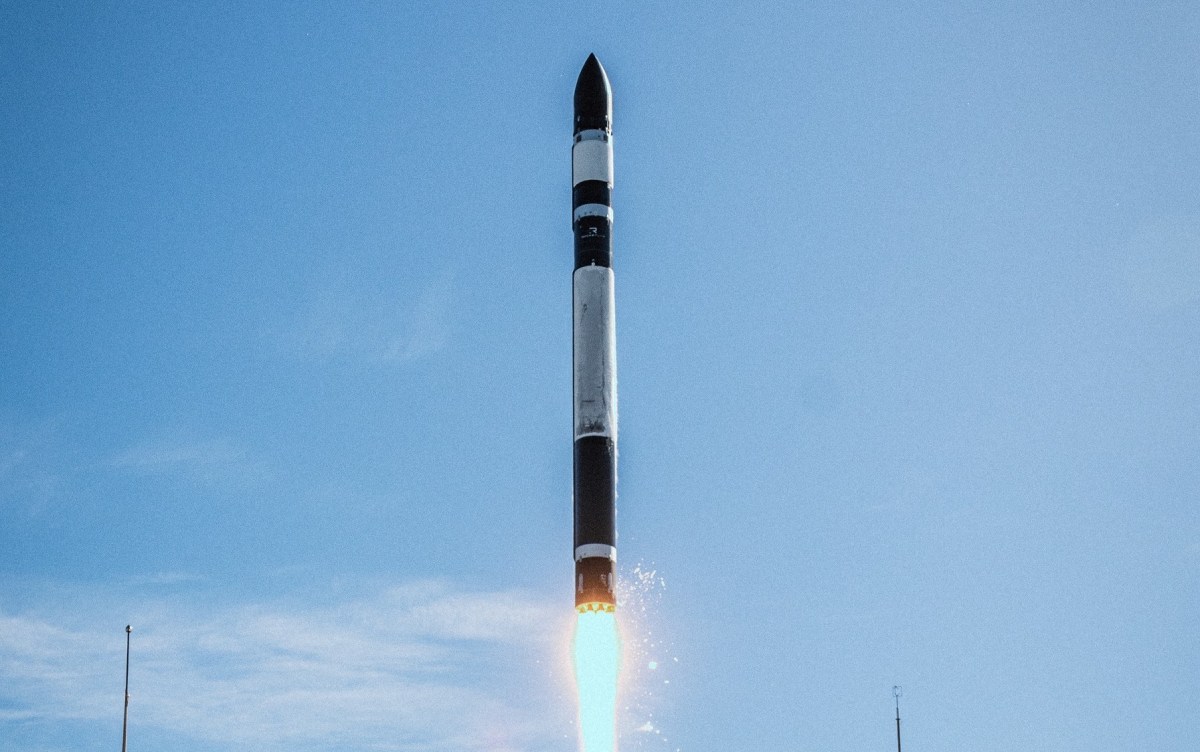
▲ An Electron rocket launch. Rocket Lab successfully completed 21 launches in 2025.
In the mid-2010s, venture capital was enthusiastic about the small satellite launch market. The CubeSat boom was coming, and expectations were high for a surge in demand for small rockets. Over 200 small launch vehicle programs were initiated simultaneously worldwide. Most of them are now gone. Virgin Orbit filed for bankruptcy, and Astra has ceased its launch vehicle business. Relativity Space abandoned its rocket and completely changed direction.
Rocket Lab is alive. Not only is it alive, but it’s no exaggeration to say that this is the best period since its founding.
In 2025, Rocket Lab’s Electron launched 21 times, successfully placing payloads into orbit on all 21 occasions. That’s a 100% success rate. Annual revenue exceeded $600 million, and they secured a contract from the U.S. Space Development Agency (SDA) to manufacture 18 missile warning satellites—a single contract worth $816 million. In the first quarter of 2026, their order backlog surpassed $2.2 billion, more than doubling year-over-year. Their market capitalization reached $37 billion.
These numbers need explanation. How did a company that builds just one small rocket grow to this scale? And the more important question is—in an era where Falcon 9 offers rideshares at $6,000 per kg, and Starship aims to disrupt that price again, where is Rocket Lab finding its place?
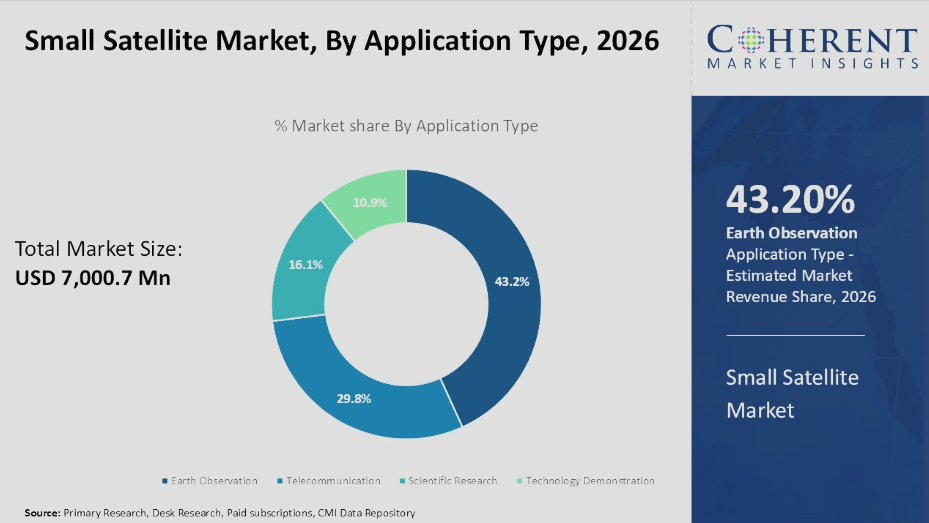
▲ Structure of the small launch market. SpaceX’s rideshare absorbs most commercial volume, while dedicated launch demand forms a separate segment.
CEO Peter Beck has repeatedly stated, “SpaceX rideshare is not our competitor.” While this might sound like mere marketing rhetoric, it is structurally accurate. Rideshares, in principle, fail to guarantee three things. First, control over launch timing. Transporter missions are dependent on SpaceX’s schedule and are structurally unsuitable for missions that must launch within a specific window, such as military reconnaissance satellites. Second, precise orbital parameters. When multiple satellites are on board, the orbit is inevitably a product of compromise. For dedicated launches, customers can specify their desired altitude, inclination, and local time of ascending node (LTAN). Third, mission security. National security customers cannot place sensitive payloads on publicly disclosed rideshare missions.
Rocket Lab’s Electron targets exactly this customer segment that requires all three conditions simultaneously. For these customers, Electron is the only reliable option on Earth. Even if the market is small, it’s strong if there’s no competition. While Electron’s launch cost of approximately $7.5 million is expensive compared to rideshares, there is no other rocket that can fulfill the conditions of “to this orbit, at this time, this single satellite.”
However, Peter Beck did not stop there. His real strategy was to provide everything needed for space access under one roof, rather than just selling rockets.
Since 2020, Rocket Lab has undertaken a series of acquisitions. They acquired Sinclair Interplanetary, a satellite attitude control component supplier; Advanced Solutions, a flight software company; Planetary Systems, a satellite separation system provider; SolAero, a manufacturer of space solar panels; and in 2025, GEOST, which makes optical payloads and space domain awareness sensors. Rocket Lab now manufactures its own satellite components, including star trackers, reaction wheels, solar panels, electric propulsion systems, software-defined radios (SDRs), composite structures, separation systems, and electro-optical/infrared sensors.
The brilliance of this strategy lies in selling these components not only for their own satellites but also externally. Competitor satellite manufacturers also purchase Rocket Lab components. In other words, even rivals become a source of revenue for Rocket Lab. As a result, in the first quarter of 2026, revenue from the Space Systems division surpassed that of Launch Services for the first time. Rocket Lab has already transformed into more of a space systems company than a launch company.
The pinnacle of this structure is Photon. Rocket Lab’s proprietary satellite bus platform, Photon, integrates propulsion, power, attitude control, and communications into a single system, allowing customers to bring only their mission ideas and have Rocket Lab handle everything from satellite design and manufacturing to launch and orbital operations. Satellites for NASA’s CAPSTONE lunar mission and ESCAPADE Mars mission are built on the Photon platform. The fact that Rocket Lab is planning its own Venus exploration mission is a clear indication that the company does not see itself as a mere launch service provider.
So, what about Neutron?
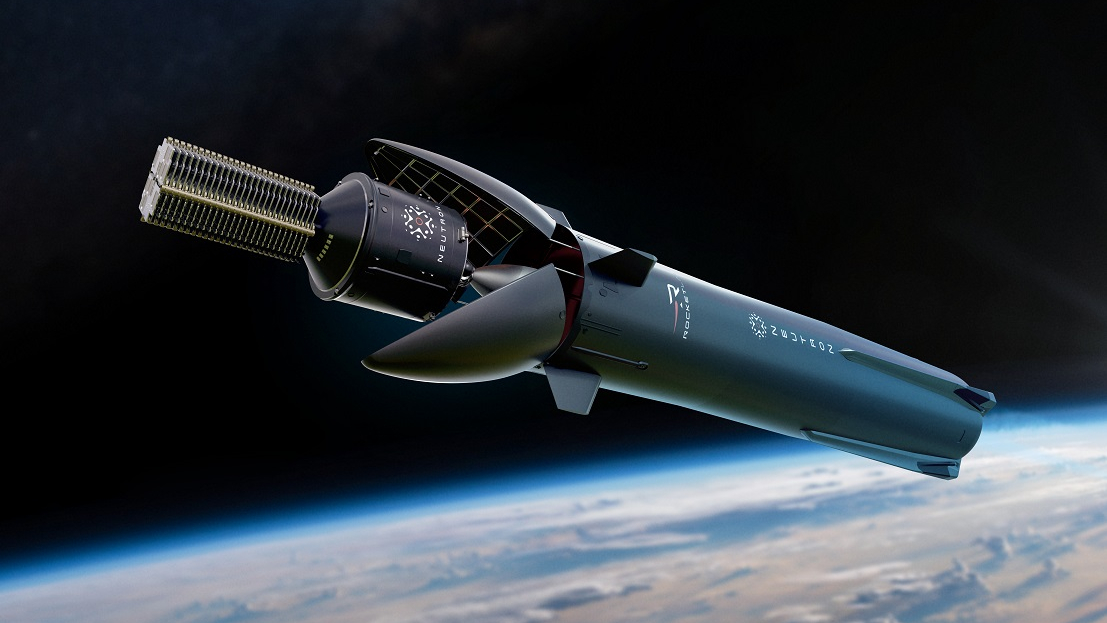
▲ Artist’s rendering of the Neutron rocket. This medium-lift reusable rocket, 42.8m tall and 7m in diameter, is under development with a target for its first flight in the latter half of 2026.
Electron is an excellent rocket, but its payload capacity to low Earth orbit is 300 kg. This limitation is problematic in two directions simultaneously. First, it cannot meet the demand for mega-constellation deployment. When building constellations of hundreds or thousands of satellites like Starlink, Amazon Kuiper, and AST SpaceMobile, a medium-lift rocket that can place several tons at once is overwhelmingly more economical than launching a 300 kg payload rocket dozens of times. Second, key government launch contracts, such as the U.S. Department of Defense’s National Security Space Launch (NSSL) program, are not even eligible for Electron’s payload capacity.
Neutron is a rocket designed to break through both these ceilings simultaneously. It stands 42.8 meters tall with a first-stage diameter of 7 meters, capable of carrying 13 tons to low Earth orbit in reusable mode and 15 tons in fully expendable mode. Its target launch cost is approximately $50 million. These are specifications that directly compete with Falcon 9.
The most notable aspect of its design is the reusability architecture. Falcon 9 recovers its fairings separately at sea. Neutron employs an “open clamshell” approach. The top of the first stage features a structure that opens like a clamshell, housing the second stage and payload within. After launch, as the first stage returns, this structure closes again, also serving as a protective cover for the second stage. No separate fairing recovery operation is required. First-stage recovery can be operated in three modes: Return to Launch Site (RTLS), Drone Ship Landing (DRL), and fully expendable.
The propellant is liquid oxygen and methane. The engine is named Archimedes. The first stage will be equipped with nine engines, and the vacuum-optimized second stage will have one. Methane was chosen because, compared to kerosene, it is much easier to clean after reuse, and its reduced soot production extends engine life. It belongs to the same generation of methane engines as SpaceX’s Raptor and Blue Origin’s BE-4.
It is also noteworthy that both the first and second-stage structures are made of carbon fiber reinforced polymer (CFRP). Manufacturing an entire rocket of this scale from carbon composites is an unprecedented attempt in the industry.
Development progress is a mix of advancements and setbacks. In 2025, the second-stage carbon composite structure passed a 1.3 million pound tensile strength test, and the flight software, avionics, and guidance systems were validated in cryogenic environments. In January 2026, a rupture occurred during a hydrostatic test of the first-stage tank. Rocket Lab explained it as “a normal part of qualification testing to push structures to their limits” and stated that the next tank is already in production. The target for the first launch is the latter half of 2026. CEO Peter Beck said, “We will aim to launch until the last day, the last hour of December.”
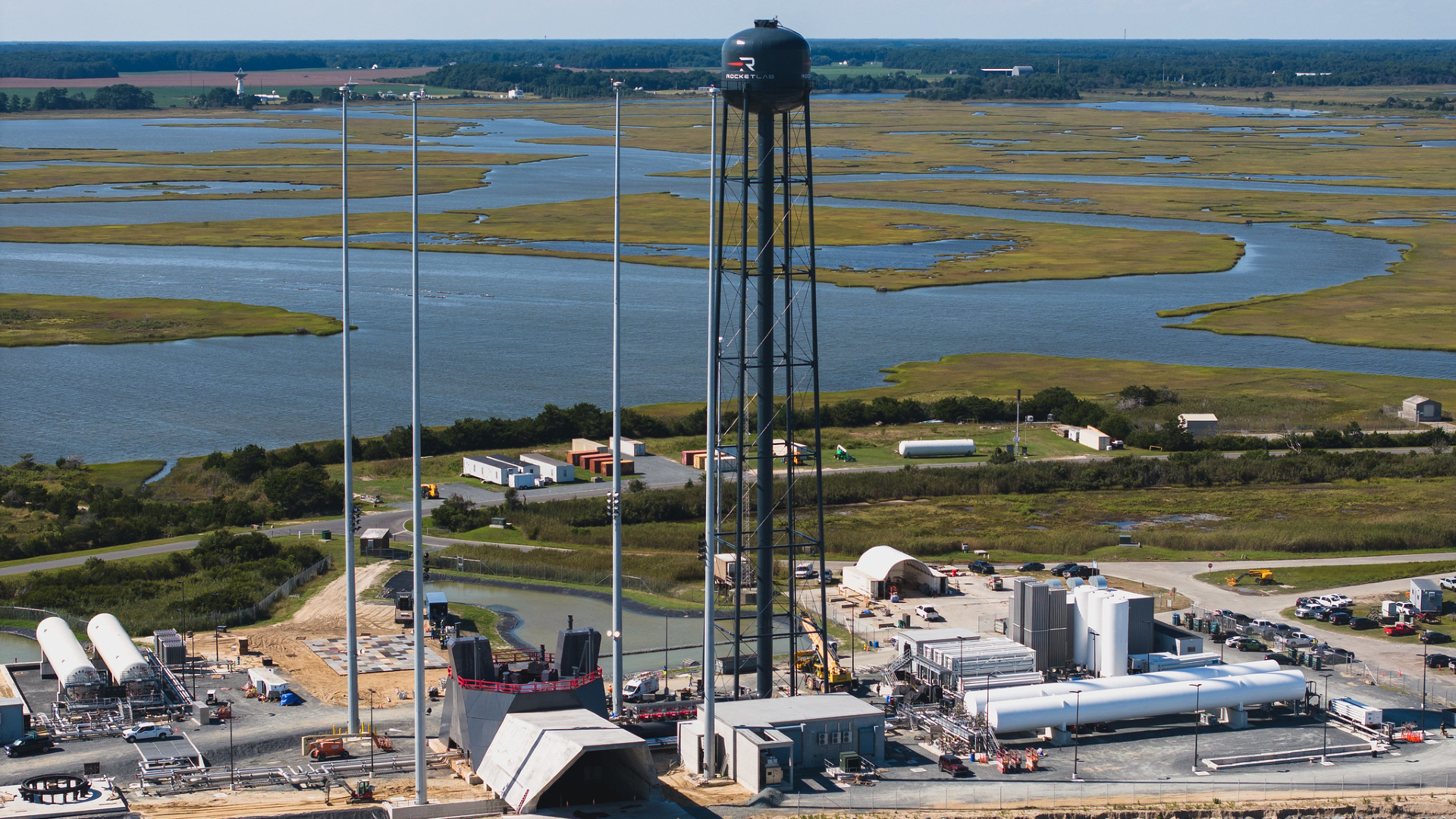
▲ Neutron launch complex at LC-3 on Wallops Island, Virginia. The 400-foot drone ship ‘Return On Investment’ is also being constructed nearby.
If Neutron is successful, the door Rocket Lab can open is clear. Through NSSL certification, they can enter the multi-billion dollar annual defense launch market and compete for mega-constellation deployment contracts. Contracts for point-to-point cargo demonstrations with the U.S. Air Force Research Laboratory (AFRL) and a rocket-based global cargo agreement with USTRANSCOM have already been signed.
Of course, the uncertainties surrounding Neutron are not insignificant. Some industry experts believe that the actual flight date could be delayed by one to three years from the official announcement. Financially, they incurred an operating loss of $229 million in 2025. Until Neutron becomes profitable, Electron and the Space Systems division must generate cash. The medium-lift rocket market itself may change before Neutron’s entry, with the maturation of Firefly Alpha and the entry of new European players.
However, Rocket Lab’s strength lies precisely in these uncertainties. While other small launch competitors risked everything on a single rocket product, Rocket Lab sells satellite components, delivers satellite buses, and performs government system contracts even on days when launches are not happening. It is no coincidence that Space Systems has surpassed Launch. The structure Peter Beck envisioned a decade ago has begun to work.
Ultimately, Rocket Lab’s survival strategy is not simple price competition or a display of technological prowess. It is about precisely identifying and filling the gaps in a market dominated by giant rockets, and using those positions to transform itself from a launch company into a space infrastructure company. Neutron is the final puzzle piece in that transformation. It’s not about whether one rocket succeeds or fails, but whether Neutron operates within the vertically integrated structure Rocket Lab has already built.
They cannot beat SpaceX. But they can fill the space that SpaceX does not. That is what Rocket Lab is doing.
References: NASASpaceFlight, Rocket Lab SEC Filings, Space Capital, New Space Economy, PBS NewsHour, TipRanks