
My Friend’s Strange Spending
Do you have a friend like this? They buy a luxury bag worth 1 million won without hesitation on payday as a ‘gift for myself,’ but they hesitate to spend 10,000 won on a taxi fare. Or, even when the stocks they invested hard-earned money in have halved, they can’t sell them, thinking, “It will go up someday,” while easily spending small amounts of unexpected money as if it were ‘money they don’t need’?
From the outside, you might think, “Why are they doing that?” These money decisions can be utterly incomprehensible. We often click our tongues at such behavior or find ourselves making similar decisions, questioning, “Am I really foolish?”
But today, I want to tell a slightly different story. In fact, no one is crazy.
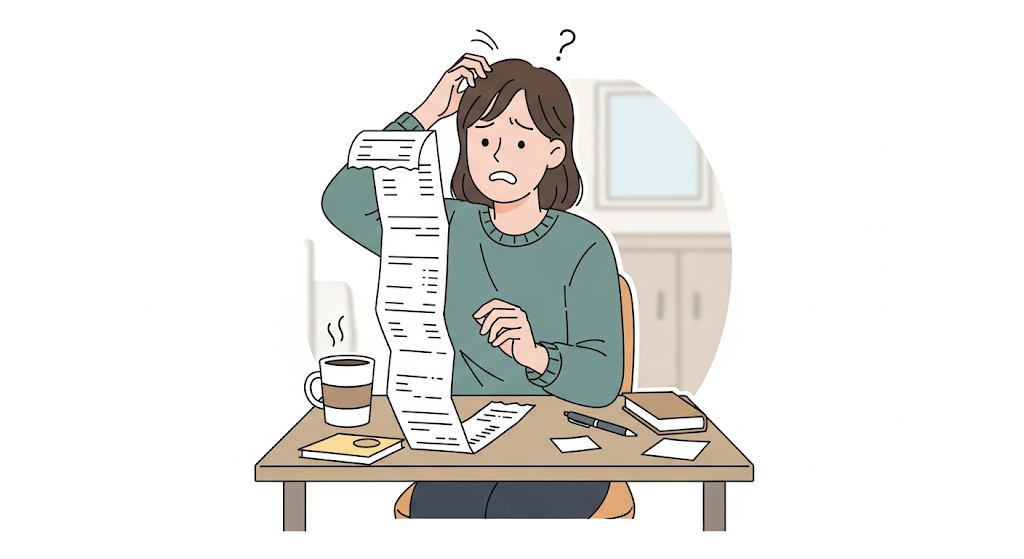
Our Brain is Actually Bad at Calculating Money
The story goes back to a very long time ago, to when our ancestors were hunting and gathering. At that time, the top priority for our brains was ‘survival.’ Should we pick the fruit in front of us or avoid the predator over there? Such immediate and survival-related judgments were crucial. Our brains evolved to optimize avoiding immediate dangers and seizing opportunities rather than calculating complex numbers.
However, in just a few thousand years, a very complex and abstract concept called ‘money’ emerged. Our brains have not yet fully adapted to this new concept. Therefore, when dealing with money, they often make errors, much like trying to run the latest game on an old operating system.
The field that studies this phenomenon is called behavioral economics. Unlike traditional economics, which assumes humans are always rational and logical, behavioral economics examines how human emotions and cognitive limitations affect economic decisions through the lens of psychology. And there, we discover some very interesting facts.
Mental Accounting
Let’s return to the story of my friend. Why did they easily buy a 1 million won bag while hesitating over a 10,000 won taxi fare? It’s because we have a mental ledger called ‘mental accounting’ in our minds.
This concept, introduced by behavioral economics founder Richard Thaler, theorizes that we attach ’tags’ to money and manage it in different accounts.
- Salary earned through hard work: ‘Precious Money’ account
- Unexpected money from bonuses or prizes: ‘Windfall’ account
- Money saved for travel: ‘Money for Enjoyment’ account

For my friend, the 1 million won was money coming from a ‘reward’ account for a month of hard work, while the 10,000 won taxi fare was money from a ’living expenses’ account that needed to be saved. Although it’s the same ‘money,’ the value and usage are perceived completely differently depending on the tag attached.
This explains why we easily spend unexpected money but try to protect the money in our savings accounts at all costs. It may seem irrational, but in our minds, there is a logical accounting process taking place.
The Pain of Loss is Greater than the Joy of Gain: Loss Aversion
The mentality of ‘holding on’ to stocks even after incurring losses is also rooted in our brain’s deep-seated ’loss aversion’ tendency.
According to research by psychologists Daniel Kahneman and Amos Tversky, humans feel the pain of loss about 2.5 times more intensely than the joy of gain, even for the same amount. In other words, the pain of losing 100,000 won is much more acute than the joy of gaining 100,000 won.
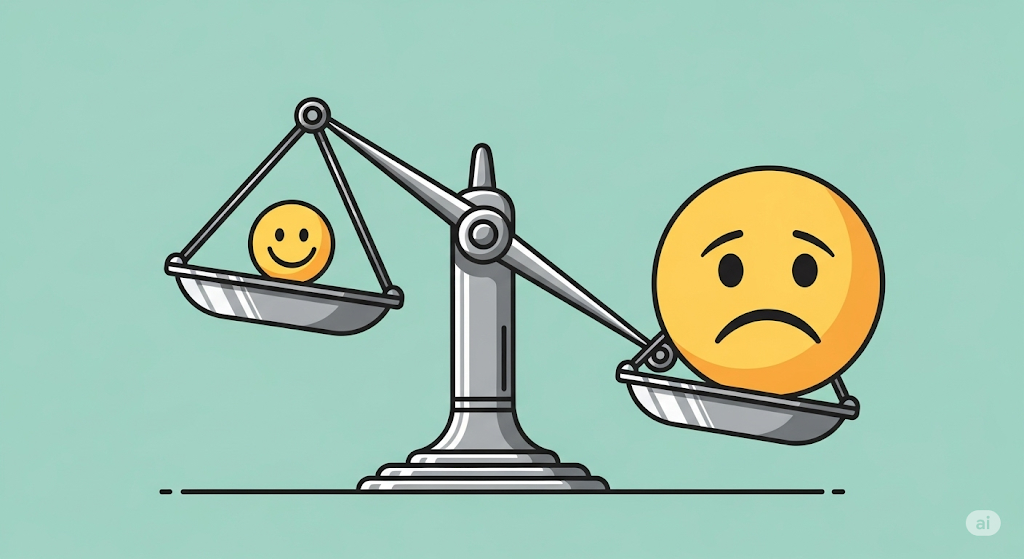
The moment we sell a stock, ’loss’ becomes an irreversible reality. Our brains, not wanting to face this pain, comfort themselves with thoughts like, “It will go up someday,” or “I haven’t sold it yet, so I haven’t lost anything,” and choose to delay decisions. This is not a rational investment judgment but rather a deeply human emotional response.
No One is Crazy, Just Human
Thus, the many ‘crazy’ decisions we make in front of money are not due to madness. They are simply very human. Our decisions are not just numbers moving on a spreadsheet but the result of our experiences, emotions, and the way our brains have evolved over thousands of years.
- My childhood experiences: Someone who grew up poor may prioritize stability, while someone from a wealthy background may handle money more boldly.
- My current emotional state: When feeling good, one is more likely to make impulse purchases, and when anxious, one may make hasty investment decisions.
- Information overload: Too much information can hinder sound judgment and lead us to rely on the most noticeable or recently heard information (anchoring effect, recency bias).
So, if you ever see a friend’s incomprehensible spending habits or find yourself feeling guilty about money, remember this story. Think, “Ah, there must be a story in that person’s mind,” or “I am making this decision because of my current emotions.”
Understanding our ‘irrationality’ may paradoxically be the first step toward making wiser and more rational decisions in front of money. After all, the skill of handling money may begin not with mathematics but with a deep understanding of humanity.