
Starting from Prison Bars to LA Sundubu: A Journey Following the Life and Soul of Koreans Encapsulated in a White Square
- We examine the fascinating process of how tofu was born in China and introduced to the Korean Peninsula.
- From the royal court of the Joseon Dynasty to commoners, we explore the impact of tofu on the lives and culture of Koreans.
- In modern times, we compare the status of tofu, which has been globalized as sundubu jjigae, and the tofu cultures of Korea, China, and Japan.
A Piece of White Square, Encapsulating the Universe
As the tightly shut iron door of the prison opens, a person steps out into the world. With a pale face from long imprisonment and an awkward gait, the first thing offered by family or friends waiting to greet him is not warm words of comfort, but a steaming piece of white tofu.
Like the intense scene from the movie ‘Lady Vengeance’, this moment is a familiar rite of passage for Koreans. The custom carries the meaning of “Live clean like tofu, do not commit sins again, and start anew.” But why tofu? This simple question leads us to the deep and grand river of history.
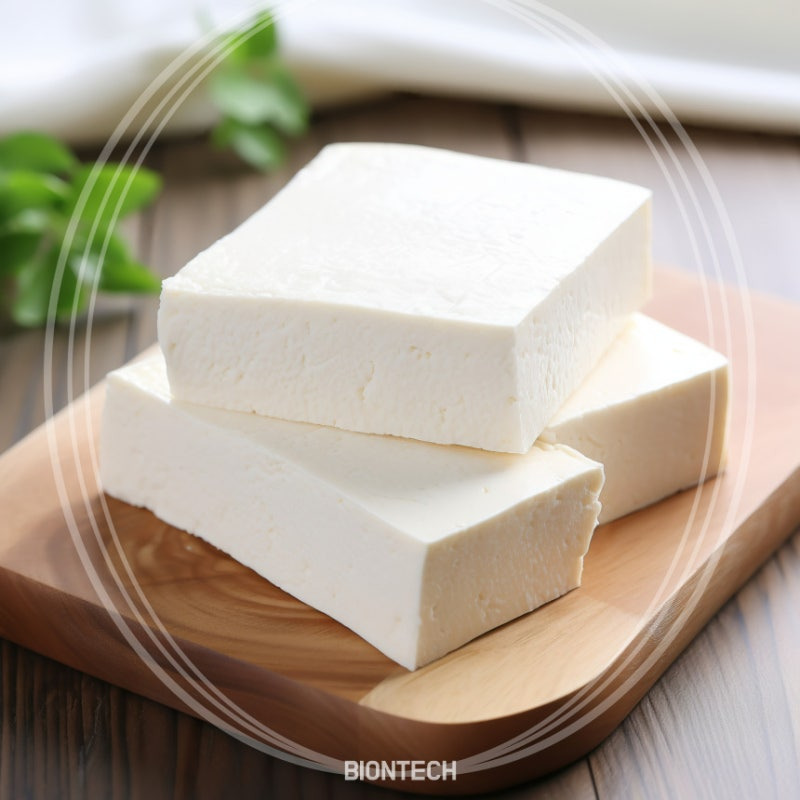
This article is a journey of peeling away the layers of stories embedded in tofu, the most common side dish on the dining table. From the legend that began in the alchemical laboratory of the Han Dynasty emperor to the poetry of a scholar from the Goryeo Dynasty, the diplomatic pride of a Joseon king, and finally its rebirth as a global food in a hot pot in LA across the Pacific.
Now, we will begin the grand tale of how this white jewel, tofu, became deeply rooted in the lives and souls of Koreans.
Chapter 1. The First Encounter with Tofu: The Culinary Treasure that Landed on the Korean Peninsula
The birth of tofu is famously associated with a legend that it was accidentally discovered during the alchemical experiments of Liu An, the King of Huainan, in the early Han Dynasty over 2,000 years ago. However, if it was invented in the 2nd century BC, the lack of documentation for about 1,000 years raises questions, leading many to believe this story was created by later generations seeking to attribute authority to a great invention.
So when and how did tofu arrive on the Korean Peninsula? The most credible theory suggests that it was introduced during the late Goryeo period, between the 13th and 14th centuries, when exchanges with the Yuan Dynasty were active. It is speculated that many envoys, merchants, and monks traveling between the two countries naturally brought the tofu-making techniques that were widespread in the Yuan Dynasty to Goryeo. This period also marks the first appearance of the word tofu in Korean literature.
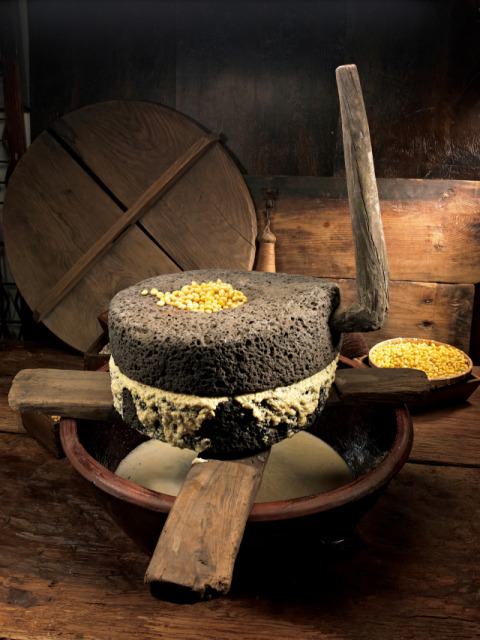
Of course, there are theories suggesting its introduction during the Three Kingdoms period, but clear evidence is lacking. In conclusion, the history of tofu in Korea approached us not through a glamorous invention story, but through a slow and gradual process of cultural exchange.
Chapter 2. The Poet’s Praise: Tofu Blossoming in Literature of Goryeo
The moment tofu first etched its name in Korean history was through a poem. The protagonist is the late Goryeo scholar Mok Eun (Lee Saek). The poem titled “Daesa Gu Tofu Raehyang (大舍求豆腐來餉)” included in his collection, Mok Eun Jip (牧隱集), is the earliest record of tofu in our literature.
菜羹無味久 (Chae Gyeong Mu Mi Gu) / The vegetable soup has long lost its taste 豆腐截肪新 (Dubu Jae Bang Sin) / Tofu brings forth a new flavor
便見宜疏齒 (Byeon Gyeon Ui So Chi) / Easy for those without teeth to eat 眞堪養老身 (Jin Gam Yang No Sin) / Perfect for nourishing the elderly
The poem shows that tofu was an innovative food that provided ’new flavors (fat, rich meat)’ to a monotonous vegetarian diet. It also indicates that it was recognized as a ‘health food’ beneficial for the elderly due to its soft texture and rich nutrition. Lee Saek elevated tofu as a heavenly gift, expressing that “Heaven cares for the people (皇天善育民).”
Chapter 3. The King’s Pride: Joseon’s Tofu Capturing the Emperor’s Palate
As we move into the Joseon Dynasty, tofu becomes a source of national pride and a diplomatic specialty. The Annals of King Sejong records that in 1434, the Ming Dynasty’s Emperor Xuanzong praised the culinary skills of Joseon court ladies, stating that “Among them, the technique of making tofu is particularly exquisite (其造豆腐之法, 尤爲精妙).”
The emperor even made an official request for more women skilled in tofu-making. King Sejong was overjoyed by this news and held a grand banquet with his officials featuring tofu dishes. This was a moment when Joseon’s cultural prowess was recognized at the center of Chinese civilization.
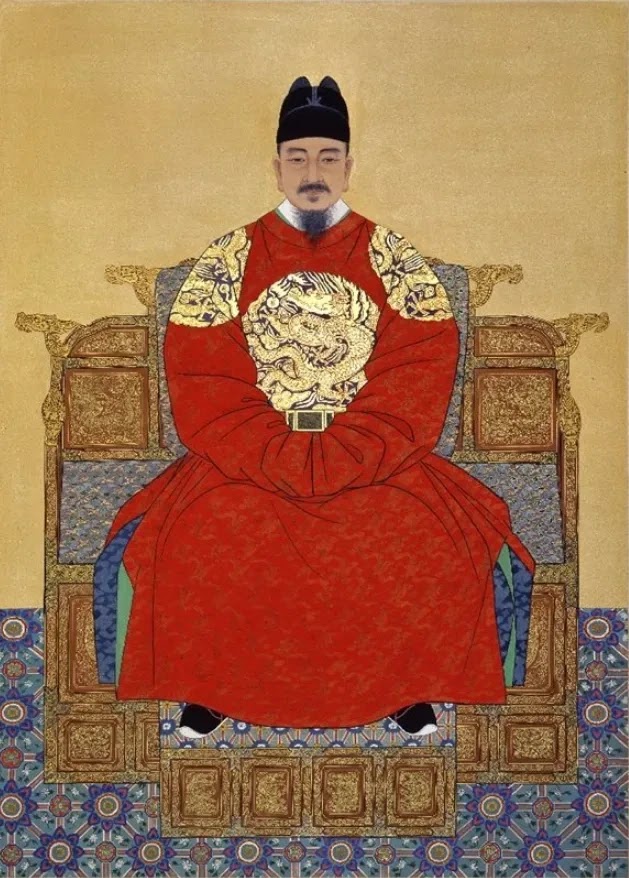
The fame of Joseon tofu is also confirmed by records stating that during the Imjin War, Ming soldiers requested ‘Joseon tofu’ to be included in their meals. This proves that Joseon had developed tofu to a level surpassing its origin in China, marking it as the first ‘K-food’ and a cultural soft power.
Chapter 4. Sacred Duty: The Temple Making Royal Tofu, Joposa
The rise of Joseon tofu to a global level was backed by a unique production system managed directly by the state, known as ‘Joposa (造泡寺)’. Joposa was a temple designated to specialize in producing tofu for royal tomb rituals.
The royal tomb ritual offerings were vegetarian meals called ‘Sosan (素膳)’, which excluded meat, and white, clean tofu was a key offering. The royal court designated temples near royal tombs as Joposa to maintain freshness.
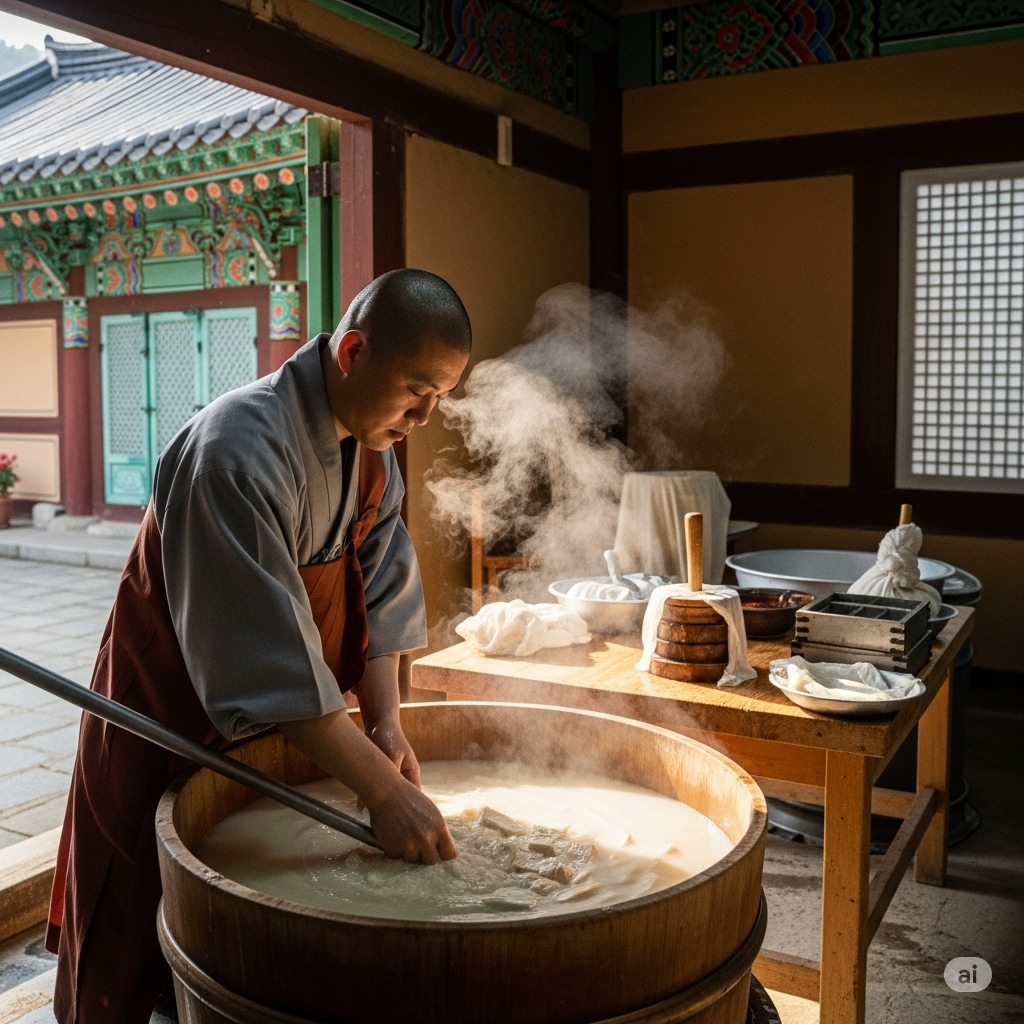
The selection of temples was due to their clean environment, the monks’ excellent skills in handling soybeans, and their labor force. Joposa served as an ‘R&D center’ where the best tofu techniques of the time met the royal court’s strict quality standards. This systematic state-led ‘quality control system’ was the secret behind the Joseon tofu that even the Ming emperor admired.
Chapter 5. The Scholar’s Table: Tofu as a Gourmet and Culinary Subject
Tofu, which appeared on royal ritual tables, was also loved as a ‘delicacy’ on the tables of Joseon scholars. The era’s greatest gourmet, Heo Gyun, recorded in his food critique Doomun Daegak (屠門大嚼) that “People outside the Jangui Gate (藏義門) make it well. Its softness and smoothness are beyond words.” This indicates that there was a culture of seeking out specific regional artisans to appreciate the taste.
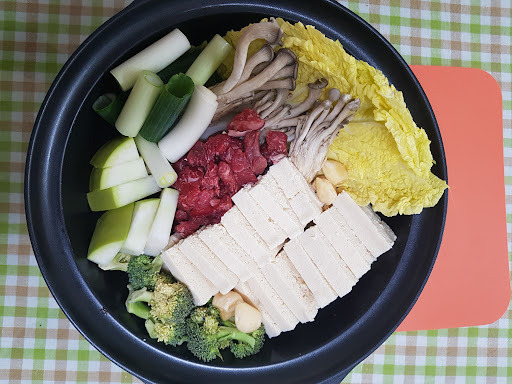
Scholars also enjoyed a refined dish called Yeonpotang (軟泡湯) made with tofu. Originally, Yeonpotang was a clear soup featuring tofu as the main ingredient, as its name ‘soft tofu (軟泡)’ suggests. It was a dish made by lightly frying tofu and boiling it with chicken or beef broth and mushrooms, showcasing the ‘paradox of status’ where tofu was both a humble food and an ingredient for gourmet dishes.
Chapter 6. Infused in Life: Tofu in Proverbs and Rituals
Tofu is deeply embedded in our everyday language and customs.
- “If words are kind, one goes to buy bean curd but returns with tofu.”: This shows the power of a warm word.
- “Eating tofu can lead to losing a tooth.”: A warning that even easy tasks can become difficult if one is careless.
- “Even if one makes tofu from soybeans, I won’t believe it.”: This expresses deep distrust towards the other party.
These cultural accumulations have given rise to the modern ritual of ’eating tofu after release from prison.’ This carries multiple meanings.
- Symbolic Meaning: A wish to live a pure and clean new life, like the white color of tofu.
- Historical Context: A pledge not to return to the past symbolized by ‘bean rice (prison life)’. The logic of irreversibility that one cannot make beans from tofu again.
- Nutritional Reason: The most rational choice to supply easily absorbable protein to a body weakened by imprisonment.
Ultimately, a piece of tofu in front of the prison symbolizes a complex cultural symbol that combines purity, historical memory, and scientific wisdom.
Chapter 7. The Pot that Crossed the Pacific: The Globalization of Sundubu Jjigae
In the late 20th century, tofu crossed the Pacific in the form of ‘sundubu jjigae’ and captured the taste of people worldwide. At the center of this success story were Korean immigrants in Los Angeles in the 1990s. In particular, ‘Bukchangdong Sundubu (BCD Tofu House)’ gained immense popularity in LA.
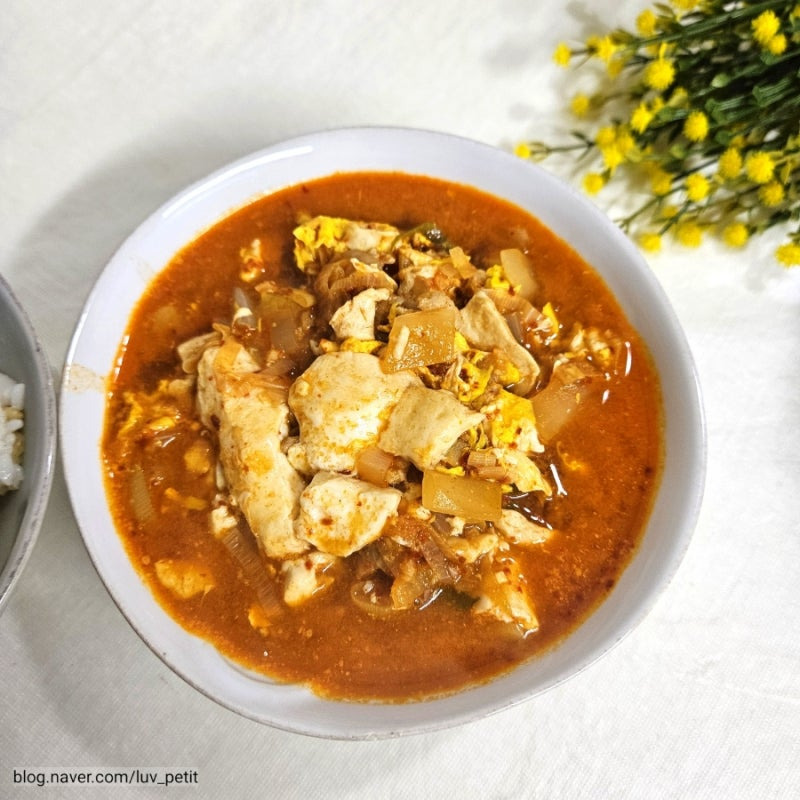
The secret to this success was ‘cultural translation’ and ‘packaging of experience.’
- Providing a complete meal: Offering a ‘combo menu’ with individual stone pot rice, nurungji, and grilled fish provided a complete culinary experience.
- Freedom of choice: Allowing customers to choose the level of spiciness lowered cultural barriers.
Even more interesting is the phenomenon where LA style has been ’re-imported’ back to Korea, establishing a new standard. This is a representative example of the dynamism of the global era, where food reimagined in immigrant societies influences the culture of the homeland.
Comparison: Korean, Chinese, and Japanese Tofu Cultures
All three East Asian countries enjoy tofu, but they exhibit different cultural characteristics. This allows for a deeper understanding of the uniqueness of Korean tofu culture.
| Country | Key Features (Form and Cooking) | Cultural Approach and Symbolism |
|---|---|---|
| Korea | Firm pan tofu that maintains its shape, preference for sundubu. Development of dishes that achieve ‘harmony’ with other ingredients like stews and braises. | Strong social and symbolic meanings as a sacred offering in rituals, and a symbol of purification after release, central to communal stew culture. |
| China | Extremely diverse forms by region (North: firm, South: soft). Features ‘variations’ like fermented stinky tofu. Uses strong spices and oils, as seen in mapo tofu. | A popular and practical approach enjoyed as street food. |
| Japan | Preference for extremely soft yudofu (kinugoshi) and tofu skin (yuba). Aiming for ‘minimal’ cooking methods that highlight the natural flavors of ingredients. | Aesthetic and delicate approach, with cookbooks like ‘Tofu White Truth’ developed to savor the texture and taste of tofu itself. |
In summary, while Chinese tofu is a ‘versatile ingredient’ and Japanese tofu is an ‘object of aesthetic appreciation’, Korean tofu can be seen as a ‘food of relationships’ that shares communal feelings.
Conclusion
Our journey, starting from a piece of tofu in front of the prison, has shown that tofu is not just a food but a ‘white jewel’ that encapsulates the history and spirit of Korea.
- Witness of History: Since its first appearance in Goryeo literature, tofu has accompanied our history as a diplomatic asset of Joseon, a royal offering, and a mirror reflecting the lives of common people.
- Cultural Symbol: From the purification ritual after release to the communal culture of sharing stews, tofu has become a powerful cultural symbol that embodies the joys, sorrows, and aspirations of Koreans.
- Icon of Globalization: The success of LA sundubu jjigae proves the infinite potential of tofu to evolve into the most Korean yet globally recognized food.
Next time you encounter tofu on your dining table, why not take a moment to recall the thousand-year story it holds? It is not just a lump of soybean protein but a precious gift that contains the essence of our culture.