
Exploring the Power of Story that Truly Moves the World Beyond Averages and Statistical Illusions.
- Understand the neuroscientific principles of why our brains respond more strongly to stories than to statistics.
- Analyze real failure cases caused by data worship in business and society.
- Learn how the unmeasurable ‘story’ has created powerful brands and social movements.
The Statistician Who Drowned in a River with an Average Depth of 1 Meter
The story of the statistician who drowned while crossing a river with an average depth of 1 meter symbolically illustrates why the power of story is important. We often rely on objective numbers, but we frequently miss the most crucial truths hidden behind them. As Einstein said, “Not everything that counts can be counted, and not everything that can be counted counts.”
Data serves as a useful two-dimensional map, but the real world moves through three-dimensional ‘stories’ of emotions, identities, and beliefs. In this article, we will explore the power of invisible narratives that drive the world beyond the limitations of numbers and seek wisdom in harmoniously using data and stories.
Part 1: Why Does the Brain Prefer Stories Over Numbers?
Have you ever felt more moved by the story of one unfortunate individual than by statistics about millions? This is a perfectly normal reaction. Our brains are inherently designed to process information in the form of narratives, or stories.
Narrative Animals, Homo Narrans
Humans may be ‘storytelling beings (Homo narrans)’ before they are ’thinking beings (Homo sapiens)’. The brain acts like a ‘storytelling machine’ that weaves information into causally linked narratives.
According to cognitive psychology, our memories retain anecdotes (episodic memory) intertwined with personal experiences and emotions far longer and more vividly than lists of context-free facts (semantic memory). Stories are the most efficient compressed files that make memories easier to retrieve and store for longer.

The Neuroscience of Empathy: How Stories Connect Brains
According to fMRI studies, when one person tells an interesting story, the listener’s brain activates in nearly the same pattern as the speaker’s brain. This is called ’neural coupling.’
The key to this process is ‘mirror neurons.’ Mirror neurons activate the brain as if one is directly experiencing the actions or emotions of others, leading to empathy. Stories are a powerful medium that not only conveys information but also directly connects brains to transmit emotions.
The Identifiable Victim Effect
This brain bias dramatically manifests in the phenomenon known as the ‘Identifiable Victim Effect.’ This refers to the tendency to feel much stronger empathy and a desire to help a single identifiable victim rather than a statistical victim from an unspecified group.
A single photograph of three-year-old refugee boy ‘Alan Kurdi’ found on a Turkish beach garnered global attention and donations that countless statistics could not achieve. While statistics about millions starving can make us feel powerless, the story of a single starving girl named ‘Lokia’ triggers immediate action. Stories are not data that lead to conclusions; they are the powerful motivation that makes data necessary.
Part 2: Failure Cases Caused by Data Worship
While data is useful, it can lead to disasters when it fails to capture human emotions, identities, and cultural contexts. Let’s examine representative cases of what happens when we blindly trust numbers.
The New Coke Disaster: Taste Data vs. Identity Story
In 1985, Coca-Cola discontinued its original formula, which had been maintained for 99 years, based on blind test data from 190,000 participants and launched ‘New Coke.’ On paper, it was a perfect decision.
However, the outcome was disastrous. Consumers were not simply drinking ’taste’; they were consuming a ‘story’ tied to their identity, childhood nostalgia, and the symbol of America. The question Coca-Cola should have asked was not, “Which one tastes better?” but rather, “What does Coca-Cola mean to people?”
| Item | What Data Promised | What Reality Showed |
|---|---|---|
| Consumer Preference | 55% preferred New Coke over the original in a test of 190,000 | Up to 8,000 complaint calls in a single day |
| Consumer Reaction | Positive expectations about better taste | Intense anger and betrayal, saying “It’s like the death of a family member,” “It’s un-American.” |
| Market Result | Regaining market share | Stock price immediately fell, and within 79 days, it was urgently reverted to ‘Coca-Cola Classic.’ |
The 2016 U.S. Presidential Election: Hidden Stories That Undermined Models
In the 2016 U.S. presidential election, most polls predicted Hillary Clinton’s victory, but the outcome was different. The main reason was the failure to read the massive narrative contained within the variable ’education level.’
For non-college-educated white voters, Trump’s message ignited a powerful story of economic insecurity, distrust of the establishment, and cultural alienation. Polls failed to measure their cohesion and missed the most crucial ‘story’ that determined the election’s outcome.
Betrayal of Goals: Goodhart’s Law and the Cobra Effect
‘Goodhart’s Law’ means that “once a measure becomes a target, it ceases to be a good measure.”
- The Soviet Nail Factory Story: When the production target was ’number of nails,’ they produced small, useless nails, but when it changed to ’total weight of nails,’ they began making large, heavy nails. The goal shifted from producing useful nails to ‘gaming’ the given metric.
- Cobra Effect: A bounty for eradicating cobras inadvertently encouraged cobra breeding, and after the bounty was abolished, the released cobras increased in number.
These cases illustrate that when attempting to control complex human societies with simple numbers, people tend to manipulate numbers rather than improve reality.
Part 3: Brands and Campaigns That Succeeded Through the Power of Story
Conversely, powerful stories that cannot be quantified in numbers change the world, create new markets, and make the impossible possible.
Selling Stories, Not Products: The DNA of Great Brands
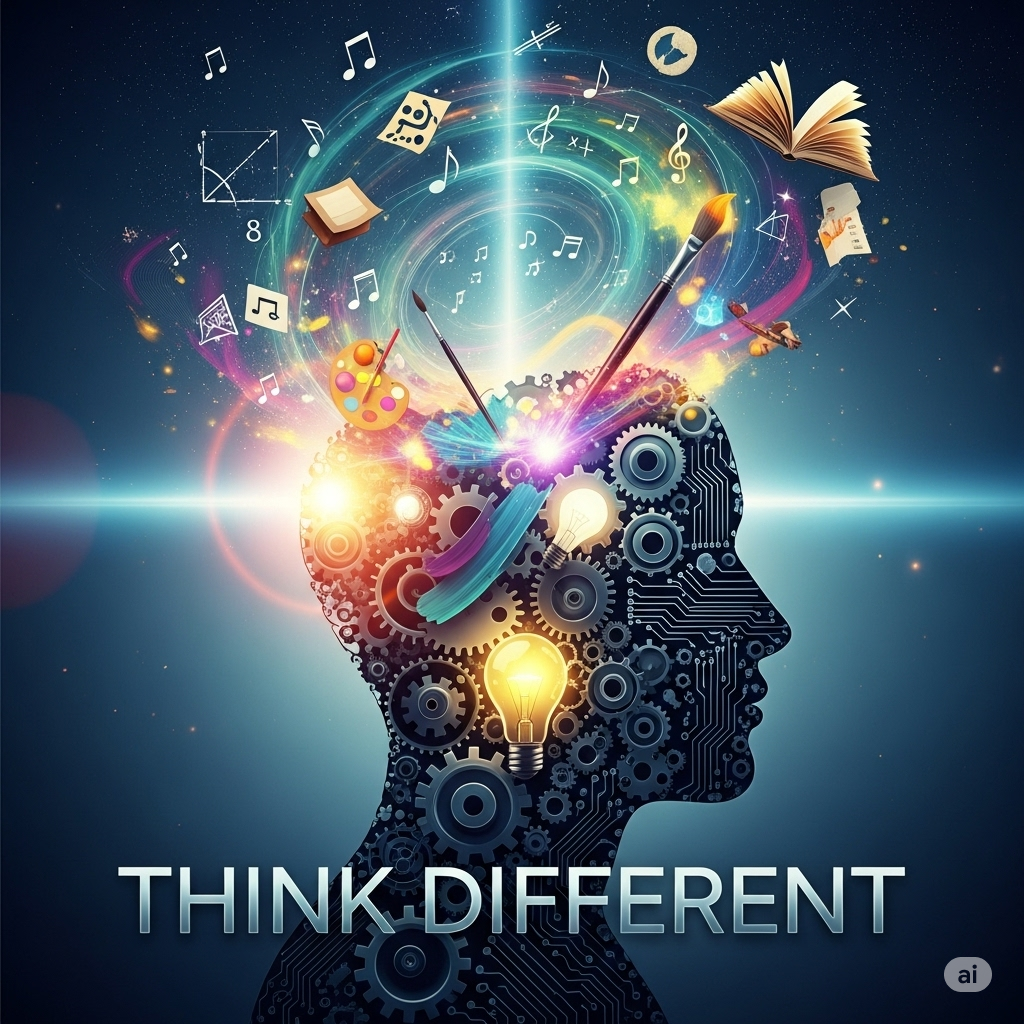
- Apple’s “Think Different”: What saved Apple from bankruptcy was not performance but a campaign that began with “Here are the crazy ones.” Buying Apple products became a form of self-expression: ‘I stand with the geniuses who change the world.’
- Nike’s “Just Do It”: This simple call to action transcends the functionality of shoes, embodying a universal philosophy to overcome inner limits. Nike became a lifestyle brand for all challengers, beyond just a shoe company.
- Zippo Lighter That Stopped Bullets: A true story of a Zippo lighter saving a soldier’s life during World War II transformed it from a simple windproof lighter into a powerful symbol of ‘good luck.’
The Power of Story That Changes the World: Social Narratives
- Ryan White and Changing AIDS Awareness: The courageous struggle of teenager Ryan White, who was infected with HIV, became a pivotal moment in viewing AIDS as a ‘human rights’ issue rather than a ‘statistic.’
- BTS and the “Love Myself” Campaign: BTS’s message of “Speak yourself” delivered at the UN, intertwined with the members’ genuine growth narratives, created a massive positive movement among young people worldwide.
| ‘LOVE MYSELF’ Movement | Content |
|---|---|
| Core Story | “Yesterday’s me is me, and today’s me is me… I have learned to love myself as I am.” - RM, UN Speech 2018 |
| Measured Impact | Funds Raised: Over $6.6 million for UNICEF’s #ENDviolence program by 2024 Social Media Engagement: Approximately 5 million tweets and over 50 million interactions by 2021 |
Priceless Pranks: Banksy and the Shredded Painting
In 2018, Banksy’s ‘Girl with Balloon’ was shredded in a frame at the moment it was auctioned. This performance delivered a powerful message that the value of art cannot be measured in numbers. Ironically, the partially shredded work ‘Love is in the Bin’ was recognized with a much higher value than before. The ‘story’ behind the artwork overwhelmed its physical form.

How to Find Balance Between Data and Story (Checklist)
To effectively combine data and stories, you can apply the following four steps:
- Question Hidden Contexts: What does this data not show? What emotions or cultural backgrounds of people are not included in the numbers?
- Validate Stories with Data: Is the success story we believe in supported by actual data? Are there any hidden warning signs obscured by the story?
- Focus on One Voice: Pay attention to outliers instead of averages. The story of one passionate customer or one highly dissatisfied customer can explain the whole.
- Discover ‘Underdog Narratives’: Like ‘Moneyball,’ find undervalued metrics in the market to create new success stories where ‘David defeats Goliath.’
Conclusion: Discover Stories Within Data
The goal of this article is not to discard data. It is to pull it down from the throne of absolute power it holds and use it with wisdom, humility, and human context.
The ‘Moneyball’ revolution may seem like a victory for data, but its essence is the powerful underdog narrative that utilizes undervalued data to show that ‘a poor team can defeat a rich team through intellect.’ Billy Beane posed a question opposite to that of New Coke. Instead of asking, ‘Which player is the best?’ he asked, ‘Which player contributes most efficiently to victory?’ This was a new question that overturned the old narratives. Moneyball is the most outstanding example of how to find and prove more compelling stories using data.

Ultimately, the most profound truths exist not in spreadsheets but in the narratives we choose to believe and tell.
-
Key Summary
- The human brain responds to stories: We are closer to emotional engines than logical calculators.
- Blind faith in data is dangerous: Numbers lack context, and misguided goals distort systems.
- Success lies in creating meaning: Great brands and movements sell powerful identities and narratives, not products.
Now, take another look at the data dashboard in your business or project. What stories are hidden behind those numbers?
References
- w.msstate.edu link
- The Foundation for a Better Life link
- Goodreads link
- Exploring Narrative Intelligence in AI… link
- What is Narrative?: - S-Space link
- [Research] What is Narrative? - Dreamrugi Workshop link
- The Brain is Sensitive to Storytelling | DBR link
- Reasons to Promote Apps Through Storytelling link
- The Science of Storytelling - Brunch link
- What is Storytelling? - Waveon link
- Neuroscience in Education - The-K Magazine link
- Successful Advertising Storytelling Cases link
- Persuasive Storytelling Techniques - Brunch Story link
- Identifiable vs. Statistical Victim - Advertising Information Center link
- Identifiable Victim Effect - Wikipedia link
- Identifiable Victim Effect - The Decision Lab link
- Ryan White - Wikipedia link
- New Coke - Wikipedia link
- Lessons from the New Coke Failure link
- New Coke: A Classic Branding Case Study link
- An Evaluation of the 2016 Election Polls link
- Q&A: Political polls and the 2016 election link
- Behind Trump’s victory… link
- Goodhart’s Law - ModelThinkers link
- The Four Flavors of Goodhart’s Law - Holistics link
- Think Different - Wikipedia link
- Background Story of Apple’s “Think Different” Campaign link
- Nike’s “Just Do It” Campaign - Ether Lab link
- Storytelling Marketing Cases - Brunch link
- Awareness of AIDS Stuck 30 Years Ago link
- “We have learned to love ourselves…” - Unicef link
- UNICEF and BTS celebrate success… link
- Love is in the Bin - Wikipedia link
- Love Is In The Bin, 2018 - Banksy Explained link
- What is Data-Driven Storytelling | Reveal link
- Moneyball: How Analytics Transformed… link
- THE MONEYBALL THEORY - IAQS link