The Value of a Difficult Journey: Why Pain is Evidence of Growth
phoue
•9 min read•--
What is worth aiming for comes with pain. Here are stories that cheer on your difficult path.
Learn through tragic examples why the easy path can be more dangerous.
Discover how failure and pain create great individuals.
Explore the wisdom of the ‘slow and deep’ path and the neuroscientific principles behind it.
Have you ever looked for a ‘cheat code’ in life? I too once dreamed of skipping the tedious and painful process to reach success directly. We instinctively want the easy path, yet strangely, the stories that linger in our hearts and change our perspectives are never about the easy road. There is a deep paradox in the difficult journey.
Humans are ‘storytelling beings’ (Homo Narrans) who understand the world through stories. According to neuroscience, when we hear a well-crafted story, our brains synchronize with the speaker’s brain. This neurological empathy, made possible by ‘mirror neurons,’ makes us feel as if we are experiencing it ourselves. However, for a story to be interesting, it must have a structure of ‘conflict and resolution.’ A journey without pain is like a story without conflict, failing to evoke any emotion in the brain and leaving no lasting memory.
The crux of this article is this: A difficult journey is not a side effect of achieving a goal, but the very essence that makes that goal valuable. From now on, let’s examine the tragedies wrought by haste, honor the legends born from failure, and explore the wisdom of a slow, arduous yet meaningful path. Your difficult journey is not a sign of failure, but evidence that a great story is being written.
A difficult journey becomes evidence of a great story in itself.
The Costly Price of the ‘Easy Path’: Tragedies Created by Haste
We often equate speed with progress, but history shows us the terrible price we must pay when speed sacrifices quality and safety.
1. The Concrete Lessons of Samseong and Seongsu
In the 1990s, South Korea’s ‘ppalli-ppalli’ (hurry-hurry) culture was a national creed. This culture was the driving force behind miraculous economic growth, but it cast a dark shadow.
In 1994, the Seongsu Bridge collapsed due to poor welding and complacent maintenance aimed at shortening construction time. The social pressure of ‘ppalli-ppalli’ was stronger than the steel structure itself.
The collapse of Seongsu Bridge and Samseong Department Store is a tragic lesson born from the 'ppalli-ppalli' culture.
Just eight months later, the Samseong Department Store collapsed in 20 seconds. This was a disaster foretold by greed and impatience. Illegal extensions, the removal of core pillars, and dragging a 87-ton cooling tower on rollers caused fatal cracks in the building.
2. The Collapse in the Digital Age
The lessons of physical collapse are also valid in the digital age. The famous motto from Silicon Valley, “Move Fast and Break Things,” is a modern version of the ‘ppalli-ppalli’ culture. Interestingly, Facebook, which coined this motto, eventually had to change it to “Move Fast with Stable Infrastructure.”
Samsung Galaxy Note 7 (2016): The rush to capture the market led to battery design and manufacturing defects, resulting in a global recall.
Cyberpunk 2077 (2020): Rushed to meet the release date, it launched with numerous bugs, disappointing fans’ expectations.
Quibi (2020): This streaming platform, despite an investment of about 2 trillion won, vanished in six months. It started hastily without market validation and cut content-sharing features to shorten development time, blocking its own path to organic growth.
All these tragedies can be explained by ‘Goodhart’s Law.’ “Once a measure becomes a target, it ceases to be a good measure,” as the law states, meaning that ‘construction time,’ ‘release date,’ and ‘quick market entry’ have replaced the essence of ‘safety,’ ‘quality,’ and ‘customer satisfaction.’
The Alchemist’s Flame: Legends Forged by Pain
However, not all pain leads to destruction. Some pain becomes the raw material for creation. The stories of those who have forged themselves into legends through failure and frustration show that pain is an essential process for growth.
Michael Jordan: He did not forget the pain of being cut from his high school team, but instead used it as lifelong motivation. Whenever he felt tired, he recalled the list that did not include his name and dedicated himself to training.
Michael Jordan used the memory of being cut as fuel for growth.
J.K. Rowling: She turned her experience of severe depression after divorce into a source of creativity. The soul-sucking gloom was embodied in the most iconic figure of ‘Harry Potter,’ the ‘Dementor.’ Her greatest pain breathed life into her greatest creation.
J.K. Rowling lived a desperate life before becoming a world-renowned author.
J.K. Rowling created a magical story from despair.
Steve Jobs: The ‘wilderness time’ after being ousted from Apple transformed him into a true leader. The painful exile, where he learned the power of focus and storytelling through NeXT and Pixar, was a necessary educational process for a great return.
Steve Jobs made a spectacular comeback after being ousted from Apple.
Their stories show that adversity is not merely an obstacle to be passed but a ‘formative experience’ that made them great. As psychiatrist Viktor Frankl said, the meaning can be found depending on what ‘attitude’ we choose even in suffering. They actively reinterpreted frustration not as failure but as ‘birth myths,’ ‘sources of inspiration,’ and ’essential educational processes.’
The Wisdom of the Process: Finding Joy in ‘Slowness’ and ‘Depth’
So how can we endure and enjoy this arduous process?
Deep Work: Professor Cal Newport states that ‘deep work,’ which uses cognitive abilities to the limit in an uninterrupted state of focus, creates true value. It requires enduring difficulty and boredom but becomes an irreplaceable competitive advantage.
Deep work is a superpower in modern society.
Slow Food Movement: This movement, which respects local traditions and biodiversity against fast food, is a metaphor for life. A life like ‘slow food,’ which takes time and care, is far richer than a ‘fast food’ life of quick success and shallow relationships.
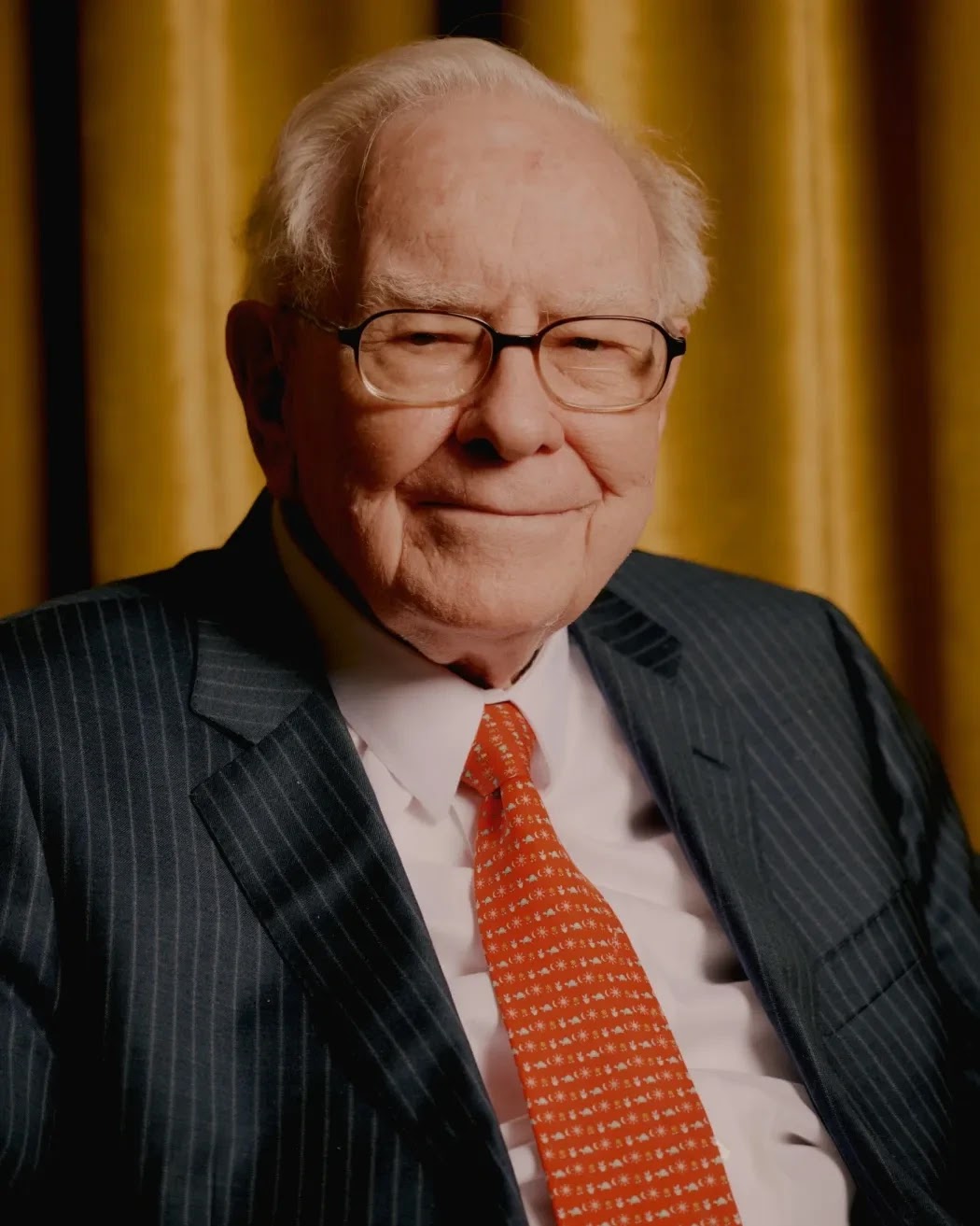
Warren Buffett’s Approach: As he said, “The stock market is a device for transferring money from the impatient to the patient,” everything of value grows through ‘compounding.’ A difficult journey is a prerequisite that allows the magic of compounding to work.Warren Buffett emphasized the value of patience.
Brain Hacking for Adversity: The Science of Positive Struggle
We can redesign our brains to utilize painful processes as opportunities for growth.
Eustress vs. Distress: Not all stress is equal. There is positive stress ’eustress’ that helps us grow and negative stress ‘distress’ that drains us. What matters is not the situation but how we ‘interpret’ it.
Flow: The ‘flow’ state described by psychologist Mihaly Csikszentmihalyi occurs at the intersection of ‘high levels of challenge’ and ‘high levels of skill.’ In other words, the point where we feel ‘difficult’ is the entrance to flow.
Delayed Gratification: As shown in the ‘marshmallow experiment,’ the ability to resist immediate pleasure and wait for a greater reward is like a ‘muscle’ that can be strengthened through training. Every time we choose the difficult path, we are building the mental strength needed for success.
The ability to delay gratification is a significant predictor of success.
Comparison: ‘Impatience’ vs. ‘Deep Journey’ Mindset
The two mindsets show stark differences in process and outcome. Which one are you closer to?
Feature
‘Impatience’ Mindset
‘Deep Journey’ Mindset
Time Perspective
An enemy to conquer, a scarce resource
An ally to invest in, an asset
Main Goal
Efficiency, completion, ‘getting it done’
Mastery, quality, ‘doing it right’
Response to Difficulty
Frustration, anxiety, seeking shortcuts
Immersion, focus, enjoying the process
Key Metrics
Speed, quantity, visible busyness
Depth, impact, created value
Dominant State
Shallow work, multitasking, distress
Deep work, single-tasking, eustress/flow
Long-term Results
Burnout, unstable outcomes, mediocrity
Growth, resilient success, excellence
Conclusion
We have seen the ruins created by haste, witnessed the great victories of resilience, and explored the wisdom of patience and the science of positive struggle.
Key Takeaways
The easy path is a trap: Sacrificing essence (safety, quality) for speed can lead to losing everything.
Pain is material: Great success is born when we actively reinterpret the pain of failure and frustration as the raw material for growth.
The process is essential: The principles of deep work, slow life, and compounding all tell us that the arduous process that takes time ultimately creates greater value.
As RM, the leader of BTS, said in his UN speech, all our mistakes and wrongdoings come together to form the brightest star in our lives. The difficult journey you are experiencing right now is not a sign of failure but the most important chapter in your unique and valuable story. Pain is evidence that the journey is meaningful.
Your journey is difficult. That is why it is valuable.
So, tell your story. What story is your difficult journey creating?