
How Much Is Your Smile Worth?
From the moment we wake up and prepare for work in the morning, we don an invisible mask. The awkward yet friendly smile we offer to a neighbor in the elevator, the calm expression we maintain while saying “It’s okay” after being stepped on in a crowded subway, and the cheerful voice of a barista saying “Have a great day!” as we order coffee. Our society resembles a vast theatrical stage, where we are often required to perform the ’emotions’ that fit our respective roles.
Today, I would like to share a profound discussion about this ’emotional acting.’ These are the precious emotions of our time that we have yet to value, but someone is indeed placing a price on them.
Emotional Management at the Highest Place in the Sky
Here, we have ‘Sujin,’ a flight attendant who wears the most elegant smile while soaring through the skies. What she learned first and longest during her training was not safety protocols or service procedures, but rather ’emotional management.’ The company’s thick manual contained this phrase: “With a warm heart inviting passengers to their homes, make the sky your happiest space.”
One day, on a fully booked flight, a passenger began demanding a window seat without reason. His voice grew louder, and all eyes turned to Sujin. Inside her heart, confusion and a bit of anger surged like waves, but her face displayed a serene smile like a calm lake. “Sir, I sincerely apologize. Currently, we are fully booked, but I will do my best to ensure you have a comfortable journey until we arrive.”
This is ‘Surface Acting.’ It involves changing one’s expression, tone of voice, and gestures to fit the role while leaving the true inner feelings untouched. Although her jaw muscles trembled slightly and her heart raced a bit faster, her outward appearance was that of a perfect ‘kind flight attendant.’ However, such acting consumes a lot of energy. The further apart the real self and the acting self are, the more fatigue known as ’emotional dissonance’ builds up inside.

Not long after, a child with a pale face due to fear of flying began to cry. Sujin approached the child, knelt down, and made eye contact. She recalled the memory of comforting her younger sibling who was scared during a thunderstorm. She transferred that genuine desire to reassure her sibling to the child in front of her. “It’s okay, little one. This plane is very brave and will fly confidently above the clouds. Shall we look out the window together and enjoy the wonderful cloud kingdom?”
Now, Sujin’s voice contained warmth that came from sincerity rather than forced kindness. Perhaps sensing that sincerity, the child gradually stopped crying and began to listen to her story.
This is ‘Deep Acting.’ It is a more advanced emotional management technique that involves using past memories or experiences to genuinely create the emotions appropriate for the role. Deep acting can be less mentally exhausting than surface acting because the outer and inner selves are aligned. However, this too poses a problem. If the process of using personal memories and emotions as company assets is repeated, one may eventually become confused about what their true emotions are. Was that warmth truly ‘mine,’ or was it part of the role of ‘flight attendant’?
Emotional Workers in a Space Where Only Voices Remain
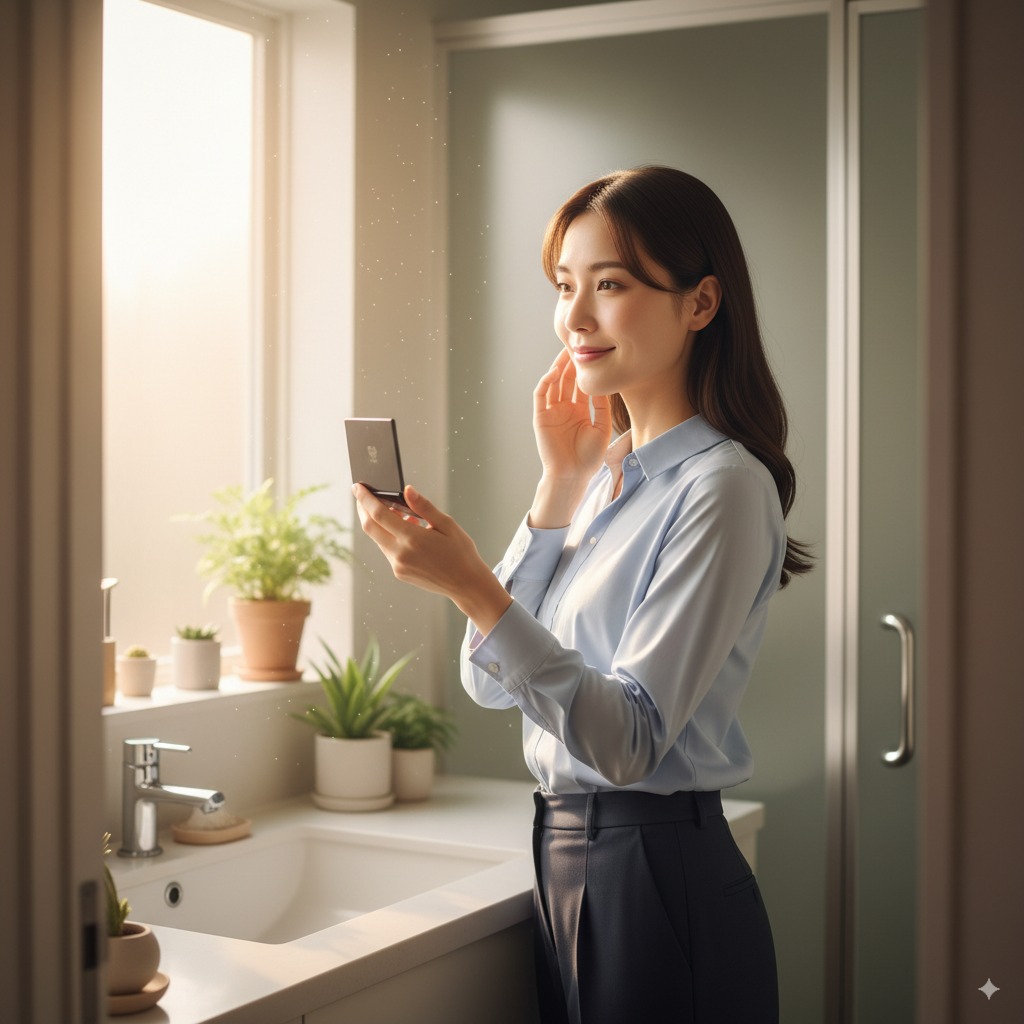
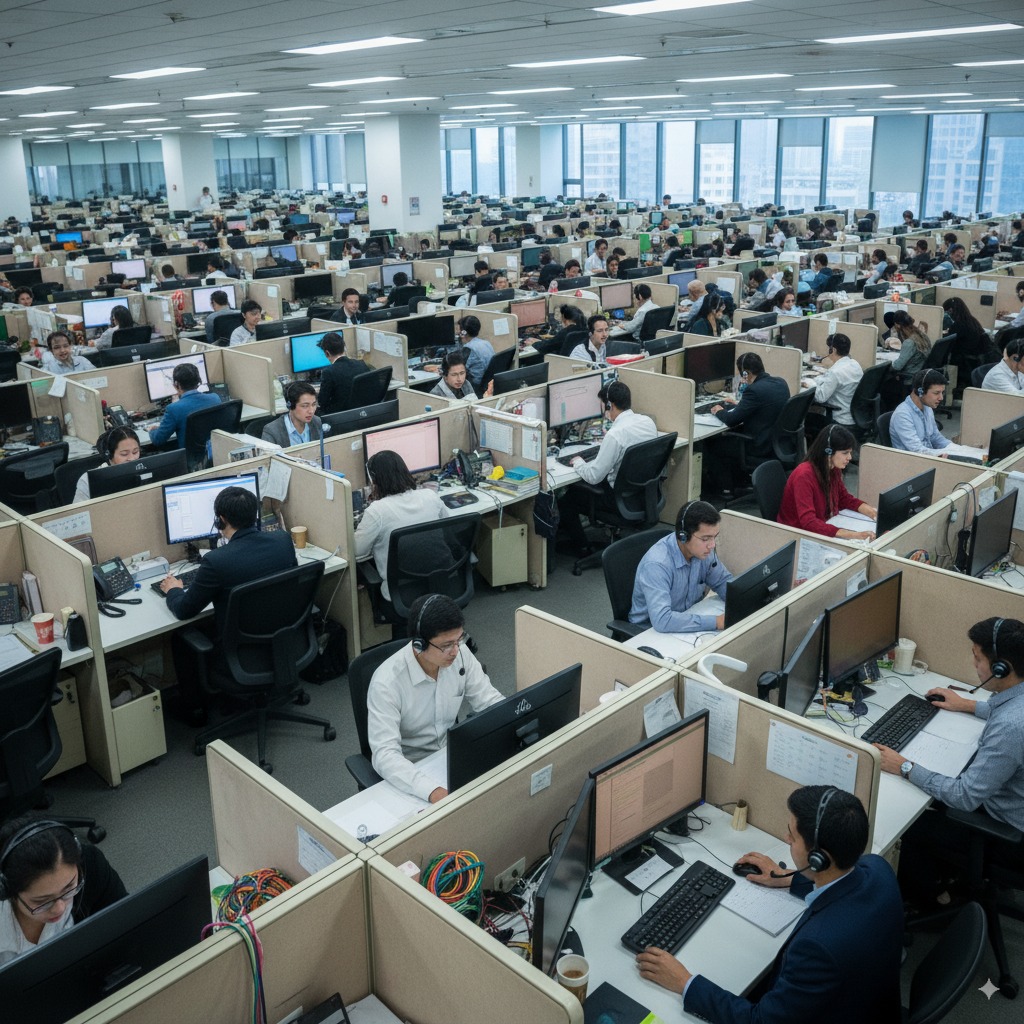
Let’s change the scene. Here is a call center office divided by numerous partitions. ‘Minjun,’ wearing a headset, responds to customers solely through his voice. His emotions are invisible, but he must convey feelings of ’trust’ and ’empathy’ through the tone, speed, and words he uses. On his desk lies a small mirror with the phrase ‘Respond with a smiling voice.’ This is because speaking with a smiling face makes the voice sound cheerful.
“Sir, you must have been very frustrated. I will check that for you right away.”
This was right after he hung up on a customer who had just erupted in anger and used informal language. Minjun’s true feelings were stained with humiliation, but he had to immediately ’transmute’ his emotions into ’empathy’ and ‘a willingness to resolve.’ This is the moment when personal feelings transform into public commodities. In this place, emotions like anger, sadness, and embarrassment are strictly prohibited. Only the ‘Feeling Rules’ set by the company exist.
What We Lose When Emotions Are Priced
The stories of Sujin and Minjun are no longer limited to specific professions. In every service-providing environment, even in relationships with colleagues or friends, we often act according to predetermined ‘Feeling Rules.’
The problem arises when this emotional labor becomes prolonged.
- Disconnection from Oneself: Repeated deep acting can lead to confusion about whether the emotions we feel are genuine or acted. You may find yourself controlling your emotions as if you were responding to a customer even during an argument with your partner after work. This leads to ’emotional alienation,’ where the owner of your emotions becomes someone else or an organization rather than yourself.
- Burnout: Squeezing out emotions requires much more energy than one might think. Like pouring water into a bottomless pit, no matter how hard you try to generate positive emotions, you may eventually fall into a state of extreme lethargy where all emotional wells seem to run dry.
- Loss of Emotional Ability: If you repeatedly use only specific emotions while suppressing others, your ability to feel and express emotions may become dull. You might turn into a robot who cannot feel joy when you should be happy or shed tears when you should be sad.

Time to Check in on My Heart
We live in an era where emotions are sold. Your kindness, gentleness, and empathy have become precious ‘commodities’ that someone is willing to pay for. But we must remember that just as every product has raw materials, your emotions also have a source that is the ‘real you.’
Today, how about taking a moment to quietly check in on your heart, which has worked hard to perform countless roles? Put down the mask for a moment and gently look at your true emotions, free from any control or management. Were you truly angry today? Were you actually very sad? Or did you feel a moment of unexpected joy?
That brief moment of facing my true emotions will be the most precious time to protect myself in this era where emotions have become commodities. Your emotions are certainly not disposable.