
A Great Epic Written by a Single Grain of Rice, From the Land of Hunger to the Fields of Hope
- The birth story of the miraculous rice that ended the ‘barley hump’, Unified Rice.
- The impact of Unified Rice on modern Korean history, its light and shadow.
- How Korea’s aid experience contributes to Africa through the ‘K-Rice Belt’ project.
Part 1: A Promise Sprouted in the Land of Despair (1960s - Early 1970s)
All great stories begin with a small seed. The epic of a single grain of Unified Rice, which changed the fate of a nation and sprouted hope across continents, starts in the gray despair of 1960s Korea. Amidst the scars of war, our nation was fighting another war against hunger.
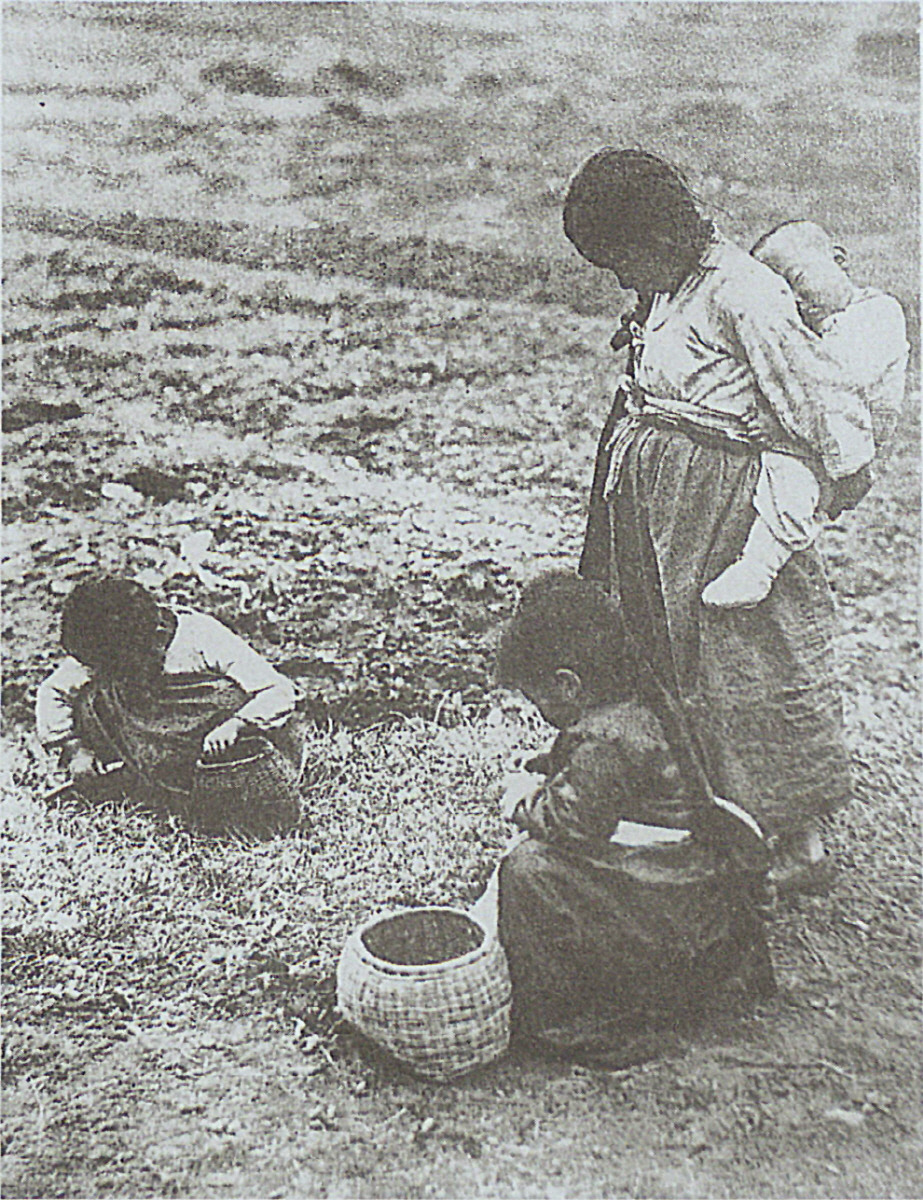
The Landscape of Hunger, Barley Hump
For Koreans at that time, spring was not a season of excitement but of suffering. The ‘barley hump’, where one had to endure hunger until the barley ripened in early summer after the food harvested the previous autumn ran out, was a fate. ‘Rice with meat soup’ was a dreamlike story, and most meals were filled with American aid flour and corn. The government even banned the sale of rice in restaurants as part of the ‘mixed grain promotion movement’. In a time when people had to sing that barley rice was sweeter than honey, a bowl of rice was the longing of the entire nation.
A Great Challenge by a Scientist, Dr. Heo Moon-Hoe’s Dream
There was a figure determined to end this relentless poverty. It was Dr. Heo Moon-Hoe, an agronomist who dedicated his life to rice research. His research was not just about solving food issues; it was also at the forefront of the Cold War, aiming to prevent the communist ‘Red Revolution’ through a ‘Green Revolution’ by increasing food production.
Initially, he introduced the foreign variety ‘Heenong No. 1’, which had high yields, but it failed miserably as it could not adapt to Korea’s climate. This failure left a costly lesson: we must develop our own variety suited to our land and climate.
Challenging the Impossible, Science that Defied Common Sense
Dr. Heo began a challenge that broke the common sense of the breeding community at the International Rice Research Institute (IRRI) in the Philippines. The prevailing belief at the time was that crossing the high-yielding tropical ‘Indica’, which was weak to cold, with the low-yielding temperate ‘Japonica’, which had good taste, would produce sterile offspring.
Dr. Heo and his colleagues implemented an innovative idea called ’three-way crossbreeding’. They crossed Indica (IR8) with Japonica (Yukara) and then crossed that hybrid with a Taiwanese variety (TN1) that had intermediate traits of both.
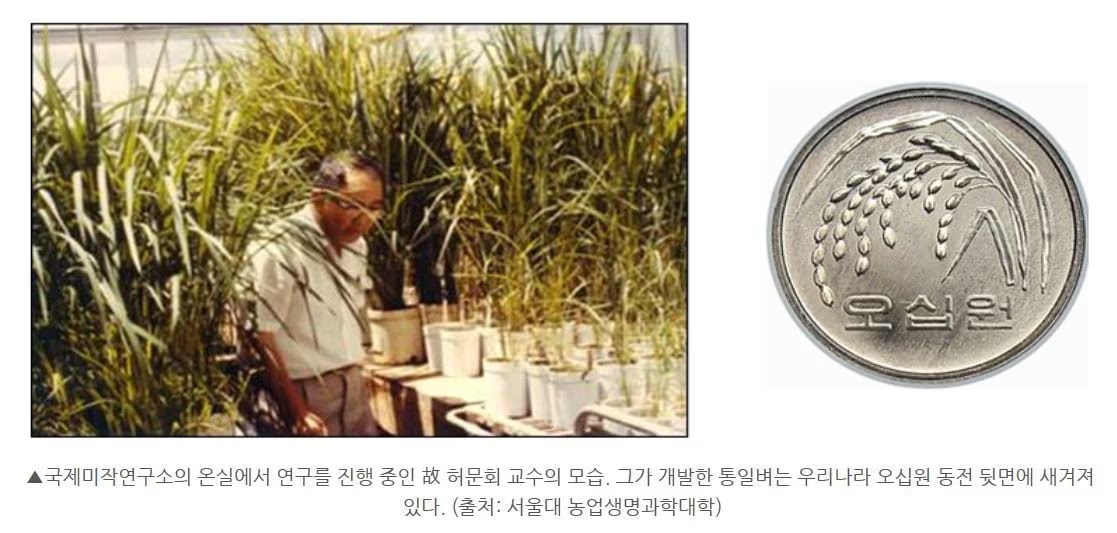
In the spring of 1966, a new rice seed, ‘Unified Rice’ (then breeding number IR667), was finally born, inheriting only the advantages of its three parents.
Part 2: Between Miracles and Discontent, the Light and Shadow of Unified Rice (1970s)
In the 1970s, Unified Rice spread across Korea, ending an era of hunger, but behind its dazzling success lay a deep shadow.
Golden Fields, A Revolution Proven by Numbers
The yield of Unified Rice was over 30% higher than existing varieties. In 1975, Korea achieved rice self-sufficiency for the first time in history, and in 1977, it recorded a world record yield of 4.94 tons per hectare. After ending a history of hunger spanning half a millennium, Korea transformed from a country receiving food aid to one lending rice to Indonesia.
Changes in rice production before and after the distribution of Unified Rice
| Item | Mid-1960s | 1977 (After distribution of Unified Rice) |
|---|---|---|
| Rice self-sufficiency rate | Impossible (dependent on aid) | Achieved 100% |
| Total production | About 3.5 million tons | 6 million tons (41.7 million sacks) |
| Yield per unit area (ha) | About 3.3 tons | 4.94 tons (World No. 1) |
| International status | Major food aid recipient | Food lending country (to Indonesia) |
The President’s Rice, A Tool of the State
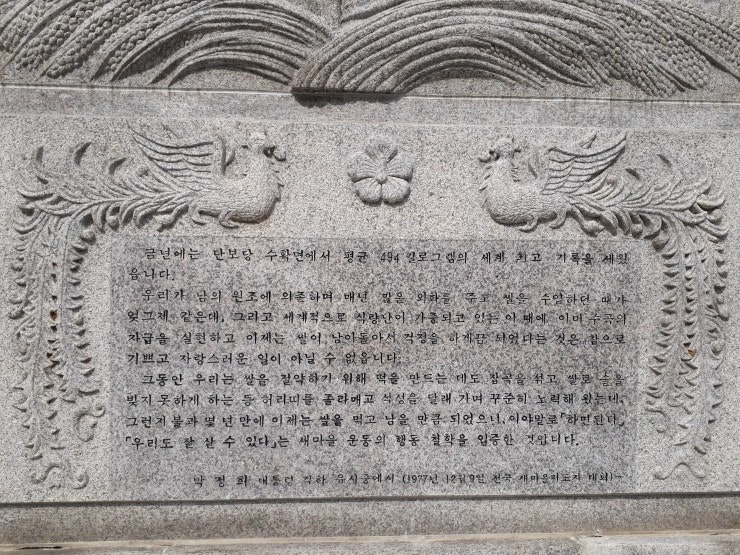
President Park Chung-hee made Unified Rice a symbol of national development strategy. He named it ‘Unification’ and ‘Yushin’, and engraved rice ears on the 50 won coin to commemorate its achievements. Notably, when the controversy over the taste of Unified Rice intensified, he famously tried to quell the debate by drawing a circle around ‘good taste’ at a cabinet meeting, using his authority. This illustrates that the distribution of Unified Rice was a powerful state-led project.
Whispers of Discontent, Issues of Taste and Coercion
However, the biggest problem with Unified Rice was its ’taste’. The rice, inheriting the blood of Indica, lacked stickiness and did not suit the Korean palate. The government effectively forced farmers to cultivate Unified Rice by excluding traditional varieties from purchase targets and cutting off agricultural funding. In this process, farmers were stripped of their autonomy to decide what to plant.
Additionally, the extensive use of chemical fertilizers and pesticides led to changes in the rural ecosystem, resulting in statements like “grasshoppers and loaches have disappeared from the fields.”
Part 3: The Long Sleep of Seeds, and Africa’s Cry (1980s - 2000s)
As Korea became prosperous, the demand for rice shifted from ‘quantity’ to ‘quality’. Unified Rice, which had been shunned for its lack of taste, revealed its weaknesses of vulnerability to cold and pests, and gradually disappeared from our fields after the 1980s.
A Legacy Preserved in the Gene Bank
While Unified Rice disappeared, its legacy was preserved intact in the seed banks of national research institutions like the Rural Development Administration. Research continued, with Dr. Heo’s team identifying the key gene ‘SD-1’ that made Unified Rice shorter. The decision to preserve genetic resources that had lost immediate value would shine unexpectedly decades later.
A Distant Cry, Africa’s Challenge
Now, the stage shifts to the African continent. The situation here remarkably resembles that of Korea in the 1960s. Although rice has become a staple, the self-sufficiency rate is only 60%, heavily relying on massive foreign imports. Low productivity, unstable climate, and limitations of native varieties have led to a desperate cry for a ’new Green Revolution’ across Africa.
Part 4: The Second Spring of Unified Rice Arrives in the Sahel (2010s - Present)
As Korea transformed from a recipient of aid to a donor country, it responded to Africa’s cry. The genes of Unified Rice were given a new mission under the hot African sun.
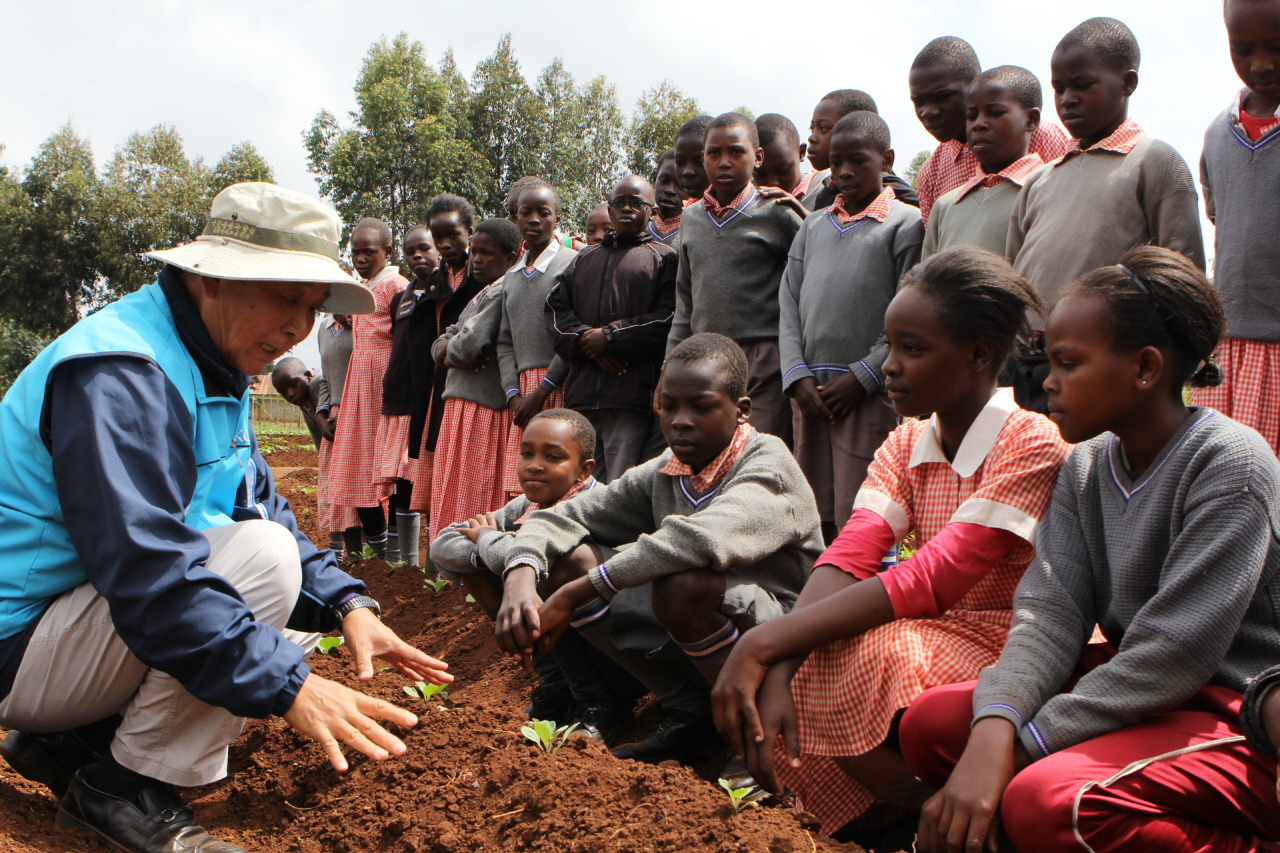
Answering the Call, K-Rice Belt Project
Korea’s unique experience was materialized in the ‘K-Rice Belt’ project. It embodies the philosophy of Korean-style official development assistance (ODA) that not only gives fish but also teaches how to catch fish and make fishing rods. The key is to build seed production complexes locally and transfer technology, leaving behind a sustainable agricultural system even after the project ends.
The Resurrection of Seeds, Senegal’s ‘ISRIZ’
A symbolic success story emerged in Senegal in West Africa. Korean scientists collaborated with the Senegalese Agricultural Research Institute (ISRA) to develop a new variety, ‘ISRIZ’, suited to the African climate based on the genes of Unified Rice.
The results were miraculous. ISRIZ recorded yields 2-3 times higher than existing varieties and, through decades of improvement, captured the taste of locals. The descendant of Unified Rice, which was shunned in Korea in the 1970s for its taste, is now recognized in Africa for having the best flavor.
Comparison of Senegal’s ‘ISRIZ’ Variety and Traditional Varieties
| Item | ISRIZ Variety | Traditional Senegalese Varieties (Sahel, etc.) |
|---|---|---|
| Average yield (per ha) | 6-7 tons | 1.5-3 tons |
| Taste and quality | Harmony of Japonica’s stickiness and Indica’s texture | Less sticky and dry |
| Market price | 400 CFA francs per kg (highest price) | 350 CFA francs per kg |
The Spreading Golden Wave, Expansion of the K-Rice Belt
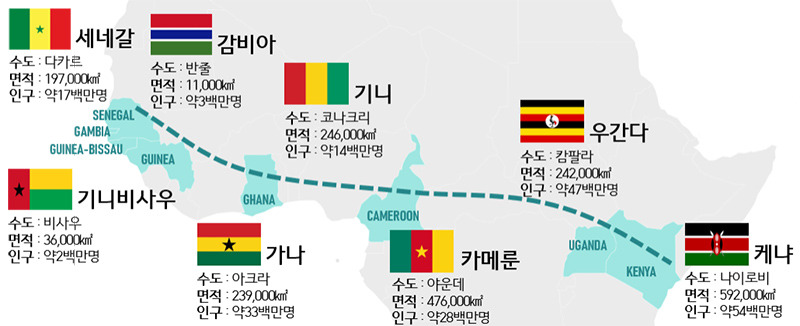
The success in Senegal is spreading across Africa, including Ghana, Gambia, and Guinea. The K-Rice Belt project aims to produce 10,000 tons of seeds annually by 2027, providing stable food for about 30 million Africans. Korea is building a true partnership with Africa through rice, the ‘belt of life’.
Lessons from Unified Rice
Following the journey of Unified Rice, I gained an important insight. The Green Revolution in 1970s Korea was a top-down model led strongly by the state under the single goal of ‘production’. While it yielded quick results, it infringed on farmers’ autonomy and forced uniform varieties, leading to side effects.
In contrast, the K-Rice Belt in 21st century Africa is different. Korea provides technology and experience while collaborating with local research institutions to develop varieties (‘ISRIZ’) suited to their soil and taste, showcasing a partnership model. This reflects a mature approach that prioritizes local sustainability beyond mere aid. Thanks to the experience of Unified Rice, we have learned better ways to cooperate.
Conclusion
The story that began with a single grain of rice is completing a vast circle. The journey of Unified Rice serves as a mirror reflecting the path Korea has walked and the path ahead.
-
Key Summary:
- Birth for Survival: Unified Rice was the ‘miraculous rice’ that liberated Korea from hunger in the 1970s.
- Paradox of Success and Legacy: After economic growth, it was shunned for its ’taste’, but its genes were preserved in the national seed bank, waiting for a new mission.
- Resurrection of Hope: The genes of Unified Rice have been reborn as seeds of hope solving food security in Africa through the ‘K-Rice Belt’ project.
This story illustrates how our urgent needs can evolve into mature responsibilities that contribute to the world. The golden rice ears in the fields of Senegal are the song of hope that has not yet ended.