
Have you ever stared blankly at a white screen, unable to write the perfect first sentence? Have you considered that the endless pursuit of perfection might actually be a cunning ’trap’ that prevents us from moving forward?
Overview
- Understand the psychological trap of perfectionism and identify the burnout, procrastination habits, and relationship issues it causes.
- Learn about the unique beauty and wisdom of life found in imperfection through the Japanese aesthetics of wabi-sabi and kintsugi.
- Realize how imperfection can become a practical tool for innovation and growth through examples like penicillin, Post-it notes, and the MVP strategy.
The Heavy Armor of Perfectionism: The Cost of Perfection
We all live with dreams of perfection, both big and small. We believe the road to success should be flawless, but often the reality is quite the opposite. In fact, the obsession with perfection drives us into anxiety, burnout, and endless procrastination. Psychologists argue that true perfectionism is far from a healthy pursuit of excellence. It is a deeply exhausting belief system rooted in the fear that ‘if I am not perfect, I have no value’.
The most significant characteristic of perfectionism is the black-and-white thinking of ‘all or nothing.’ If even a single flaw is found, the entire effort feels wasted. This rigid mindset creates immense pressure. No matter how great the achievement, instead of satisfaction, we suffer from regret and doubt, thinking ‘I could have done better.’
Three Ways Perfectionism Destroys You
- Mental and Emotional Burnout: Perfectionists are always on edge due to anxiety about mistakes and fear of others’ evaluations. Even during rest, they feel anxious if they are not doing something, leaving no room to enjoy life. It’s like running a car engine at full speed all the time. Eventually, it overheats and must stop. This is burnout. Especially when performance-oriented perfectionism combines, even successful people can easily fall into burnout syndrome, suddenly exhausting all their energy.
- The Paradox of Procrastination: Have you ever felt so burdened by the need to ‘do it perfectly’ that you couldn’t even start? This is called ‘avoidant perfectionism.’ It is not laziness. It is a misguided self-protection mechanism that suggests it is better to do nothing than to produce an imperfect result.
- Strained Relationships: Perfectionism affects not only oneself but also those around them. By applying their high standards to others, perfectionists tend to be critical and uncompromising. This behavior creates tension for others and ultimately damages teamwork or fractures relationships. They may end up feeling isolated, thinking ’no one can meet my standards.’
Perfectionism does not have just one face. Check the table below to see how this destructive perfectionism operates within you.
Characteristics of Perfectionism by Type
| Type | Core Belief | Key Behavior |
|---|---|---|
| Self-Oriented Perfectionism | “I must be perfect for myself.” | Extreme self-criticism, inability to accept flaws, harsh self-punishment. |
| Socially Prescribed Perfectionism | “I must appear perfect to others. Only then can I be recognized.” | Extremely sensitive to others’ opinions and evaluations, fear of rejection, tendency to please others. |
| Neurotic Perfectionism | “Perfection is impossible. Therefore, I am a perpetual failure.” | Strong desire to avoid failure leads to not even attempting, learned helplessness, interpreting everything pessimistically. |
The Aesthetics of Flaws: Life Wisdom from Wabi-Sabi and Kintsugi
For those of us accustomed to Western beauty standards that equate perfection with beauty, Eastern philosophy offers a completely different perspective. What if the scratches, cracks, and signs of wear are not evidence of failure but instead embody unique beauty and history?
Wabi-Sabi: The Beauty of Imperfect and Transient Things
Wabi-sabi (わび・さび) is a Japanese aesthetic that finds beauty in the imperfect, impermanent, and humble. ‘Wabi’ signifies a fullness that comes from simplicity and tranquility rather than material abundance, while ‘sabi’ refers to the depth and elegance that naturally develops as things age and wear over time.

Think of a moss-covered rock in a tranquil garden, an asymmetrical teacup that reflects the artisan’s touch, or a child’s well-loved stuffed animal. These things, because they are not perfect, convey deeper resonance and stories. Wabi-sabi whispers to us to escape the endless desire for perfection and discover the value of what we already have, what is old, and what is familiar.
Kintsugi: Mending Wounds with Gold
The art that most dramatically illustrates this aesthetic of imperfection is kintsugi (金継ぎ). Kintsugi is a traditional Japanese repair technique that uses lacquer mixed with gold powder to reassemble broken pottery.
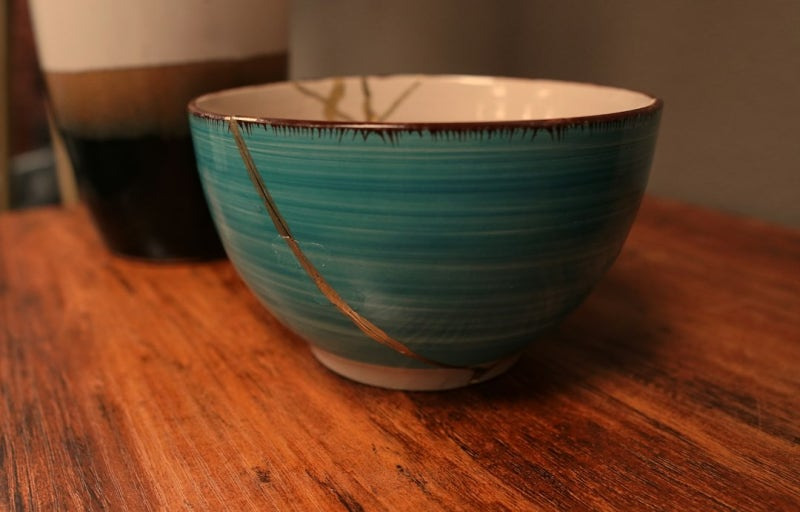
The core philosophy of kintsugi is not to hide the damage. Instead, it highlights the broken traces with golden lines, elevating the scars and the process of recovery into the object’s unique history. A broken vessel is reborn through repair into something more unique and valuable than before. The story of kintsugi transcends merely fixing an old bowl; it serves as a profound metaphor for our life’s wounds and recovery. Breaking is not the end but the beginning of a new story. This reminds us that our failures and pains are not shameful secrets but evidence of our unique and resilient existence.
‘Unexpected Fortune’: How Genius Emerges from Imperfection
Did you know that imperfection is not only philosophically beautiful but also a highly practical tool that drives innovation and discovery in the real world? Great discoveries that changed history often stemmed not from perfect plans but from minor mistakes and ‘unexpected fortune (Serendipity).’
Case 1: Miracles Born from a Messy Laboratory - Penicillin and Post-it Notes
Discovery of Penicillin: In 1928, Alexander Fleming’s laboratory was not particularly tidy. Upon returning from vacation, he found a mysterious blue mold growing on a petri dish, and all the surrounding staphylococci were dead. If he had been a ‘perfect’ scientist, he would have been disgusted by the contaminated petri dish and thrown it away immediately. However, Fleming’s greatness lay in not overlooking that ‘mistake’ and asking, “Why?” The world’s first antibiotic, penicillin, was born from this ‘messiness’ and ‘chance’.
Birth of Post-it Notes: In 1968, 3M researcher Spencer Silver was working on a project to develop a strong adhesive but ended up creating a ‘useless’ weak adhesive that left no stickiness when peeled off. A few years later, his colleague Art Fry was struggling with bookmarks falling out of his church choir hymn book. At that moment, he had the brilliant idea to try Silver’s ‘failed’ adhesive on paper. Thus, what was almost discarded as a failure transformed into one of the most successful office supplies in history: Post-it notes.
Case 2: The Power of ‘Launch First’ - The MVP Revolution
This ‘power of mistakes’ has been systematized in Silicon Valley’s startup culture through the strategy of Minimum Viable Product (MVP). MVP is a strategy where a version of a product with only the minimum core features that customers can use is launched before creating a perfect product. In other words, it involves intentionally releasing an ‘imperfect product’ to the world.
The Start of Airbnb: In 2007, Brian Chesky and Joe Gebbia could not afford the expensive rent. They came up with the idea of placing an air mattress in their living room and providing breakfast. Their first MVP was not a sleek app like today. It was just a simple webpage with a few photos of their apartment and contact information. Everything was messy, but this MVP perfectly validated the core hypothesis that ‘people would willingly pay to stay in a stranger’s home.’

Dropbox’s Clever MVP: Dropbox founder Drew Houston created a 3-minute ’explanatory video’ showing how the product would work instead of the actual product. This video went viral, and the beta service waiting list exploded from 5,000 to 75,000 overnight. Not a single line of actual code was written, but it was enough to confirm the explosive market demand.
The Courage to Show: How to Embrace Your Imperfect Story
The final key we need to shed the heavy shield of perfectionism and embrace imperfection as beauty and opportunity is ‘courage.’ Renowned researcher Brené Brown likens perfectionism to a ‘20-ton shield.’ This shield weighs us down and prevents us from truly connecting with others.
Dr. Brown presents vulnerability as the antidote to perfectionism. She redefines vulnerability not as weakness but as the ‘courage’ to willingly reveal oneself in situations where outcomes cannot be controlled. Those who feel deep love and belonging are people who had the courage to be imperfect. They believe, “I deserve love and belonging just as I am right now.” This stands in stark contrast to the perfectionist belief that “I will only be valuable when I am perfect.”
Brené Brown’s concept of ‘wholehearted living’ involves nurturing three things:
- Courage: The courage to fully reveal everything, including my imperfections.
- Compassion: The ability to be kind to myself before being kind to others.
- Connection: The genuine relationships that arise when we let go of the compulsion to ‘have to be something’ and live as we are.
This is the attitude of fully embracing imperfection. It is believing that what makes me vulnerable is what makes me most beautiful. This aligns perfectly with the philosophy of kintsugi, which fills broken gaps with gold. Our vulnerabilities are indeed the most brilliant golden lines of our lives.
The declaration ‘I am enough’ is not an excuse for complacency or laziness. Paradoxically, this belief is the strongest foundation that enables true growth, resilience, and high achievement. The path to true excellence begins not with ‘I must be perfect’ but with the belief that ‘I am already valuable.’
A Guide to Your Incredibly Wonderful Life of Imperfection
So far, we have explored how cunning a trap perfectionism is, how beautiful (kintsugi) and productive (MVP) imperfection can be, and how it is the core of a courageous life (vulnerability). Now it is time to lay down this heavy shield and live a little lighter and freer.
Four Practices for Embracing Imperfection
- Recite the mantra ‘This is good enough’ (My Life’s MVP): Instead of grand goals, try starting very small. Instead of aiming to write a perfect novel, set a goal to write ‘one page of a terrible first draft.’ Lowering the barrier to starting allows you to finally begin what you have been procrastinating.
- Rename Failure as ‘Data’: When things do not go as planned, instead of saying, “I failed,” change the question to, “What did I learn from this?” Adopt the mindset of a scientist who constantly learns by treating life as an experiment. This shift in thinking turns frustration from a personal insult into a valuable lesson for growth.
- Consciously Practice Self-Compassion: Perfectionists are masters of self-criticism. The antidote is self-compassion. When you make a mistake, ask yourself, ‘What would I say to my best friend if they made this mistake?’ Then, tell yourself those warm words. This small practice can break the cycle of endless self-blame.
- Celebrate Your Own Kintsugi: Recall kintsugi, our central metaphor. Think of a difficult experience you went through in the past, a ‘scar’ in your heart. Instead of struggling to hide it, take time to reflect on how that experience shaped who you are today, what it taught you, and how it became part of your unique and resilient story. By doing this, we can finally view the broken gaps in our lives as beautiful golden lines.
Conclusion
Perfectionism is a cunning trap that prevents us from moving forward.
- Perfectionism leads to burnout, procrastination, and fractures in relationships, hindering our growth.
- Embracing imperfection becomes a driving force for practical innovation and discovery, beyond philosophical beauty like wabi-sabi and kintsugi, as seen in penicillin and MVP strategies.
- The most important thing is to have the courage to reveal one’s vulnerabilities and cultivate the belief in self-compassion that ‘I am already enough.’
Now is the time to lay down the heavy shield of perfectionism and embrace your messy, beautiful, and imperfect self, starting a more genuine and courageous life. I hope this article serves as a small strength for your new beginning.