
A story of the ‘invisible government’ born from the tension between state secrecy and democracy.
- Understand the historical origins and modern transformations of the ‘deep state’ narrative.
- Analyze the psychological and social factors that lead people to believe in conspiracy theories.
- Approach the reality of the ‘invisible government’ concept through a comparative analysis of cases in the U.S. and Korea.
Two Governments and the ‘Deep State’
In 1964, journalists David Wise and Thomas Ross declared in their book The Invisible Government that “there are two governments in the United States today.” This statement encapsulates the essence of the concept we now refer to as the Deep State, a powerful secret national security apparatus operating in the shadows of democracy. This article explores how the ‘deep state’ narrative is not merely a fiction but a complex phenomenon born from the real tension between state secrecy and democratic principles.
This narrative began with specific criticisms of the CIA and has evolved over time into a powerful political weapon. This article traces its origins, ideological transformations, and the psychological and technological factors driving its spread. In particular, it aims to access the multilayered reality of the concept of the ‘invisible state’ through a comparative analysis of the U.S. and South Korea.
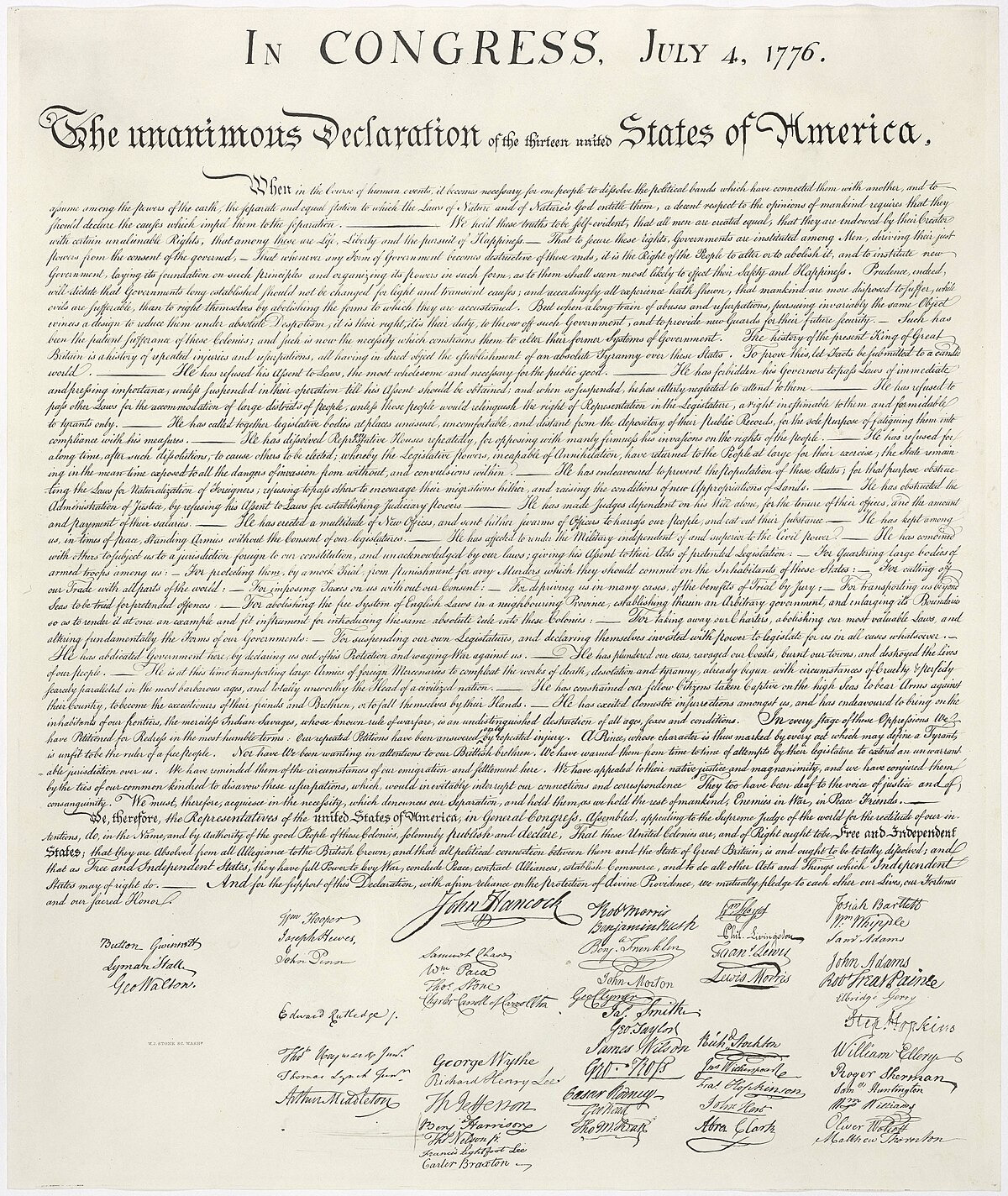
Part 1: The Genesis of Deep State Theory - The CIA and The Invisible Government
Shadows of the Cold War
The concept of the ‘invisible government’ emerged in the unique context of the Cold War following World War II. As the U.S. faced the threat of the Soviet Union, massive secret intelligence agencies like the CIA gained unprecedented powers in areas where congressional or public oversight was minimal. They became actors not just in information gathering but also in covert operations and regime changes worldwide.
Core Claims of The Invisible Government (1964)
Unlike later conspiracy theories, Wise and Ross did not claim that the CIA was a rogue organization acting independently. The crux of their argument was that within the framework set by the president and a small advisory group, the CIA had significant autonomy to create events on the ground and influence policy. This exposed the existence of a secret foreign policy that bypassed the State Department and was a landmark work that broke the media’s silence on CIA covert operations.
CIA’s Overreaction: Realizing Their Own Prophecy
The CIA viewed the publication of this book as a serious threat. They attempted to prevent its release and even planned to buy up the entire first edition. When that failed, they mobilized ‘assets’ in the media to induce critical reviews.
This overreaction by the CIA resulted in the ‘Streisand effect’. By treating legally sound journalism as a national security threat, the CIA confirmed public suspicions about a powerful and unaccountable secret government. Ultimately, the CIA’s actions transformed the book from a mere investigative report into a foundational text for conspiracy theories.
Part 2: The Evolution from ‘Invisible Government’ to ‘Deep State’
Terminology Shift and Partisan Acceptance
Today’s term ‘deep state’ originates from the 1990s Turkish term ‘derin devlet’, referring to a secret network within the military and security agencies. It was introduced to the U.S. by former Republican congressional aide Mike Lofgren. His concept approached bipartisan criticism, viewing the deep state as a symbiotic network among government agencies, lobbyists, and corporate-financial interest groups rather than a secret conspiracy.
However, during the Trump administration, this concept morphed into a partisan weapon depicting a ‘rogue’ bureaucratic group obstructing the agenda of an elected president. While early criticisms targeted the ‘secret state (CIA)’ lacking democratic oversight, modern narratives define the ‘public state (government agencies)’ itself as the enemy.
Narrative Apex: QAnon
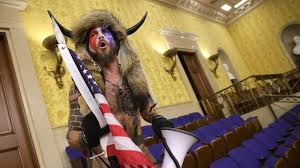
QAnon represents an extreme mutation of the ‘deep state’ narrative. In the worldview of QAnon, the deep state is a global conspiracy of Satan-worshipping pedophiles, with Donald Trump portrayed as the savior fighting against them. This narrative has even provided ideological justification for real political violence, such as the January 6, 2021, attack on the U.S. Capitol.

.
Part 3: The Psychology of Believing in the Deep State: Why Are We Drawn to Conspiracy Theories?
Belief in conspiracy theories is rooted not in the irrationality of individuals but in universal human psychology.
Three Key Psychological Motives
- Cognitive Motive (Desire to Know): Provides simple and clear explanations for a complex world.
- Existential Motive (Desire for Control): Clarifies blame by identifying an enemy, providing a sense of control.
- Social Motive (Desire for Belonging): Shares ‘special knowledge’ to strengthen group identity.
Cognitive Traps and Biases
- Proportionality Bias: The belief that significant events must have significant causes.
- Confirmation Bias: Selectively accepting information that supports one’s beliefs.
- Illusory Pattern Recognition: Connecting unrelated events to find intent.
Digital Amplifiers: Social Media
Social media algorithms prioritize emotional and provocative content to maximize user engagement. In this process, ’echo chambers’ and ‘filter bubbles’ form, amplifying conspiracy theories. I too feel that my thinking narrows when I only watch videos recommended by algorithms. The lack of transparency in how these algorithms operate complicates problem-solving.
Table 3.1: Key Psychological Drivers of Conspiracy Belief
| Factor Type | Driver/Bias | Definition |
|---|---|---|
| Motive | Cognitive Motive | Desire for knowledge, certainty, and a coherent understanding of the world. ‘Deep state’ provides a single, comprehensive explanation for complex political events. |
| Motive | Existential Motive | Desire for safety, security, and a sense of control over one’s environment. Believing one has identified a secret conspiracy restores a sense of control. |
| Motive | Social Motive | Desire to maintain a positive image of oneself and one’s in-group. ‘We’ are patriots who see the truth, ’they’ are the corrupt ‘deep state’ elite. |
| Cognitive Bias | Proportionality Bias | The assumption that significant events must have significant causes. Believing that pandemics or election results are the result of a massive conspiracy is more satisfying. |
| Cognitive Bias | Confirmation Bias | Preference for information that confirms existing beliefs. Opposing evidence is dismissed as ‘fake news’. |
| Cognitive Bias | Illusory Pattern Recognition | Recognizing meaningful patterns in random data. Connecting unrelated events as evidence of an organized ‘deep state’ plan. |
Part 4: The Deep State in Korea - ‘Shadow Government’ and Political Polarization
The concept of the ‘shadow government’ has been weaponized in various forms amid Korea’s extreme polarization. This demonstrates how the ‘deep state’ narrative functions as an ’enemy template’ applicable to any society.
- Conservative/Right Narrative: Defines political opponents, labor unions, and civic groups as pro-North, anti-state ‘shadow governments’ undermining national security.
- Progressive/Left Narrative: Explains that a ‘privileged cartel’ composed of prosecutors, conservative media, and conglomerates resists reform.
Such opposing conspiracy theories transform political disagreements into a battle between good and evil, deepening social distrust and division. Do you believe that a truly massive ‘shadow government’ operates behind the conflicts in our society?
Comparison of Deep State Narratives in the U.S. and Korea
| Category | U.S. ‘Deep State’ | Korean ‘Shadow Government’ |
|---|---|---|
| Core Actors | Intelligence agencies, career bureaucrats, financial elites | (Depending on the faction) pro-North forces vs. privileged cartel |
| Main Criticism Target | State power beyond democratic control | Entire political opposition |
| Characteristics | Initially bipartisan criticism → gradually transformed into far-right, partisan narrative | Utilized as a tool of extreme political polarization from the outset |
| Ultimate Goal | (Claim) Overthrow of elected power | (Claim) Regime overthrow vs. hindrance of reform |
Part 5: The Reality of the Deep State - The Boundary Between Fact and Conspiracy
Conspiracy theories do not arise in a vacuum. They are grounded in the history of actual government deception and secrecy. The CIA’s MKUltra project, Watergate, and the Iran-Contra affair demonstrate that the government indeed concocts conspiracies and lies, creating a ‘Credibility Gap’.
Case 1: JFK Assassination - A Conspiracy of Cover-up, Not Murder
The U.S. House Assassinations Committee concluded that the CIA was not involved in the Kennedy assassination conspiracy. However, declassified documents reveal that the CIA deliberately concealed information from the Warren Commission, despite having monitored assassin Oswald in advance.
Here, the ‘conspiracy’ was not about the assassination of the president but rather a bureaucratic self-preservation conspiracy to cover up the agency’s intelligence failures and protect the organization. This cover-up has sparked larger conspiracy theories for decades.
Case 2: Peter Dale Scott’s Research - The Boundary Between Criticism and Conspiracy
Peter Dale Scott’s research illustrates the boundary between legitimate criticism and conspiracy theories. He documented shocking patterns of “deep politics”, such as the CIA allying with drug traffickers for covert operations. However, he further claimed that events like the Gulf of Tonkin incident or the 9/11 attacks might have been manipulated by ‘deep state’ forces, crossing into the realm of conspiratorial reasoning.
Table 5.1: Distinguishing Facts from Conspiracy Theories in Major Events
| Event | Established Historical Fact | ‘Deep State’ Conspiracy Theory Claims |
|---|---|---|
| JFK Assassination (1963) | The CIA monitored Oswald and concealed related information from the Warren Commission. Covered up intelligence failures. | The CIA orchestrated the Kennedy assassination to prevent the agency’s dismantling. |
| Iran-Contra Affair (1985-87) | The Reagan administration illegally sold weapons to Iran and used the funds to support Nicaraguan rebels. | This is evidence of a rogue ‘deep state’ operating independently of the president. (In reality, it was a conspiracy led by senior administration officials.) |
| 9/11 Attacks (2001) | Attack by Al-Qaeda. U.S. intelligence agencies failed to connect the dots. | The U.S. government (‘deep state’) orchestrated a ‘false flag’ operation to justify war. |
Conclusion: The Invisible Government, An Endless Story
The ‘invisible government’ narrative is a powerful political myth rooted in the unresolved tension between secrecy for national security and democratic accountability.
- Key Summary 1: The ‘deep state’ narrative began as a rational critique of CIA’s secret activities but gradually morphed into a partisan and extreme conspiracy theory.
- Key Summary 2: Belief in conspiracy theories is amplified by universal human psychology seeking to resolve uncertainty and gain a sense of control, as well as by social media algorithms.
- Key Summary 3: The history of actual government secrecy and lies has created a ‘credibility gap’ that provides the soil for conspiracy theories, but this does not prove the existence of a singular entity called ‘deep state’ manipulating events.
To combat the destructive power of such conspiracy theories, efforts are needed to address the roots of public distrust through principles of greater transparency and accountable governance, going beyond merely refuting false claims. Developing a habit of stepping back and thinking critically when encountering information can be the first step.
References
- The “Deep State”: A Problem that the CIA Helped to Create Leiden Security and Global Affairs
- Review of Peter Dale Scott’s “American War Machine” History News Network
- Forbidden history: CIA censorship, The Invisible Government… Taylor & Francis Online
- Full text of “The Invisible Government by David Wise” Internet Archive
- Agency-a-History-of-the-CIA-8000.pdf Pima County Public Library
- The Invisible Government by David Wise and Thomas B. Ross. Book review CIA
- The Invisible Government - Wikipedia Wikipedia
- Deeper Than the “Deep State”: Follow the Money Origins, Ohio State University
- QAnon | #TranslateHate | AJC American Jewish Committee
- 「음모론이란 무엇인가」 - 국회도서관 국회도서관
- The Psychology of Conspiracy Theories - PMC National Center for Biotechnology Information
- Radical ideas spread through social media. Are the algorithms to blame? PBS NOVA
- 그림자 정부 (음모론) - 위키백과 위키백과
- 세계를 지배하는 ‘그림자 정부’가 있다(?) - 제주일보 제주일보
- 사드 배치 반대와 남한의 그림자 정부 - 미래한국 Weekly 미래한국 Weekly
- 한국정치에서 음모론과 선거의 연관성 KCI
- Findings | National Archives U.S. National Archives