
The One Lesson History Teaches Us
Author Morgan Housel’s latest work, ‘Same as Ever’, poses a provocative yet fundamental question:
“Looking back at the past, we realize that we cannot know the future.”
What do you think of this statement? Some may consider it ‘obvious’, while others might ask, ‘Isn’t some level of prediction possible?’ However, this statement is not merely a philosophical reflection or an expression of humility. It is the most practical and powerful insight for understanding our lives, investments, and all changes in the world.
The goal of this article is to prove how true this proposition is through the recent 20 years of history we have all experienced. We will examine how dramatically the so-called smartest experts, analysts with vast data, and CEOs who manipulated the market failed to predict the future. Of course, this is not to mock them. It is to gain better wisdom through their failures and our collective blindness.
We will soon realize that the effort to predict specific events is futile, and instead, focusing on the unchanging human behaviors of greed and fear, opportunity, and the power of compelling stories is a much wiser path. The future is always uncertain and full of surprises, and the greatest risks always come from places we cannot see.
So, shall we embark on a time travel to see how little we knew about the future?
Part 1: The Story of the ‘Keyboard-less Phone’ That Earned the World’s Mockery
2007: The Era When Nokia Ruled the World
Let’s go back to 2007. What kind of mobile phone were you holding? Many of you were probably using a phone with a physical keyboard that made a ‘click’ sound. At that time, the world belonged to Nokia. Nokia dominated a whopping 40% of the global market with smartphones running the Symbian operating system. For business people, the BlackBerry’s QWERTY keyboard was a symbol of success. This was the ‘reality’ of the time, and it was common sense that no one doubted. The pinnacle of technology seemed to lie in faster and more accurate physical keyboards.
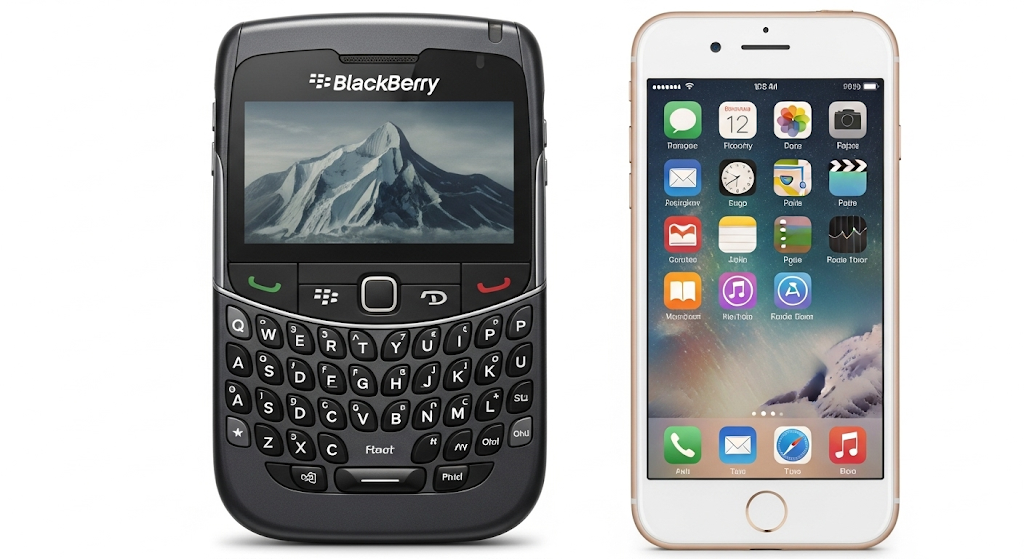
The ‘Expert’ Predictions That Went Sour
That very year, Apple announced the iPhone. And a scene that would go down in history unfolded. At that time, the CEO of Microsoft, the world’s largest software company, Steve Ballmer, burst into laughter when asked about the iPhone in an interview.
He could not contain his laughter and said, “$500? That’s the most expensive phone in the world. Business customers will never buy it. Because it has no keyboard.”
Looking back now, it seems absurd, but at the time, his argument was very logical. All ‘statistics’—market share, consumer surveys, sales data—supported his statement. He was not a fool. He simply predicted the future based on existing data. His prediction became a symbolic example of our collective limitations in imagining ‘a different future’.
The Unforeseen 1.4 Quadrillion Won Ghost
The story does not end with Steve Ballmer being wrong. The real key is that no one, not even Apple, which created the iPhone, could predict the true scale of the revolution this small device would bring. The real revolution was not the ‘phone’ itself. It was the ‘App Store’, which did not even exist at the time of the iPhone’s announcement and was later quietly added. Initially seen as just a small add-on, the App Store soon became a giant that swallowed the world.
Let’s take a look at the scale of this unpredictable explosion through data.
Growth of the Economic Value of the App Store Ecosystem
| Year | Total Revenue and Sales (Global) | Total Revenue and Sales (South Korea) |
|---|---|---|
| 2019 | $519 billion (approx. 630 trillion won) | - |
| 2020 | - | 16.5 trillion won |
| 2022 | $1.1 trillion (approx. 1,459 trillion won) | 38 trillion won |
What created this massive economic ecosystem? It was areas that people never thought they needed apps for, such as online shopping, food delivery, travel booking, and ride-hailing. No one in 2007 could have imagined that they would call a taxi, order dinner, or book accommodations worldwide with a small device in their pocket.
The Invisible Truth: The Trojan Horse and the Power of Story
Here, we can gain a deeper lesson beyond the failure of future predictions.
First, the greatest innovations often disguise themselves in different forms. The iPhone was not a new phone. It was a ‘Trojan Horse’ carrying a completely new economy. People thought they wanted a better phone, but what they truly craved was a universal platform that solved everything from their pockets.
The initial debate remained at a one-dimensional level, focusing on whether there was a keyboard or not, and whether the price was high or low. However, the second and third-order effects were beyond imagination. A software market called the App Store emerged (second-order effect), and that market shook the foundations of existing industries like taxis, hotels, retail, and even dating (third-order effect). Future shocks arise from places that far exceed the initial purpose of a product.
Second, statistics always kneel before stories. Morgan Housel emphasizes that stories are always more powerful than statistics. Steve Ballmer focused on the statistics that ‘people want physical keyboards.’ However, Apple and the developers who followed sold a powerful ‘story’ that said, ‘Your life can change this way with these apps.’ The narrative of convenience, connection, and enjoyment was far more persuasive than any market share report from 2007. Stories created new realities that old data could not explain. This is the pattern that history repeatedly shows. Human desire for a better life and stories always render current statistical models outdated.
Part 2: Sunny Days Before the Storm: 2008, When Optimism Ruled the World
The Era of Unshakeable Belief
Now, let’s move a bit further forward to the mid-2000s. Do you remember the air of that time? It was a time when optimism about low interest rates and endless economic growth dominated the world. In particular, in the United States, the belief that ‘housing prices will never fall’ was almost religious. This was not just a vague expectation of the public. The entire global financial system, designed by the smartest minds on Wall Street, was built on this belief.
The ‘Invisible’ Risk: Financial Weapons of Mass Destruction
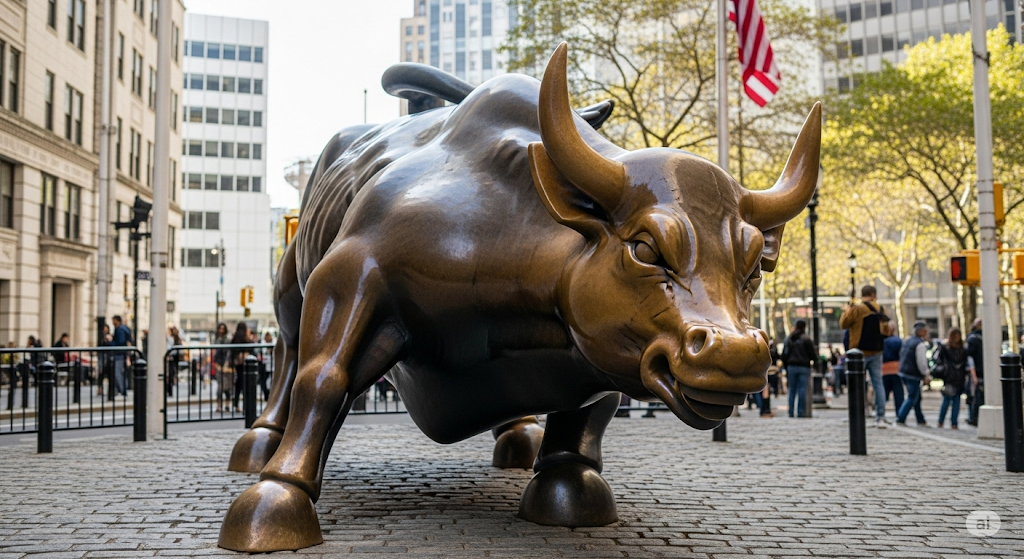
At the center of that belief was the ‘subprime mortgage’. Loans were recklessly issued to people with low credit ratings, but no one was worried. This was because Wall Street’s ‘geniuses’ chopped up and mixed these risky loans into a safe and profitable financial product called ‘collateralized debt obligations (CDOs)’. They either did not know or ignored the fact that they had not eliminated the risk but had cleverly hidden it.
At that time, Wall Street was a place overflowing with greed and arrogance. Bankers were hailed as icons of innovation, and millions of dollars in bonuses were seen as a natural reward for their genius. This was a perfect textbook example of how the timeless human nature of greed, overconfidence, and collective madness operates, as Morgan Housel describes.
Inevitable Collapse and Unpredictable Echoes
The party that seemed eternal came to an end. As housing prices began to fall, everything collapsed like dominoes. Falling housing prices → Surge in loan defaults → Plummeting value of CDOs → Global financial system paralysis. Countless people lost their homes and jobs.
But what was truly unpredictable was what happened afterward. Financial experts’ economic models might have predicted declines in GDP or unemployment rates. However, no model could have predicted the ‘Occupy Wall Street’ movement that began in a park in New York three years later, in 2011. Who could have foreseen that a financial crisis originating from complex derivatives would evolve into a social movement where ordinary people pitched tents in parks and shouted, ‘We are the 99%’? The anger of the people stemmed not just from losing money but from feeling betrayed by the top 1%.
The Invisible Truth: The Paradox of Expertise and Social Contagion
The 2008 financial crisis leaves us with another profound lesson.
First, the paradox of expertise. The 2008 crisis did not occur due to a lack of expertise but rather because there was an oversupply of a very narrow and selfish kind of expertise. The engineers who designed these complex financial products were undoubtedly geniuses. However, their genius was focused on maximizing short-term profits and hiding risks rather than understanding the vulnerabilities of the entire system. This shows that expertise lacking wisdom and a holistic view can be far more dangerous than ignorance.
A one-dimensional view says, ‘People took bad loans.’ A two-dimensional insight analyzes that ’the system itself encouraged such behavior by dispersing responsibility through complex products.’ However, the three-dimensional truth is that this ’expert-led’ system ultimately gave rise to a massive moral and social backlash (the Occupy Wall Street protests) that questioned the very legitimacy of modern capitalism. This outcome far exceeded the scope of any financial prediction.
Second, financial contagion leads to social contagion. The financial crisis itself was a pandemic within the financial system. However, soon a powerful emotional virus called ‘anger’ spread worldwide. The spark of protests that began in New York led to a global social contagion, such as Spain’s ‘Indignados’ movement. Financial models could calculate economic shocks like unemployment rates or GDP losses, but they could not account for the emotional and political responses triggered by them. History has shown that massive economic events create emotional and political vacuums that will be filled in unpredictable ways.
Part 3: The World on January 1, 2020: What Were the Smartest People Worried About?
The ‘Official Future’ Experts Predicted
Now, we arrive at the most dramatic case in our time travel. Let’s go to the world of January 1, 2020, just a few years ago. What were we, and the group of experts considered the smartest in the world, worried about at that time? If we unfold the economic outlook reports for 2020 from major economic institutions like the IMF and KDI, a surprisingly consistent picture emerges. Their main concerns were as follows:
- Escalation of the US-China trade dispute
- Slowdown of the European economy centered around Germany
- Uncertainty surrounding Brexit
- Overall moderate global growth slowdown, but cautious optimism that it would recover in 2020
This was the ‘official future’ of the world leading up to 2020.

The One Word Missing from All Reports
Now, here lies the crux of this story. There is one chilling word that was absent from all these thick reports by numerous experts. That word is ‘pandemic’. This is the most perfect and chilling evidence of Morgan Housel’s assertion that “Risk is What You Don’t See.” This massive event that completely changed human life in the 21st century was not on anyone’s prediction radar until just weeks before it struck.
The Great Acceleration: A Decade of Change in Just One Year
The COVID-19 pandemic did not simply add a new risk. It acted as a massive ‘catalyst’ that explosively accelerated existing trends. The digital transformation that companies around the world had planned for years was accomplished in just a few months.
The most representative example is remote work. It was not a gradual change. It was a revolution that happened overnight. Remote work, which was previously found only in a few IT companies, suddenly became the daily routine for hundreds of millions of people worldwide. And this massive social experiment has led to another unpredictable backlash: a new social tension between employees wanting flexibility and companies concerned about productivity.
The Invisible Truth: Black Swans and Forcing Functions
This experience of the pandemic teaches us two fundamental truths about the future.
First, history is made by ‘Black Swans’. The ‘Black Swan’ described by statistician Nassim Taleb refers to unpredictable events with a very low probability of occurrence but which have a tremendous impact once they do occur. While experts were busy modeling the impacts of the ‘known’ risk of trade wars, the real tsunami was quietly forming beyond the horizon.
The primary event was the emergence of the virus. The secondary consequence was global lockdowns and economic paralysis. However, the true historical change is the permanent alteration in how we work, shop, learn, and communicate. The universalization of remote work, the shift to a ‘digital-first’ society, and the resulting deepening digital divide and polarization of the labor market are examples of this.
Second, crises act as ‘forcing functions’. The pandemic did not give us choices. It ‘forced’ companies into remote work, ‘forced’ consumers online, and ‘forced’ governments to implement unprecedented economic stimulus. This shows that progress does not always follow a gradual and incremental path. Sometimes, unexpected crises push us forward against our will. Before 2020, remote work was a privilege for a few. The crisis made it the default. And we will grapple with the unpredictable outcomes of this forced experiment for at least the next decade.
Conclusion: How Should We Live in an Unpredictable World?
So far, we have looked back at three significant historical turning points. Experts with all the data in the world missed the true destructive power of the keyboard-less phone, failed to predict the social anger that the financial crisis would unleash, and were completely unaware of the emergence of a pandemic that would halt humanity. The common thread in all these stories is clear: It is impossible, and even futile, to make specific predictions about the future.
So how should we live? If predictions are foolish, what is the wise alternative? Morgan Housel provides us with very practical guidelines.
- Invest in Preparedness, not Prediction People in California believe that a major earthquake will ’eventually’ happen. But they do not know when, where, or how strong it will be. So instead of spending money on predictions, they invest in ‘preparation’ by building sturdy structures and having emergency systems in place. The same goes for our lives. If we only prepare for risks we can imagine, we will be defenseless against those we cannot. The amount of savings that might seem excessive in personal financial management is actually the right amount. Safety margins should always be secured to the point of seeming excessive.
- Focus on What Doesn’t Change Specific events may be unpredictable, but human behavior patterns are surprisingly consistent. People will still react with greed and fear, rush for opportunities, avoid uncertainty, and be captivated by compelling stories even 50 years from now. Jeff Bezos of Amazon focused not on the question, ‘What will change in 10 years?’ but rather on ‘What will not change in 10 years?’ He believed that customers’ desire for lower prices and faster delivery would never change, and he built his empire on that belief. Understanding human nature is a far more useful compass than predicting the future.
- Let the Pessimist and Optimist Coexist Within You The best strategy is to “save like a pessimist and invest like an optimist.” You must plan pessimistically enough to survive all the crises that may come in the short term. Only then can you dream optimistically enough to enjoy the fruits of long-term growth. Survival is the prerequisite for everything.
There is no need to fear the uncertainty of the future. Instead, we can free ourselves from that uncertainty. The moment we accept that we cannot know the future, we focus on what we can truly control instead of wasting energy on futile predictions. That is to create a robust, flexible, and resilient life from now and here, capable of withstanding any shock and seizing the hidden opportunities within it.
Sources
- [Same as Ever, '불변의 법칙', Morgan Housel - Brunch](https://brunch.co.kr/@wybook/317)
- 불변의 법칙 - 23 Stories About What Never Changes - Aladin
- 불변의 법칙 | Morgan Housel - Domestic Books - Kyobo Bookstore
- ‘불변의 법칙’ Key Points Summary (Morgan Housel) - Brunch
- BL&T No. 175: Takeaways from “Same As Ever” by Morgan Housel | Lucas Ballasy
- [Kim Ji-soo’s Power Interview] ‘불변의 법칙’ Author Morgan Housel “The Desire for Certainty is a Great Illness of the Mind”
- Same as ever: Timeless lessons on risk, opportunity and living a good life - Barnaby Robson
- Same As Ever by Morgan Housel – My Key Takeaways - Siddharth Chatterjee
- Smartphones/History - Namu Wiki
- In 2007, the global smartphone market, iPhone captured 10% market share as a single product
- CEO Steve Ballmer’s reaction to the first iPhone announcement
- The App Store ecosystem built by Apple grew into a $519 billion market - IT DongA
- Apple’s App Store generated 38 trillion won in South Korea last year - Hankyoreh
- App Store developers generated $1.1 trillion in total billings and sales in the App Store ecosystem in 2022 - Apple
- Last year, sales through the domestic App Store ecosystem reached 16.5 trillion won… Apple first disclosed - Yonhap News
- Same as Ever Summary (Morgan Housel) | 3 Lessons in 4 Minutes
- After the Subprime Crisis: Reorganization of the International Financial Order and Implications - Korea Institute for International Economic Policy
- “There could be a ‘great crash’ in 2008”.. Emergency real estate outlook from 9 experts - Daum
- Subprime Mortgage Crisis - Namu Wiki
- Causes of the Boom and Collapse of Housing Loans in the 2000s in the US
- Episode 3. The Path of the Financial Crisis Seen Through the 2008 Case - KB Think
- Wall Street: Greed and Ruin - Eroun.net
- [10 Years After the Financial Crisis] ①That Night 10 Years Ago, the World Froze - Yonhap News
- As Always Summary and Review | Morgan Housel - StoryShots
- [Long Article] Looking Back at the 2008 Global Economic Crisis — What Should We Learn? - Workers’ Solidarity
- What is the Fate of the Leaderless Wall Street Protesters? - SisaIN
- Occupy Wall Street (r165 edition) - Namu Wiki
- Occupy Wall Street - Wikipedia, the Free Encyclopedia
- [Diagnosis] The Story of the Occupy Wall Street Protests - Future Korea Weekly
- KDI Economic Outlook, 2019 First Half - KDI Korea Development Institute - Research
- 2020 World Economic Outlook - KDB Future Strategy Research Institute
- IMF Downgrades Global Economic Growth Forecast to 3.5% for 2019 and 3.6% for 2020 - Korea International Trade Association
- IMF Forecasts 2.5% Economic Growth Rate for Host Country This Year - mofa.go.kr - Ministry of Foreign Affairs
- Same as Ever: A Guide to What Never Changes by Morgan Housel - Goodreads
- Digital Transformation and Social Change Outlook
- Global Trends After COVID-19 - ETRI KSP
- Exploring Changes in Work Styles and New Lifestyles After COVID-19
- The End of COVID-19 and the Increase of Remote Work | Digital 365 (July Vol.15) - Korea Information Industry Association
- Achieved Both Work Efficiency and Employee Satisfaction with Remote Work! | Ministry of Employment and Labor > News > Reports
- National Strategy for Promoting Corporate Innovation in the Digital Transformation Era After COVID-19
- Analysis of the Ripple Effects of Digital Transformation Accelerated by the Pandemic and Implications
- Book notes: Same as Ever by Morgan Housel - Marlo Yonocruz