
Have you ever planted a small seed in a handful of soil? That tiny, fragile seed sprouts, grows a stem, and ultimately bears abundant fruit. The civilization of humanity began with that small miracle. But what if all the seeds on this land disappeared due to climate change or a massive disaster? What could we start over with?
To answer this daunting question, humanity made a bold and great promise. In the coldest and loneliest place on Earth, the frozen heart of the Svalbard archipelago in Norway, we decided to create a ‘modern-day Noah’s Ark’ that contains all of humanity’s agricultural history.
Today, let’s embark on a journey to the site of that great promise.
## A Parcel of Life Heading to the End of the World
The story begins with over 1,700 national seed banks around the world. Colorful potato seeds preserved for thousands of years by farmers in the Andes of Peru, traditional beans passed down through generations in South Korea, and resilient millet that has survived droughts in Africa. Scientists and farmers from various countries carefully dry their most precious seeds, placing them in specially made triple-layer aluminum bags and packing them into boxes.
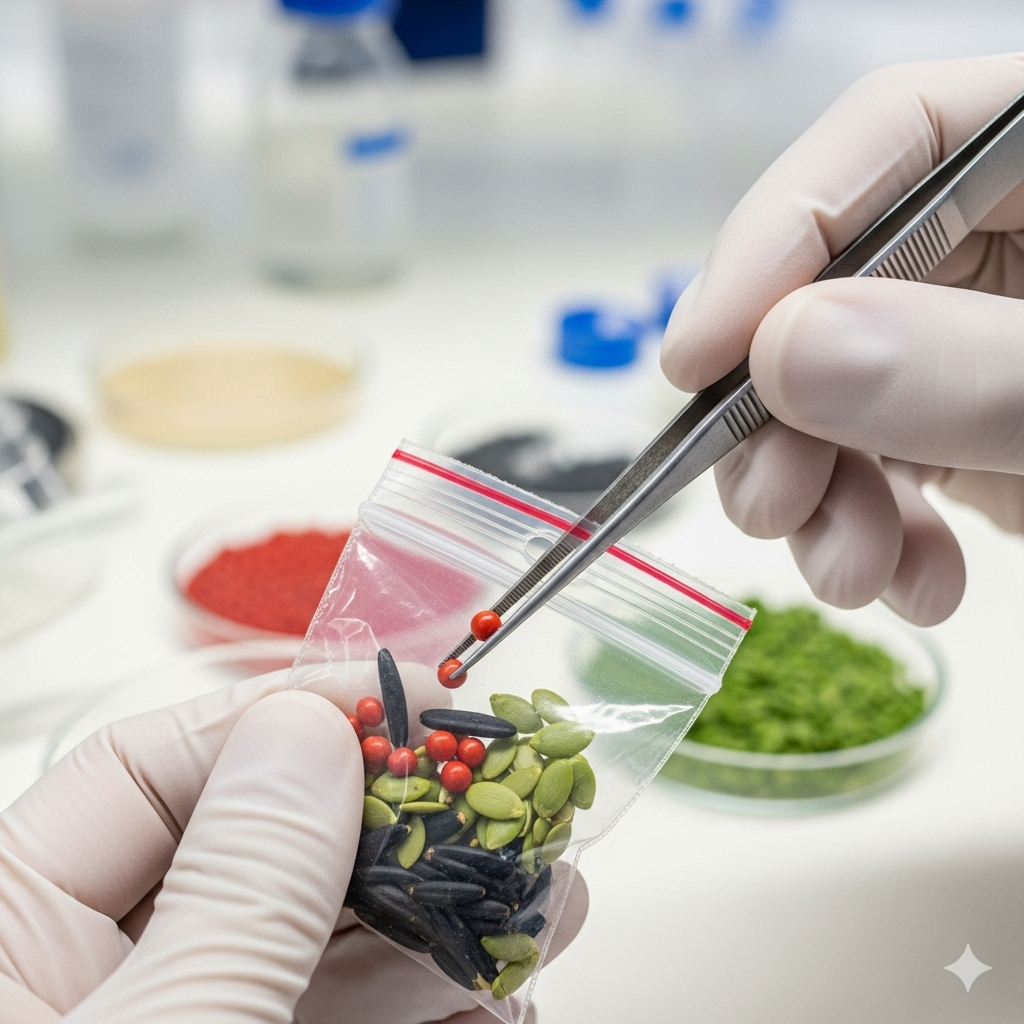
These boxes are not ordinary parcels. They are ’time capsules of life’ containing the future of humanity. Soon, a long journey begins. Loaded onto an airplane, they pass through Oslo, Norway, and finally arrive at a small airport in Svalbard, known as the end of the world, at latitude 78 degrees north. The security checkpoint here inspects these seed boxes more rigorously than people. The sight of them passing through the X-ray scanner is as serious as welcoming a state guest.
## The Gateway to Eternity, Encountering the Art of Light
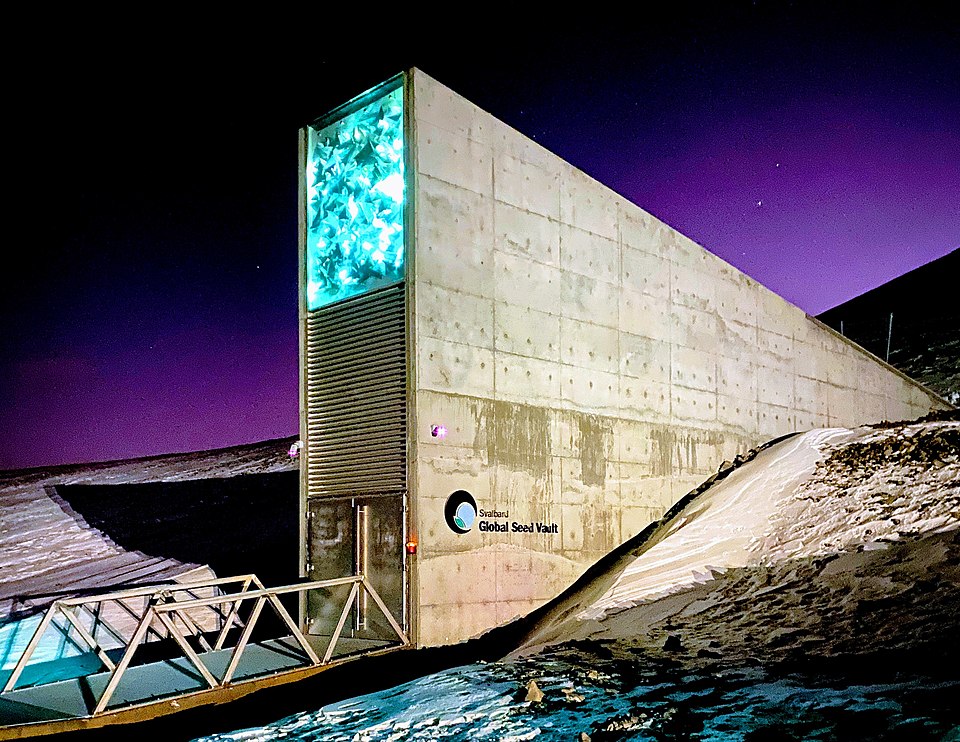
Once the seeds leave the airport, they travel along snow-covered roads until they finally reach their destination. The gray concrete juts out like a wedge, piercing the mountain. This is the only entrance to the Svalbard Global Seed Vault. Contrary to expectations of a cold and imposing entrance, it welcomes visitors with a mysterious light.
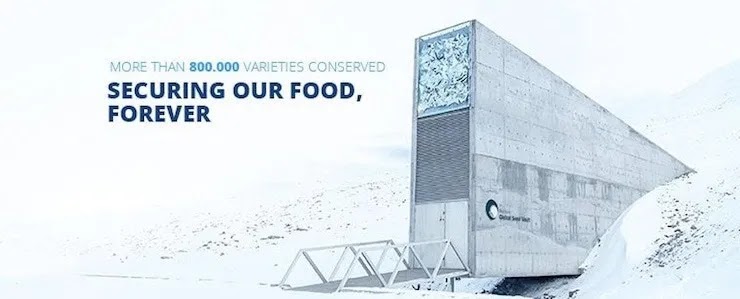
This is ‘Perpetual Repercussion,’ a work by Norwegian artist Dyveke Sanne. During the summer’s midnight sun, thousands of mirror pieces reflect the Arctic sunlight, shining like dazzling jewels, and when the winter’s polar night arrives, 200 optical fibers emit a mysterious turquoise light from within, dancing with the aurora. It seems to proclaim with all its might that something precious lies deep within the dark mountain, and that it is humanity’s hope.
## A Quiet Sanctuary, the Heart of the Earth
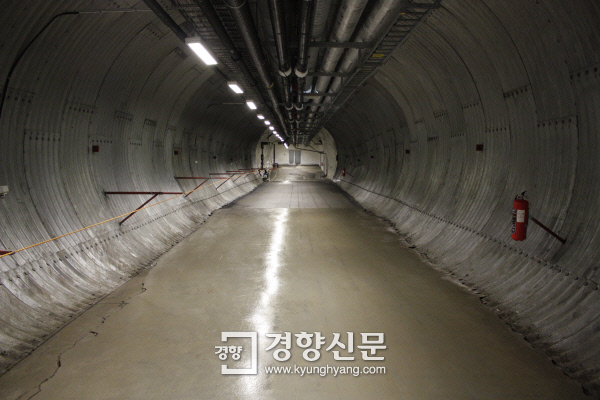
‘Clank.’ As the heavy steel door opens, all the noise of the world fades behind. The frigid air envelops me instantly, and before my eyes stretches a long tunnel that goes 130 meters deep into the permafrost. The walls are covered in white ice, and apart from the sound of my own breathing, there is nothing else to hear. The administrator describes this place as ’like entering a cathedral.’ It is that quiet, majestic, and sacred.
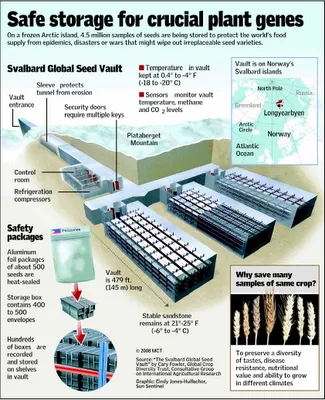
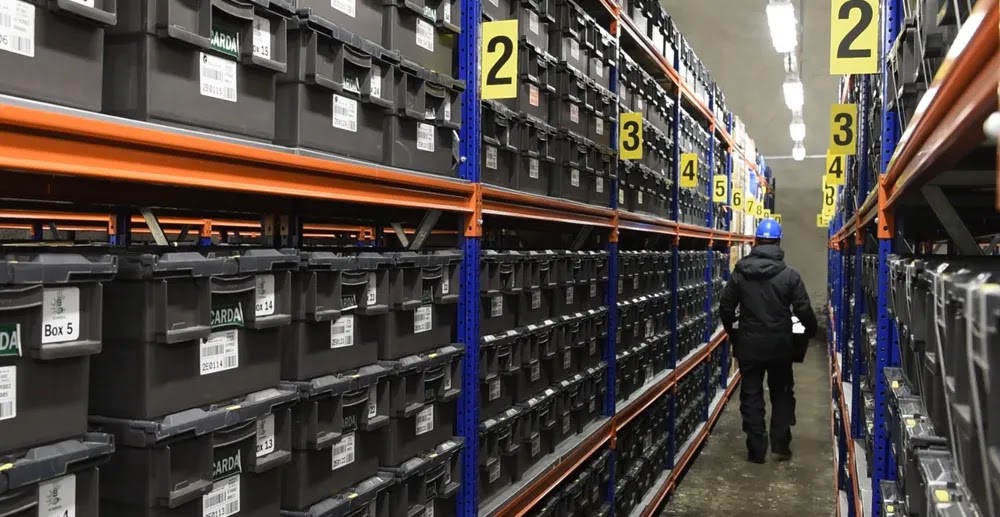
After passing through several more doors, three enormous storage rooms finally appear. This is the sanctuary where all of humanity’s agricultural heritage sleeps eternally. The temperature is set to -18°C, the international standard for seed preservation. While an artificial cooling system maintains this cold, the most reliable insurance is ’nature.’ Even if the power supply is cut off, the permafrost surrounding the entire mountain will act as a natural freezer, keeping the seeds safe.
## Nameless Heroes and Broken Promises
Behind this great project are nameless heroes. Although owned and constructed by the Norwegian government, its operation is carried out through international partnerships. The Nordic Genetic Resource Center (NordGen) manages the day-to-day operations, while the international organization ‘Crop Trust,’ established to preserve global seed diversity, supports the costs of transporting and storing seeds from developing countries around the world. They collaborate solely for the single goal of humanity’s future, transcending borders and ideologies.
However, even this seemingly perfect ‘fortress of eternity’ faced trials. In 2017, an unexpected climate change assault began. Due to unusually high temperatures in the Arctic, part of the permafrost melted, causing melted water to flow into the entrance tunnel of the vault. Fortunately, the water did not reach the storage rooms where the seeds were kept, and all the frozen water was removed. This incident sent a strong warning to humanity: even the hope for the future we must protect is not free from the threats of climate change. Subsequently, the Norwegian government undertook extensive reinforcement work, upgrading the entire tunnel to a perfect waterproof structure, reaffirming the ‘promise of eternity.’
## Hope Sprouting Again from the Land of Despair: Syria
Is the Svalbard vault merely insurance for future disasters? No. The seeds here have already become a realistic hope for those in despair.
In Syria, where everything was destroyed by a horrific civil war, the important seed bank ‘International Center for Agricultural Research in the Dry Areas (ICARDA)’ in Aleppo also had to close its doors. There was a risk of losing precious genetic resources, such as wheat, barley, and lentils, which had been improved over thousands of years to withstand drought and barren lands in the Middle East.
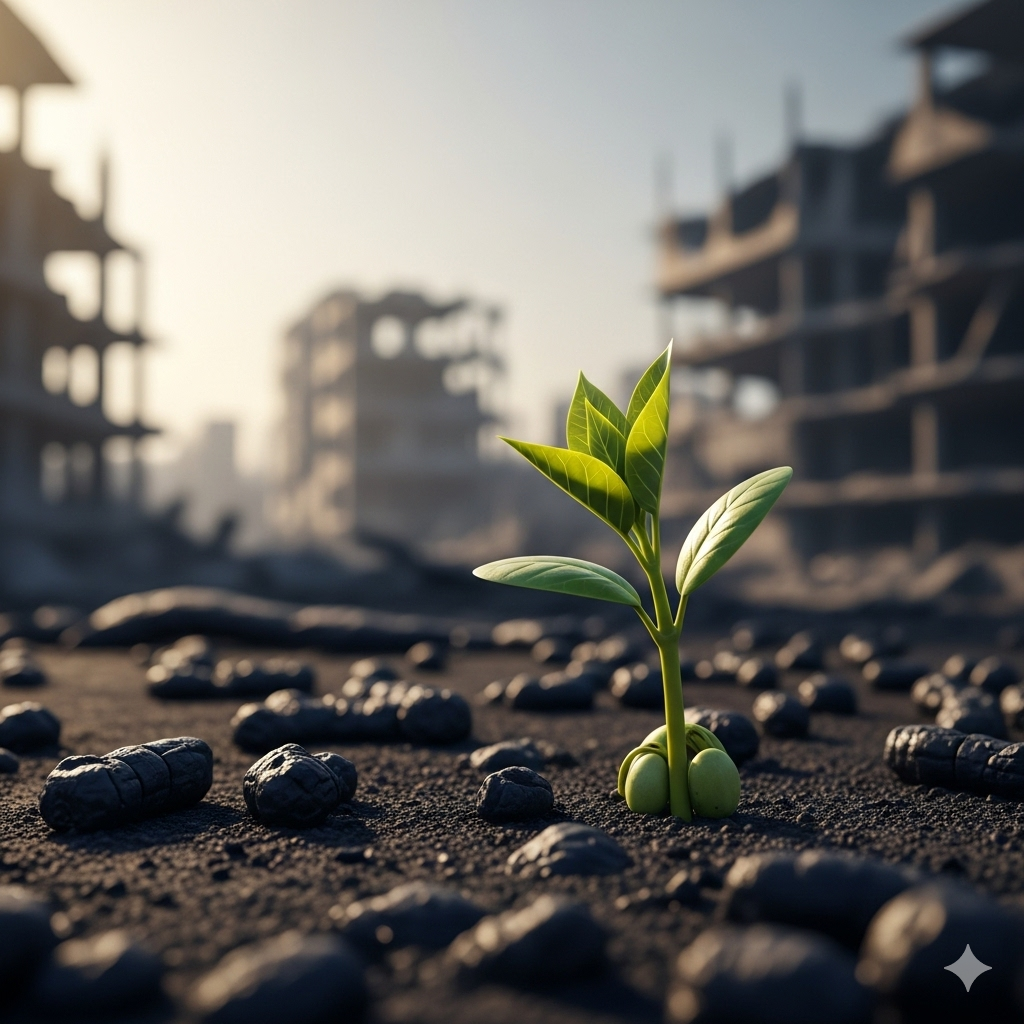
However, ICARDA scientists had previously duplicated their seeds in Svalbard. They made the first-ever request for a ‘withdrawal’ in the history of the vault. The seeds returned from Svalbard were sown in new research facilities in Lebanon and Morocco. And a few years later, a miraculous event occurred. They nearly perfectly restored their lost seed collection and even sent the newly multiplied seeds back to Svalbard for ’re-deposit.’ This was the greatest evidence of how human cooperation can make hope bloom again from the ashes of despair.
## The Great Journey Starting from Your Table
The story of Svalbard poses a question to us: What will we leave for future generations?
The foods we encounter every day on our tables. Each one is a great legacy created through the collaboration of humanity and nature over thousands of years. Preserving this diversity is not just about the right to eat various foods; it is about safeguarding a ‘genetic weapon’ that future humanity can use to fight against new diseases and unpredictable climate changes.
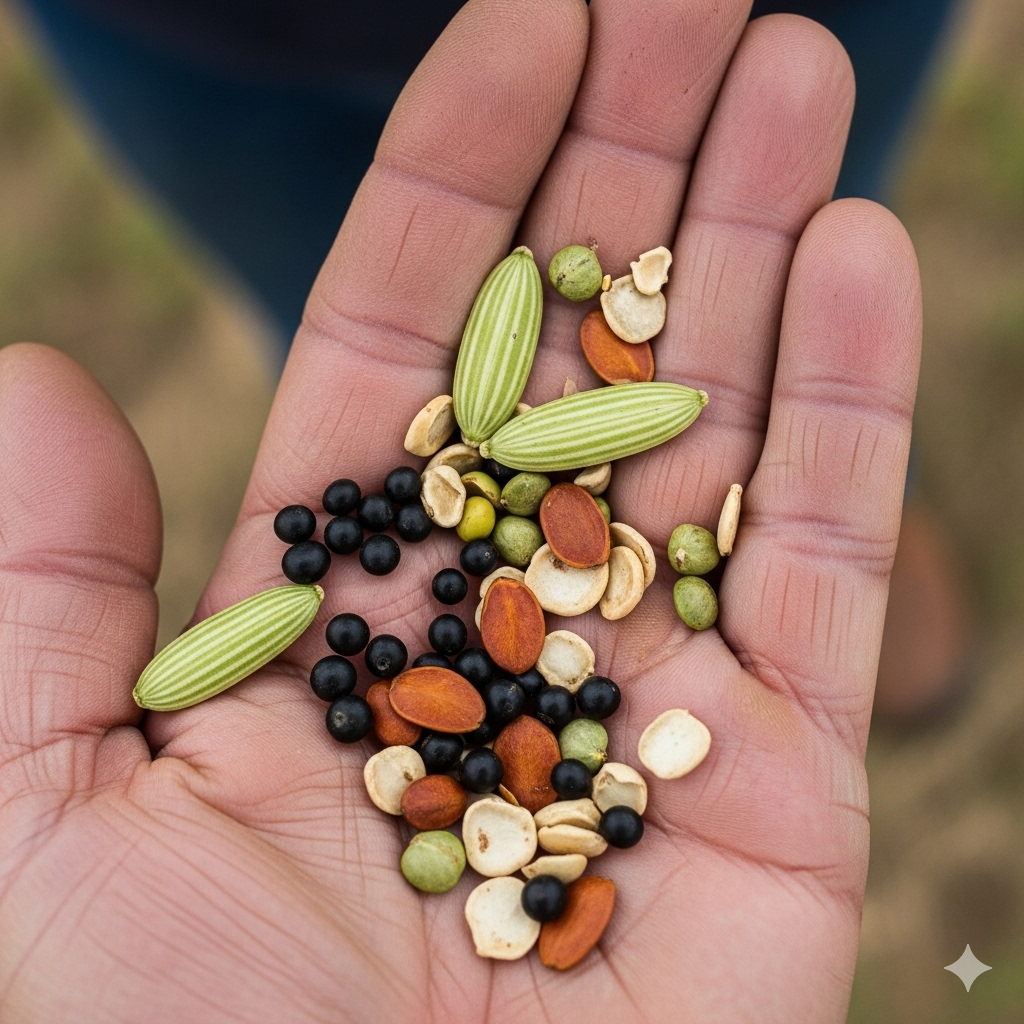
The 1.2 million seeds sleeping in the icy fortress of Svalbard. Hoping that those small promises of life remain eternally asleep. That is perhaps the greatest hope we can have as we live today. From your table, from a small interest in our land’s native produce, that great journey has already begun.