
We believe we ‘own’ many things, from coffee mugs to digital data, but delving into their essence reveals that the meaning of ownership is a complex maze.
- The philosophical origins and debates surrounding the concept of private ownership
- How ownership of physical, digital, and data assets differs
- The modern societal shift from ‘ownership’ to ‘access’ and its implications
The Beginning of the Sense of ‘Mine’
On my desk sits my favorite coffee mug, which gives me the joy of complete ownership. Its heavy handle and comfortable texture make it feel like ‘mine.’ Whether I drink coffee, water, or use it as a pencil holder is entirely my choice. Philosophers like Hegel have argued that such possessions are manifestations of my spirit and personality. This mug is not just an object; it embodies my tastes and way of life, making it a part of me.
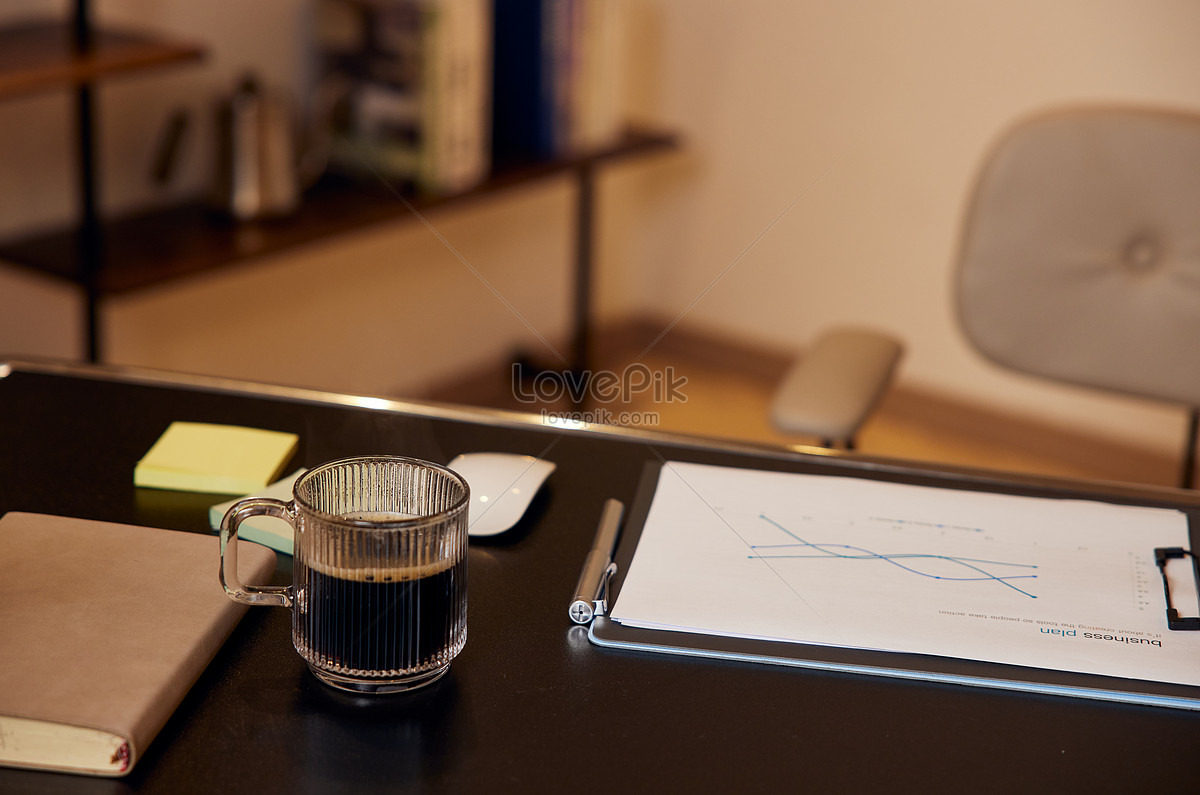
But what if I want to throw this mug against the wall and shatter it? Is that also my freedom? What if this mug is actually a game item I purchased for 500,000 won? What if the copyright of the beautiful design on it belongs to a famous artist? The simple and intense feeling of ‘mine’ quickly transforms into a complex maze of questions.
Today, we will explore this maze together, starting from a coffee mug and extending to fenced land, invisible ideas, digital data, and ourselves. What can we truly call ‘ours’? At the end of this journey, we may reconsider the true meaning of ownership.
The Birth of the Concept of Private Ownership: Locke vs. Rousseau
The concept of ‘private ownership,’ which we take for granted, did not fall from the sky. It is more like an invention born from intense ideological clashes throughout human history. At the center of this are two great thinkers, Jean-Jacques Rousseau and John Locke.
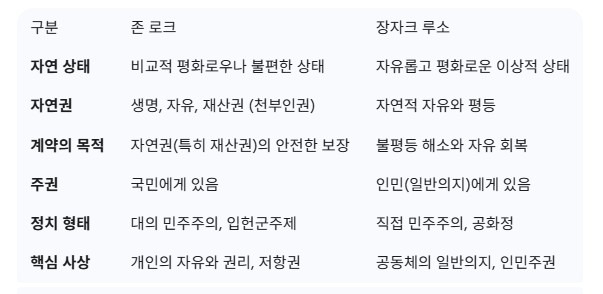
Rousseau: The First Fence is the Seed of Inequality
One day, a person appeared and declared, “This is my land!” after fencing off a piece of land. The surrounding people were naive enough to believe him. The 18th-century French philosopher Rousseau lamented that this person was the true founder of civil society and the instigator of all humanity’s crimes, wars, murders, and unhappiness.
In his work, The Origin of Inequality Among Men, he argued that this first fence led humanity away from a natural state of equality into a state of endless conflict and inequality over ownership. For Rousseau, ‘ownership’ was not a natural right but an artificial promise that divided society, akin to original sin. He believed that all land ultimately belonged to the community, and individuals had the right to occupy only as much as they needed for survival and worked for.
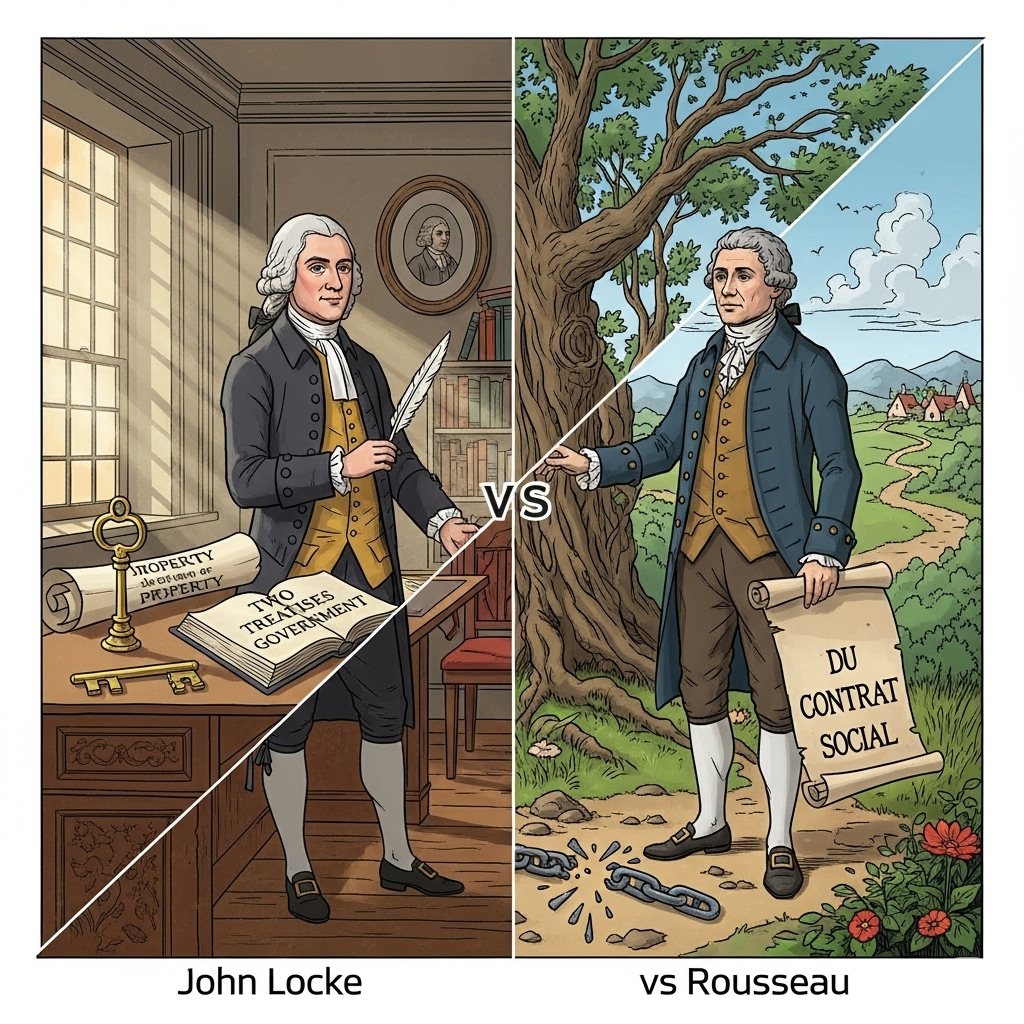
Locke: Labor Creates Ownership
However, preceding Rousseau, the British philosopher John Locke told a very different story. For him, ownership was not theft but the result of creation. God originally gave the world as a shared resource for all humanity, but he believed that the ’labor’ an individual performs with their body was entirely their own.
Thus, if I go to the forest, sweat to pick apples, and cultivate wasteland into a field, the apples and field, infused with the magic of my ’labor,’ become not just shared resources but parts of me, my exclusive possessions.
This ‘Labor Theory of Ownership’ had tremendous repercussions. It sanctified individual effort and elevated the resulting private property to the realm of natural rights, which neither the state nor kings could arbitrarily infringe upon. This idea significantly influenced the American Revolution and the French Revolution, becoming a massive engine driving the capitalist society we live in today.
The Ongoing Debate: Critiques from Proudhon and Marx
Of course, Locke’s claims were not universally welcomed. The French anarchist thinker Proudhon argued that while labor could justify rights to ‘products,’ it could not justify ownership of ’land itself,’ which was not created by anyone’s labor. For him, “Property is theft.”
Furthermore, Karl Marx analyzed that in capitalist society, the very concept of ownership through labor becomes a fiction, leading to the tragedy of workers being alienated from the products they create.
Thus, the concept of ‘mine’ has been a subject of fierce debate since its inception. It was not a natural law but a historical decision by humanity to choose Locke’s promise over Rousseau’s warning.
The Limits of Physical Ownership: Why Can’t I Do Whatever I Want with My House?
Now, let’s imagine we have become loyal descendants of Locke, working hard to acquire our own home. My name is clearly printed on the title deed, and it is legally my perfect possession. Am I truly the king of this house?
One night, if I suddenly get carried away playing drums until dawn, my neighbors will likely spend the night awake, suffering from lack of sleep. Can I extend my house from the third to the fifth floor without permission? I would probably soon receive a demolition order from the local government. Thus, the ‘absolute’ ownership we believe in is, in fact, filled with contracts full of ‘invisible ink.’
Article 211 of the Civil Code of South Korea defines, “The owner has the right to use, profit from, and dispose of their property within the limits of the law.” This clearly states that ownership is not an unlimited right.
Moreover, our civil law’s ’neighboring relationship’ principle states that adjacent property owners must yield a little in exercising their ownership rights for harmonious relations. This applies when noise from my house disturbs my neighbors or when part of my land must be used for construction next door.
Ultimately, even the most seemingly certain possession, ‘my house,’ is not something I can do whatever I want with. Ownership is not the absolute dominion of a sovereign but rather a ‘social right’ that comes with promises and responsibilities to be upheld as a member of the community. Absolute ownership is merely a myth that does not exist in reality.
Ownership of Intangible Assets: Ideas and Digital Items
We are now leaving the visible and tangible world to discuss humanity’s attempts to own ghosts like melodies that linger in our minds or brilliant ideas.
Crowning Ideas: Copyright and Patent Rights
To protect invisible creations, humanity has devised the clever system of ‘intellectual property rights.’
- Copyright: Protects the original ’expression’ of a creation. It arises automatically when a work is expressed, such as the sentences of a novel or the melody of a song, focusing on protecting the creator’s personality and mental effort.
- Patent: Protects new ’technological inventions’ that did not exist before. In exchange for publicly disclosing the invention, the government grants exclusive business rights for a certain period (usually 20 years).
Thus, intellectual property rights bestow a temporary monopoly on intangible assets, but this crown is not eternal and comes with numerous restrictions and conditions.
The Dilemma of Digital Swords: Ownership or License?
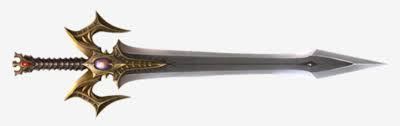
In an online game, after months of effort and spending 500,000 won, I obtained the legendary sword ‘Frostbite.’ It feels like a real ‘mine’ earned through blood and sweat. However, if the game company shuts down the service or seizes my account for violating terms, ‘Frostbite’ will vanish into data dust.
Legally, the user does not ‘own’ the game item but has merely acquired a ’license’ to use specific data. The fundamental ownership of the item remains with the game company.
Interestingly, if someone scams me and takes this item, they can be punished for fraud under criminal law. This is because the court recognizes that the item, while not a ’thing’ under civil law, has clear ’economic value.’
Here lies a remarkable contradiction. The law simultaneously says, “You do not own it,” while also acknowledging, “But it has value that must be protected.” The imperfection of ownership rights over game items has led to a yearning for ’true digital ownership,’ which has become a significant backdrop for the emergence of technologies like NFTs.
Table 1: The Spectrum of the Sense of ‘Mine’
| What I ‘Have’ | What I Truly Own | Can I Resell It? |
|---|---|---|
| Physical Book | Physical Entity (Paper, Ink) | Yes. Can sell at a second-hand bookstore. |
| E-book (RidiBooks) | ‘License’ to read the content | No. Cannot resell. |
| Legendary Game Item | ‘License’ to use the data | No (usually). Violation of terms. |
| Art Piece NFT | Unique token on the blockchain | Yes. Can sell on a marketplace. |
The Emergence of New Ownership Models: What Does NFT Prove?
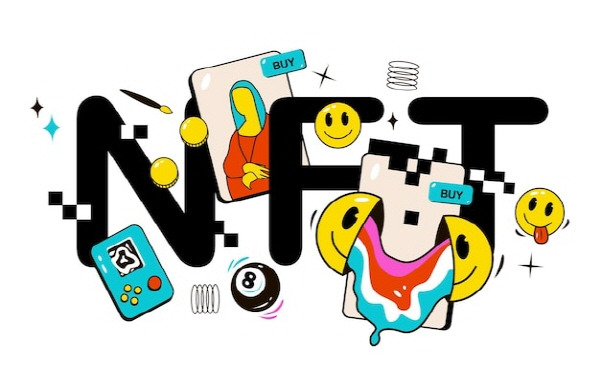
In the fragile foundation of ‘ownership’ in the digital world, NFTs (Non-Fungible Tokens) have emerged as a bold solution.
NFTs are like ‘one-of-a-kind digital authenticity certificates’ or ‘digital title deeds.’ They use blockchain, a public ledger that no one can forge, to permanently record, “This official link pointing to this digital file is owned by OOO.”
The Crucial Separation of Ownership and Copyright
The most important point here is that what NFT buyers are purchasing is not the image file itself. They are certainly not acquiring ‘copyright,’ which allows for duplication or commercial use. Copyright remains with the original creator.
What the buyer acquires is ownership of a ’token containing an exclusive link’ to that image. Therefore, while the buyer can resell this NFT (token) to someone else, they cannot print the image on a T-shirt to sell (though there are exceptions where commercial use rights are granted under contract conditions, like with BAYC).
Ultimately, NFTs represent an attempt to technically implement the concepts of ‘original’ and ‘ownership’ in a digitally replicable world. The buyer is not purchasing the image itself but rather the right to say, ‘I am the official owner of this image,’ which is a kind of status based on social agreement.
Who Owns Data Rights, the Oil of the 21st Century?
So far, we have discussed things we buy with money, but there is the most valuable asset we unconsciously share every day: your ‘data.’
When Your Life Becomes Their Asset
Every action you take, from liking something on social media, searching for lunch options, to watching YouTube videos, is recorded on the servers of large tech companies. This data has become the oil of the 21st century, the key raw material driving the AI era, bringing companies trillions of won in value. Our very lives have become their most important asset.
Have you ever seriously considered the meaning of the ‘agree’ button you click every day?
Ownership or Self-Determination?
So, whose data is this? Currently, most laws do not recognize traditional ‘ownership’ of data. Instead, the law grants the right to control who collects and uses my information and for what purposes through the concept of ‘personal data self-determination rights.’
However, this is far from the ‘ownership’ that allows for active management or sale of my data as an asset. Because of this gap, the economic value of data mostly accrues to the platform companies that collect and analyze it.
Can Memories Be Inherited: The Tragedy of Digital Heritage
This issue is most poignantly revealed in ‘digital heritage.’ During the Cheonan sinking incident, bereaved families requested access to the deceased soldiers’ Cyworld mini-hompages but were denied due to the deceased’s privacy (such as friend visibility).
The right to protect the deceased’s privacy clashed directly with the right of the survivors to ‘own’ the memories of the deceased. Whose digital heritage, filled with our lives and memories, is it? Our society has yet to provide a clear answer to this question.
From ‘Ownership’ to ‘Access’: The Light and Shadow of the Subscription Economy
Perhaps you are already living in an era beyond ownership. We no longer ‘own’ CD albums or cars; we ‘access’ services like Spotify or KakaoTaxi. As economist Jeremy Rifkin predicted, we are living in the ‘Age of Access.’
From Ownership to Access, from Sharing to Subscription
The ‘Age of Access’ signifies a time when the right to access and use something when needed becomes more important than permanently owning it. This has led to two trends: Sharing Economy and Subscription Economy.
- Sharing Economy: A model that shares already produced idle resources, like Airbnb and Uber.
- Subscription Economy: A model that provides ongoing services and experiences for a monthly fee, like Netflix and MS Office.
Consumers can focus on the experiences they desire without the burden of owning and managing products.
Liberation or New Subjugation?
Does this change liberate us from the burdens of ownership? In my case, while it used to bring me great joy to have hundreds of CDs on my shelf, now I enjoy all music with just one Spotify playlist. However, alongside this convenience, there is a lingering anxiety that my music preference data is entirely handed over to companies and that everything will disappear if I stop paying the monthly subscription fee.
This reflects a fundamental shift in our relationship with assets, beyond just a change in consumption patterns. As philosopher Byung-Chul Han points out, we believe we are freely using platforms, but in reality, we may be becoming ‘both owners and slaves’ within those invisible rules.
When ownership rights concentrate in the hands of a few platform companies and the majority only hold ‘access rights,’ can we truly say we have become freer?
Wisdom Beyond Ownership: The Message of Chief Seattle
So far, we have followed the story of Western civilization’s attempts to define ‘mine’ at all costs. However, there is a voice that sees the world in a completely different way.
In 1854, Chief Seattle of the Suquamish tribe is said to have delivered a speech in response to the U.S. government’s land acquisition demands, fundamentally questioning the concept of ‘ownership.’
The Land Does Not Belong to Humans; Humans Belong to the Land
Chief Seattle is reported to have said:
“How can you buy or sell the sky, the warmth of the land? … How can you sell the freshness of the air and the sparkle of the water, when we do not own them? … We are a part of the land, and the land is a part of us.”
For him, the land, sky, rivers, and animals were not ‘assets’ to be owned but rather ‘family’ and ‘kin.’ While white settlers viewed the land as an ’enemy’ to be conquered, indigenous people saw it as the ‘mother’ that birthed and nurtured them.

The core of this worldview is not ‘ownership’ but ‘responsibility.’ They were not owners of the land but stewards who must care for it healthily for future generations. While the Western concept of ownership is based on ’exclusion,’ Chief Seattle’s worldview is based on ‘connection.’ From this perspective, selling the land would be akin to selling one’s mother, an unimaginable act.
Conclusion: So, What Truly Belongs to Us?
Our journey, which began with a coffee mug, has shown that the concept of ‘ownership’ is a complex entity that constantly evolves with time and technology.
Three Key Takeaways
- Ownership is not absolute: Physical ownership is a ‘conditional right’ constrained by laws and society, while digital ownership is bound by technology and contractual terms.
- From ‘Ownership’ to ‘Access’: The era of ownership is waning, and the subscription economy, which allows access to experiences when needed, is emerging as a new standard, creating new power dynamics.
- True ownership lies within: The only things we can truly own are our ’experiences’ and ‘memories’ within ourselves, which cannot be taken away by anyone.
Psychoanalyst Erich Fromm divided ways of life into ‘having mode’ and ‘being mode.’ A life focused on having more is always anxious, but true joy can be found in a life that seeks to exist more deeply.
Now, take another look at the coffee mug on your desk. Is it just a simple object, or is it a token of precious experiences? The only thing we can truly own is our own life, which seeks to ’exist’ more deeply.