
We have become accustomed to cold sandwiches in front of our monitors, reflecting on the paradoxical disappearance of ‘shared meals’ in an age of abundance.
In a small town in Europe, when the lunch bell rings, shops close, and people head home. Enjoying a leisurely meal with family or friends for an hour or two is not just a break but a sacred social ritual. In contrast, the landscape of today’s major cities around the world is quite different. The ‘sad desk lunch’ under the glow of monitor lights has become all too familiar. We live in an era of unprecedented food abundance, yet paradoxically, we are losing the time to enjoy our meals.

This wave of time pressure has seeped into the workplace culture in Korea in a unique way. While lunch breaks for American workers have become significantly shorter, the ’national rule’ for lunch hours in Seoul’s office districts is changing. The lunch hour that used to start at ‘12 o’clock sharp’ now peaks at 11:30 AM. According to data analysis by KB Kookmin Card, the peak time for lunch meal payments in Seoul’s major business districts has shifted from 12:40 PM in 2019 to 12:10 PM, a full 30 minutes earlier in just five years. This is a strategic move to avoid the ‘inefficiency’ of long lines and to make the most of short break times. While this differs from the Western trend of time reduction, the underlying pressure surrounding the resource of ’time’ remains the same.
What immense force is compressing our meal times? What fills the void left by the disappearance of traditional meals? And what is the invisible cost we pay for losing this fundamental human ritual? We will trace the traces left by the lost meal times on our social, psychological, and even physical well-being.
The Changing Paradigm of Meals
| Category | Traditional Meal Paradigm | New ‘Meal Time’ Paradigm |
|---|---|---|
| Time | Fixed and protected time (e.g., 1~2 hours) | Compressed, fragmented, or disappeared (e.g., under 30 minutes) |
| Social Context | Communal, shared experience (commensality) | Individual, primarily in workspaces (“desk lunch”, eating alone) |
| Food Type | Home-cooked or freshly prepared food | Convenience-focused (lunch boxes, meal replacements, snacks) |
| Main Goal | Social bonding, enjoyment, nutritional intake | Efficiency, energy replenishment, time-saving |
| Psychological State | Relaxation, connection, conversation | Stress, multitasking, isolation, or ‘digital companions’ (eating shows) |
The New Staple of the Rushed Generation
To fill the void left by traditional home-cooked meals, modern society has invented a new form of ‘staple.’ Interestingly, Korea and Western societies have proposed different solutions to this issue, reflecting their distinct cultural anxieties regarding the loss of meal times.
The Glamorous Evolution of Korean Convenience Store Lunch Boxes
In Korea, the biggest beneficiaries of this time war are undoubtedly convenience stores. With single-person households exceeding 30% of all households, convenience stores have established themselves as major food suppliers beyond mere retail outlets. In particular, sales of convenience store lunch boxes and kimbap have recorded explosive growth of over 20~30% annually.
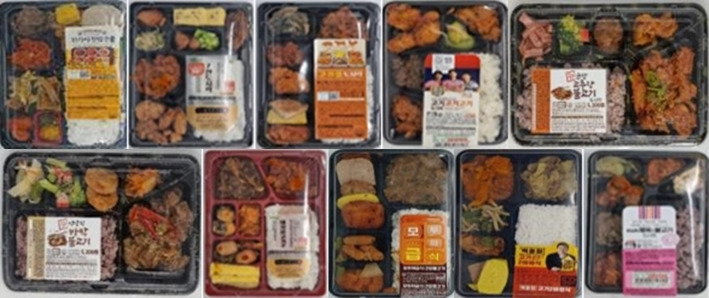
Whereas early convenience store lunch boxes were synonymous with ‘cheap and simple meals,’ today’s lunch boxes have glamorously transformed into ‘premium convenience food.’ The convenience store industry is employing high-end strategies, using premium rice varieties like Shin Dong Jin Mi, insisting on Wando seaweed, and collaborating with famous chefs and culinary researchers. The lunch box series named after chef Baek Jong-won has become a bestseller in convenience stores, and actress Kim Hye-ja’s lunch box has become a cultural phenomenon.
Notably, the birth of the term ‘Hyeja-robda’ is worth mentioning. Originating from Kim Hye-ja’s lunch box, which boasts generous portions and high cost-effectiveness, this term transcends the simple meaning of ’large quantity.’ It reflects the collective desire of Korean society to yearn for the richness and warmth of ‘home-cooked meals’ even within the modern value of convenience. In other words, Korean convenience store lunch boxes have evolved to simulate the ‘form’ and ’experience’ of traditional meals, maintaining the structure of a Korean meal with rice and various side dishes, providing cultural satisfaction that one has had a ‘proper meal’ even in a fast-paced world.
Complete Deconstruction of Meals: Western Meal Replacements
In contrast, the Western solution is more radical. The emergence of meal replacements like Soylent and Huel defines the act of eating itself as a ‘problematic inefficiency.’ These products have formed a global market worth billions of dollars, selling not just nutrition but also ‘time’ and ‘efficiency.’ Their marketing philosophy reduces food to its most functional element, that is, ‘perfect fuel.’
This trend aligns with the global phenomenon of ‘snackification.’ This refers to the replacement of designated meals with small snacks throughout the day, reflecting the busy lifestyle of modern individuals. Meal replacements represent the most extreme form of this snackification, stripping away the form, texture, and enjoyment of eating, leaving only the function of nutritional intake.
Ultimately, while Korea’s ‘Hyeja lunch box’ represents a cultural resistance to preserving the form of meals, Western meal replacements can be seen as a technological innovation aimed at deconstructing the concept of meals. This illustrates how easily the social and sensory purposes of the act of eating can be discarded, while also clearly showing how cultural efforts to protect that last bastion manifest.
Alone, Yet Together: The Paradox of Modern Meals
As meal times shrink and their contents change, the way we eat is also fundamentally transforming. The traditional commensality of gathering to share food is gradually disappearing, replaced by solitude and virtual connections.
The Era of ‘Eating Alone’: A Choice of Isolation
The increase in single-person households has made ‘eating alone’ an unavoidable reality. However, the spread of eating alone in Korean society cannot be explained solely by demographic changes. It is also a voluntary choice for those who feel ‘relationship fatigue’ in a vertical and rigid workplace culture. When lunch with a boss feels like an extension of work, eating alone becomes an act of ‘healing’ that allows one to secure personal time and escape emotional labor.
This phenomenon is not unique to Korea. Due to busy schedules and fragmented lifestyles, the tradition of families having dinner together is gradually weakening in Western societies as well. The decline of communal meals, which were central to social bonding, is identified as a significant cause of the isolation experienced by modern individuals.
Digital Commensality: The Virtual Table of ‘Mukbang’
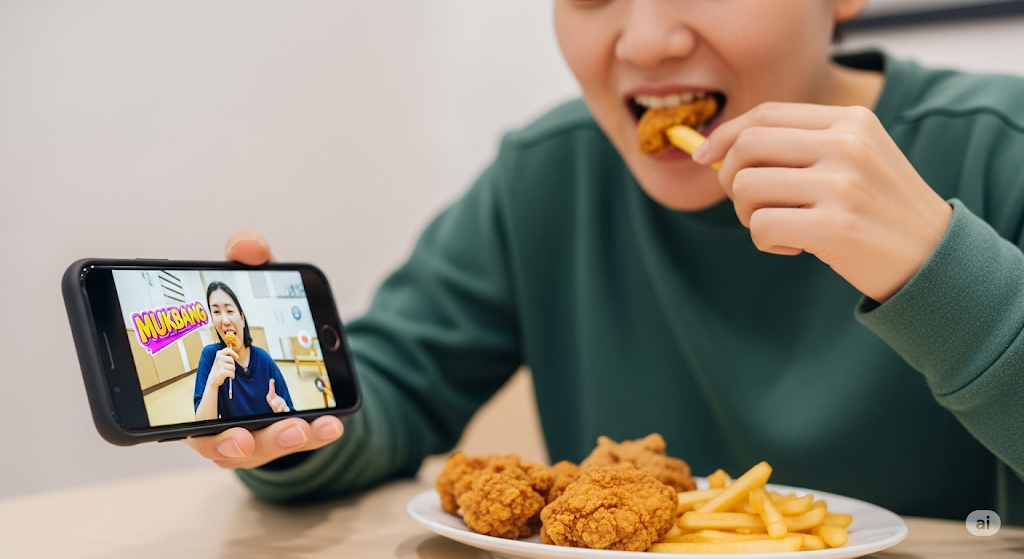
In the absence of physical communal meals, a strange digital alternative has emerged: ‘Mukbang’ (eating broadcasts), which started in Korea and has become a global phenomenon. Mukbang serves as a virtual ‘meal friend’ for those eating alone, functioning as a new form of ‘digital commensality’ that alleviates loneliness.
The psychological effects of Mukbang are powerful. Viewers experience vicarious satisfaction by watching the BJ (broadcast host) eat deliciously, and for those on a diet, it can provide a sense of psychological fullness. Research shows that merely watching others eat activates similar brain areas as when one eats, which can somewhat satiate appetite. This provides stress relief and emotional stability, explaining why Mukbang has formed a massive fandom.
However, this virtual table casts a dark shadow. While it serves as a comforting content that alleviates loneliness, Mukbang often encourages extreme overeating and the consumption of stimulating foods (spicy, salty, greasy). This can negatively impact viewers’ eating habits, leading them to perceive abnormal quantities of food as normal and prefer unhealthy diets. Ultimately, Mukbang appears to address the issue of modern isolation, but paradoxically, it creates a new problem of unhealthy eating habits.
This symbolizes the complete separation of the two core functions of meals: ’nutritional intake’ and ‘social bonding.’ Viewers gain social connection (or a similar feeling), while the streamer performs the physical intake. This digital mediation transforms the act of eating into a ‘performance’ and carries the potential risk of distorting the norms of real-world meals.
Changes in Our Bodies: The Surprising Cost of Convenience
The changes in our eating habits are not limited to the social and psychological realms. The most surprising and evident evidence appears in our own bodies, particularly in our facial structure. The ‘convenience’ we have pursued is altering our bodies, which have evolved over thousands of years, and the traces of this are etched in our jawbones.
Research by scholars like Harvard anthropologist Daniel Lieberman has revealed that the size and shape of the human jawbone are significantly influenced not only by genetics but also by the physical stress of chewing activities in childhood. Our ancestors lived in environments where they could chew tough meats and fiber-rich plants, allowing their jawbones to develop sufficiently. This vigorous chewing activity led to wide and strong jawbones, creating space for all teeth to align properly.

However, modern diets are taking the opposite route. The modern table, dominated by soft breads, finely ground processed meats, and cooked vegetables, no longer requires strong chewing activities. As a result, our jaws are deprived of the ’exercise’ they evolved to expect, leading to insufficient growth.
The result is the ‘malocclusion epidemic’ in modern society. While the size of our teeth is genetically determined, jawbones shrink due to environmental influences, resulting in insufficient space for teeth. Crooked teeth and wisdom tooth extraction issues are representative cases of ‘mismatch diseases’ born from civilization. The high prevalence of malocclusion among Korean children is also related to the shift from fiber-rich traditional Korean meals to soft Western diets and processed snacks.
This provides a powerful and physical metaphor that runs through the theme of this article. The convenient foods we have chosen to save ‘time’ in meals have, in turn, robbed our ‘jaws’ of the time to grow, reducing their size. The shortening of meal times and the reduction of jawbones serve as chilling evidence of how modern values of ‘efficiency’ and ‘convenience’ are reshaping not only our social relationships but also our biological structures.
In the Age of Speed, How to Reclaim Taste and Relationships
Amidst the overwhelming currents of speed and efficiency in modern society, it seems we are losing the essential joy and meaning of meals. However, there is also a strong movement to reclaim the value of food against this massive tide. Surprisingly, the answers can be found in the most common things around us.
Even McDonald’s, the symbol of fast food, knows that it cannot conquer the world with uniform taste alone. One of the secrets to McDonald’s success is its thorough ‘localization’ strategy. Respecting India’s cultural characteristics of not eating beef, they developed the ‘McAloo Tikki (potato patty burger),’ sell ‘McSpaghetti’ with rice in the Philippines, and feature the ‘Bulgogi Burger’ as a representative menu in Korea. This proves that no matter how powerful the winds of globalization are, they cannot completely erase the unique ‘flavors’ and ‘cultures’ of each region. Our tastes and identities possess a much more tenacious power than we realize.
These resistances and alternatives can begin not with grand slogans but with our small practices. Here are a few enjoyable suggestions to reclaim lost meal times and relationships.

First, visit a nearby ‘farmers’ market’ or ‘local food direct sales store.’ These spaces, which are becoming active in Korea, are not just places to buy fresh ingredients but also vibrant community spaces where producers and consumers meet and communicate directly. Selecting soil-covered vegetables, smelling seasonal fruits, and talking with farmers reconnects us with the origins of food.
Next, rediscover the ‘joy of cooking.’ Numerous studies show that cooking can be an excellent therapeutic activity that relieves stress, stimulates creativity, and boosts self-esteem. It doesn’t have to be complicated. The act of focusing on preparing a meal with simple ingredients can become a meditation that calms a busy mind.
Finally, the most important yet often forgotten aspect is to reflect on the value of ‘shared meals.’ Even if just once a week, put down your smartphone and sit down at the table with family or friends. In that time of sharing food and conversation, we will rediscover the greatest gifts that food brings: the joy of ‘relationships’ and ‘connections.’
Ultimately, reclaiming lost meal times is not a return to the past. It is about rediscovering the value of ‘slowness’ in an age of speed and recovering the most essential joys of our lives that have been consumed by the logic of efficiency. That small rebellion can start at your dinner table tonight.