
Where has all our curiosity gone? This is a guide for adults who have forgotten how to ask questions.
- Understand the neuroscientific principles of how curiosity works in the brain.
- Identify your curiosity style through the ‘Hunter’ and ‘Busybody’ types.
- Learn 7 specific ways to awaken dormant curiosity in everyday life.
Introduction: Adults Who Have Forgotten to Ask Questions
“Mom, why is the sky blue?” A child’s day is filled with endless ‘why?’ questions. Everything in the world is an object of exploration. But what about our days as adults? We wake up to an alarm, commute along a set path, and handle familiar tasks. There seems to be little room for curiosity to intervene.
Many people take it for granted that curiosity diminishes with age. However, author Ian Leslie warns in his book Curious that “the moment humans lose curiosity, they age.” This article aims to discuss how lost curiosity is the most powerful ‘superpower’ that evolves humanity and grows our brains. Let’s embark on a journey into the world of curiosity, the greatest instinct that can change your life.

The Identity of Curiosity: A Natural Vitamin for the Brain
The Instinct to Fill the ‘Information Gap’
What is curiosity? In psychology, it is defined as ’the desire to know something new,’ but the ‘Information Gap’ theory explains it more clearly. Curiosity arises when we recognize the gap between ‘what I know’ and ‘what I want to know.’
It is like the sensation felt at the boundary where the light of a single candle reaches in a dark room. Only by recognizing what I know (the light of the candle) can I realize what I do not know (the darkness beyond the light) and become curious about what lies beyond. This creates the ‘paradox of knowledge and curiosity,’ where curiosity grows as knowledge increases.

This primal desire has been the driving force behind the advancement of human civilization. Questions that seem ‘useless’ and unrelated to immediate survival have given birth to philosophy, science, and art.
The Neuroscience of the ‘Pleasure’ of Knowing
Neuroscientists refer to curiosity as the “most powerful natural vitamin for the brain.” The key ingredient is the neurotransmitter dopamine.
When we are curious and find the answer, our brain’s ‘reward circuit’ activates, releasing dopamine that provides satisfaction and pleasure. This is the essence of the intellectual ‘pleasure’ we feel when acquiring new knowledge.
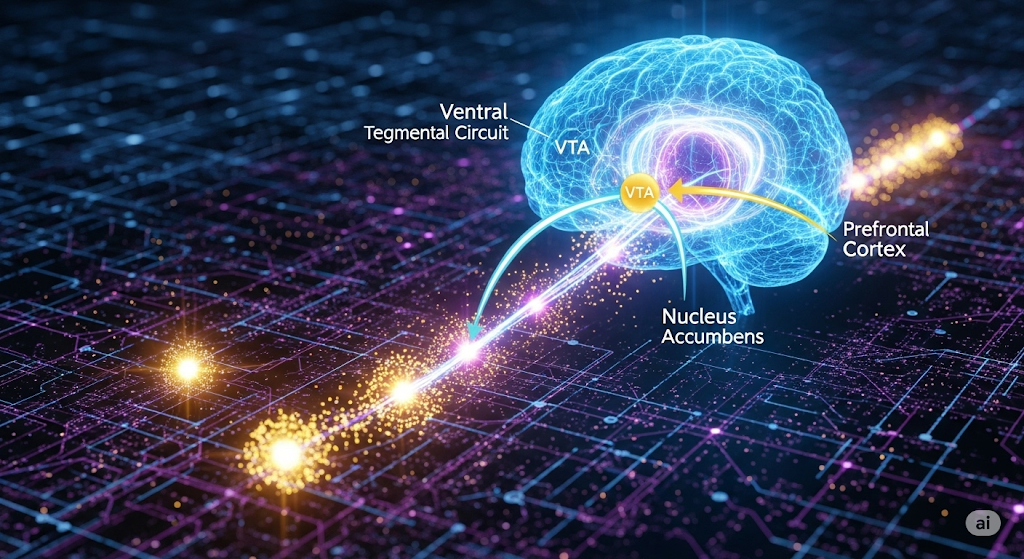
Moreover, when we feel curiosity, the hippocampus, the brain’s memory center, is activated, maximizing learning ability. Knowledge that is memorized forcefully is quickly forgotten, but information sought out of genuine curiosity remains in memory for a lifetime.
The Amazing Gifts Brought by Curiosity
Rediscovering curiosity offers us amazing gifts in this era.
- Enhanced Creativity and Problem-Solving Skills: Curiosity is an inexhaustible ‘source’ of creativity. It questions the obvious and connects seemingly unrelated ideas to create new value. The attitude of viewing failure as part of the growth process is essential for creative problem-solving.
- Greater Happiness and Life Satisfaction: Curious individuals discover meaning and novelty in their daily lives and experience higher levels of positive emotions. Genuine curiosity about others enhances empathy and helps form deeper connections.
- Lifelong Growth and Resilience: Curiosity is the engine of lifelong learning. Those who continuously learn and explore adapt better to change. Based on my experience, when the desire to know outweighs the fear of the unknown, we finally gain the courage to step out of our comfort zones and grow.

What is Your Curiosity Style?
Not everyone experiences curiosity in the same way. Understanding your curiosity type can be the first step in nurturing it. Are you a ‘deep-diving hunter’ or a ‘broad-scanning busybody’?
Comparison/Alternatives
Curiosity Style Comparison: Hunter vs. Busybody
| Feature | Hunter Type (The Hunter) | Busybody Type (The Busybody) |
|---|---|---|
| Core Motivation | Desire to fill specific knowledge gaps and master them | Desire to experience novelty and diversity and be stimulated |
| Main Focus | Depth over breadth | Breadth over depth |
| Behavior | Stays on one topic for a long time, exploring closely related information | Quickly jumps between various topics without relevance |
| Representative Question | “What is the exact principle of this?” | “What is this? What is that?” |
| Potential Weakness | May narrow focus and miss connections with other fields | Knowledge may remain superficial and easily distracted |
Quality of Curiosity: Good Curiosity vs. Exploitative Curiosity
It is important not just to be curious, but to consider ‘how’ you are curious.
- Good Curiosity: Arises from a ‘desire to explore’ and dig into the essence of a problem, fundamentally enhancing problem-solving abilities.
- Exploitative Curiosity: An attitude of offloading problem-solving efforts onto others to relieve immediate frustration. It robs the opportunity to develop one’s own thinking skills.
Checklist or Step-by-Step Guide
Here are 7 ways you can start today to become an explorer in your daily life.
- Adopt a ‘Beginner’s Mind’: Observe familiar things as if you are seeing them for the first time. Let go of the thought, “I already know everything.”
- Ask Better Questions: Develop the habit of questioning phenomena using the framework of ‘Why, What, How.’
- Redefine ‘Boredom’ as ‘Interest’: Instead of saying, “This meeting is boring,” change the question to, “What is the one thing I can learn here?”
- Explore Information Outside Your Area of Interest: Intentionally read books outside your expertise or watch documentaries on unfamiliar topics.
- Follow the Traces of Curiosity: When questions arise, jot them down and spend at least 10 minutes exploring them each day, enjoying an intellectual adventure.
- Create Small Adventures in Daily Life: Intentionally create small and new experiences, such as taking a new route to work or ordering the most unfamiliar dish at a restaurant.
- Cultivate a Curious Environment: Surround yourself with curious people, respect each other’s questions, and engage in conversations to find answers together.
Conclusion
Curiosity is not the exclusive domain of a few geniuses; it is a ‘skill’ that anyone can relearn and train.
- Key Summary 1: Curiosity arises when we recognize the ‘information gap,’ providing pleasure to the brain through dopamine release and maximizing learning ability.
- Key Summary 2: Curiosity is a key driver for creativity, happiness, and lifelong growth, manifesting in various styles such as ‘hunter’ and ‘busybody.’
- Key Summary 3: We lose curiosity due to the traps of efficiency and fear, but we can regain it through conscious questioning and exploration habits.
Today, why not make your first day looking at your world as a universe filled with infinite questions rather than a textbook full of answers? All great achievements begin with a very small question.
References
- How to Answer a Child’s Questions?, Maeili Link
- Why Are Questions Important?, Now is the Era of Baekgeun!! - Tistory Link
- Does Curiosity Really Decrease with Age? Psychological Research Results, Brunch Link
- How to Become an Adult Who Doesn’t Lose Curiosity | Today’s Senior (with Jang In-seong), YouTube Link
- What is Curiosity?, kalpa50.tistory.com Link
- Curiosity, Namu Wiki Link
- Conditions of Curiosity, Seoul National University Happiness Research Center Link
- The Power that Moves Consumers - The Psychological Mechanism of Curiosity, Advertising Information Center Link
- The Psychological Mechanism of Intellectual Curiosity: Comparison of Differences Based on Curiosity Satisfaction Methods, accesson.kr Link
- Having Curiosity, Brunch Link
- Curiosity, Wikipedia Link
- [E-book] The Neuroscience of Curiosity, Aladin Link
- The Neuroscience of Curiosity | Gato Toshinori, Kyobo Bookstore Link
- Addiction and Reward Circuit | Knowledge for Prevention of Addiction, National Bugok Hospital Link
- Human’s Innate Nature ‘Curiosity’, Does More Curiosity Improve Quality of Life?, Research Paper Link
- Employees with More Curiosity Perform Better, Merck Group Link
- There Are Two Types of Human Curiosity, Whim vs. Inquiry? Which One Are You?, TechTube Link
- Intellectual Curiosity and Diversity Curiosity, Brunch Link
- [Future of Education] How to Cultivate a Child’s Questioning Power, Segye Ilbo Link
- ‘Curiosity’ is a More Urgent Capability Than You Think., Brunch Link
- 9 Activities to Help Develop Children’s Curiosity, LEGO Link
- Curiosity: Evoking Curiosity: The Beginning of a Lifelong Learning Plan, FasterCapital Link
- Leonardo da Vinci, Inside the Wall - Tistory Link
- What We Can Learn from ‘Leonardo da Vinci’ Now, Brunch Link
- Einstein Quotes, Kyobo Bookstore Link
- In a Complicated World, Curiosity is Power, Dong-A Business Review Link
- “Why?” “Why?” The Reason We Need to Fulfill a Child’s Curiosity, Baby News Link