
From Engraved Stones to Digital Streams: The Unstoppable Voice of Koreans.
- We can trace how communication methods in Korea have evolved from ancient times to the modern era.
- We gain an understanding of how power, media, and public voices have interacted throughout history.
- We reflect on what is needed today for a healthy digital public sphere.
Hello! Today, we are embarking on a fascinating journey through time to discover the roots of Korea’s comment culture.
From records engraved on stone to the familiar internet comments of today, let’s follow the long history of how Koreans have communicated, resisted, and shaped public opinion.
Table 1: The Evolution of Media and Comments in Korean History
| Era | Major Media Forms | Form of ‘Comment’ |
|---|---|---|
| Three Kingdoms/Unified Silla | Wooden tablets, Stone tablets | Administrative transitions, Ceremonial respect |
| Joseon Dynasty | Official gazettes, Petitions, Wall writings | Petitions, Anonymous slander, Collective action resolutions |
| Enlightenment Period | Hansung Sunbo, Independence Newspaper | Reader submissions, Opinion formation through editorials |
| Japanese Occupation/Authoritarianism | Controlled newspapers, Broadcasting | Underground publications, Limited submissions |
| Digital Age | PC communication, Portal news, Social media | Internet comments, Malicious comments, Online petitions |
1. The Dawn of Voices: Records of Ancient and Medieval Times
1.1 The Neural Network of the State: Wooden Tablets
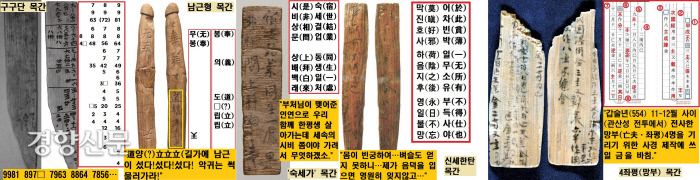
Before paper became common, the ‘mokgan’ (wooden tablet) was a key technology for managing the state in ancient Korea.
This was not a medium for the public like today’s newspapers; it served as an internal administrative ’neural network’. Mokgan contained information such as tax collection and military supplies management. In a sense, it was the state’s secret ledger.
The discovery of hundreds of mokgan at Silla and Baekje archaeological sites shows that an intricate bureaucracy relied on records even before paper was widely used.
1.2 Permanent Public Memory: Stone Tablets
Unlike the temporary administrative records of mokgan, ‘geul-dol’ (stone tablets) were the first mass media intended to convey something permanently to the public.
Stele and tombstones were used to boast royal authority, commemorate significant events, and establish social norms. The very material of stone symbolized ’eternity’ and ‘power’.
Although these inscriptions were one-way information delivery, the act of people showing respect to the stele and sanctifying the location can be seen as a form of public ‘comment’.
2. Writing of Resistance: The Public Sphere and Comment Culture of Joseon
2.1 The Birth of an Enlightened Public: Official Gazettes
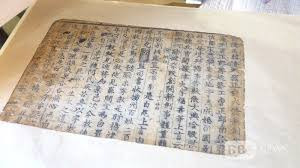
‘Jo-bo’ was the official newspaper of the Joseon court, primarily handwritten to convey news such as royal orders and appointments to officials and the nobility.
However, in 1577, a significant event occurred. Private merchants attempted to print and sell Jo-bo using movable type in the ‘Private Printing Jo-bo Incident’. This was the first attempt in Korean history to commercialize state information.
King Seonjo harshly punished these individuals, demonstrating how fearful he was of losing the monopoly on information. This incident marked the beginning of all future struggles for press freedom.
2.2 Channels of Resistance: From Petitions to Anonymous Wall Writings
In the Joseon era, there were both official and unofficial ‘comments’ directed at the state.
- Petitions: A legitimate channel for officials or scholars to criticize policies and express opinions to the king. However, it came with significant risks, as many scholars submitted ‘maninso’ (petitions signed by many), resembling today’s ‘signature campaigns’, which was the pinnacle of petition culture.
- Wall writings: Those without power and those resisting the regime used anonymous ‘wall writings’. Typically written in Hangul for easy reading, these wall writings criticized officials, spread rumors, and swayed public sentiment. The state viewed this as a serious threat, punishing responsible individuals with death.
2.3 Calls to Action and Collective Mobilization: The ‘Sabal Tongmun’
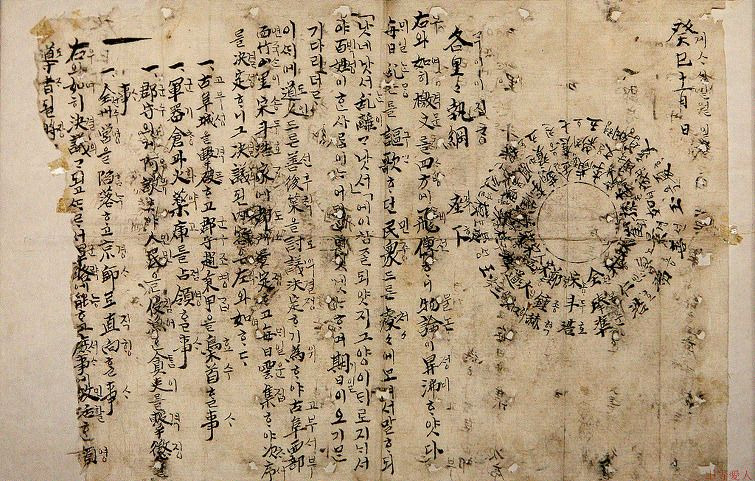
‘Sabal Tongmun’ was an ingenious communication tool for mobilizing the masses, particularly useful during the Donghak Peasant Revolution.
It involved drawing a circle on paper with an overturned rice bowl and writing participants’ names around the circle. This way, the main instigator could remain anonymous, allowing everyone to share responsibility and evade government tracking.
3. Modern Media and the Voice of the Nation
3.1 The Birth of Modern Newspapers and the Hangul Revolution
As we moved into modern times, a revolution in communication occurred. The official gazette ‘Hansung Sunbo’ (1883), which was produced in Classical Chinese, transitioned to the privately published ‘Independence Newspaper’ (1896) in pure Hangul.
The significance of the ‘Independence Newspaper’ lies in its use of pure Hangul and spacing, making it accessible for everyone to read. This opened the door for commoners and women to access information for the first time.
The ‘reader submission section’ was Korea’s first instance of interactive journalism. What particularly impressed me while tracing this history was the insight that the democratization of media depends not only on technology but also on ’language’.
3.2 Gagged Media: Colonial and Authoritarian Rule
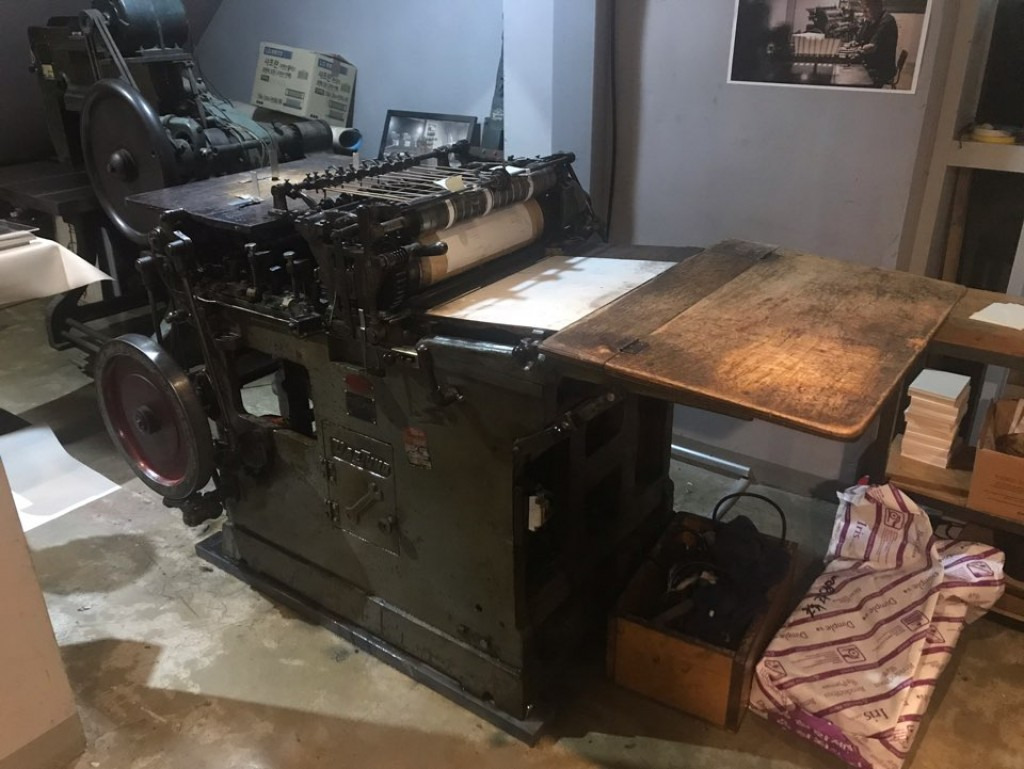
However, press freedom did not last long. The Japanese established the ‘Newspaper Law’ in 1907, beginning to censor and control Korean media.
This oppression continued into the military dictatorship after liberation. Particularly notorious was the ‘Reporting Guidelines’ of the Chun Doo-hwan regime in the 1980s. The government would call newspapers daily to dictate which articles to write and which to avoid, even controlling the size of headlines and page placement.
4. Digital Agora: The Age of Comments
4.1 From Closed Networks to Public Squares
In the 1990s, the emergence of PC communications like ‘Hitel’ and ‘Nownuri’ opened the era of online communication.
Initially, these were closed communities where only acquaintances gathered, but everything changed with the advent of portal sites. The launch of ‘Daum Agora’ in 2004 created a massive digital square. Portal news sites like Naver and Daum, along with their comment features, made ‘comments’ the most important way for the public to engage with the news.
4.2 The Power and Shadow of Online Public Opinion
Online comments have both light and shadow.
- Constructive Function: Comments can correct misinformation in articles, provide deeper knowledge from experts, and allow people to share their experiences positively. Sometimes, comment sections can be filled with more valuable information than the original article, leading to the phenomenon of ‘comment journalism’.
- Destructive Function: However, malicious comments, or ‘malicious posts’, are a serious social issue. Cyberbullying and the spread of false information leave irreparable scars, especially on public figures. The tragic deaths of stars like Choi Jin-sil, Sulli, and Goo Hara highlighted how lethal online defamation can be, ultimately leading portals to decide to close comment sections on entertainment news.

- Case 1: Hwang Woo-suk Incident (2005): At that time, netizens fervently defended Dr. Hwang through online forums and comments, branding the media that raised doubts as ’traitors’. Online public opinion played a significant role in creating and maintaining the ‘Hwang Woo-suk myth’, but ultimately contributed to its collapse when the truth was revealed.
- Case 2: Candlelight Vigils (2008 & 2016): The candlelight vigils against the import of U.S. beef in 2008 and the protests against the government’s corruption in 2016 demonstrated how online platforms can organize massive street protests. The digital square and the physical square were powerfully connected.
5. Control of Comments and Public Opinion: Challenges in the Digital Age
5.1 The Battle Over Anonymity: Internet Real Name System
As the negative effects of online comments grew, the government introduced the ‘Internet Real Name System’ to increase accountability and reduce malicious comments.
However, it faced strong opposition for stifling freedom of expression, and ultimately, in 2012, the Constitutional Court ruled that “the freedom of anonymous expression is an essential element of a democratic society”, declaring the Internet Real Name System unconstitutional.
5.2 Organized Comments: The Druking Incident and Opinion Manipulation
The ‘Druking Comment Manipulation Incident’ was a shocking event that demonstrated how easily the digital public sphere can be manipulated.
A small organized group used an automation program called a macro to manipulate the ‘agree/disagree’ counts on Naver news comments, attempting to distort public opinion on specific political issues. This incident raised fundamental questions about whether the ‘online public opinion’ we see is genuine.
5.3 Constantly Changing Rules: Portal Comment Policies
Portal sites continue to change their comment policies. Whenever a social event occurs, they introduce new rules under pressure from public opinion. This shows how challenging it is for portals to balance user participation, social responsibility, and political pressure.
Comparison: The Evolution of Portal News Comment Policies
Table 2: Timeline of Portal News Comment Policy Comparisons (Naver vs. Daum/Kakao)
| Period/Year | Portal | Major Policy Changes |
|---|---|---|
| 2004 | Daum | Launch of ‘Agora’ service |
| 2007 | Both | Introduction of Internet Real Name System (limited identity verification) |
| 2012 | Both | Abolishment of Internet Real Name System (unconstitutional ruling) |
| 2019 | Kakao (Daum) | Temporary suspension of entertainment news comment service |
| 2020 | Naver | Full disclosure of comment authors’ nicknames/history |
| 2023 | Kakao (Daum) | Transition of news comments to ‘Time Talk’ (real-time chat) |
Conclusion
Through this long history, we can discover several important facts.
- First, the desire to express oneself remains unchanged. From wall writings in the Joseon era to today’s comments, Koreans have persistently raised their voices to participate in public discourse and hold power accountable.
- Second, technology changes, but the conflict between freedom and responsibility continues. While the forms of media change, the challenge of protecting the voices of criticism while safeguarding the socially vulnerable remains.
- Third, new times require new skills. In an era where algorithms influence public opinion, we must develop the ability to read and write digital information critically, known as ‘digital literacy’.
Reflecting on this long and intense history of communication, what are your thoughts on today’s comment culture?
References
- Reference 1: [Debate] Goguryeo Mokgan
- Reference 2: Document Administration in Silla
- Reference 3: Mokgan < Video Culture and Arts Story - Our History Net
- Reference 4: Mokgan - Wikipedia, The Free Encyclopedia
- Reference 5: The Secret of Mokgan… Was Daegu a Forward Base in the Silla Era? - Seoul Economy
- Reference 6: Wishes Engraved in Stone, Korea’s Stone Culture <Regional N Culture Theme
- Reference 7: Tombstones and Stone Copies: The Culture of Engraving on Stone and Copying on Paper - Media Buddha
- Reference 8: Jo-bo
- Reference 9: Media Manipulation in the Joseon Era, A 14-Year-Old Trying to Stop It - OhMyNews
- [Reference 10: [Rediscovering Cultural Heritage] The World’s First Daily Newspaper
Was a Dangerous Political Medium Yeongcheon … - Yeongcheon Internet News - Reference 11: Do You Know the World’s First Daily Newspaper ‘Jo-bo’? - Yonhap News
- Reference 12: The World’s First Daily Newspaper ‘Jo-bo’ Published During the Joseon Era - Our Culture Newspaper
- Reference 13: Jo-bo (r24 edition) - Namu Wiki
- Reference 14: The Voice That Saves the World… How Were Petitions in the Joseon Era? - Segye Ilbo
- Reference 15: A Look at the ‘Straight Voice’ Petitions of Joseon - KBS 2024.06.04. - YouTube
- Reference 16: The Voice of Joseon Scholars for National Affairs ‘Petition’ - Focus Daily
- Reference 17: Even in the Joseon Era, Fake News Was Spread to Gather Power
- Reference 18: Wall Writing - Encyclopedia of Korean Ethnic Culture
- Reference 19: The Spread of False Information on the Internet and Freedom of Expression
- Reference 20: The Naju Wall Writing Incident - Namu Wiki
- Reference 21: The Naju Wall Writing Incident (羅州掛書事件) - Encyclopedia of Korean Ethnic Culture
- Reference 22: The Naju Wall Writing Incident and the Madness of King Yeongjo - Yeongam Ilbo
- Reference 23: [Lee Deok-il’s Restoring Our History] <4> A Perspective on the Naju Wall Writing Incident in the 31st Year of Yeongjo - Maeil Newspaper
- Reference 24: The Sabal Tongmun of Gobo < Korean History Viewed Through Historical Materials - Our History Net
- Reference 25: Sabal Tongmun - Namu Wiki
- Reference 26: Hide the Revolution Instigator…‘Sabal Tongmun’ / YTN - YouTube
- Reference 27: Hansung Sunbo (漢城旬報) - Encyclopedia of Korean Ethnic Culture
- Reference 28: Founding Speech of the ‘Hansung Sunbo’ < Korean History Viewed Through Historical Materials - Our History Net
- Reference 29: Today’s History (October 31) - Archive Chosun News
- Reference 30: Seo Jae-pil and the Enlightenment Movement, Dreaming of Modernity Through Enlightenment [Our Philosophy on the Road] - 16
- Reference 31: A Study on the Internal Basis for the Founding of the ‘Independence Newspaper’: Focusing on the Spread of Hangul in Late Joseon - Sogang University - Social Science Research Institute
- Reference 32: The Cornerstone of Enlightenment in 19th Century Korea, Independence Newspaper
- Reference 33: A New Understanding of the Founding of the ‘Independence Newspaper’ - Academy of Korean Studies
- Reference 34: Independence Newspaper (獨立新聞) - Encyclopedia of Korean Ethnic Culture
- Reference 35: Security Law (保安法) - Encyclopedia of Korean Ethnic Culture
- Reference 36: Press Suppression / Control of Society and Culture and Colonial Rule / Volume 4 1910s Japanese Military Rule - National, Han Geom-soo
- Reference 37: Newspaper Law (新聞紙法) - Encyclopedia of Korean Ethnic Culture
- Reference 38: Media Outlets Claiming Government Suppression of Press - Policy Briefing
- Reference 39: Reporting Guidelines (r193 edition) - Namu Wiki
- Reference 40: Media Consolidation in 1980 - Our History Net
- Reference 41: Reporting Guidelines Related to the Bucheon Police Station Sexual Assault Incident (July 16, 1986). Provided by the Media Union - Korean Journalists Association
- Reference 42: “Only Report the Prosecutor’s Announcement”… First Public Disclosure of the Original ‘Reporting Guidelines’ - KBS News
- Reference 43: What Has Changed in the Bucheon Police Station Sexual Assault Incident and Prosecutor’s Sexual Harassment Over 30 Years - News Top
- Reference 44: Reporting Guidelines Incident - Open Archive
- Reference 45: [That News] The Bucheon Police Station Sexual Assault Incident
- Reference 46: Bucheon Police Station Sexual Assault Incident - Wikipedia, The Free Encyclopedia
- Reference 47: Presidential Candidate ‘PC Communication Debate’ < Society < Reporter Jang Yoon-sil - Media Today
- Reference 48: Nownuri - Namu Wiki
- Reference 49: Agora, Collective Intelligence, Internet Public Sphere
- Reference 50: The Beef Crisis and Internet Portals - Monthly Chosun
- Reference 51: Daum Agora - Namu Wiki
- Reference 52: Daum Agora (r635 edition) - Namu Wiki
- Reference 53: Naver Starts News Comment Subscription Service
- Reference 54: Naver Starts News Comment Subscription Service… Concerns About Increased Bias - Chosun Ilbo
- Reference 55: Naver News/Comments - Namu Wiki
- Reference 56: “Both Individuals and Companies Are Victims… Malicious Comments on the Internet Must Be Strengthened” - Dong-A Ilbo
- Reference 57: How Can the ‘Positive Influence’ of Comments Be Possible? - SisaIN
- Reference 58: The Power of ‘Comments’ That Shake Netizens - KAIST Newspaper
- Reference 59: Where Do Historical Malicious Comments Come From? - National Human Rights Commission Human Rights Webzine
- Reference 60: Malicious Comments Encouraging Celebrity Suicides… Flood of National Petitions - Daily Good News
- Reference 61: ‘Malicious Comments’ That Also Harassed Goo Hara… Waves of Mourning and Reflection - KBS News
- Reference 62: Stars Bruised by Malicious Comments and Sensational Reporting… To Break the Cycle of Tragedy - Yonhap News
- Reference 63: Stars Bruised by Malicious Comments and Sensational Reporting… To Break the Cycle of Tragedy - SBS News
- Reference 64: The Media’s Responsibility in the Hwang Woo-suk Incident
- Reference 65: The Hwang Woo-suk Incident and
- OhMyStar - Reference 66: Hwang Woo-suk Incident - Wikipedia, The Free Encyclopedia
- Reference 67: “Collusion Fraud by Media-Government-Business-Netizens-Scientific Community” - Pressian
- Reference 68: Internet Political Participation and Representative Democracy: Focusing on the 2008 Candlelight Vigil
- Reference 69: Online Public Sphere and Political Participation: - S-Space
- Reference 70: Continuous Public Opinion for Candlelight Vigils Increased to 42.1% - Eco Journal
- Reference 71: The Meaning and Influence of Online Political Communication in Korea – Daily Candlelight Vigils, Online Participation
- Reference 72: Changing Portal Comment Policies… What We Gain and Lose - ZDNet Korea
- Reference 73: The Unconstitutionality of the Internet Real Name System - Open Net
- Reference 74: Unconstitutionality of the Internet Real Name System During Election Campaigns and Future Tasks - National Assembly Legislative Research Service
- Reference 75: Internet Real Name System - Namu Wiki
- Reference 76: The Internet Real Name System Should Be Implemented - Korea Legislative Research Institute
- Reference 77: The ‘Druking Comment Manipulation Incident’… Manipulating Comments at a Rate of 2.9 Times Per Second | News A Live - YouTube
- Reference 78: ‘Druking Comment Manipulation’ Kim Kyung-soo, Gyeongnam Governor Today Supreme Court Ruling / YTN - YouTube
- Reference 79: The ‘Druking Incident’ Known for Choo Mi-ae’s Instructions… “I Opposed the Special Investigation” / YTN - YouTube
- Reference 80: News Comments Influence Journalism
- Reference 81: Removing Comments Led to a Drop in Users… The ‘Loss-Making Choice’ of Portal Daum - Citizen Journalism Changing the World, Mindle
- Reference 82: Awareness Survey on Comment Purification Policies of Internet Portals (‘Time Talk’ etc.) - Korea Press Foundation