
“Crazy Overheating is Normal”: Markets are Designed to Break Down
- The paradox of ‘wildfire’: stability and peace sow the seeds of financial crises
- The predictable three stages of the financial cycle leading to a ‘Minsky Moment’
- ‘Antifragile’ strategies for surviving and thriving in chaotic markets
How Does Peace Sow the Seeds of Chaos?
“The market overheating crazily does not mean it has broken down. Crazy overheating is normal.” This statement suggests that market collapse, or Minsky Moment, is not a bug in the system but a built-in feature. The paradox that stability and peace can lead to greater instability and catastrophe is the first step in understanding the market.
The best metaphor illustrating this paradox is the ‘Paradox of the Forest Fire’. A healthy forest burns off the dry leaves and fuel accumulated on the ground through periodic small fires. If humans perfectly control all small sparks, it may seem peaceful at first. However, within that peace, decades of fuel continue to accumulate, eventually leading to an unavoidable ‘mega wildfire’ that engulfs the entire forest with just one lightning strike. Ironically, the perfect control intended to protect the forest becomes the seed of disaster.
The financial market operates on the same principle. Economist Hyman Minsky explained through the ‘Financial Instability Hypothesis’ how the stability of the market inevitably conceives instability.
Minsky Moment: The Predictable Three Stages of Collapse
Minsky divided the state of the financial system into three stages based on the debt repayment ability of market participants. This is a predictable journey into chaos.
1. Hedge Finance - The Era of Peace
The most sound and stable stage. Borrowers (companies, individuals) can fully repay both the principal and interest with their cash flow. The market is cautious, learning from past crises, and risk management is thorough.
2. Speculative Finance - The Era of Optimism
As peace prolongs, people begin to forget risks and become optimistic about the future. Borrowers in this stage can cover interest with cash flow but rely on extending maturities (rollover) expecting asset prices to rise for principal repayment. This is when dry leaves start accumulating on the forest floor.
3. Ponzi Finance - The Era of Madness
Finally, the market is engulfed in madness. Borrowers in this stage cannot even cover interest with cash flow, let alone the principal. The only survival strategy is for asset prices to rise ‘forever’ and ‘steeper’. This resembles a Ponzi scheme, where the interest of existing investors is paid with the money of new investors.

And finally, the Minsky Moment arrives. A minor event, such as an interest rate hike or regulatory tightening, stops the rise in asset prices. The most vulnerable Ponzi finance investors begin to collapse and start dumping assets, triggering a decline in asset prices. The falling prices also bring down speculative finance investors, leading to a financial crisis that spreads like a ‘mega wildfire’ ignited by a small spark.
The Human Psychology Behind Bubbles: Why Does History Repeat Itself?
The fundamental reason the Minsky cycle repeats is due to predictably irrational human psychology.
Confirmation Bias: The Brain Sees Only What It Wants to See
The tendency to seek information that aligns with existing beliefs while ignoring opposing information. During the dot-com bubble of the 1990s, investors were captivated by the narrative of a ’new economy’ and deliberately overlooked obvious warning signs like the declining profitability of internet companies. They only sought rosy growth prospects. This pattern is repeating in the current debates over artificial intelligence (AI) bubbles.
Loss Aversion and FOMO: Greed Driven by Fear
Behavioral economics suggests that humans feel the pain of loss about twice as intensely as the joy of gain (loss aversion). Behind this psychology lies the fear of being left out, known as FOMO (Fear Of Missing Out). Watching others become wealthy triggers the pain of ‘opportunity cost loss’. I too experienced strong FOMO during the cryptocurrency frenzy in 2021, wondering if I should jump in now.
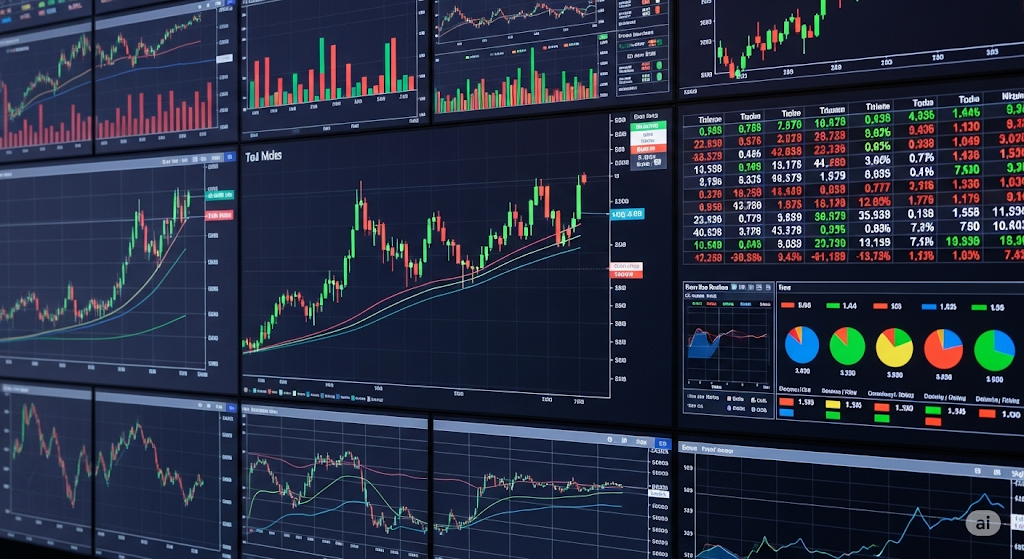
The frenzy over ‘meme stocks’ like GameStop, the cryptocurrency boom and bust, and the NFT bubble are all tragedies created solely by FOMO, which stems from the desire not to be left out, regardless of corporate value.
Table 1: Anatomy of Historical Bubbles - Patterns of Repeating Human Psychology
| Bubble | New Paradigm Narrative | Major Psychological Drivers |
|---|---|---|
| Tulip Mania (1630s) | “Tulips, a new form of currency” | Greed, Herd Behavior |
| South Sea Bubble (1720) | “Infinite wealth through monopoly of New World trade” | Greed, FOMO |
| Dot-com Bubble (1990s) | “The internet changes everything” | Confirmation Bias, FOMO |
| US Housing Bubble (2000s) | “Housing prices never fall” | Greed, Reflexivity |
| Cryptocurrency/NFT Frenzy (2020s) | “Decentralized finance is the future” | FOMO, Confirmation Bias |
Reflexivity Theory (Soros’s Theory of Reflexivity): Thoughts Create Reality
Legendary investor George Soros believed that the ‘perception’ of market participants creates the objective ‘reality’. The perception that ‘prices are rising’ leads to more buying, which raises prices, and the increased prices reinforce the initial perception, forming a positive feedback loop that creates bubbles. The belief during the housing bubble that ‘US home prices never fall’ is a perfect example of this reflexive cycle.
Minsky Moments in History: From Finance to Geopolitics
The pattern of stability sowing the seeds of chaos repeats across all areas of society, including history and corporate management.
- Historical Tragedy (Belle Époque): The unprecedented peace and prosperity in Europe just before World War I (‘Belle Époque’) allowed imperialist competition and rigid alliances to fester, ultimately leading to the assassination in Sarajevo that plunged the continent into war.
- Financial Tragedy (Greenspan Put): The belief that the Fed would rescue the market with interest rate cuts whenever crises arose led to extreme moral hazard among financial institutions, sowing the seeds for the 2008 global financial crisis.
- Corporate Tragedy (Innovator’s Dilemma): Dominant companies like Kodak, Nokia, and Blockbuster fell because rational decision-making to protect current success (peace) led them to ignore future ‘disruptive innovations’.
- Geopolitical Tragedy (Thucydides’s Trap): When a rising power (China) threatens the position of an existing hegemonic power (the US), the likelihood of war increases due to structural tensions, even if both sides do not desire it, following the same principle.

Survival Strategy in Chaos: Thinking Antifragile
If peace inevitably gives birth to chaos, what should we do? Thinker Nassim Nicholas Taleb finds the answer in the concept of ‘Antifragile’. Antifragile refers to the quality of gaining strength and benefits from shocks, volatility, and stress. As he puts it, “The wind extinguishes a candle but energizes a bonfire”; our goal is to be a bonfire that uses the winds of change as fuel, not a candle that goes out.
Barbell Strategy: Practical Application of Antifragility
Taleb suggests avoiding the mediocre middle and combining extremes in a ‘Barbell Strategy’.
- Extreme Safety (85-90% of assets/efforts): Allocate most to extremely safe places like government bonds or cash to ensure minimal survival.
- Extreme Risk (10-15% of assets/efforts): Allocate a small amount to ‘options’ like venture investments that have a high failure rate but asymmetrically large expected returns upon success.

The key to this strategy is that losses are limited to 10-15%, but the upside potential is unlimited. It is structured to gain tremendous profits instead of being destroyed when unpredictable shocks (black swans) occur.
Personal Investor Checklist for Preparing for a ‘Minsky Moment’
As the crisis approaches, how prepared are you? Reflect on the following questions.
- What is the level of debt in my portfolio? (Is it a safe ‘hedge’, risky ‘speculation’, or ‘Ponzi’?)
- Am I falling into confirmation bias? (Am I ignoring negative information about the assets I have purchased?)
- Is my current investment driven by FOMO? (Have I been swept into chasing purchases because of news of others making money?)
- Am I applying the Barbell Strategy? (Have I concentrated all my wealth in ‘medium-risk’ assets?)
- Am I imagining and preparing for the worst-case scenario? (Do I have a plan for when asset prices crash, like the ’negative visualization’ of Stoic philosophy?)
Conclusion: How to Ride the Waves of Chaos
We have examined how stability gives birth to instability and how this process culminates in the Minsky Moment.
- Key Summary 1: Long periods of peace and stability erode vigilance against risks, fostering debt and speculation, which inevitably weakens the entire financial system.
- Key Summary 2: Human irrationalities like confirmation bias, FOMO, and reflexivity act as key drivers that perpetuate these cycles of collapse.
- Key Summary 3: Rather than trying to predict crises, it is wiser to build ‘antifragile’ strategies (e.g., Barbell Strategy) that become stronger when crises hit.
Our goal is not to prevent overheating and collapse but to create a system that does not get destroyed when it occurs but instead uses that force to become stronger. We should respect chaos rather than fear it and apply the principles of antifragility to our lives and investments.
How about re-evaluating your investment portfolio from the perspective of ‘antifragility’?
References
- Paradox of the Forest Fire Namu Wiki
- Paradox of the Forest Fire and COVID-19 Science Times
- Hyman Minsky and the Financial Instability Hypothesis Brunch
- Greenspan’s Riddle Hwaseong Newspaper Focus
- “The Era of Stability is Over” Yonhap Infomax
- “A Greater Crisis is Coming” Warnings from Minsky’s Theory Energy Economy Newspaper
- Minsky Moment Stibee
- Housing Market PF Crisis and Minsky Moment News1
- Analysis of Factors Undermining Financial Stability and Implications Insurance Research Institute
- Ponzi Scheme Namu Wiki