
We were promised flying cars, but the reality seems to be just social media and slightly improved smartphones each year. This article explores not the speed of technological advancement, but the limitations of our brains that perceive exponential change linearly.
- The fundamental psychological reasons why technological advancement feels slow
- The five stages of the ‘Gartner Hype Cycle’ that all new technologies experience
- Three mental tools for effectively responding to an uncertain future
We were promised flying cars, personal jetpacks, and utopian future cities. Yet, the reality seems to be endless social media debates and slightly improved smartphone models each year. This sense of technological stagnation is familiar to us all. True progress that could change the world always seems just around the corner, yet it never feels within our grasp. But what if this disappointment is actually a massive illusion?
This article is about that illusion. The problem lies not in the speed of technological advancement, but in the limitations of our perception that thinks linearly in an exponentially changing era. Our brains have evolved to think in predictable, step-by-step ways, while technology grows explosively, building on previous innovations. This discrepancy creates a ‘perception gap,’ leading us to feel disappointed in the present while simultaneously underestimating the scale of the wondrous future that is already taking shape around us.
I, too, once pondered, ‘When will we finally see flying cars?’ and felt disappointed by technological progress. However, I soon realized that the disappointment was not with technology itself, but with my perception.
In this article, we will embark on a long journey. First, we will explore the psychological biases that create this perception gap, analyzing the rollercoaster of hype and disappointment that all new technologies experience. Next, we will equip ourselves with new mental tools to better navigate this reality, and finally, we will look around at the current state of technology, moving past the period of disappointment to witness the ‘wonders of the future’ that have already arrived.
1. The Blind Spot of Our Brains: Linear Thinking and Exponential Technological Advancement
Understanding that the reality of technological advancement fundamentally clashes with our perception is the starting point of all discussions.
The Engine of Progress: Kurzweil’s Law of Accelerating Returns
Futurist Ray Kurzweil revealed through the ‘Law of Accelerating Returns’ that technological advancement is not linear but follows an exponential curve that builds upon itself. Each innovation at one stage creates stronger tools for the next stage, accelerating the pace of progress itself.
To easily understand this concept, let’s use a simple analogy. If you walk 30 steps linearly, you will cover about 30 meters, reaching the opposite side of a large room. However, if you walk 30 steps exponentially, doubling your stride with each step, the distance becomes mind-boggling enough to circle the Earth multiple times. This is the dramatic difference that our brains find intuitively difficult to grasp.
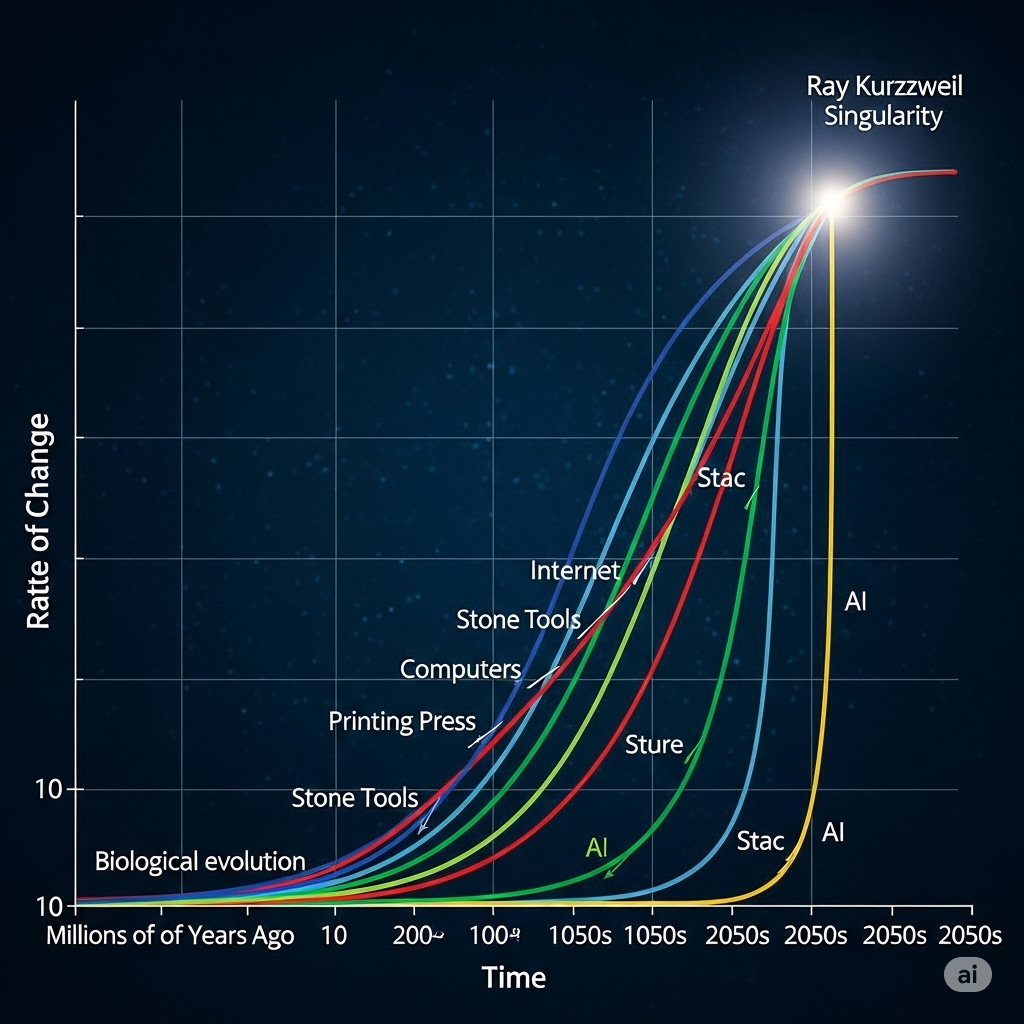
There is a significant gap between our predictions (the straight line) and the reality of technological advancement (the curve).
This kind of growth is not a recent phenomenon. According to Kurzweil’s analysis, the advancement of computing technology has shown a consistent exponential trend for over 80 years, largely unaffected by external shocks such as wars or economic downturns. This means that technological progress is not a temporary trend but a powerful force that grows continuously through compounding.
The Psychology of Skepticism: Why Do We See Curves as Lines?
Our brains possess cognitive biases, mental shortcuts evolved for survival, which can hinder our ability to predict the future of technology.
Loss Aversion: The Comfort of the Status Quo
According to Nobel laureate Daniel Kahneman, we feel pain from losses about twice as intensely as we feel pleasure from gains. This ’loss aversion’ tendency makes us prefer the familiar (certain gains) over the new (uncertain risks).
Kodak’s executives were not foolish to ignore digital cameras; they were psychologically designed to protect their lucrative film business (certain gain) from the uncertain digital technology (potential loss) that could cannibalize it. This is also why we often preferred ‘faster horses’ over the unknown entity of the automobile.
Confirmation Bias and Recency Bias: The Echo Chamber of Stagnation
We tend to actively seek information that confirms our existing beliefs and ignore evidence to the contrary. This is known as ‘confirmation bias.’ If we believe progress is slow, we will focus only on delayed projects or failed startups, overlooking the exponential advancements quietly happening in laboratories.
‘Recency bias’ leads us to give greater weight to recent events. Recent failures of technological products, such as market crashes or the collapse of the NFT market, feel like more significant signals for predicting the future than the steady technological advancements of the past decade.
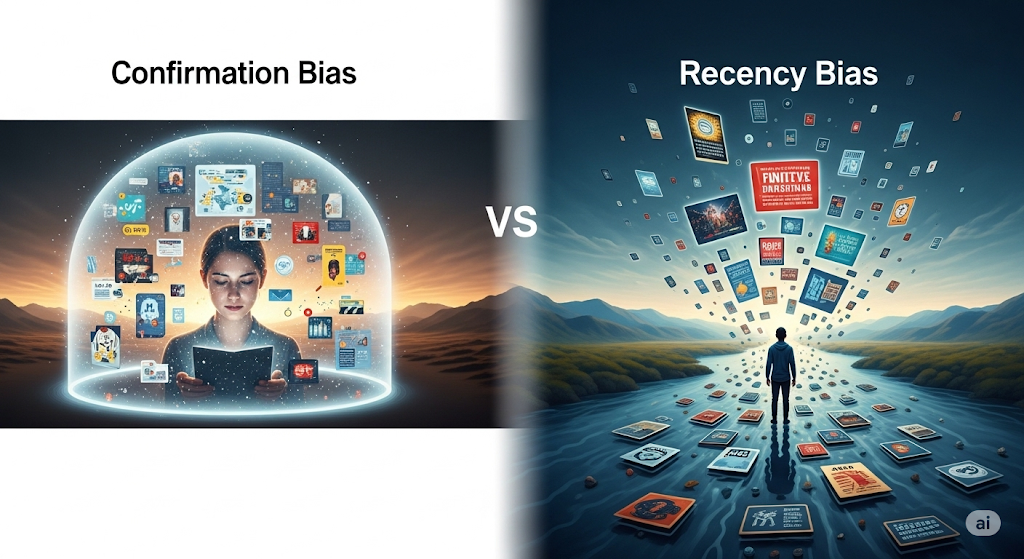
Historical Myopia: We Have Been Wrong Before
Underestimating the future is not a new phenomenon. History is filled with our misjudgments.
- Automobiles: The anecdote of a banker advising against investing in Henry Ford, calling cars a “temporary fad” and claiming that “horses are here to stay” perfectly illustrates the underestimation of disruptive technology.
- Personal Computers: In 1943, IBM’s chairman Thomas Watson reportedly predicted, “The world market for computers is about five.” This reflects the limitations of not imagining the paradigm shift from massive mainframes to personal devices.
- The Internet: In 1995, Clifford Stoll declared in a Newsweek article, “No online database will replace your daily newspaper.” This is a powerful example of how even experts completely missed the exponential potential of new platforms.
In conclusion, the feeling that technological advancement is slow is not a reflection of reality but a cognitive illusion created by the clash between our linear thinking and the exponential reality of technological advancement.
2. The Anatomy of Hype: Riding the Technological Rollercoaster
There is a social and economic cyclical process that amplifies our psychological biases, making technological advancement feel more erratic and disappointing. This is the ‘Hype Cycle.’
Gartner Hype Cycle: A Map of Our Emotions Toward Technology
The Gartner Hype Cycle is a powerful framework for understanding the lifecycle of new technologies. It serves as a map of our collective hopes and disappointments regarding technology.
- Technology Trigger: A groundbreaking technology emerges, and the media begins to take notice, leading to a moment of “What if this is possible?”
- Peak of Inflated Expectations: A period of irrational exuberance where everyone rushes into the market, driven by the fear of missing out (FOMO).
- Trough of Disillusionment: The bubble bursts, and the technology fails to meet inflated expectations, leading to declarations of it being “just a passing fad.”
- Slope of Enlightenment: A quiet revival period where second and third-generation products emerge, and practical applications begin to appear.
- Plateau of Productivity: The technology becomes deeply integrated into our lives, no longer seen as new but as a mainstream technology.
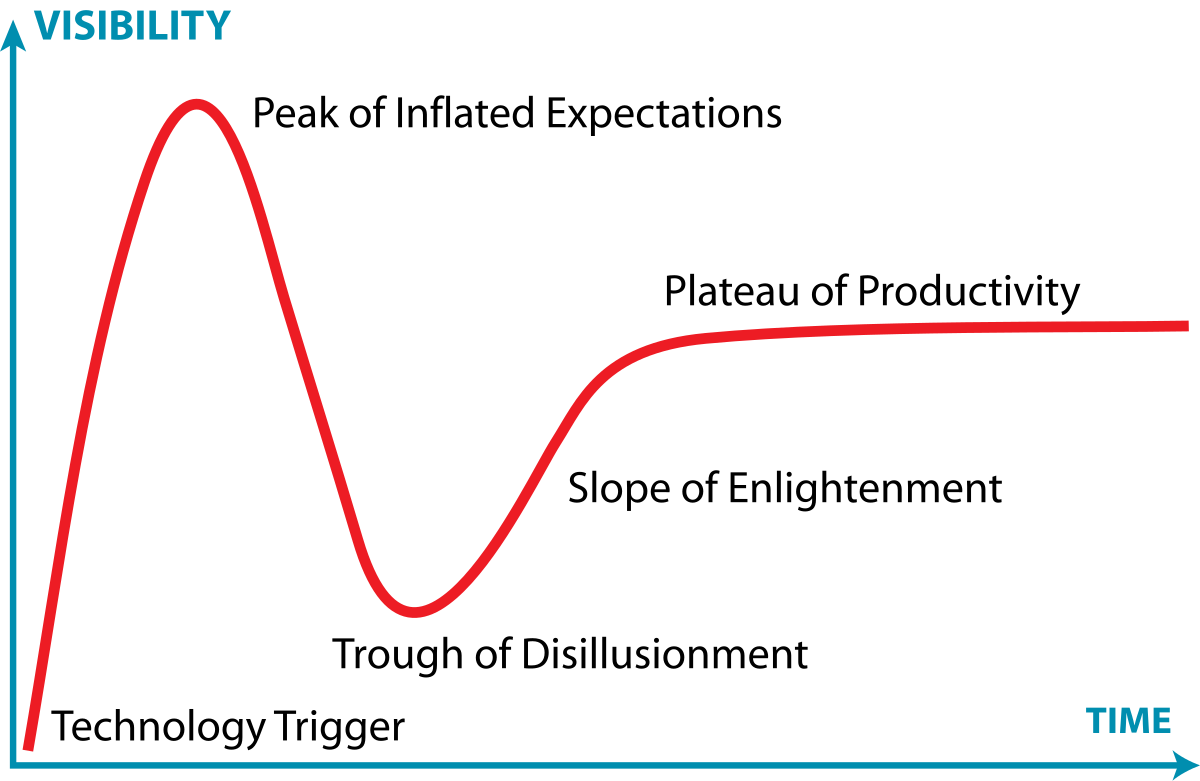
All new technologies go through a rollercoaster of expectations and disappointments before reaching stability.
Case Studies: The Dot-com Bubble and Crypto Winter
- Dot-com Bubble (1995-2001): After the ‘peak of inflated expectations’ where any ‘.com’ name attracted investment, the bubble burst in 2000, leading to the bankruptcy of many companies during the ’trough of disillusionment.’ However, the infrastructure built during this time laid the foundation for true internet revolutions like Google and Amazon.
- Crypto Winter: Following the ‘peak’ of the NFT craze in 2021, the ‘crypto winter’ ensued with price crashes and exchange collapses, representing a typical ’trough of disillusionment.’ Yet, it is precisely at this point that the true value of the underlying technology of blockchain began to be quietly established.
The Trap for Companies: The Innovator’s Dilemma
According to Professor Clayton Christensen’s ‘Innovator’s Dilemma’ theory, successful companies fail because they listen to their best customers and focus on profitable products, ignoring new ‘disruptive’ technologies that initially perform poorly.

Established players lose their market to disruptive innovations as they focus on the mainstream market.
- Kodak: Invented the first digital camera but buried it out of fear that it would cannibalize their profitable film business.
- Blockbuster: In 2000, they laughed off and rejected a proposal to acquire Netflix, failing to see the disruptive potential of streaming.
The ’trough of disillusionment’ that we feel is the most dangerous moment for established players and the most crucial moment for new challengers.
| Stage | Characteristics and Public Perception | Examples and Emotional Journey |
|---|---|---|
| Technology Trigger | Groundbreaking discovery, media attention. “This could change everything!” | Example: Kodak’s first digital camera Emotion: “Wow, this is amazing! The future is here!” |
| Peak of Inflated Expectations | Enthusiastic hype, unrealistic predictions. “It will solve all problems right now!” | Example: Dot-com bubble, NFT craze Emotion: “I have to get in on this! I don’t want to be left behind!” (FOMO) |
| Trough of Disillusionment | Failures, decreased interest, bankruptcies. “I knew it, it was just a fad.” | Example: Dot-com bubble collapse, crypto winter Emotion: “Nothing changes. It was all hype.” |
| Slope of Enlightenment | Realistic benefits emerge, second and third-generation products released. “Ah, now I see how this can be useful.” | Example: E-commerce after 2005 Emotion: “Hmm, this is better than I thought. Quite convenient.” |
| Plateau of Productivity | Settles as mainstream technology, becomes essential. “How did I live without this?” | Example: Internet, smartphones, GPS Emotion: “I can’t imagine my life without this. It’s just… a given.” |
3. A Toolbox for the Exponential Age
Equipping ourselves with new mental models to think differently about the future is crucial.
① Antifragile: Becoming Stronger from Shocks
Thinker Nassim Taleb coined the term ‘Antifragile’ to describe the property of becoming stronger from shocks rather than merely enduring them. “Winds extinguish candles, but they make bonfires burn brighter.”
A practical way to implement this is through the ‘Barbell Strategy.’ Allocate 90% of your resources to extremely safe assets (stable core business) and invest only a small 10% in high-risk, high-reward opportunities (side projects, learning new technologies).
② Stockdale Paradox: Facing Reality While Maintaining Faith
Admiral James Stockdale’s survival strategy as a Vietnam War prisoner was paradoxical. He combined a harsh acceptance of reality—“I won’t be getting out by Christmas”—with an unwavering belief in the ultimate outcome—“I will prevail and win.”
This is the perfect posture for navigating the hype cycle. Accepting the reality that technology is currently in the ’trough of disillusionment’ while not losing faith in the long-term exponential trend.
③ Stoic Philosophy: Focusing on What You Can Control
Ancient Stoic philosophy provides practical tools for maintaining calm in an unpredictable world.
- Negative Visualization (Premeditatio Malorum): A training method for preparing for the shock of failure by imagining the worst-case scenario and building psychological resilience.
- Dichotomy of Control: Focus energy only on what we can control (our actions, learning) and accept what we cannot control (market crashes, the speed of technological advancement).
4. The Wonders That Have Already Arrived: The Current State of Technological Advancement
Let’s look at specific examples of technologies transforming from disillusionment to wonder in the real world.
Technologies Approaching the Plateau of Productivity: 3D Printing
Once seen as a hobbyist technology for making plastic toys, 3D printing has now established itself as a core industrial technology.
- Aerospace: GE Aviation is producing jet engine parts using 3D printing to reduce weight and improve fuel efficiency.
- Medical: It has become a reality to print patient-specific skull and jawbone implants, reducing surgery time and aiding recovery.
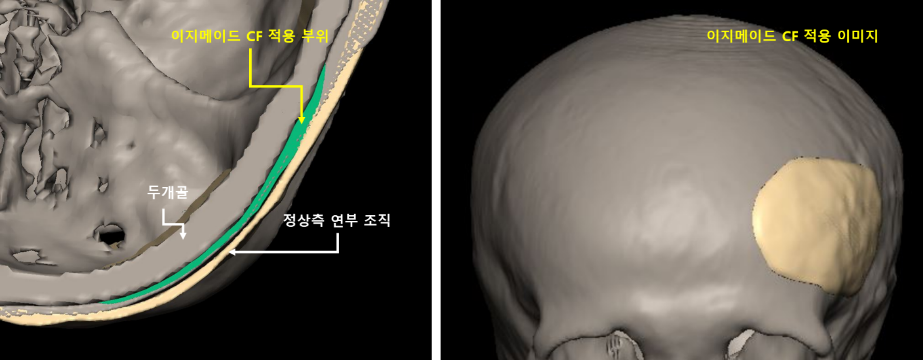
3D printing is no longer science fiction; it is an essential technology in the medical field.
Technologies Climbing the Slope of Enlightenment: AI and Blockchain
- AI and Robotics: Beyond the hype of generative AI chatbots, AI is merging with robots in smart factories to maximize productivity and enhance the precision of surgical robots, driving innovation in the physical world.
- Blockchain: After the bubble of ‘crypto winter’ has cleared, technologies like supply chain transparency from IBM and Maersk or ‘self-sovereign identity’ allowing individuals to control their own data are being developed.
Technologies in the Technology Trigger Stage: The Next Generation of Curves
- Quantum Computing: Still in its early stages, if successful, it will solve problems in drug development, materials science, and other areas that current supercomputers cannot tackle, marking the next S-curve in computing technology.
- Nuclear Fusion: Once the subject of jokes about being “20 years away,” private companies are now attracting billions in investments, aiming for net energy production within a decade. If successful, it will provide humanity with nearly limitless clean energy.
Conclusion
The feeling that technological advancement is slow is an illusion born from the clash between our linear thinking and the exponential reality of technological innovation. The current disappointment is not a failure but a necessary process that must be traversed before essential technologies of the future are born.
Three Key Points
- Perception Illusion: Our brains intuitively struggle to understand exponential technological advancement, leading us to mistakenly believe progress is slow.
- Predictable Cycles: All new technologies follow the ‘Hype Cycle,’ experiencing hype (inflated expectations) and disappointment (trough of disillusionment) before settling into our lives.
- Wise Responses: The uncertainties of the future can be navigated through mental tools like ‘Antifragile’ and the ‘Stockdale Paradox.’
What Should We Do Now? Like Amazon’s ‘Day 1’ philosophy, instead of cynically viewing technologies trapped in the ’trough of disillusionment,’ approach them with curiosity and ask, “What can I learn from this? What might the next version of this technology look like?”
The future does not wait. It has already arrived around us, disguised as disappointment and quiet effort. When we change the way we see, we will finally witness the wonders unfolding before our eyes.
References
- Ray Kurzweil, The Law of Accelerating Returns https://www.kurzweilai.net/the-law-of-accelerating-returns
- Daniel Kahneman, Thinking, Fast and Slow
- Clayton Christensen, The Innovator’s Dilemma
- Gartner, Gartner Hype Cycle https://www.gartner.com/en/research/methodologies/gartner-hype-cycle
- Nassim Nicholas Taleb, Antifragile: Things That Gain from Disorder