
Why do we feel more heartbroken by the sadness of one child than by the tragedy of a million?
- The scientific principle behind why our brains respond more strongly to one person’s story than to statistics.
- How great brands like Apple and Nike sell ‘myths’ instead of products.
- The power of stories that have changed the world, like the boy who changed perceptions about AIDS.
Why are our brains drawn to stories?
Cold statistics activate only the language areas of our brain, but engaging storytelling activates the entire brain like an orchestra. When a character in a story runs, our motor cortex responds; when delicious food is described, our sensory cortex reacts. We are not just listening to stories; we are literally ’experiencing’ them.
This phenomenon is because our brains are designed to empathize much more strongly with the specific narratives of individuals than with large numbers. In psychology, this is referred to as the ‘Identifiable Victim Effect.’ In 2015, a single photo of three-year-old refugee Alan Kurdi, who moved the world, led to a surge in international opinion and donations that years of statistical reports could not achieve.
This is the way our brains operate beyond mere sentimentality. fMRI studies show that when we encounter the story of a specific individual, the amygdala, which is the emotional processing center, reacts intensely. Our brains have evolved to store ’episodic memories’ intertwined with personal experiences and emotions much longer and more powerfully than ‘semantic memories’ like phone numbers. Ultimately, humans are ‘Homo narrans,’ or ‘storytelling humans,’ and stories are like the operating system (OS) of our cognitive framework.
Your brain is addicted to stories
While we want to believe we are rational beings, our brains are actually much more attracted to stories than to logic. We are closer to a ‘story machine’ that constantly creates narratives to understand the world.
At the heart of this remarkable phenomenon are ‘mirror neurons.’ Just by observing the actions of others, the same brain cells activate as if we were acting ourselves, which is the neurological basis of empathy. A well-crafted story makes us feel the protagonist’s emotions as if they were our own through mirror neurons, forming a powerful emotional bond that data alone can never create.
Thus, listing data when trying to persuade someone is like asking the brain for extra work. In contrast, providing a well-structured story is like speaking directly in the brain’s native language, making it a much more efficient and persuasive mode of communication.

Brands Become Myths: Examples of Marketing Storytelling
Marketing guru Seth Godin said, “Marketing is the art of spreading stories that resonate with the audience.” Great brands do not sell product features; they sell myths that will be remembered forever in people’s hearts.
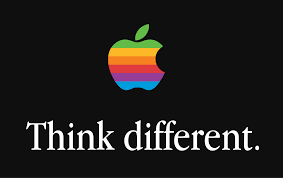
Apple: “Think Different”
When Steve Jobs returned to Apple in 1997, just before its bankruptcy, he introduced the “Think Different” campaign, which was like a poem rather than focusing on product specifications. The ads featured images of ‘The Crazy Ones’ who changed the world, like Einstein and Martin Luther King, without showing any products. Through the message that “those who believe they can change the world ultimately do,” Apple became a brand that sells identity of innovation and rebellion rather than computers.
Nike: “Just Do It”
Nike told stories about our inner conflicts and overcoming them instead of shoe technology. The “Just Do It” campaign, which began with an ad featuring an 80-year-old man running across the Golden Gate Bridge in 1988, focused on the inner struggles of ordinary people overcoming hesitation rather than elite athletes. Michael Jordan’s “Failure” ad listed his many failures rather than his successes, conveying the story that greatness belongs to everyone who decides to try, turning simple sneakers into a philosophy of life and an icon of motivation.
Stories that Turn Ordinary Objects into Legends
This power is not limited to giant brands. Personally, I was deeply impressed by the story of the ‘Zippo lighter.’ The tale of how it saved a soldier’s life by stopping a bullet during World War II elevated a simple windproof lighter to the status of a ‘guardian’ of life. Thus, even ordinary products can become legends when they encounter an attractive narrative.
- Evian Water: The story of ‘healing spring water’ that cured a French marquis gave ordinary water a mystical value.
- Chaumet Jewelry: The story of the founder’s fateful meeting with Napoleon added historical depth to the brand.
| Brand (Brand) | Possible ‘Statistics/Specs’ They Could Use | The ‘Story’ They Told |
|---|---|---|
| Apple (Apple) | Processor speed, memory, screen resolution | Praise for misfits, rebels, and geniuses who change the world |
| Nike (Nike) | Air sole technology, shoe weight, material science | Inner struggles against doubt and inertia. The personal victories of ordinary heroes |
| Zippo (Zippo) | Windproof design, flame temperature, fuel capacity | A lighter that saved a soldier’s life by stopping a bullet on the battlefield |
| Evian (Evian) | Mineral content, pH level, purity of the source | The miraculous spring water that cured a French nobleman’s incurable disease |
When One Person’s Story Moves History
Powerful storytelling can change society and alter the course of history beyond marketing.
Ryan White: The Boy Who Changed the Face of Disease
In the 1980s, AIDS was a subject of fear and prejudice. At that time, the story of Ryan White, a teenage boy infected with HIV through a blood transfusion, changed everything. His struggle to simply want to go to school shifted public perception of the tragedy of AIDS from ‘blame’ to ‘care.’ The story of one boy accomplished what years of public health data could not, and his name will forever be associated with the Ryan White Care Act in the United States.
Barack Obama: Weaving National Hope into Personal Stories
Barack Obama’s 2008 presidential campaign is one of the most successful examples of political storytelling. Instead of listing policies, he presented a narrative of unity that transcended division through his personal history as the son of a Kenyan father and a white mother from Kansas. “Yes, We Can!” was a powerful climax inviting voters to become protagonists in the story of hope he presented. People voted not for policies but for an attractive narrative they wanted to be a part of.
Scientist Carl Sagan, Who Sang the Universe in Poetry
Even in the field of science, which is at the pinnacle of data, the power of storytelling is not an exception. In 1980, Carl Sagan’s TV series
Instead of explaining the orbits of planets, he invited viewers on a grand journey aboard the ‘spaceship of imagination.’ In particular, the phrase, “We are made of star-stuff” transformed astronomy into the most intimate story about ‘myself.’ When even the most complex data is woven into a fascinating narrative, it can wield a powerful force that captivates the world.

Conclusion: It’s Time to Share Your Story
From the tragedy of Alan Kurdi to brand myths, individuals who changed history, and scientists who sang the universe, we arrive at one clear conclusion. A well-crafted story is the most powerful communication tool humans possess.
- The brain responds to stories: Our brains are designed to empathize much more deeply with specific and emotional stories than with abstract data.
- Brands are completed through stories: Great brands sell mythical stories that embody the identity and aspirations of their customers, not product features.
- Stories move the world: A single person’s true story has the power to break down social prejudices and change the course of history.
Now it’s your turn. What values do you want to convey, and what truths are hidden within the data? Don’t just list facts; uncover the human ‘story’ hidden within. Numbers may be forgotten, but great stories live on forever.
References
- Identifiable victim effect Wikipedia
- Identifiable vs. Statistical Victim Advertising Information Center
- Identifiable Victim Effect The Decision Lab
- What is Storytelling? Waveon
- The brain is sensitive to storytelling DBR - Dong-A Business Review
- Think different Wikipedia
- Nike’s Legendary “Just Do It” Campaign Ether Lab
- Ryan White Wikipedia
- Cosmos Aladin