
posts / Humanities

"Thinking 'It's all my fault' — Why it was your smartest mistake","Are you blaming yourself saying, 'This is my fault too'? That thought may actually be a 'psychological armor' your mind developed to protect you. Uncover the nature of the cognitive distortion called 'personalization' and discover practical ways to break the cycle of self-blame.","![Personalization](https://pub-69e75e95c2a24d169ba7d738dadaead6.r2.dev/Personalization_ff36cbddcf/Personalization_ff36cbddcf.jpg)\n\nDo you sometimes hear a voice deep inside that **\*\*says, \"This is all my fault\"\*\***? We often take that voice as evidence of weakness or a character flaw that needs fixing.\n\nBut what if that thought is actually the \*\*trace of the most sophisticated and clever survival strategy you learned to get by\*\*? More precisely, what if it is the \*\*\*\*'psychological armor'\*\*\*\* that your past self forged to impose order and regain a sense of control in a confusing world?\n\nThis piece will be a journey to dissect that worn and heavy armor — in other words, to **expose the true nature of 'self-blame' and explore how to safely let it go**. In psychology, this pattern of thinking is defined as a cognitive distortion called **'personalization'**. Personalization is a mental filter that makes you feel personally responsible for events over which you have little or no control. Unfortunately, this elaborate filter often underlies depression, anxiety, and low self-esteem.\n\nOver the next four chapters we will dissect the structure of this clever mistake.\n\n1. We will observe the **mechanism** of how an offhand remark in daily life can transform into a storm of self-blame.\n2. From a **neuroscientific perspective**, we will understand why this blaming voice gets louder and more persistent under stress and overload.\n3. We will trace the deep and painful **origins** of this thought pattern.\n4. Based on all this understanding, we will learn **concrete methods** to unlock the shackles of the thought 'it's all my fault.'\n\nThis is not a journey to shame yourself. I promise this is a journey to understand the smartest mistake that once protected you, and finally to free yourself from it.\n\n## 1. "Let's talk tomorrow": When one phrase becomes a storm of self-blame\n\nEvery story starts with an 'interpretation.' The same event can open up entirely different realities depending on the lens we wear. Especially, the lens of 'it's all my fault' is a powerful one that distorts every neutral signal in the world into an attack or criticism directed at you.\n\n!['The glasses of "It's all my fault"'](https://pub-69e75e95c2a24d169ba7d738dadaead6.r2.dev/_2d5980ef7b/_2d5980ef7b.png)\n\nLet's take a concrete scenario to look closely at how this lens operates.\n\n**The event: an email**\n\nOne late afternoon before a project deadline, Minjun, a mid-level manager at an IT company, sent an update email summarizing the project's progress to his team and Director Park.\n\nA few hours later, a notification chimed. A short reply from Director Park arrived as a 'reply all.' It contained just one sentence.\n\n> "Let's discuss the details at tomorrow's meeting."\n\nObjectively, this email is neither more nor less than a fact. Yet that single sentence created a huge ripple inside Minjun.\n\n* **Reaction A (depersonalized interpretation):** \n One team member reads the email, shrugs, and thinks, "Great, I'll get a chance to align things at tomorrow's meeting. The director must be busy today." This is a neutral, fact-based interpretation of the situation.\n* **Reaction B (personalized interpretation — inside Minjun):** \n Minjun's mind begins to write a completely different narrative. He feels his chest drop slightly. "Did I write something wrong? Is the report formatted incorrectly? The director must think my report is inadequate. I ruined everything. I ruined the project's good momentum."\n\n![Personalized vs Depersonalized Interpretation](https://pub-69e75e95c2a24d169ba7d738dadaead6.r2.dev/_a23bf7fd83/_a23bf7fd83.png)\n\n### The structure of self-blame: the main culprit 'personalization' and three accomplices\n\nWhat happened inside Minjun was not mere worry. It was a powerful negative feedback loop created by several cognitive distortions working together.\n\n* **Main culprit: Personalization** \n At the center of this reaction is 'personalization.' Minjun connected the external, neutral event of Director Park's short email directly to an internal flaw ("I'm incompetent").\n* **Accomplice 1: Mind Reading** \n Minjun assumes he can read Director Park's mind. The thought "He must think my report is insufficient" is a 'mind reading' distortion that declares someone else's thoughts without evidence.\n* **Accomplice 2: Emotional Reasoning** \n After reading the email, Minjun feels anxious and ashamed. He uses that feeling as evidence of reality: "I feel incompetent, therefore I must be incompetent."\n* **Accomplice 3: Mental Filter** \n Minjun ignores the many positive facts about having successfully led the project so far. His mental filter focuses only on the single, negatively perceived cue: 'the short email.'\n* ![Personalization, Mind Reading, Emotional Reasoning, Mental Filter](https://pub-69e75e95c2a24d169ba7d738dadaead6.r2.dev/Mental_Filter_etc_c72f9a2d80/Mental_Filter_etc_c72f9a2d80.webp)\n\nThus the thought 'it's all my fault' is not a single mistake but rather a chorus of cognitive distortions joining forces. The problem is that this chorus is so familiar and automatic that we mistake it for reality.\n\nThe pain does not come from Director Park's email itself but entirely from Minjun's **interpretation** — the personalized story he told himself.\n\nRealizing this is the first step toward change. This is not just a thought but almost an automatic **cognitive reflex**. Our first intervention is not to force ourselves to 'think differently' but to simply notice, without judgment, that the reflex has activated.\n\n---\n\n## 2. Why does self-blame get worse when you're exhausted? (a neuroscience view)\n\nWhy was Minjun's reaction so extreme? The day he received the email was the last week of a long, stressful quarter. He had been sleep-deprived for days and his mental energy was nearly depleted.\n\nWhen our **brain is overloaded, the thought 'it's all my fault' transforms from a simple voice into a scream that rips the ears**.\n\n### A besieged brain: cognitive overload and negativity bias\n\nOur brain is not a supercomputer with infinite resources. When under high stress and dealing with a lot of information — in a state of **'cognitive load'** — the brain loses the capacity for nuanced thinking and relies on energy-saving shortcuts.\n\n![Cognitive Load](https://pub-69e75e95c2a24d169ba7d738dadaead6.r2.dev/Cognitive_Load_3a4a751f30/Cognitive_Load_3a4a751f30.webp)\n\nOne of the brain's strongest shortcuts in this state is the **\*\*'negativity bias'\*\***. This mechanism evolved for survival, making us pay far more attention to potential threats or negative information than to positive information. That's why one criticism sticks longer than ten compliments.\n\nIn a stress-primed state, the brain turns up the volume on this negativity bias. The neutral email from Director Park is no longer just information. Minjun's brain classifies it as a potential **'social threat'** and immediately sets off an alarm.\n\n![Negativity Bias](https://pub-69e75e95c2a24d169ba7d738dadaead6.r2.dev/Negativity_Bias_c260e15e33/Negativity_Bias_c260e15e33.jpg)\n\n### The avalanche of thought: from personalization to catastrophizing\n\nAmplified threat perception is the perfect catalyst for an avalanche of thoughts. In psychology this avalanche is called **\*\*catastrophizing\*\***: magnifying current difficulties into the worst‑case scenario.\n\n![Catastrophizing](https://pub-69e75e95c2a24d169ba7d738dadaead6.r2.dev/Catastrophizing_9f19ba40d2/Catastrophizing_9f19ba40d2.webp)\n\nMinjun's thought process is a textbook example of catastrophizing.\n\n1. **Initial thought (personalization):** "There is something wrong with my email, so the director is upset."\n2. **Chain reaction (the avalanche begins):** "The team will all see me as incompetent."\n3. **Worst‑case scenario (catastrophizing):** "I'll be excluded from this project. Maybe I'll get fired. My life will be ruined."\n\nThe brain tries to protect itself by predicting the worst based on past dangerous experiences — sadly, very cleverly.\n\n### The relentless loop of thought: a stress feedback loop\n\nHere we find a crucial fact: stress, personalization, and catastrophizing form a mutually amplifying vicious cycle — a **feedback loop**.\n\n> **Stress** (depleted cognitive resources) → **Personalization** ("it's my fault") → **Catastrophizing** ("I'll be fired") → **Stress hormone release** (bodily threat response) → **More severe stress** (further cognitive depletion) → **Stronger personalization** ...\n\n![Personalization feedback loop](https://pub-69e75e95c2a24d169ba7d738dadaead6.r2.dev/_190c6c932d/_190c6c932d.png)\n\nUnderstanding this vicious cycle is vital. It explains why deciding to "think positively" in the middle of a spiral of thoughts is so difficult.\n\nIn short, the overwhelming voice of self-blame filling your head is not evidence that the situation is truly terrible. It is an emergency signal that **your brain has switched into primitive survival circuits because of overload**. Those thoughts are **symptoms**, not accurate diagnoses of the situation.\n\n---\n\n## 3. Where did that thought originate: the broken vase and moral defense\n\nWhy have we developed such an elaborate and painful program of self-blame? Why does Minjun's brain default to the script 'it's all my fault'?\n\nTo answer that, we must go back in time to the moment this program was first encoded.\n\n### The origin of the script: a broken vase\n\nYoung Minjun was playing in the living room when he accidentally knocked over his mother's most cherished vase, shattering it into pieces. With a sharp crashing sound and already worn out from work and daily pressures, his mother exploded: "Can't you be careful? Why do you keep making things hard for me?"\n\nA child's brain cannot analyze the situation like an adult. For a child, the mother is the center of the world and the source of survival. If the mother seems unhappy, the child assumes responsibility. At that moment the child's brain makes a desperate survival calculation.\n\n"Mom is unhappy. I caused it. This is my fault. If I become a 'good child,' Mom won't be unhappy anymore."\n\n### The birth of psychological armor: 'moral defense'\n\n![Unconscious resistance to protect oneself](https://pub-69e75e95c2a24d169ba7d738dadaead6.r2.dev/_ea479d2ddb/_ea479d2ddb.jpg)\n\nThis is the moment psychoanalysts call the birth of a **\*\*'moral defense'\*\***. For a child wholly dependent on caregivers, believing "I am a bad child who makes my caregiver unhappy" paradoxically feels safer than thinking "the caregiver is unpredictable and hurtful."\n\n**By turning blame toward itself, the child gains a paradoxical sense of control.** The belief "If this is my fault, then I can fix it by behaving better" offers hope. This is the first piece of the armor called 'self-blame' — the smartest mistake for survival.\n\nRepeated experiences like this imprint deep **\*\*core beliefs\*\*** in the unconscious, such as "I am responsible for other people's emotions" or "I am fundamentally flawed."\n\n### The only one you really keep messing up with\n\nThe chapter title, 'the person you frequently make mistakes with,' is actually a trick question. The person you keep failing with is not your boss, partner, or friend.\n\n#### **The only person you keep making mistakes with is yourself.**\n\nThe mistake is applying childhood survival patterns to yourself as an adult — constantly criticizing and blaming yourself.\n\nMinjun's intensified self-blame in front of an authority figure like Director Park happens because that dynamic triggers attachment patterns similar to childhood. His reaction to the director's cold email resembles the desperate response of the child who blamed themselves for the broken vase decades earlier.\n\nThus, _your inner critic is not merely a bad habit but a distorted echo of a deep desire to protect relationships and stay connected_. Now it is time to redirect that loyalty and protective instinct from others back toward yourself.\n\n---\n\n## 4. How to take off the old armor: two prescriptions for the person saying 'it's all my fault'\n\nWe now understand where the thought 'it's all my fault' comes from, how it operates, and why it intensifies under stress. Next, we'll explore concrete, practical methods to shed this old armor and move toward a lighter, freer life.\n\nThere are two approaches. One is a 'head' approach — directly addressing distorted thoughts — and the other is a 'heart' approach — healing the emotional wounds at the root of those thoughts.\n\n### Strategy 1. [Head] Rewriting the script of thought (Cognitive Restructuring)\n\n![Principles of CBT (Cognitive Behavioral Therapy)](https://pub-69e75e95c2a24d169ba7d738dadaead6.r2.dev/CBT_06a8b0b500/CBT_06a8b0b500.svg)\n\nThis approach is based on the principles of Cognitive Behavioral Therapy (CBT). The core idea is that our emotions are determined more by our 'thoughts' or 'interpretations' of events than by the events themselves. It is a **training** to become an active participant in your thoughts rather than a passive bystander.\n\n**Step 1: Catch the automatic thought** \nThe first task is to catch the automatic thought 'it's all my fault' in the moment. Notice the moment self-blame arises and write the thought down without judgment. (Example: "Director Park was annoyed because my email was terrible.")\n\n**Step 2: Gather evidence** \nNow become a detective and collect objective evidence.\n\n* _Evidence supporting the thought:_ "His reply was shorter than usual."\n* _Evidence against the thought:_ "He's very busy. It's the end of the quarter. There were no negative words in the email. He scheduled a meeting to discuss it tomorrow."\n\n**Step 3: Challenge the distortion** \nBased on the evidence, ask questions. "Is there another way to view this situation?", "Is this outcome 100% my responsibility?", and the most powerful question: **"If my closest friend were in the same situation, what would I say to them?"**\n\n**Step 4: Create a balanced alternative thought** \nThe goal is not blind positivity but realism.\n\n* _Alternative thought:_ "Director Park's short reply momentarily startled me, but the most likely explanation is that he was trying to communicate efficiently amid a busy schedule. My anxiety is my interpretation, not an objective measure of my work performance."\n\nTo help this process, you can use a **\*\*Cognitive Restructuring Worksheet\*\***.\n\n| Situation | Automatic Thought & Emotion | Evidence Against the Thought | Balanced Alternative Thought |\n| --- | --- | --- | --- |\n| **Example: Boss sent a short email.** | "My report was awful so he's upset." (Anxiety, shame 90%) | He's very busy. It's quarter end. A meeting was scheduled. There were no negative words. | "His short reply probably reflects his busy schedule. My anxiety is an automatic interpretation, not necessarily fact." |\n| **Example: A friend canceled plans.** | "They're avoiding me because I'm annoying." (Sadness, rejection 80%) | The friend said they haven't been feeling well. Something urgent may have come up. They apologized multiple times. | "I'm upset that a plan was canceled, but they likely have a valid reason. This does not define our entire relationship." |\n\n### Strategy 2. [Heart] Healing inner wounds (Self-Compassion)\n\nIf the cognitive approach targets the 'head,' self-blame is actually a 'heart' problem. Deep emotional wounds of shame and inadequacy lie at its root. The most effective remedy for these wounds is **\*\*self-compassion\*\***.\n\n![Self-Compassion](https://pub-69e75e95c2a24d169ba7d738dadaead6.r2.dev/Self_Compassion_566189c089/Self_Compassion_566189c089.png)\n\nAccording to psychologist Kristin Neff, self-compassion consists of three core elements.\n\n1. **Self-Kindness:** Treating yourself with warmth and understanding rather than harsh judgment when you make mistakes.\n2. **Common Humanity:** Recognizing that suffering and failure are part of the shared human experience, not something you suffer alone.\n3. **Mindfulness:** Observing painful thoughts and feelings without suppression or exaggeration, holding them in balanced awareness.\n\nHere are concrete self-compassion exercises you can practice daily.\n\n* **Exercise 1: Speak to yourself like a friend** \n The classic and powerful method. Imagine your closest friend in Minjun's situation. What would you say? "It's okay, don't worry so much. The director's busy. You worked hard." Now say those warm, supportive words to yourself in the mirror.\n* **Exercise 2: Write a compassionate letter** \n Imagine a friend or wise mentor who loves and supports you unconditionally. From their perspective, write a letter to your struggling self. Describe your difficulties, your self-blame and shame, and offer deep understanding, compassion, and encouragement.\n* **Exercise 3: Be a compassionate observer (Three Chairs)** \n Close your eyes and imagine three chairs. In the first sits your harsh 'inner critic'; in the second sits the 'accused, shrinking you'; in the third sits the wise, warm 'compassionate observer.' From the observer's standpoint, watch the exchange between the critic (likely trying to protect you) and the accused (fearful). Then, have the observer send compassion to both sides, integrating the inner conflict toward a peaceful resolution.\n\n---\n\n## Conclusion: The courage to gratefully lay down old armor\n\nThe journey out of 'it's all my fault' requires two wings. If **cognitive restructuring** is the 'skill' that repairs the old sail and steers the rudder of your ship, then **self-compassion** is the 'strength' that calms rough waves and creates a tranquil sea for sailing. Together they produce the most powerful synergy.\n\nAt the start we compared self-blame to armor. At the end of this journey, we should not hate or destroy the armor that once protected you. Instead, understand how desperately it tried to keep you safe and offer gratitude for its effort.\n\nThen declare that you now stand in a safer, more mature world where that heavy armor is no longer needed.\n\nTo unlock the shackles of the thought 'it's all my fault' is to have the courage to put down the heavy armor, to risk being hurt, to embrace imperfection, and above all to become a warm friend to yourself.\n\nIt is the beginning of a lifelong, magnificent journey of learning to live with an open heart, a compassionate mind, and a resilient spirit.\n\n---\n\n<details><summary>Details</summary>\n\n1. Cognitive restructuring strategies: Breaking cognitive distortions: practical strategies - FasterCapital\n2. Five cognitive distortions and their examples in cognitive approaches - HappyCampus\n3. Cognitive distortions: psychological traps that distort thinking - JapHakSeoGo\n4. How To Avoid Taking Everything Personally - Pattison Professional Counseling and Mediation Center\n5. Personalization: A Common Type of Negative Thinking - Therapy Now SF\n6. Addressing Personalization: Overcoming Cognitive Distortions - Bay Area CBT Center\n7. Five ways to deal with problem situations without distortion - MeetingDesignLab\n8. 15 common cognitive distortions - Reddit (r/raisedbynarcissists)\n9. 15 thinking styles that lead to massive anxiety 6/15: Personalization - Anxiety Ireland\n10. Cognitive distortion - Wikipedia, the free encyclopedia\n11. Neuroscience of bias: Module 3 - NCCC\n12. Negativity bias - Wikipedia\n13. Negativity Bias: Meaning, Psychology, And Examples - Octet Design Studio\n14. What Is The Negativity Bias and How Can it be Overcome? - Positive Psychology\n15. Not all emotions are created equal: The negativity bias in social-emotional development - (PMC, NCBI)\n16. Catastrophizing: Why We Spiral Into Worst-Case Scenarios - Psychology Today\n17. Catastrophizing and Decatastrophizing: A Comprehensive Guide - Positive Psychology\n18. What doctors wish patients knew about stopping catastrophic thoughts - (AMA-ASSN)\n19. Catastrophizing - Psychology Today\n20. What is catastrophizing? 6 ways to stop catastrophic thinking - MedicalNewsToday\n21. Catastrophising: why we do it and how we stop - Priory Group\n22. I messed up, so love me... 'The psychology of self-blame' - Hankyoreh\n23. 5 Common Ways We Engage in Self-Blame - Psychology Today\n24. Fear of negative evaluation, causes and coping (FNE - social anxiety) - Mind Picnic Counseling Center\n25. Self-critical tendency (Self-Criticism) symptoms and counseling FAQ - Mind Picnic Counseling Center\n26. Self-hatred - Namuwiki\n27. The Relationship between Mindfulness and Shame: Moderated Mediating Effect of Self-Blame and Self-Compassion for College Students - (stress: stress)\n28. CBT Cognitive Behavioral Therapy - The Tree Group\n29. Cognitive behavioral therapy - Wikipedia, the free encyclopedia\n30. Cognitive Behavior Therapy - KOCW, Kangnam University YJ\n31. Cognitive therapy for depression - Samsung Medical Center\n32. What is cognitive behavioral therapy? - (cbt.or.kr)\n33. Self-compassion - Wikipedia, the free encyclopedia\n34. 'Self-compassion' that makes life happy - Distancing\n35. Validation study of the Korean version of the Self-Compassion Scale among community-dwelling adult women - (Self-Compassion.org, Ewha Womans University)\n36. OA Journal - The role of self-compassion in emotion regulation - Korean Journal of Health Psychology\n37. Compassion-Focused Therapy - Wikipedia \n </details>

phoue

12 min read --

Personalization
Personalization

혹시 마음속 깊은 곳에서 **“이건 모두 내 탓이야”**라는 목소리가 울려 퍼질 때가 있으신가요? 우리는 종종 그 목소리를 나약함의 증거나 고쳐야 할 성격적 결함으로 여깁니다.

그런데 말이죠, 만약 그 생각이, 사실은 당신이 지금까지 살아남기 위해 터득한 가장 정교하고 영리한 생존 전략의 흔적이라면 어떨까요? 아니, 정확히 말하면, 혼란스러운 세상 속에서 어떻게든 **질서를 부여하고 통제감을 찾으려 했던, 과거의 당신이 단단하게 벼려낸 **‘심리적 갑옷’****이라면 말입니다.

이 글은 그 낡고 무거워진 갑옷, 즉 ‘자책’의 정체를 파헤치고, 이제는 그것을 안전하게 내려놓는 법을 탐구하는 여정이 될 겁니다. 심리학에서는 이러한 사고 패턴을 **‘개인화(Personalization)’**라는 인지 왜곡의 한 형태로 정의합니다. 개인화는 자신에게 통제권이 거의 없거나 전혀 없는 사건에 대해 불필요한 개인적 책임을 느끼는 정신적 필터입니다. 안타깝게도 이 정교한 필터는 우울감, 불안, 그리고 낮은 자존감의 주된 원인이 되기도 하죠.

우리는 앞으로 네 개의 장을 통해 이 정교한 실수의 구조를 해부할 것입니다.

  1. 일상 속 스쳐 지나가는 한마디 말이 어떻게 우리 안에서 자책의 폭풍으로 변하는지 그 메커니즘을 관찰할 것입니다.
  2. 스트레스와 과부하 상태에서 왜 이 자책의 목소리가 유독 더 크고 집요해지는지 뇌과학적 관점에서 이해해볼 것입니다.
  3. 이 생각의 뿌리가 어디서 시작되었는지, 그 깊고 아픈 기원을 추적할 것입니다.
  4. 이 모든 이해를 바탕으로 ‘모두 나 때문’이라는 생각의 족쇄를 푸는 구체적인 방법을 배울 것입니다.

이것은 자신을 비난하는 여정이 아닙니다. 약속컨대, 당신을 지켜주었던 가장 똑똑했던 실수를 이해하고, 마침내 그것으로부터 자유로워지는 여정입니다.

1. “내일 얘기하죠”: 한마디 말이 자책의 폭풍이 될 때

모든 이야기는, 결국 ‘해석’에서 시작됩니다. 같은 사건이라도 우리가 어떤 안경을 쓰고 보느냐에 따라 완전히 다른 현실이 펼쳐지죠. 특히 ‘모두 나 때문’이라는 안경은 세상의 모든 중립적인 신호를 나를 향한 공격이나 비난으로 왜곡하는 강력한 렌즈입니다.

‘모두 나 때문’이라는 안경
‘모두 나 때문’이라는 안경

하나의 구체적인 시나리오를 통해 이 렌즈가 어떻게 작동하는지 깊이 들여다보겠습니다.

사건의 발생: 한 통의 이메일 

프로젝트 마감을 앞둔 어느 늦은 오후, IT 회사의 중간 관리자인 민준 씨는 팀원들과 박 이사에게 프로젝트 진행 상황을 정리한 업데이트 이메일을 보냈습니다.

몇 시간 뒤, 알림이 울렸습니다. 박 이사로부터 짧은 답장이 ‘전체 회신’으로 도착했습니다. 내용은 단 한 문장이었습니다.

“자세한 내용은 내일 회의에서 논의합시다.”

이 이메일은 객관적인 사실, 그 이상도 이하도 아닙니다. 하지만 이 한 문장은 민준 씨의 내면에서 거대한 파문을 일으켰습니다.

  • 반응 A (비개인화적 해석):
    팀원 중 한 명은 이메일을 보고 어깨를 으쓱하며 이렇게 생각합니다. “좋아, 내일 회의에서 방향을 맞출 기회가 생기겠군. 이사님이 오늘 바쁘신가 보다.” 이것은 상황을 중립적이고 사실에 기반하여 해석한 반응입니다.
  • 반응 B (개인화적 해석 - 민준 씨의 내면):
    민준 씨의 마음은 완전히 다른 서사를 써 내려가기 시작합니다. 심장이 살짝 내려앉는 것을 느낍니다. “내가 뭘 잘못 썼나? 보고서 양식이 틀렸나? 이사님은 내 보고가 불충분하다고 생각하시는 게 틀림없어. 내가 다 망쳤어. 프로젝트의 좋은 흐름을 내가 다 망쳐버렸어.”
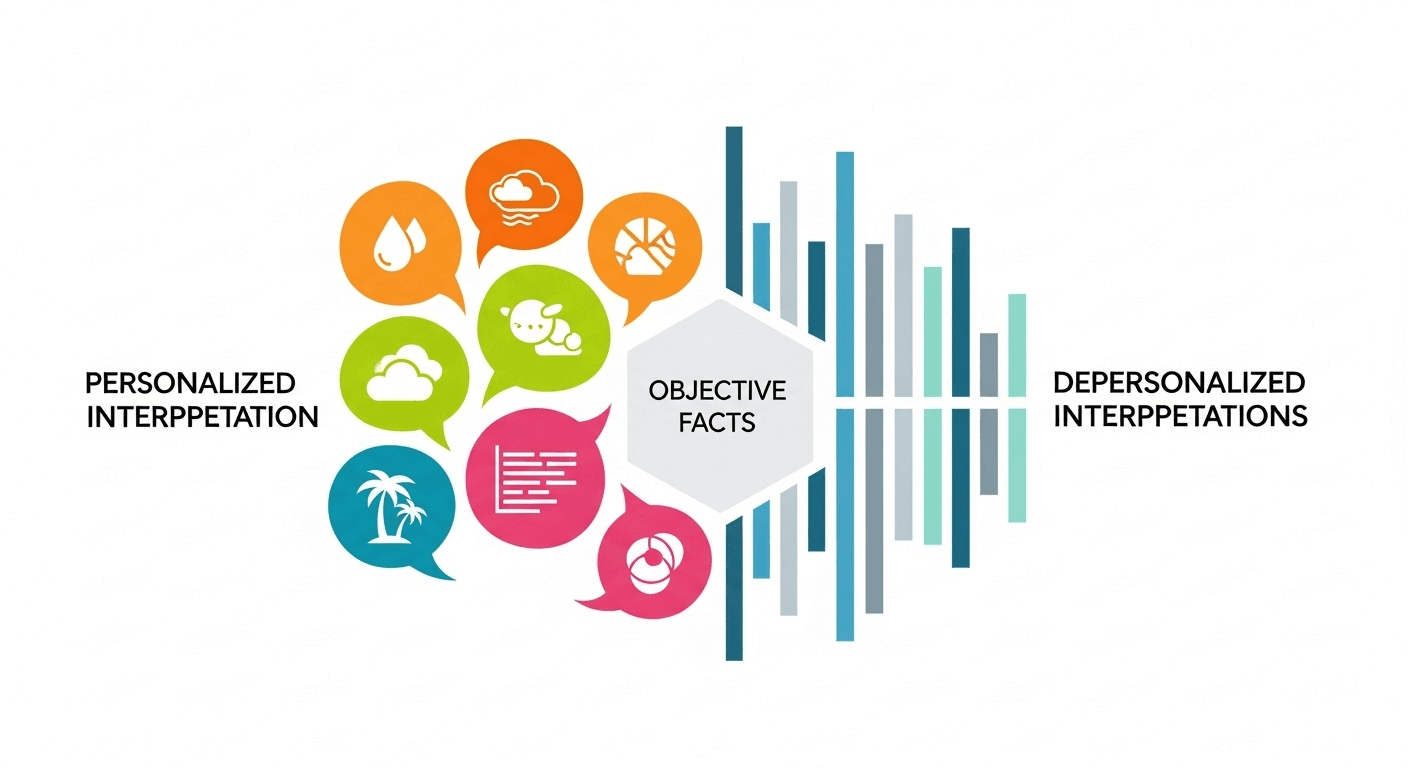
개인화적 해석과 비개인화적 해석
개인화적 해석과 비개인화적 해석

자책의 구조: 주범 ‘개인화’와 3인의 공범들

민준 씨의 내면에서 일어난 일은 단순한 걱정이 아닙니다. 이것은 여러 인지 왜곡이 정교하게 결합하여 만들어낸 강력한 부정적 피드백 회로입니다.

  • 주범: 개인화 (Personalization)
    이 모든 반응의 중심에는 ‘개인화’가 있습니다. 민준 씨는 박 이사의 짧은 이메일이라는 외부적이고 중립적인 사건을 자신의 내재적 결함(“내가 무능하다”)과 직접적으로 연결했습니다.
  • 공범 1: 독심술 (Mind Reading)
    민준 씨는 자신이 박 이사의 마음을 읽을 수 있다고 가정합니다. “그는 내 보고가 불충분하다고 생각하는 게 틀림없어"라는 생각은 아무런 근거 없이 타인의 생각을 단정 짓는 ‘독심술’ 왜곡입니다.
  • 공범 2: 감정적 추론 (Emotional Reasoning)
    이메일을 읽은 후 민준 씨는 불안과 수치심을 느꼈습니다. 그리고 이 감정을 현실을 판단하는 근거로 사용합니다. “내가 무능하다고 느껴지니, 나는 무능한 것이 분명하다"고 결론 내리는 것입니다.
  • 공범 3: 선택적 추상화 (Mental Filter)
    민준 씨는 그동안 프로젝트를 성공적으로 이끌어온 수많은 긍정적인 사실들을 모두 무시합니다. 그의 정신적 필터는 오직 ‘짧은 이메일’이라는 하나의 부정적으로 인식된 단서에만 초점을 맞춥니다.
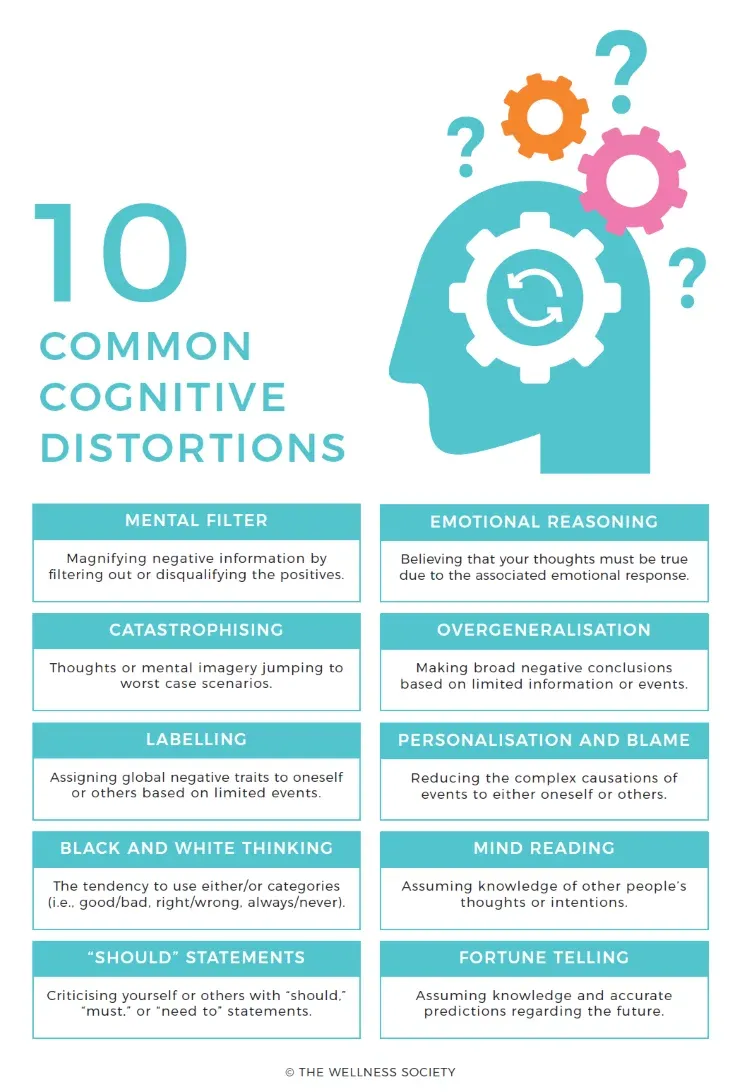
  • Personalization, Mind Reading, Emotional Reasoning, Mental Filter
    Personalization, Mind Reading, Emotional Reasoning, Mental Filter

이처럼 ‘모두 나 때문’이라는 생각은 단일한 실수가 아니라, 여러 인지 왜곡이 합세하여 만들어낸 합창과 같습니다. 문제는, 이 합창이 너무나 익숙하고 자동적이어서, 우리는 그것이 현실이라고 착각하게 된다는 겁니다.

고통은 박 이사의 이메일 자체가 아니라, 전적으로 민준 씨의 ‘해석’, 즉 그가 자신에게 들려준 개인화된 이야기에서 비롯되었습니다.

이 사실을 깨닫는 것이 변화의 첫걸음입니다. 이것은 단순한 생각이 아니라, 거의 반사적으로 일어나는 인지적 반사 신경에 가깝습니다. 우리가 할 수 있는 첫 번째 개입은 ‘다르게 생각해야지’라고 억지로 노력하는 것이 아니라, 판단 없이 그 반사 신경이 작동했음을 그저 알아차리는 것입니다.


2. 왜 유독 피곤할 때 자책이 심해질까? (뇌과학의 관점)

민준 씨의 반응이 왜 그토록 극단적이었을까요? 그가 이메일을 받은 날은 길고 스트레스가 많았던 분기의 마지막 주였습니다. 그는 며칠째 수면 부족에 시달렸고, 정신적 에너지는 거의 바닥난 상태였습니다.

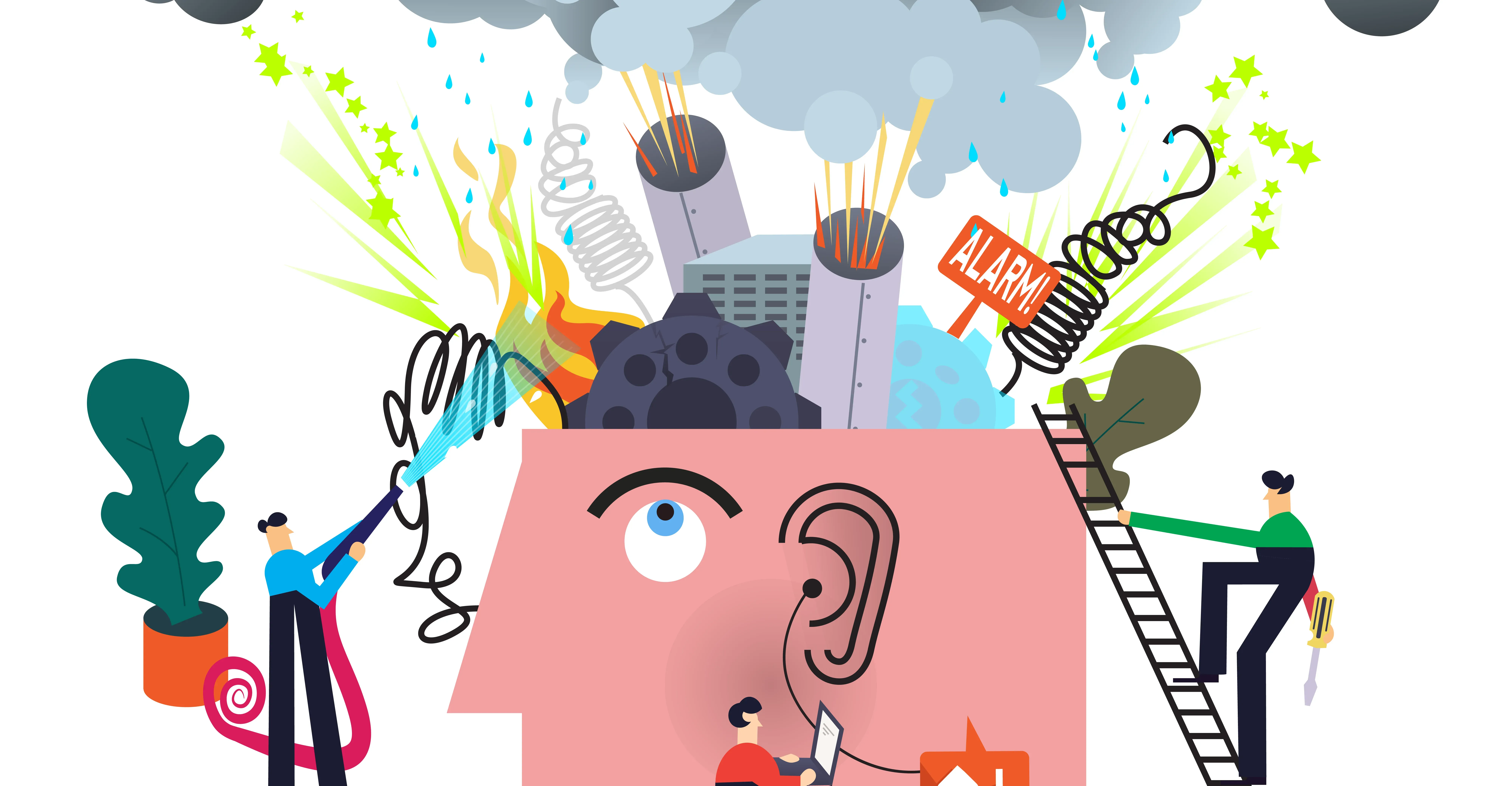
이처럼 우리의 뇌가 과부하에 걸렸을 때, ‘모두 나 때문’이라는 생각은 단순한 목소리가 아니라 귀를 찢을 듯한 비명으로 변합니다.

포위된 뇌: 인지 과부하와 부정성 편향

우리의 뇌는 무한한 자원을 가진 슈퍼컴퓨터가 아닙니다. 스트레스가 높고 처리해야 할 정보가 많은 ‘인지 과부하(Cognitive Load)’ 상태에 놓이면, 뇌는 정교한 사고를 할 여력을 잃고 에너지를 아끼는 지름길에 의존합니다.
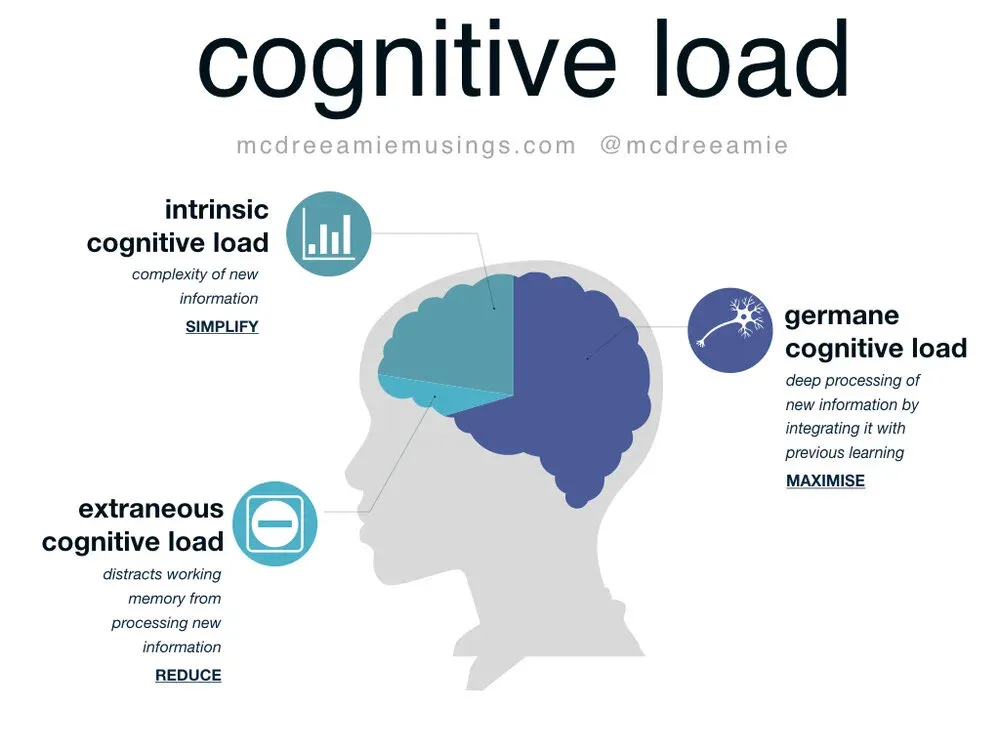
Cognitive Load
Cognitive Load

이때 뇌가 선택하는 가장 강력한 지름길 중 하나가 바로 ****‘부정성 편향(Negativity Bias)’****입니다. 이것은 인류가 생존을 위해 발전시킨 기제로, 긍정적인 정보보다 잠재적 위협이나 부정적인 정보에 훨씬 더 많은 주의를 기울이게 만듭니다. 칭찬 열 마디보다 비난 한 마디가 더 오래 기억에 남는 이유죠.

스트레스로 경계 태세에 들어간 뇌는 이 부정성 편향의 볼륨을 최대로 높입니다. 이 상태에서 박 이사의 중립적인 이메일은 더 이상 단순한 정보가 아닙니다. 민준 씨의 뇌 경보 시스템은 그것을 ‘사회적 위협’ 가능성이 있는 신호로 분류하고 즉각 비상벨을 울립니다.
Negativity Bias
Negativity Bias

생각의 눈사태: 개인화에서 ‘파국화’로

증폭된 위협 인식은 생각의 눈사태를 일으키는 완벽한 기폭제가 됩니다. 이 눈사태를 심리학에서는 ****‘파국화(Catastrophizing)’****라고 부릅니다. 현재의 어려움을 확대 해석하여 최악의 시나리오를 상상하는 것이죠.
파국화 Catastrophizing
파국화 Catastrophizing

민준 씨의 사고 과정은 파국화의 교과서적인 예입니다.

  1. 초기 생각 (개인화): “내 이메일에 문제가 있어서 이사님이 화가 났다.”
  2. 연쇄 반응 (눈사태 시작): “팀원들도 모두 나를 무능하다고 볼 것이다.”
  3. 최악의 시나리오 (파국화): “나는 이 프로젝트에서 배제될 것이다. 결국 해고당할지도 모른다. 내 인생은 끝장이다.”

뇌는 과거의 위험했던 경험을 바탕으로 현재의 불확실한 상황을 최악으로 예측하여 스스로를 보호하려 하기 때문입니다. 슬프도록 똑똑하게요.

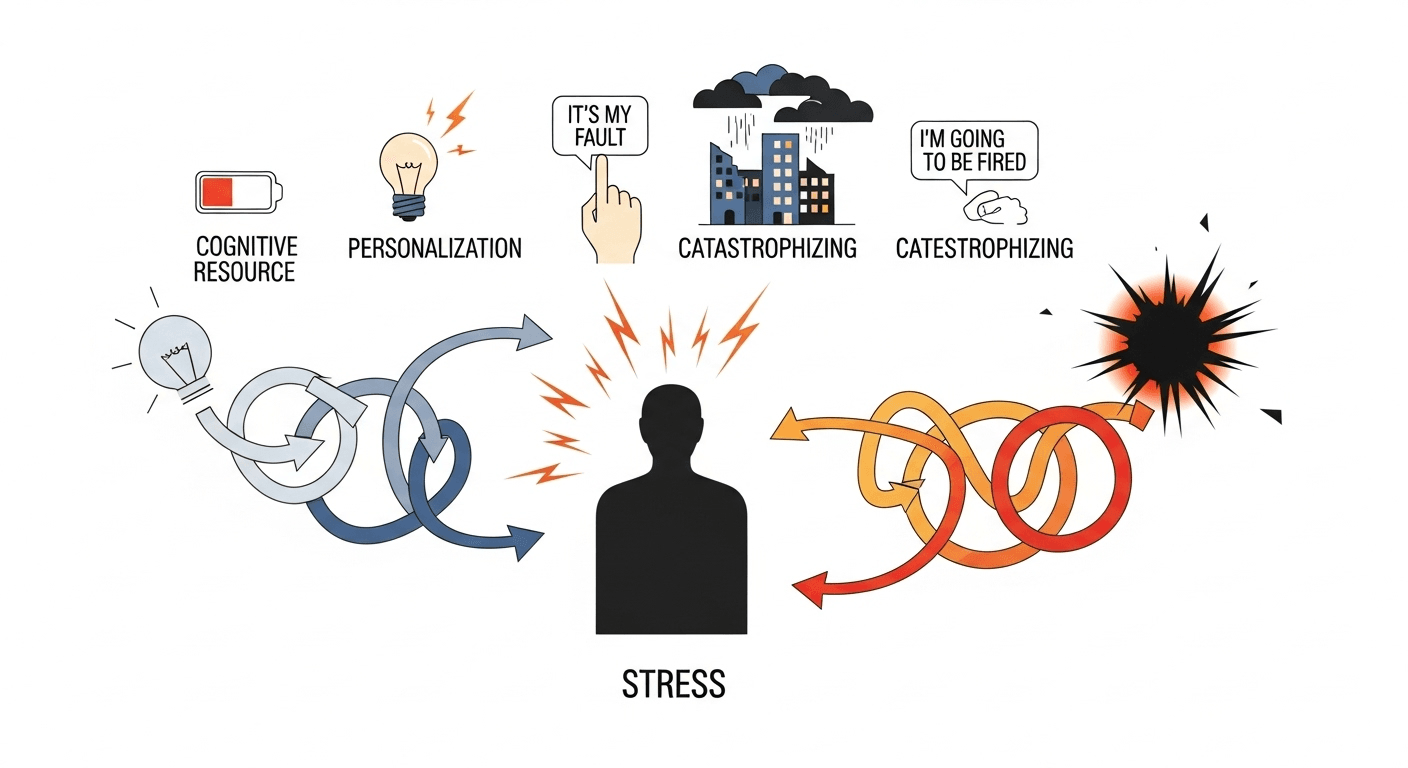
멈출 수 없는 생각의 굴레: 스트레스의 피드백 루프

여기서 우리는 정말 중요한 사실을 발견하게 됩니다. 스트레스, 개인화, 파국화의 관계는 서로를 증폭시키는 악순환의 고리, 즉 피드백 루프를 형성합니다.

스트레스 (인지 자원 고갈) → 개인화 (“내 탓이야”) → 파국화 (“난 해고될 거야”) → 스트레스 호르몬 분비 (신체적 위협) → 더 심각한 스트레스 (인지 자원 완전 고갈) → 더 강력한 개인화

개인화 피드백 루프
개인화 피드백 루프

이 악순환의 고리를 이해하는 것은 매우 중요합니다. 이는 생각의 소용돌이 한가운데서 “긍정적으로 생각하자"고 결심하는 것이 왜 그토록 어려운지를 설명해주기 때문입니다.

결론적으로, 당신의 머릿속을 가득 채운 압도적인 자책의 목소리는 상황이 정말로 끔찍하다는 증거가 아닙니다. 그것은 당신의 뇌가 과부하에 걸려 원시적인 생존 회로로 전환했다는 비상 신호입니다. 그 생각들은 상황에 대한 정확한 진단이 아니라, 과부하의 **‘증상’**일 뿐입니다.


3. 그 생각은 어디에서 시작되었나: 깨진 꽃병과 도덕적 방어

우리는 왜 이토록 정교하고 고통스러운 자기 비난의 프로그램을 갖게 되었을까요? 민준 씨의 뇌는 왜 하필이면 ‘모두 나 때문’이라는 스크립트를 기본값으로 실행하는 것일까요?

그 답을 찾기 위해서는 시간을 거슬러 올라가, 이 프로그램이 처음 코딩되었던 순간으로 돌아가야 합니다.

스크립트의 기원: 깨진 꽃병

어린 민준이 거실에서 놀다가 실수로 어머니가 가장 아끼는 꽃병을 떨어뜨려 산산조각 냈습니다. ‘쨍그랑!’ 하는 소리와 함께, 일과 생활에 지쳐 있던 어머니는 폭발했습니다. “넌 도대체 조심성이라는 게 없니? 왜 엄마를 이렇게 힘들게만 하는 거야!”

어린아이의 뇌는 이 상황을 어른처럼 분석할 수 없습니다. 아이에게 세상의 중심이자 생존의 전부인 엄마가 불행해 보입니다. 그리고 그 원인이 자신에게 있다고 합니다. 그 순간, 아이의 뇌는 생존을 위한 필사적인 계산을 합니다.

“엄마가 불행하다. 내가 원인이다. 이건 내 탓이다. 내가 ‘착한 아이’가 되면, 엄마는 더 이상 불행하지 않을 거야.”

심리적 갑옷의 탄생: ‘도덕적 방어’

자신을 지키기위한 무의식적 저항
자신을 지키기위한 무의식적 저항

이것이 바로 정신분석가들이 **‘도덕적 방어(Moral Defense)’**라고 부르는 심리 기제의 탄생 순간입니다. 전적으로 양육자에게 의존하는 아이에게, “나는 예측 불가능하고 상처를 주는 부모와 함께 있는 착한 아이다"라고 믿는 것보다 “나는 좋은 부모님과 함께 있는 나쁜 아이다"라고 믿는 것이 심리적으로 훨씬 더 안전합니다.

비난을 자신에게 돌림으로써 아이는 역설적인 통제감을 얻게 됩니다. “이게 내 잘못이라면, 내가 더 잘 행동하면 상황을 바꿀 수 있을 거야"라는 희망을 가질 수 있기 때문입니다. 이것이 바로 ‘자책’이라는 갑옷의 첫 조각이며, 생존을 위한 가장 똑똑한 실수였습니다.

이러한 경험이 반복되면, “나는 다른 사람의 감정에 책임이 있다”, “나는 근본적으로 결함이 있다"와 같은 깊은 **‘핵심 신념(Core Beliefs)’**이 무의식 속에 각인됩니다.

당신이 진짜 ‘실수’하는 유일한 상대

이 장의 제목, ‘당신이 자주 실수하는 상대’는 사실 함정 질문입니다. 당신이 실수하는 상대는 상사도, 파트너도, 친구도 아닙니다.

당신이 거듭하여 실수하는 유일한 상대는 바로 자기 자신입니다.

그 실수는 어린 시절의 생존 패턴을 성인이 된 지금에도 무의식적으로 자신에게 적용하는 것, 즉 끊임없이 자신을 비난하고 질책하는 것입니다.

특히 박 이사와 같은 권위자 앞에서 민준 씨의 자기 비난이 심해지는 이유는, 그 관계가 어린 시절의 애착 관계와 유사한 역학을 촉발하기 때문입니다. 박 이사의 차가운 이메일 앞에서 보인 반응은, 사실 수십 년 전 깨진 꽃병 앞에서 엄마의 불행을 자신의 탓으로 돌렸던 어린 아이의 절박한 반응과 다르지 않습니다.

따라서 _당신의 내면 비판가는 단순한 나쁜 습관이 아니라, 관계를 지키고 연결되고자 했던 깊은 욕구의 왜곡된 메아리_입니다. 이제 그 충성심과 보호 본능을 타인이 아닌, 자기 자신에게 돌려줄 때입니다.


4. 낡은 갑옷을 벗는 법: ‘모두 내 탓’이라는 당신을 위한 2가지 처방

자, 이제 우리는 ‘모두 나 때문’이라는 생각이 어디서 와서, 어떻게 작동하며, 왜 스트레스 상황에서 더욱 기승을 부리는지 이해하게 되었습니다. 이제 이 낡은 갑옷을 벗고 더 가볍고 자유로운 삶으로 나아가기 위한 구체적이고 실질적인 방법을 탐구할 것입니다.

접근법은 두 가지입니다. 하나는 왜곡된 생각을 직접 다루는 **‘머리’**의 접근법이고, 다른 하나는 그 생각의 뿌리에 있는 감정적 상처를 치유하는 **‘가슴’**의 접근법입니다.

전략 1. \[머리\] 생각의 스크립트 재작성하기 (인지 재구성)

인지행동치료(CBT)의 원리
인지행동치료(CBT)의 원리

이 접근법은 인지행동치료(CBT)의 원리에 기반합니다. 핵심은 우리의 감정이 사건 그 자체보다 사건에 대한 우리의 ‘생각’이나 ‘해석’에 의해 결정된다는 것입니다. 이것은 자신의 생각에 대한 방관자가 아니라, **적극적인 참여자가 되는 **‘훈련’****입니다.

1단계: 자동적 사고 포착하기
가장 먼저 할 일은 ‘모두 나 때문’이라는 자동적 사고를 현장에서 붙잡는 것입니다. 자책감이 드는 순간을 알아차리고, 그 생각을 판단 없이 그대로 적어보십시오. (예: “박 이사님은 내 이메일이 형편없어서 짜증이 났다.”)

2단계: 증거 수집하기
이제 탐정이 되어 객관적인 증거를 수집할 차례입니다.

  • 생각을 지지하는 증거: “평소보다 답장이 짧았다.”
  • 생각에 반대되는 증거: “그는 매우 바쁜 사람이다. 분기 마감이다. 이메일에는 어떤 부정적인 단어도 없었다. 오히려 내일 논의하자며 회의를 확정했다.”

3단계: 왜곡에 도전하기
수집한 증거를 바탕으로 질문을 던지십시오. “이 상황을 다르게 볼 방법은 없을까?”, “이 결과에 대해 100% 나에게 책임이 있는가?”, 그리고 가장 강력한 질문입니다. “만약 내 가장 친한 친구가 똑같은 상황이라면, 나는 그에게 뭐라고 말해줄까?”

4단계: 균형 잡힌 대안적 사고 생성하기
목표는 맹목적인 긍정성이 아니라 현실성입니다.

  • 대안적 사고: “이사님의 답장이 짧아서 순간 당황했지만, 가장 가능성 있는 설명은 그가 바쁜 일정 속에서 효율적으로 소통하려 했다는 것이다. 내 불안감은 나의 해석일 뿐, 나의 업무 능력에 대한 객관적인 사실이 아니다.”

이 과정을 돕기 위해 다음과 같은 ****‘인지 재구성 워크시트’****를 활용할 수 있습니다.

상황 (Situation) 자동적 사고 (Automatic Thought) & 감정 (Emotion) 반대 증거 (Evidence Against the Thought) 균형 잡힌 대안적 사고 (Balanced Alternative Thought)
예: 상사가 짧은 이메일을 보냈다. “내 보고서가 엉망이라서 그가 화가 났다.” (불안, 수치심 90%) 그는 매우 바쁘다. 분기 마감이다. 회의가 예정되어 있다. 이메일에 부정적인 말은 없었다. “그의 짧은 답변은 그의 바쁜 일정 때문일 가능성이 가장 높다. 내 불안감은 나의 자동적인 해석일 뿐, 사실이 아닐 수 있다.”
예: 친구가 약속을 취소했다. “내가 귀찮아져서 나를 피하는 것이다.” (슬픔, 거절감 80%) 친구는 최근 몸이 좋지 않다고 했다. 갑작스러운 가족 일이 생겼을 수도 있다. 나에게 미안하다고 여러 번 말했다. “친구가 약속을 취소해서 서운하지만, 그에게는 그럴만한 사정이 있을 것이다. 이것이 우리의 관계 전체를 의미하는 것은 아니다.”

전략 2. \[가슴\] 내면의 상처 치유하기 (자기-자비)

인지적 접근이 ‘머리’의 문제라면, 자기 비난은 사실 ‘가슴’의 문제입니다. 그 뿌리에는 수치심과 부적절함이라는 깊은 감정적 상처가 자리 잡고 있습니다. 이 상처에 대한 가장 효과적인 약은 바로 ****‘자기-자비(Self-Compassion)’****입니다.

Self-Compassion
Self-Compassion

자기-자비는 어려운 상황에 처한 자신을 가장 친한 친구에게 하듯, 따뜻하고 친절하게 대하는 태도입니다. 심리학자 크리스틴 네프(Kristin Neff)에 따르면, 자기-자비는 세 가지 핵심 요소로 구성됩니다.

  1. 자기-친절 (Self-Kindness): 실수를 했을 때, 자신을 가혹하게 비판하는 대신 따뜻하고 이해심 있게 대하는 것.
  2. 보편적 인간성 (Common Humanity): 고통과 실패는 나 혼자만의 경험이 아니라 모든 인간이 공유하는 보편적인 경험임을 인식하는 것.
  3. 마음챙김 (Mindfulness): 고통스러운 생각과 감정을 억압하거나 과장하지 않고, 있는 그대로 알아차리고 균형 잡힌 시각으로 바라보는 것.

다음은 일상에서 자기-자비를 실천할 수 있는 구체적인 연습 방법입니다.

  • 연습 1: 친구에게 하듯 대하기
    가장 고전적이고 강력한 방법입니다. 민준 씨의 상황에 당신의 가장 친한 친구가 처했다고 상상해보십시오. 당신은 그에게 뭐라고 말해주겠습니까? “괜찮아, 너무 신경 쓰지 마. 이사님이 바쁘셔서 그런 걸 거야. 너 정말 열심히 했잖아.” 자, 이제 그 따뜻하고 지지적인 말을 거울 속 자신에게 똑같이 해보십시오.
  • 연습 2: 자비로운 편지 쓰기
    당신을 무조건적으로 사랑하고 지지하는 상상의 친구(혹은 현명한 멘토)가 있다고 가정하고, 그 친구의 관점에서 지금 힘들어하는 자신에게 편지를 써보십시오. 당신이 겪고 있는 어려움, 자기 비난, 수치심을 구체적으로 언급하고, 그에 대해 깊은 이해와 연민, 격려를 담아 편지를 완성합니다.
  • 연습 3: 자비로운 관찰자 되기 (세 개의 의자)
    눈을 감고 세 개의 의자를 상상합니다. 첫 번째 의자에는 당신의 가혹한 **‘내면의 비판가’**가, 두 번째 의자에는 움츠러든 **‘비난받는 나’**가, 세 번째 의자에는 이 모든 상황을 지혜롭고 따뜻한 시선으로 바라보는 **‘자비로운 관찰자’**가 앉아 있습니다. 이제 관찰자의 시점에서 비판가(아마도 당신을 보호하고 싶어서 화가 났을)와 비난받는 나(두려워하는) 사이의 대화를 지켜봅니다. 마지막으로, 관찰자는 양쪽 모두에게 연민을 보내며 이 내면의 갈등을 통합하고 평화로운 해결책으로 이끌어 줍니다.

결론: 낡은 갑옷을 감사함으로 내려놓는 용기

‘모두 나 때문’이라는 생각에서 벗어나는 여정은 두 개의 날개를 필요로 합니다. 인지 재구성은 당신이 탄 배의 낡은 돛을 수선하고 방향키를 바로 잡는 ‘기술’이라면, 자기-자비는 거친 파도를 잠재우고 순항할 수 있는 잔잔한 바다를 만들어주는 ‘힘’입니다. 이 두 가지는 함께할 때 가장 강력한 시너지를 발휘합니다.

글의 서두에서 우리는 자책을 ‘갑옷’에 비유했습니다. 이 여정의 끝에서 우리가 해야 할 일은 한때 당신을 지켜주었던 그 갑옷을 미워하거나 부숴버리는 것이 아닙니다. 대신, 그 갑옷이 얼마나 절박하게 당신을 보호하려 했는지 이해하고, 그 노고에 감사를 표하는 것입니다.

그리고 이제는 더 이상 그 무거운 갑옷이 필요 없는, 더 안전하고 성숙한 세상에 당신이 서 있음을 선언하는 것입니다.

‘모두 나 때문’이라는 생각의 족쇄를 푸는 것은, 무거운 갑옷을 내려놓고 상처받을 수 있는 용기, 불완전함을 끌어안을 수 있는 용기, 그리고 무엇보다 자기 자신에게 따뜻한 친구가 되어줄 수 있는 용기를 내는 과정입니다.

그것은 당신의 열린 마음, 자비로운 심장, 그리고 회복탄력성 있는 영혼으로 살아가는 법을 배우는, 평생에 걸친 위대한 여정의 시작입니다.


Details
  1. 인지 재구성 전략: 인지 왜곡에서 벗어나기: 실용적 전략 - FasterCapital
  2. 인지적 접근에서 인지적 왜곡 5가지와 그 예시 - 해피캠퍼스
  3. 인지 왜곡: 생각을 왜곡하는 심리적 함정들 - 잡학서고
  4. How To Avoid Taking Everything Personally - Pattison Professional Counseling and Mediation Center
  5. Personalization: A Common Type of Negative Thinking - Therapy Now SF
  6. Addressing Personalization: Overcoming Cognitive Distortions - Bay Area CBT Center
  7. 문제상황을 왜곡 없이 다루는 5가지 방법 - 회의설계소
  8. 15가지 흔한 인지 왜곡 - Reddit (r/raisedbynarcissists)
  9. 15 thinking styles that lead to massive anxiety 6/15: Personalization - Anxiety Ireland
  10. 인지적 왜곡 - 위키백과, 우리 모두의 백과사전
  11. 편견의 신경과학: 모듈 3 - NCCC
  12. Negativity bias - Wikipedia
  13. Negativity Bias: Meaning, Psychology, And Examples - Octet Design Studio
  14. What Is The Negativity Bias and How Can it be Overcome? - Positive Psychology
  15. Not all emotions are created equal: The negativity bias in social-emotional development - (PMC, NCBI)
  16. Catastrophizing: Why We Spiral Into Worst-Case Scenarios - Psychology Today
  17. Catastrophizing and Decatastrophizing: A Comprehensive Guide - Positive Psychology
  18. What doctors wish patients knew about stopping catastrophic thoughts - (AMA-ASSN)
  19. Catastrophizing - Psychology Today
  20. What is catastrophizing? 6 ways to stop catastrophic thinking - MedicalNewsToday
  21. Catastrophising: why we do it and how we stop - Priory Group
  22. 내가 잘못했으니 날 사랑해줘요…‘자기비난의 심리학’ - 한겨레
  23. 5 Common Ways We Engage in Self-Blame - Psychology Today
  24. 부정적 평가에 대한 두려움, 원인과 극복 방법 (FNE - 무정형 공포증) - 심리상담센터 마음소풍
  25. 자기비난 성향 (Self-Criticism) 증상과 상담 FAQ - 심리상담센터 마음소풍
  26. 자기혐오 - 나무위키
  27. The Relationship between Mindfulness and Shame: Moderated Mediating Effect of Self-Blame and Self-Compassion for College Students - (stress: stress)
  28. CBT 인지행동치료 - 더트리그룹
  29. 인지 행동 치료 - 위키백과, 우리 모두의 백과사전
  30. Cognitive Behavior Therapy 인지행동상담 - (KOCW, 강남대학교 유재민)
  31. 우울증 인지치료 - 삼성서울병원
  32. 인지행동치료란? - (cbt.or.kr)
  33. 자기연민 - 위키백과, 우리 모두의 백과사전
  34. 삶을 행복하게 하는 ‘자기 연민’ - 디스턴싱
  35. 지역사회에 거주하는 성인 여성을 대상으로 한 한국판 자기-자비척도의 타당화 연구 - (Self-Compassion.org, 이화여자대학교 이지영, 이경성)
  36. OA 학술지 - 정서처리과정에서 자기자비의 역할 - Korean Journal of Health Psychology
  37. 자비중심치료 - 위키백과, 우리 모두의 백과사전
#"Why I think 'it's all my fault'"#The habit of blaming oneself over trivial things#How to overcome the cognitive distortion of personalization#Why self-blame intensifies when stressed#Psychological causes of self-criticism#Cognitive restructuring training methods#Self-compassion practice exercises#Dealing with the inner critic

Recommended for You

Why Logical People Always Fail in Relationships: Escaping Winning Addiction with a 3-Step Solution

Why Logical People Always Fail in Relationships: Escaping Winning Addiction with a 3-Step Solution

19 min read
Turning Emotions into Strategy: Mastering the 5-Step Law of Conflict Resolution

Turning Emotions into Strategy: Mastering the 5-Step Law of Conflict Resolution

10 min read
It's Not Always Best to Endure: 5 Rational Languages to Master the Situation

It's Not Always Best to Endure: 5 Rational Languages to Master the Situation

10 min read

Advertisement

Comments