
Beyond Blind Hope and Paralytic Despair: Learning Strategies for Sustainable Survival and Growth.
- You can clearly understand the concept of the Stockdale Paradox.
- You can realize the historical, economic, and psychological traps caused by blind optimism.
- You can learn that strategic pessimism is the wisdom to manage uncertainty and create better outcomes.
- You can acquire practical methods of ‘Antifragility’ by integrating the two opposing attitudes to become stronger.
Despair Named Hope: The Trap of Blind Optimism
The story begins with Admiral James Stockdale, a U.S. Navy officer who was imprisoned for eight years in the ‘Hanoi Hilton’ during the Vietnam War. He survived in a harsh environment where many of his fellow prisoners succumbed, and surprisingly, the first to die were not the pessimists but the ‘blind optimists.’
They held vague hopes like, “I will be out by this Christmas,” or “I will definitely be out by Easter.” However, when the promised dates passed without release, they fell into deep despair and ultimately met their demise. In contrast, Stockdale faced the harsh reality that he would not be leaving before Christmas while simultaneously maintaining the hope that he would eventually escape. This is the essence of the Stockdale Paradox: the attitude of accepting reality as it is (pessimism) while holding an unwavering belief that you will prevail in the end (optimism).
This paradoxical attitude is also connected to the ancient Stoic philosophy’s ‘Dichotomy of Control.’ Unlike the optimists who pinned their hopes on the uncontrollable ‘release date,’ Stockdale focused on what he could control: ‘his attitude and inner will’ to survive.

The Absence of Pessimism in History, Economy, and Business
Optimism that is not firmly rooted in reality can sometimes lead to massive destruction. History is full of evidence of this.
The Great Illusion of History and Thucydides’ Trap
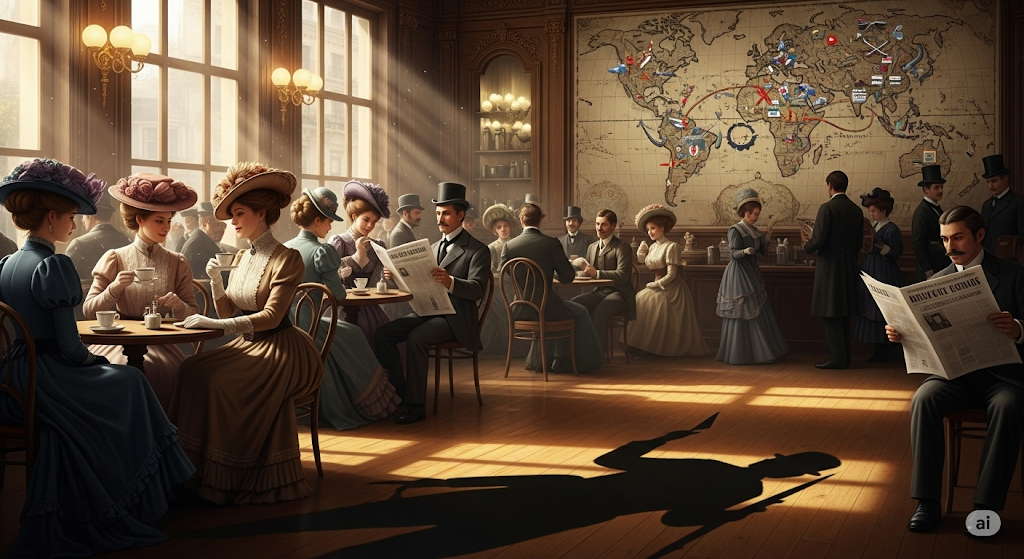
In the late 19th century, Europe believed in eternal peace and prosperity amid dazzling scientific advancements and wealth. However, behind this blind optimism, imperialistic greed and nationalistic conflicts were quietly growing, resulting in the tragedy of World War I.
In 1992, Francis Fukuyama declared the ultimate victory of liberal democracy with the collapse of the Soviet Union, but his thesis of ’the end of history’ lost its strength in the face of the harsh reality of Islamic fundamentalism and authoritarian states’ regression. This failure highlights the importance of ‘Thucydides’ Trap,’ which recognizes the pessimistic reality that the likelihood of war increases when emerging powers threaten existing hegemonic states.
The Anatomy of Bubbles: Greed, FOMO, and the Minsky Moment
Market madness shows how optimism can transform into collective delusion. Economist Hyman Minsky described the moment when the tower of optimism built on debt collapses, known as the ‘Minsky Moment.’
- Dot-com Bubble (Late 1990s): Under the belief that ’this time is different,’ indiscriminate investments in internet companies with unclear profit models flourished, and ultimately, the bubble burst in March 2000 with signals of interest rate hikes from the Federal Reserve.
- Global Financial Crisis (2008): Financial institutions relied on the optimism of the ‘Greenspan Put,’ believing that the central bank would bail them out during market crises, leading to the reckless issuance of risky subprime mortgages. This culminated in the bankruptcy of Lehman Brothers and a global recession.
- Cryptocurrency Craze (Recent): The ‘FOMO’ amplified by social media and confirmation bias led to skyrocketing prices, and the subsequent market collapse became another Minsky Moment.

All these failures stem from cognitive biases such as ‘recency bias’ and ‘confirmation bias,’ believing that recent positive trends will last forever.
The Innovator’s Curse: When Success Breeds Failure
The optimism of successful companies often becomes the most lethal poison. Professor Clayton Christensen’s ‘Innovator’s Dilemma’ explains this paradox. Dominant companies in the market underestimate and ignore ‘disruptive innovations’ that could change the future due to their strong optimism about current success.
- Kodak: Despite inventing the world’s first digital camera, Kodak ignored digital technology due to optimism about the permanence of its film business and ultimately fell.
- Nokia: Dismissing the iPhone as a ‘joke,’ Nokia became complacent with its hardware-centric business model and missed the shift in the smartphone market.
- Blockbuster: By rejecting Netflix’s acquisition offer and clinging to optimism about its offline store business, Blockbuster disappeared from the market.
These companies did not fail due to a lack of capital or technology. The corporate-level confirmation bias of ‘what has worked for us will continue to work’ blinded them to new possibilities.
The Wisdom of Despair: Imagining the Worst to Create the Best
Pessimism is not merely a negative emotion. When used strategically, it becomes a powerful tool for facing reality and managing risks.
Ancient Wisdom for Modern Chaos
Ancient Roman Stoics practiced ‘Premeditatio Malorum,’ training to vividly imagine the worst-case scenarios in advance. This is not to fall into depression but to alleviate the shock that may come and to appreciate what one currently has. It serves as a psychological vaccination against future misfortunes.
They also sought wisdom through the ‘Dichotomy of Control,’ letting go of anxieties about things beyond their control and focusing their energy solely on their thoughts and actions.

The Psychology of Productive Worry
Psychologist Julie Norem introduced the concept of ‘Defensive Pessimism.’ This psychological mechanism involves specifically envisioning all negative situations that could arise before an important task. This ‘productive worry’ leads to thorough preparation instead of paralyzing anxiety, enabling higher achievements. I, too, have experienced revising my script multiple times by imagining potential questions and worst-case reactions before an important presentation. Thanks to this, I was able to respond much more flexibly during the actual presentation without panicking.
Designing for Failure
The principle of “imagine the worst” is also central in the world of engineering. Industries requiring high safety, such as aerospace and automotive, analyze and prepare for all possible failure scenarios through ‘Failure Mode and Effects Analysis (FMEA).’ Additionally, to eliminate ‘Single Points of Failure (SPOF),’ systems are designed under the pessimistic assumption that individual components will ‘inevitably’ fail.
In 1940, the Tacoma Narrows Bridge collapse due to weak winds was a tragedy caused by the designer’s failure to imagine unexpected failure modes. After this incident, pessimistic simulations considering all potential failure possibilities became a mandatory process. Thus, strategic pessimism is not a passive resignation but the most proactive act of increasing control over uncertainty.
Integration: Antifragility and the Barbell Strategy
So how should we combine optimism and pessimism? Nassim Nicholas Taleb argues that we must strategically combine the two to create a state of ‘Antifragility’ that grows stronger amid uncertainty.
Comparison of Antifragility Concepts
| Characteristic | Fragile (Glass) | Antifragile (Immune System) |
|---|---|---|
| Response to Stress | Breaks, weakens, collapses | Becomes stronger, learns, evolves |
| Relationship with Volatility | Dislikes randomness and shocks | Loves randomness and small shocks |
| Strategy | Predict, avoid, over-optimize | Barbell strategy, acceptance of trial and error |
| Real-World Examples | Financial systems with excessive leverage | Human muscle systems, distributed networks |
Taleb presents the ‘Barbell Strategy’ as a specific method for creating this antifragile state. Like weights in a gym, it focuses only on the extremes and avoids the mediocre middle ground.

- Investment: Place 90% of assets in extremely safe places like government bonds or deposits, and invest the remaining 10% in venture investments or early cryptocurrencies that have a high probability of failure but can yield massive returns if successful.
- Career: Just as Einstein worked as a stable patent office employee while researching relativity in his spare time, maintain a stable job while pursuing passionate side projects.
- Leadership: Ernest Shackleton abandoned the optimistic goal of crossing Antarctica and focused on the brutally realistic goal of ’the safe return of all crew members.’ Similarly, Amazon’s Jeff Bezos maintains an innovative attitude of ‘Day 1’ with a pessimistic vigilance that it could become ‘Day 2.’
Thus, the integration of optimism and pessimism is not merely a compromise. It is a strategic wisdom of building a pessimistic safety net for survival and then daringly attempting optimistic leaps from that foundation.
Conclusion
We often tend to think of hope and despair, optimism and pessimism as opposing concepts. However, as the Stockdale Paradox shows, true progress is possible only when we move forward with the engine of hope while constantly adjusting our course and avoiding obstacles with the radar of pessimism. With only hope, we run aground, and with only pessimism, we cannot even leave the harbor.
Here are a few practical strategies we can apply to our lives:
- Practice ‘Premeditatio Malorum’: Spend just 5 minutes each morning imagining what could go wrong today. This prepares your mind for minor issues and deepens your gratitude for the calm when nothing happens.
- Create Your Own Barbell: Design a barbell strategy that blocks downside risks while keeping upside possibilities open in various areas of life. For example, combine a stable job with a passionate side hustle or mix safe assets with small high-risk investments.
- Challenge Your Biases: Consciously seek opinions that contradict your beliefs. Be especially wary of making important decisions under the influence of ‘FOMO’ fueled by social media.
The future is uncertain. But when we learn to hope for the best while preparing for the worst, we can become ‘antifragile’ beings who not only survive but also grow stronger against any shock, actively shaping the future.