
Why Did Starbucks Choose Cold Machines Over Calling Customers by Name?
- The real reason Starbucks abandoned ‘Call My Name’ and adopted vibrating buzzers and kiosks.
- Starbucks’ survival strategy found between rising labor costs and premium strategies.
- The two types of Starbucks stores we will encounter in the future.
How Did Starbucks Become a Symbol of Customer Experience?
The Starbucks we loved was more than just a coffee shop. Before the introduction of Starbucks Vibrating Buzzers and kiosks, it was a space that promised a special experience with ‘people.’ All of this was meticulously designed under the brand mission of ‘inspiring the human spirit.’
The Third Place: Selling More Than Just Coffee
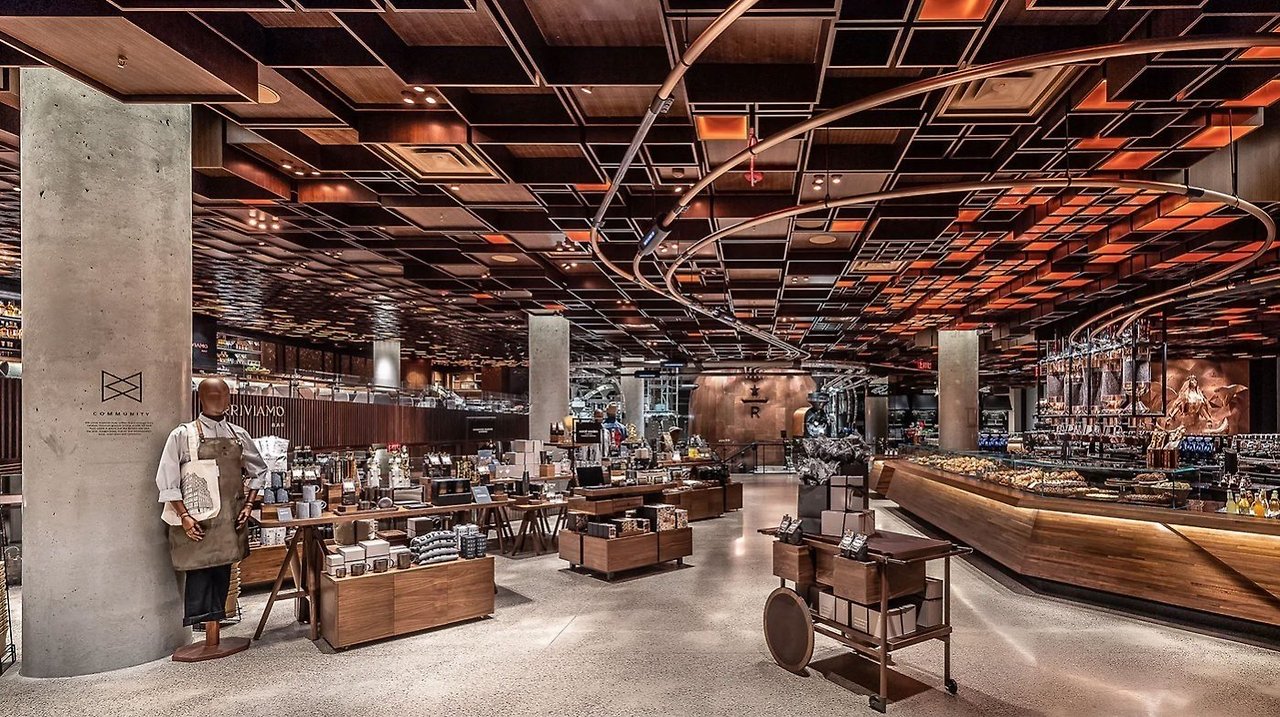
At the core of Starbucks’ success is the philosophy of ‘The Third Place.’ It provides a sanctuary where one can escape from home (the first place) and work (the second place) to simply be oneself. Like Howard Schultz’s belief, Starbucks captured each customer’s story within the space, forming deep connections. Baristas were the point of communication at the center of this interaction.
Call My Name: The Pinnacle of Human Connection
This philosophy shone brightest in the service that began in Korea, ‘Call My Name.’ This service, which calls customers by their nicknames instead of order numbers, added an analog touch to the digital age and received explosive responses.
However, paradoxically, the success of this most human service proved the necessity of technology adoption. It showed how open customers were to well-designed digital experiences (Siren Order) while simultaneously revealing the physical limitations of not being able to hear partners’ voices during peak times.
The Prelude to Change: The Trojan Horse, Siren Order
A pivotal moment for Starbucks’ transformation from a coffee company to a data technology firm was the introduction of ‘Siren Order.’ Created to solve the chronic problem of long lines during lunch hours, this mobile ordering app completely changed Starbucks’ future.
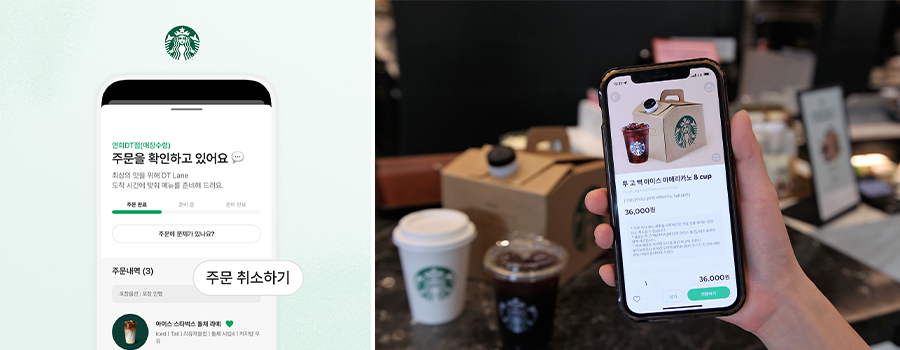
Siren Order was not just a convenience feature. It was a ‘Trojan Horse’ that kept customers tied to Starbucks’ digital ecosystem. All order data (personalization options, visit times, etc.) from customers who signed up to use the app became Starbucks’ most valuable asset. This data and the customer base familiar with digital technology later became a solid foundation for introducing kiosks and Starbucks Vibrating Buzzers.
Kiosks and Vibrating Buzzers: Two Hidden Truths
Why did Starbucks abandon its symbolic ‘communication with people’ and choose machines? Behind the official explanations lies a much more pragmatic business logic.
1. Kiosks: Friendly Helpers or Cost-Cutting Tools?
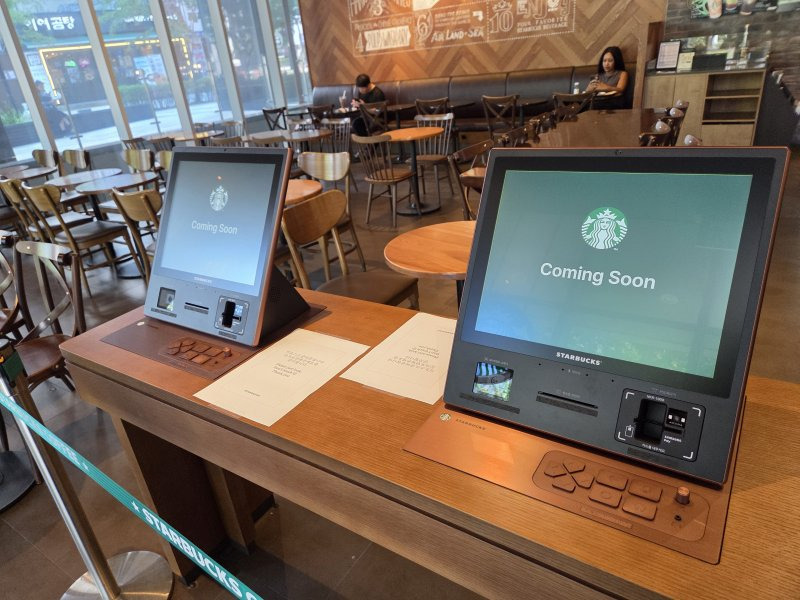
Starbucks claims to have introduced kiosks to alleviate language barriers for foreign tourists and reduce congestion during peak times. However, the uncomfortable truth behind this is the rapidly rising labor costs.
In recent years, the increase in labor costs at Starbucks Korea has significantly outpaced revenue and operating profit growth. The proportion of labor costs in total sales soared to 31%, putting immense pressure on profitability. Ultimately, the introduction of kiosks was an unavoidable economic choice to alleviate the burden of uncontrollable labor costs.
2. Vibrating Buzzers: Practical Tools or Betrayal of the Brand?
Starbucks Vibrating Buzzers are presented as a solution for special stores, like those that are too large or multi-level, where it is difficult to call names. While this explanation is close to the truth, there is a deeper context.
This is not just an exception but a necessary choice to support Starbucks’ new ‘premium strategy.’ Calling customers loudly in a massive experiential store of over 300 pyeong would rather detract from the premium experience. In this case, the seemingly impersonal vibrating buzzer paradoxically helps customers focus on the value of the space without being disturbed by noise and chaos, acting as a ‘premium experience protection device.’
| Technology (기술) | Official Rationale (공식 도입 이유) | Underlying Driver (숨겨진 비즈니스 요인) |
|---|---|---|
| Kiosk (무인 주문기) | Alleviating language barriers for foreign tourists, increasing efficiency during peak times | Alleviating the pressure of rising labor costs sustained over 10 years, direct cost control, and profitability defense strategy |
| Vibrating Buzzer (진동벨) | Practical need in special environments where calling names is physically impossible, such as multi-level or large stores | Essential operational support tool to maintain the premium experience of ‘experience-centered’ large stores |
Two Types of Starbucks: A Sophisticated Market Segmentation Strategy
Ultimately, Starbucks’ actions are not a confusion of identity but a highly sophisticated ‘Market Segmentation’ strategy to respond to fierce market competition. The era of providing the same experience in all stores is over.
1. ‘Throughput’ Stores
- Characteristics: Located in areas with high foot traffic, such as office clusters or subway stations, prioritizing speed and convenience.
- Core Technology: Maximizing transaction volume and controlling operating costs through concentrated use of kiosks and Siren Order. This serves as a ‘defensive moat’ against the onslaught of low-cost coffee brands.
2. ‘Experience’ Stores
- Characteristics: Located in special places like the Bukhan River or ‘Gyeongdong 1960,’ offering rest and special experiences.
- Core Technology: Utilizing Starbucks Vibrating Buzzers and top-notch coffee equipment to maximize brand value. This provides an ‘offensive spear’ that low-cost brands cannot replicate.
Conclusion: Your Choice Determines Starbucks’ Future
Starbucks has evolved from a romantic notion of human connection to accepting the logic of machines amid rising labor costs and market competition. This has been a strategic choice for survival.
Key Summary:
- Paradox of Human Connection: The success of ‘Call My Name’ paradoxically proved the possibility and necessity of digital transformation.
- Realistic Pressure: Behind the introduction of kiosks and vibrating buzzers lies uncontrollable labor cost increases and declining profitability.
- Dual Strategy: Starbucks is now targeting the market with two types of stores: ’efficiency’ and ’experience.’
Now the final question remains for us. When you face a kiosk in front of the store or feel a vibrating buzzer in your hand, you are sending a signal to Starbucks. What do you value more in a cup of coffee? A warm voice or perfect speed? Our choices will shape the Starbucks of tomorrow.
References
- Starbucks Mission Report World
- The Economics of Café Spaces… Why Does Starbucks in the U.S. Chase Away ‘Free Customers’? Chosun Ilbo
- [Loconomy Life] The Concept of Space for Balance Beyond Home and Work E Today
- The History of Brands is Born in the Third Place Korea Standards Association
- Starbucks Korea Dominating the Domestic Coffee Market… Civic News
- Siren Order, Followed by the U.S., Developed First in Korea Real Food
- Over 200,000 Participants in 20 Days… “Expecting Emotional Communication with Customers” iNews24
- However, in large stores or areas with high customer density… Economy Daily
- Starbucks Introduces Kiosks in Myeongdong, Seoul Newneek
- [Starbucks Digital Planning Team] Siren Order Developed in Korea Exported Back to the U.S. Hankyung Magazine
- The Background of Siren Order’s Birth… Stibee
- Rewards, Personalization, Payment, Ordering are the key elements. Brunch
- Why Did Starbucks, with Its ‘Principle of Human Communication,’ Introduce Kiosks? Edaily
- The Purpose of Securing Employee Convenience in Large Stores… “The Principle of Communication with Customers Remains Unchanged” Asia Economy
- Consumer Opinions on Kiosk Introduction Were Generally Mixed. News Worker