
1. The First Meal Enjoyed in the Sky: A Humble Beginning
The story begins in October 1919, aboard a Handley Page transport plane flying from London to Paris. Unlike the massive airplanes of today, passengers on this small, rattling aircraft paid 3 shillings for a cold lunch. It was a modest box containing sandwiches, fruit, and chocolate. This was humanity’s first in-flight meal.

At that time, flying was a privilege of the wealthy, and the aircraft itself was quite unstable. Even the slightest turbulence could lead to breakage, making porcelain dishes a distant dream. However, the experience of flying itself was so special that even a cold lunch became an unforgettable memory for passengers.
2. A Restaurant Above the Clouds: The Golden Age of In-Flight Meals
In the 1950s, with the advent of the jet age, air travel entered a new phase. Airplanes became larger and more stable, and airlines began fierce competition to provide special experiences in the sky. This marked the beginning of the ‘golden age’ of in-flight meals.
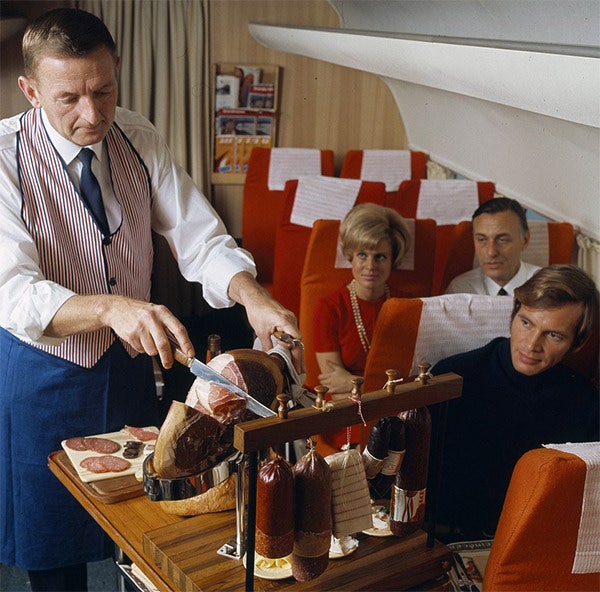
It was no exaggeration to call it a ‘restaurant in the sky.’ Pan Am served first-class passengers freshly roasted beef carved directly from a cart, while Scandinavian Airlines (SAS) showcased whole smoked hams. The menu was filled with gourmet dishes like lobster, caviar, and foie gras, served with sparkling silverware and white linen napkins.
In this era, in-flight meals were not just food to fill the stomach. They symbolized the elegance and excitement of air travel, representing a perfect culinary experience in their own right.
3. The Fall of Flavor: What Changed?
How did the once-glamorous dining experience in the sky transform into what we see today? Several key reasons lie behind this change.
## 3-1. Deregulation and the Beginning of Infinite Competition
In 1978, the passage of the Airline Deregulation Act in the United States marked the beginning of significant changes. Airlines that had previously enjoyed stable routes and fares under government protection were thrust into an era of fierce competition. The primary goal of airlines shifted from ‘better service’ to ‘cheaper tickets.’
In the race to cut costs for survival, the first casualty was the once-glamorous in-flight meal. Expensive ingredients were replaced with cheaper alternatives, and multi-course meals were reduced to simple trays. 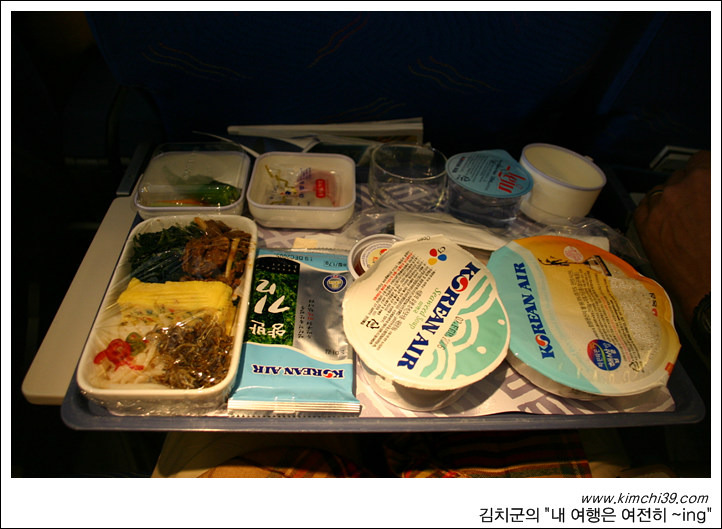
## 3-2. The Rise of Low-Cost Carriers
The competition did not stop there. The emergence of low-cost carriers (LCCs) in the 1990s introduced radical strategies, including eliminating in-flight meals altogether or making them available for purchase. Passengers willingly sacrificed in-flight meals for cheaper tickets, and this trend significantly impacted traditional airlines. The thought of “Is it really necessary to offer meals for free?” began to spread throughout the airline industry.
## 3-3. The Secrets of the Sky Kitchen: Scientific Reasons for Changing Taste
In fact, the unappetizing nature of in-flight meals cannot solely be blamed on airlines’ lack of effort; there are scientific reasons as well.
- Dulled Taste Buds: At an altitude of about 10,000 meters, the cabin pressure is lower and the air is extremely dry. In such an environment, our sensitivity to sweetness and saltiness can drop by as much as 30%. The mucous membranes in the nose also dry out, making it difficult to properly smell the food. With the sense of smell, which plays a significant role in taste, diminished, food can taste bland.
- Noise Interference: The loud noise of the airplane also affects taste. One study found that loud noise reduces the perception of sweetness while enhancing the umami flavor. This is why tomato juice is particularly popular on airplanes, as it has a strong umami taste.
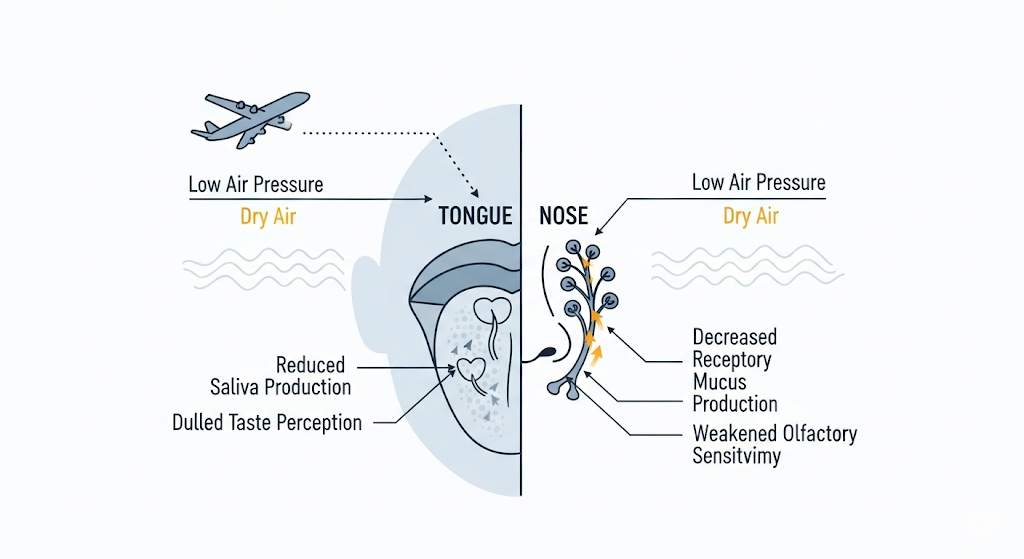
For these reasons, airlines tend to use saltier and more stimulating seasonings than they would on the ground. However, during the reheating process of pre-cooked meals, moisture evaporates, and the texture often becomes dry. In the effort to enhance flavor, unfortunate situations arise where even stranger-tasting food is produced.
4. Dreaming of Sky Flavors Again
Today, we no longer expect the lavish meals of the golden age in airplanes. However, the story does not end here. Some airlines are collaborating with famous chefs to develop new in-flight meal menus and are introducing diets that consider health and sustainability, continuing efforts to reclaim the lost ‘joy of gourmet dining in the sky.’
Although it may not be as glamorous as before, the value of enjoying a warm meal while gazing at the clouds outside the window remains unchanged. What stories will be served on your tray during your next flight?