
A Fierce and Passionate History of Three Families Born from a Nation’s Hunger
- Understand the flow of 60 years of ramen history in South Korea.
- Compare and analyze the rise and fall of the three companies: Samyang, Nongshim, and Ottogi, along with their core strategies.
- Explore the process of K-Ramen becoming a global cultural icon.
A Bowl of Hope, The Beginning of Everything
The curtain rises on the Ramen Wars in the late 1950s, in a war-torn South Korea. At that time, people filled their hunger with ‘Ggulggulijuk’, a porridge made from leftover food from U.S. military bases. In the early 1960s, witnessing this horrific scene, Samyang Foods’ founder, the late Jeon Jung-yoon, decided to create an affordable and nutritious alternative food. The answer was the ‘ramen’ he tasted in Japan.
This decision marked the beginning of a grand ambition to solve a nation’s food crisis. Over the next 60 years, three great families would engage in a monumental war over this single bowl of ramen.
- Samyang: The first kingdom born to alleviate the hunger of the nation.
- Nongshim: The challenger who nurtured ambition amidst sibling rivalry.
- Ottogi: The patient giant who quietly walked its own path, waiting for the right moment.
Now, we begin the fierce and passionate ‘Game of Ramen Thrones’ that parallels modern South Korean history.
Act 1: The First Kingdom - The Era of the Samyang Family (1963-1984)
Chairman Jeon Jung-yoon persistently persuaded the government to secure $50,000 in support and obtained technology and equipment with the help of Japan’s Myojo Foods. The president of Myojo Foods was so moved by his patriotism that he provided the soup formula without charging any royalties.
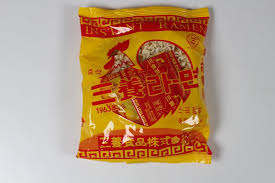
On September 15, 1963, South Korea’s first Samyang Ramen was launched at an astonishing price of 10 won. Initially, it was misunderstood as ‘fabric’ or ‘plastic’, but thanks to nationwide free tasting events and the government’s ‘mixed and processed food promotion campaign’, sales skyrocketed.
The initial chicken broth ramen evolved into a spicy beef broth to suit Korean tastes, following former President Park Chung-hee’s advice to “add more chili powder.” By the early 1980s, Samyang held over 60% market share, reigning as the absolute monarch of the ramen kingdom.
Act 2: The Challenger’s Counterattack - The Rise of the Nongshim Family (1965-1988)
During the Samyang kingdom era, Shin Choon-ho, the younger brother of Lotte Group founder Shin Kyuk-ho, was quietly sharpening his sword. Defying his brother’s opposition, he established ‘Lotte Industrial’, which later became ‘Nongshim’.
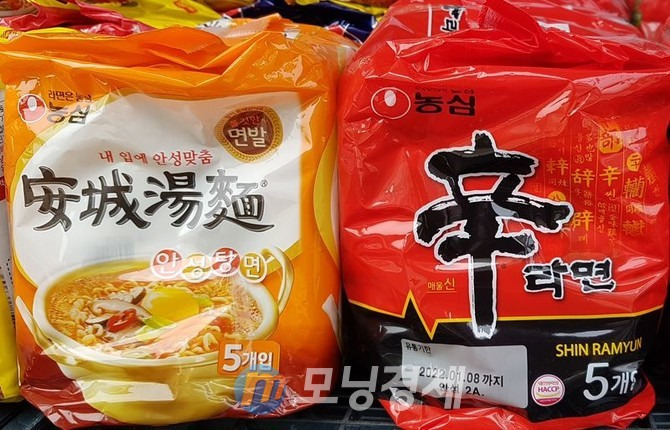
Chairman Shin Choon-ho believed that “ramen should be a staple food rather than a snack,” and invested heavily in independent R&D. As a result, the ‘Hit Products Legion’ was born, shaking the Korean ramen market in the 1980s.
- Neoguri (1982): Thick udon noodles with a refreshing seafood broth.
- Anseongtangmyun (1983): A soybean paste-based broth that recreates the taste of savory greens.
- Jjapaghetti (1984): The pioneer of broth-less ramen combining Jajangmyeon and spaghetti.
- Shin Ramyeon (1986): A symbol of the intense ‘spicy flavor’ that Koreans crave.
Under the onslaught of these hit products, Samyang was shaken, and in 1985, Nongshim finally claimed the number one market share. This is an important historical fact showing that they secured the throne through product strength even before the upcoming ‘Uji Incident’. While Samyang sold ‘solving hunger’, Nongshim successfully sold ’the joy of eating and Korean identity’.
Act 3: The Uji Incident - The Burned Throne (1989-1997)
In November 1989, the prosecution announced that “Samyang fried ramen with ‘industrial beef tallow (Uji)’,” shocking South Korea. The term ‘industrial’ was fatal.
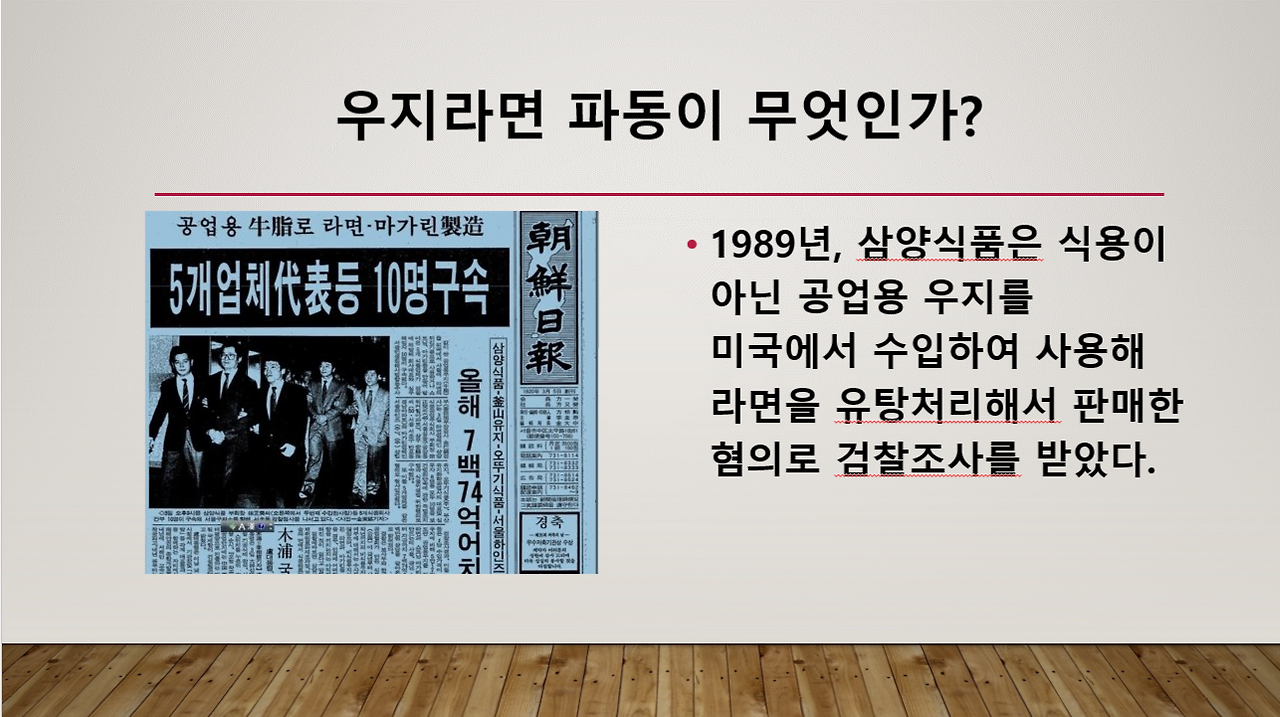
However, the truth was different. The tallow used by Samyang was classified as ’non-edible’ before refining, but it was perfectly refined and harmless edible oil. In fact, they used oil that was more expensive than palm oil for a richer taste. A few days later, the government announced that it was “harmless to humans,” but the stigma of ‘industrial’ could not be erased.
[Insight] The Uji Incident is a painful example of how sensational stigmas can overshadow complex truths. It parallels the spread of fake news in today’s social media era. It clearly shows the tragedies that occur when emotional fear dominates public opinion over fact-checking.
Samyang turned to ashes. Factories stopped, employees left, and market share plummeted to an irrecoverable level.
Market Share Changes Before and After the Uji Incident (%)
| Year | Major Events | Nongshim | Samyang | Ottogi |
|---|---|---|---|---|
| 1985 | Nongshim first ranked number one | 40.7 | 39.3 | - |
| 1988 | Just before the Uji Incident | 54.1 | 25.9 | 3.0 |
| 1989 | Uji Incident occurs (November) | 60.6 | 18.9 | 5.1 |
| 1990 | Aftermath of the Uji Incident | 62.2 | 15.1 | 6.7 |
After eight years of legal battles, the Supreme Court acquitted Samyang in 1997, but it was a glory filled with scars.
Act 4: The Patient One - The Survival of the Ottogi Family (1988-2010s)
While the two giants fought, Ottogi quietly walked its own path. Entering the ramen market in 1988, Ottogi’s survival strategy was ’trust’ and ‘goodness’.
- Price Freeze: Keeping the price of ‘Jin Ramyeon’ frozen for over 10 years, standing by the common people.
- Social Contribution: Sponsoring surgeries for thousands of children with heart disease and reducing the proportion of non-regular workers, becoming a symbol of a ‘good company’.
- Integrity Management: Paying over 150 billion won in inheritance tax without any loopholes, gaining national trust.
Thanks to these efforts, consumers affectionately nicknamed Ottogi ‘Gottugi (God + Ottogi)’, leading to a steady increase in market share. Ottogi created a new competitive axis of ’ethics’ and ’trust’ rather than taste or innovation. Consumers began to engage in value consumption, supporting ‘good companies’ beyond just buying a pack of ramen.
Act 5: The Phoenix’s Ascent - Samyang’s Global Conquest (2012-Present)
Twenty years after the Uji Incident, a miracle came to Samyang, which everyone thought was finished. It began with the idea of Vice Chairwoman Kim Jung-soo, the daughter-in-law of the founder, to create ‘Buldak Bokkeummyeon’. Inspired by spicy chicken galbi restaurants, she decided to encapsulate ‘addictive spiciness’ in ramen.
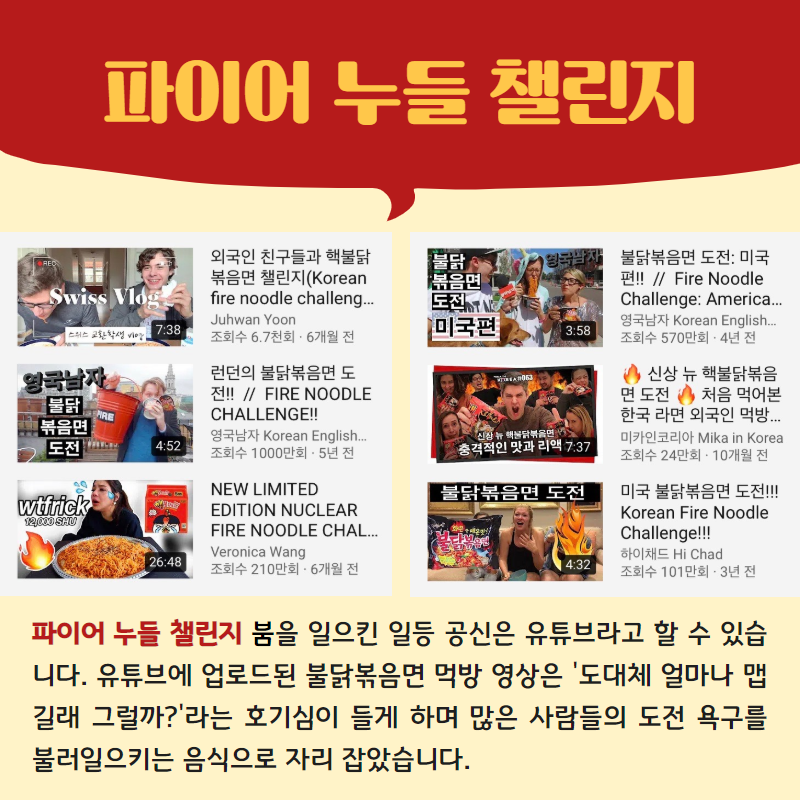
The initial domestic response to Buldak Bokkeummyeon, launched in 2012, was modest. However, the miracle began with the ‘Fire Noodle Challenge’ initiated by overseas YouTubers.
[Insight] The success of Buldak Bokkeummyeon is a great reversal drama created by consumers themselves. I believe this is similar to how K-pop fans created the ‘fancam’ culture that made idol groups global stars. It shows that consumer-driven participation and play culture can become the best marketing strategy of the 21st century, rather than corporate-planned marketing.
This challenge transformed Buldak Bokkeummyeon into not just food, but a global ‘content’ and ‘game’. Samyang’s sales and stock prices soared, and it made a glamorous comeback as a global company with 77% of its exports.
Comparison of Core Strategies of the Three Major Ramen Companies
| Company | Core Strategy | Representative Products | Success Keywords |
|---|---|---|---|
| Samyang | Demand of the times, Global trends | Samyang Ramen, Buldak Bokkeummyeon | First, Revival, Globalization |
| Nongshim | R&D, Korean taste | Shin Ramyeon, Jjapaghetti | Technology, Marketing, Number One |
| Ottogi | Trust, Value consumption | Jin Ramyeon, Sesame Ramen | Good company, Cost-effectiveness, Number Two |
Conclusion
The 60-year history of the ramen wars encapsulates a microcosm of modern South Korean history. The story that began in the ruins of war has now become a symbol of K-culture that captivates the taste buds of people worldwide.
-
Key Summary:
- Samyang solved the nation’s food crisis under the name of ‘first’, but after trials, it made a glamorous comeback with ‘Buldak’ to conquer the world.
- Nongshim toppled a 20-year stronghold with its unique technology and strategies that resonate with Korean tastes, reigning as the absolute powerhouse.
- Ottogi has steadily grown based on the trust asset of being a ‘good company’, proving that corporate social responsibility can be a strong competitive edge.
Now, the stage of the ramen wars is the entire world. The true winner of this war is not a specific company, but ‘K-Ramen’ itself, which has established itself as a global cultural icon. What is your favorite ramen and why? Share your stories in the comments!