
A 7 Billion Won Painting in Your Pocket
In a gallery, you stand in front of Andy Warhol’s pop art masterpiece, ‘14 Small Electric Chairs.’ This artwork, valued at over 7 billion won, radiates an intense aura in silence. In the past, you would have simply admired it from afar.
But what if you could become the owner of this piece with just a few taps on your smartphone? For the price of a nice dinner, no less. This is no longer a scene from science fiction. This is the reality being created by ‘Real World Asset (RWA) tokenization.’
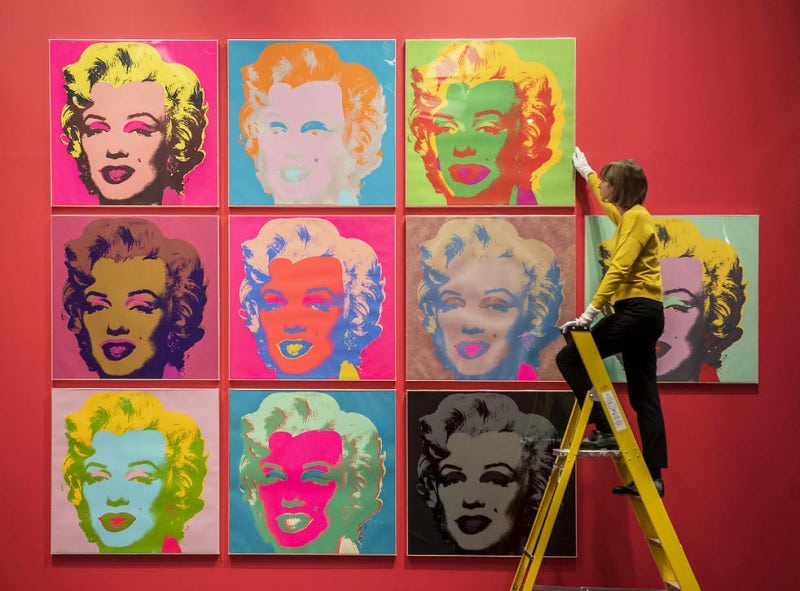
This story is a journey exploring how RWA is breaking down the barriers of investment that were once exclusive to the wealthy. Assets that were once the domain of the ultra-rich—luxury ski resorts in Colorado, skyscrapers in New York, rare artworks, and even meteorites from space—are now open to all of us.
This is not just a story about a new investment trend. It marks the beginning of a massive change that fundamentally alters the very concept of ownership. From now on, we will unravel the secrets of this amazing magic one by one and catch a glimpse of the future that giants predict will be worth trillions of dollars.
What is this magic? Unpacking RWA
Core Idea: From Reality to the Digital World
The core concept of RWA tokenization is surprisingly simple. It involves taking real-world assets (like buildings, bonds, or music copyrights) and creating digital tokens that represent ownership on the blockchain. This process is often described as moving assets from ‘off-chain’ (the real world) to ‘on-chain’ (the blockchain digital world).
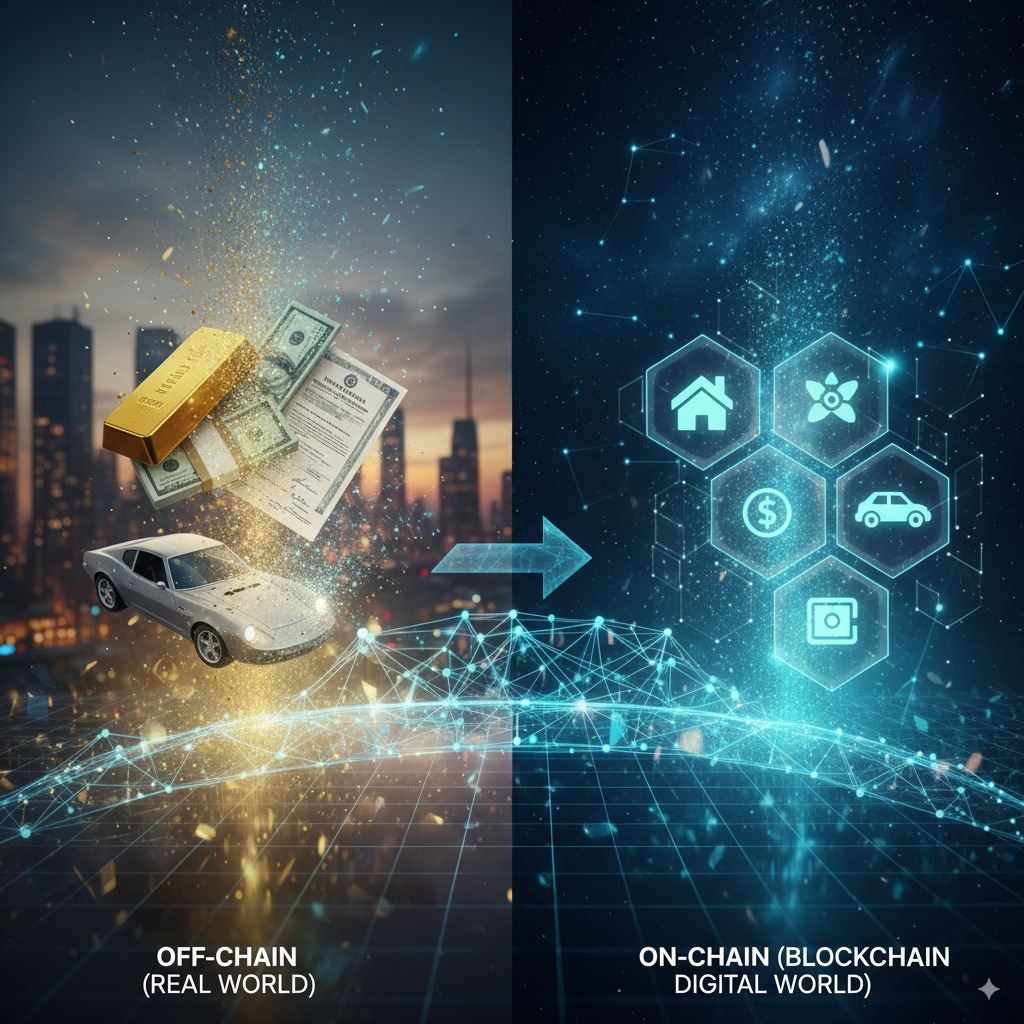
Let’s use an easy analogy. Imagine the title deed of a building. Traditionally, this is a single piece of paper stored in a safe. Tokenization is like converting that one document into, say, 100,000 digital ‘shares’ (tokens). Each token cryptographically proves ownership of one 100,000th of that building. Now, these ‘shares’ can be freely bought and sold online 24/7 from anywhere in the world.
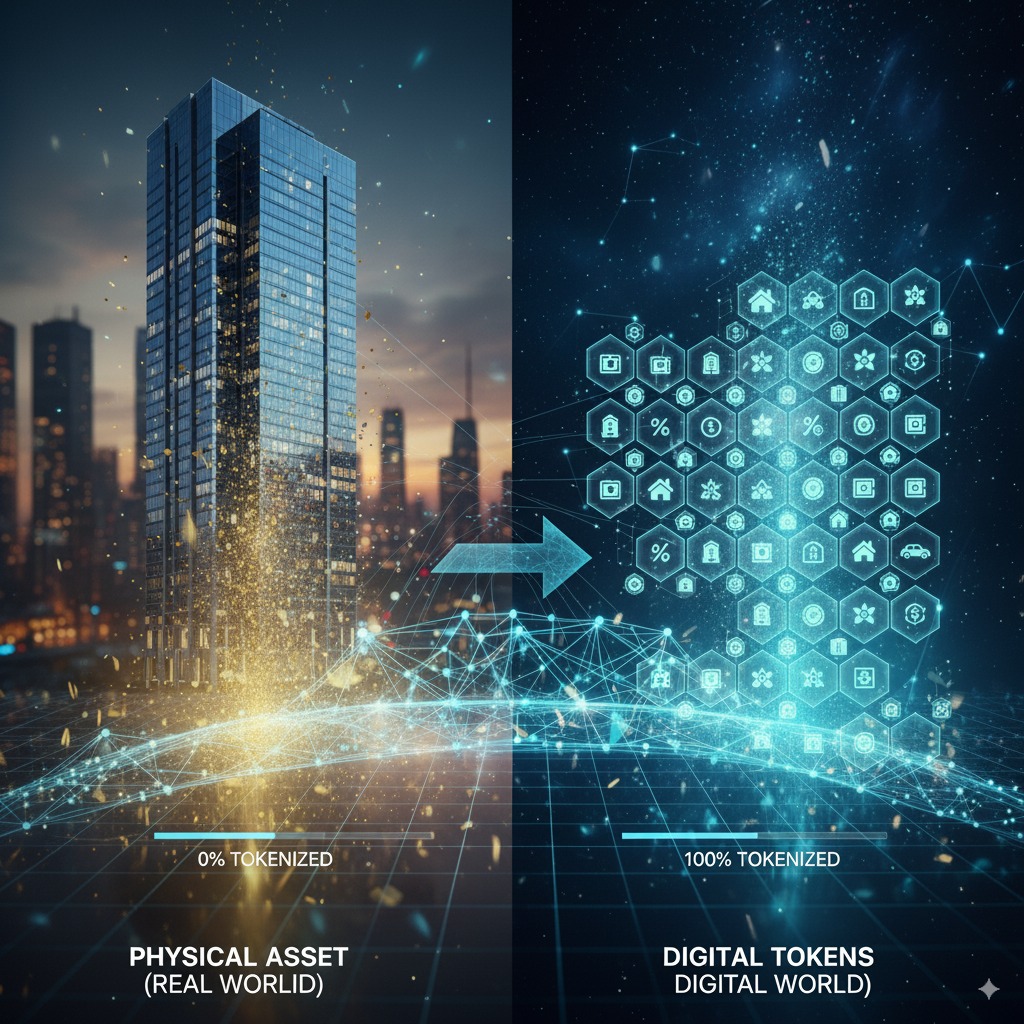
How It Works: A 4-Step Journey to Digital Value
So how does this ‘magic’ actually happen? The process can be broadly divided into four steps.
- Asset Selection and Valuation: First, select an asset that can prove its value, like commercial real estate. Then, determine the total value that the tokens will represent through a professional appraisal.
- Creating a Legal Structure: This step is often invisible but is the most crucial. Typically, a legal entity like a Limited Liability Company (LLC) is created to own the physical asset. This legal ‘wrapper’ serves as a safeguard to ensure that the digital tokens have real legal effect regarding the asset.
- Tokenization and Issuance: A program called a ‘smart contract’ is deployed on a blockchain like Ethereum. This contract creates the digital tokens, specifies how many will be issued, how they will be traded, and how profits like rental income will be distributed to token holders.
- Distribution and Trading: The created tokens are sold to investors. Once purchased, tokens can be freely traded on the secondary market, creating a new ’liquidity’ that never existed before.
The real innovation of this process lies not in the technology itself but in legally establishing a valid bridge between physical assets and their digital replicas. The magic of RWA begins right here.
Wait, is RWA different from STO?
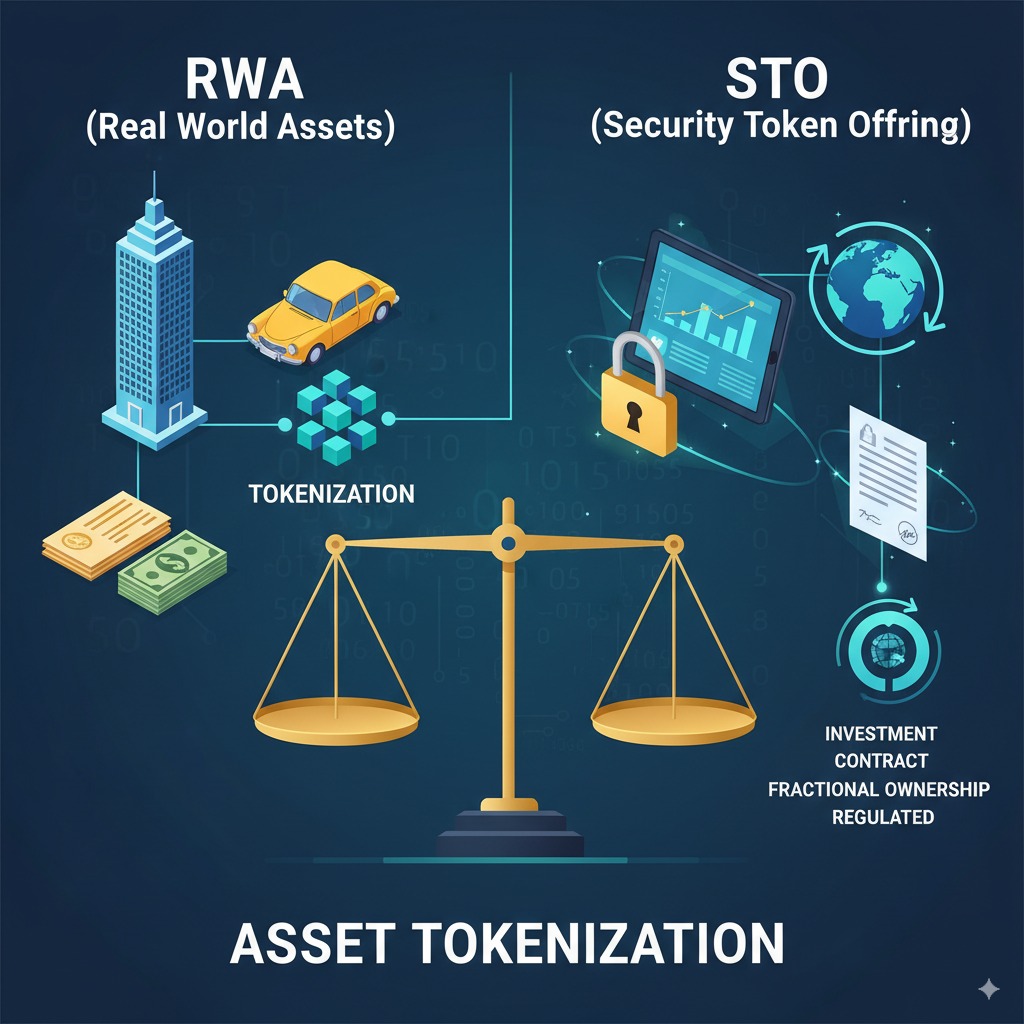
Let’s briefly compare RWA with a similar concept, ‘Security Token Offering (STO).’ STO refers to the tokenization of traditional ‘securities’ like stocks or bonds under the regulation of financial authorities. In contrast, RWA encompasses a broader concept that includes non-security assets like artworks or collectibles. RWA can be seen as an evolution and expansion of STO.
Digital Trust, Oracles: How Do Tokens Know the Value of a Building?
The Dilemma of Blockchain: A Genius Trapped in a Soundproof Room
Blockchain is incredibly secure and transparent, but it has one significant weakness: it is intentionally isolated from the outside world. This means it cannot fetch external information like stock prices, weather, or real estate values on its own. So how can a token representing a building know its constantly changing value?
The Savior’s Arrival: Oracles, the Bridge to the Real World
The solution to this problem is ‘Oracles.’ Oracles are services that find and verify real-world data and securely deliver it in a way that the blockchain can understand.
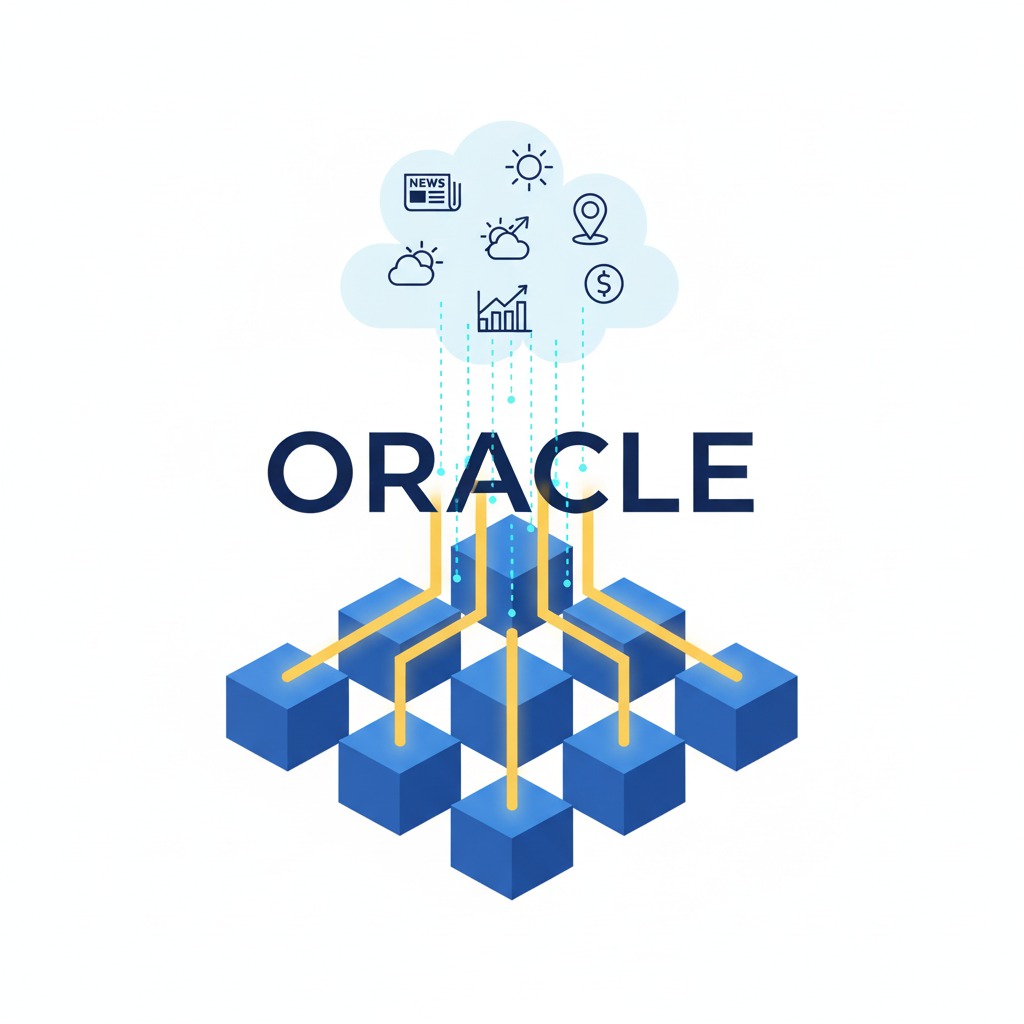
Let’s use another analogy. Think of the blockchain as a smart judge in a courtroom. This judge can only make rulings based on the evidence presented in court. Oracles are like trusted expert witnesses. These witnesses go out into the world to verify facts (“According to the latest appraisal, this building is valued at 10.5 billion won”) and deliver the information in a language the judge can understand. Then, based on this reliable information, the judge can make a ruling (execute the smart contract).
Without oracles, RWA tokens would be disconnected from reality and would merely become speculative instruments. Oracles are the lifeline that firmly ties the value of RWA tokens to reality.
From Ski Resorts to Neighboring Rent: Pioneers of a New World
A Hotel That Skipped Wall Street: The Story of St. Regis Aspen
In 2018, the luxurious St. Regis Aspen Resort in Colorado needed funding. Initially, they considered going public on the New York Stock Exchange (IPO), but the process of listing a single hotel was too expensive and complicated.

Instead of giving up, they came up with a groundbreaking idea: tokenization. They issued a digital security called ‘Aspen Coin’ and successfully raised $18 million (about 2.4 billion won) by selling 18.9% of the hotel’s equity. This was a historic moment proving that high-value real estate could be fractionally sold on the blockchain.
Rent Paid in Cryptocurrency Every Week: The Revolution of RealT
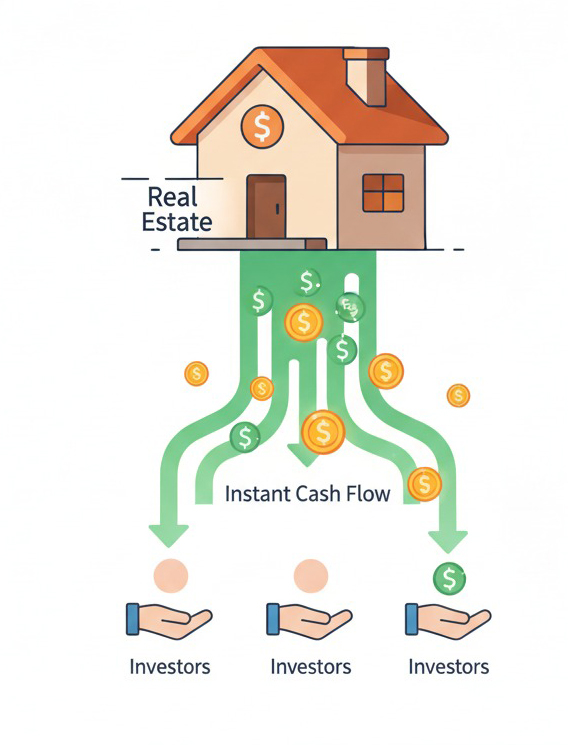
If Aspen’s case was for the wealthy, the platform ‘RealT’ aimed for true democratization of real estate investment. Their idea was simple: tokenize single-family homes in cities like Detroit, allowing anyone in the world to invest for just $50 (about 70,000 won).
The real innovation lay in the profit distribution method. Token holders receive rental income directly in stablecoins (cryptocurrencies with fixed value) in their wallets every week. This transformed slow and cumbersome real estate investment into an immediate cash flow opportunity.
Andy Warhol Goes on the Blockchain: Art for Everyone
Do you remember the artwork by Andy Warhol mentioned in the introduction? In 2018, the art investment platform ‘Masonas’ tokenized this piece. They raised $1.7 million (about 2.3 billion won) by selling 31.5% of the painting. Buyers could purchase digital certificates representing partial ownership of the artwork using Bitcoin or Ethereum. This demonstrated that even a one-of-a-kind masterpiece could be brought into the digital economy.
These three stories all showcase the same revolution: separating accessibility from ownership. RWA detaches the economic benefits of assets from physical assets, allowing the rights to be shared with anyone in the world.
Table: Traditional Real Estate Investment vs. Tokenized Real Estate Investment
| Feature | Traditional Real Estate Investment | Tokenized Real Estate Investment (e.g., RealT) |
|---|---|---|
| Minimum Investment | High (tens of thousands to hundreds of millions won) | Low (starting from $50) |
| Liquidity | Very low (selling can take months) | High (24/7 online trading) |
| Geographical Barriers | High (complex for overseas investments) | Low (anyone in the world can invest) |
| Transaction Process | Slow and complicated (paperwork, etc.) | Fast and efficient (automated by smart contracts) |
| Transparency | Opaque (difficult to access ownership records) | High (transparently recorded on the blockchain) |
| Profit Distribution | Slow (monthly or quarterly) | Fast (weekly or daily) |
The Designers of Bridges: The Story of Centrifuge
Starting Point: Problems in the Real World
The founders of ‘Centrifuge’ were well aware of the significant pain points faced by small and medium-sized enterprises. They often had to wait over 60 days to receive payment after selling goods. This cash flow gap was a major obstacle to business growth.
They envisioned a world where any business could tokenize its future receivables and use them as collateral to obtain immediate funding.
The Centrifuge Model: Bridging DeFi and Real Finance
Centrifuge has realized that dream. Businesses bundle their receivables into a single digital asset (NFT) and submit it to the Centrifuge platform. Investors then lend money against this, earning returns based on real-world cash flows. This effectively creates a bridge where decentralized finance (DeFi) capital supplies funds to real-world businesses.
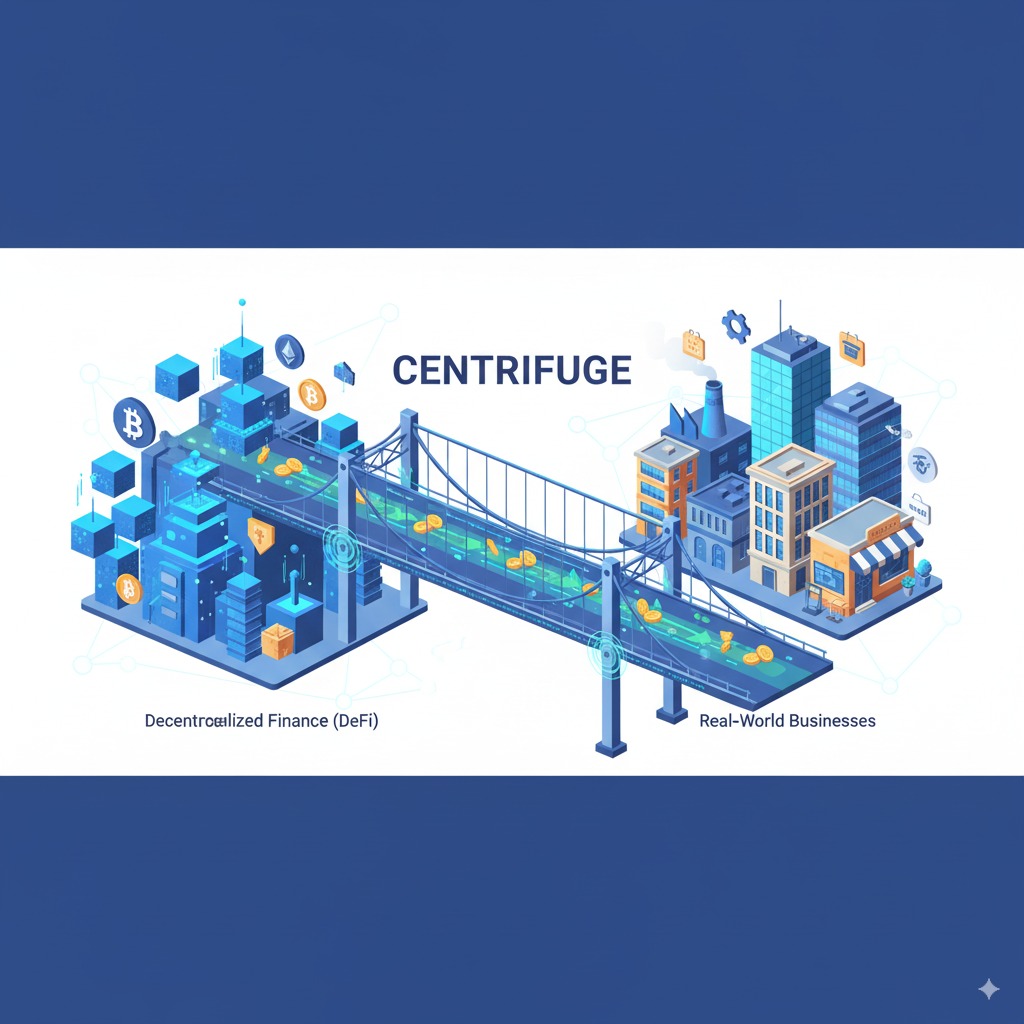
The story of Centrifuge shows that the most successful RWA projects are born from a desire to solve concrete problems in the real world.
The Rise of Giants: BlackRock’s CEO Changes His Mind
Larry Fink’s Transformation
Larry Fink, CEO of the world’s largest asset management firm BlackRock, dismissed Bitcoin in 2017 as a “signal of money laundering.” He represented the skeptical viewpoint of Wall Street.
However, in 2024, his attitude changed 180 degrees. He publicly acknowledged, “My past opinion on Bitcoin was wrong,” and declared, “The next step will be the tokenization of all financial assets.” This is a strong signal that the RWA revolution is being taken seriously at the pinnacle of the financial world.
Franklin Templeton Shows Action
While Larry Fink stunned the world with words, another giant, Franklin Templeton, took action. In 2021, they launched the ‘Franklin OnChain U.S. Treasury Fund,’ the first mutual fund in the U.S. to record ownership on the blockchain. This was a quiet yet significant step integrating blockchain efficiency into the most traditional and heavily regulated financial sector.
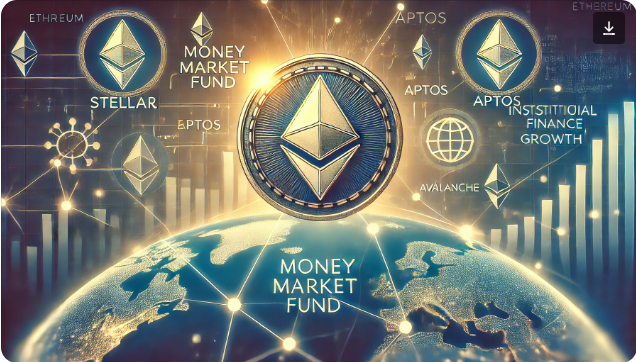
The emergence of giants like BlackRock changes the game. They bring massive capital and trust to the RWA field. Ultimately, for RWA to grow to a trillion-dollar scale, it will need to be a ‘regulated revolution’ that integrates with the existing financial system rather than a disruptive one.
A 200 Trillion Won Dream and Some Obstacles
Predictions of Trillions of Dollars
Predictions about the future of the market are staggering. The Boston Consulting Group (BCG) forecasts that the RWA market will reach $16 trillion (about 2,000 trillion won) by 2030. This signifies a massive trend that will not be a niche market but a core part of future global finance.
Mountains to Overcome
However, to make this dream a reality, several significant obstacles must be overcome.
- The Maze of Regulation (the biggest obstacle): Different rules and uncertain laws in each country are the biggest issues. Without clear regulations, big players will hesitate to enter the market.
- The Link Between Reality and Digital: How can we legally ensure that owning a token equates to owning a physical asset? This is still a challenge because blockchain records are not legal title deeds.
- Technological and Security Risks: Technical risks such as bugs in smart contracts, hacking, and oracle errors still exist.
The future of RWA will be a battleground among various blockchain platforms competing to become the ‘settlement system’ of this massive market.
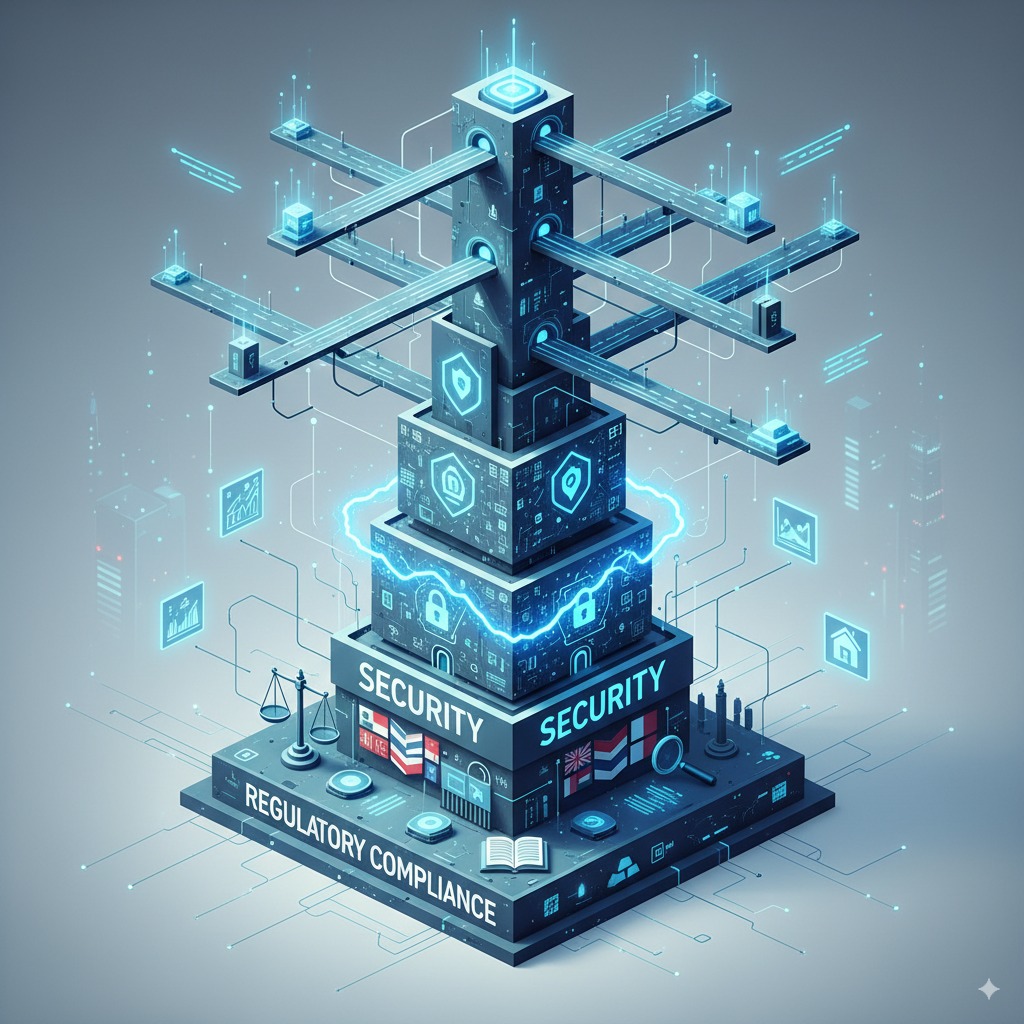
The winner will not simply be the fastest or cheapest platform but will be the one that offers the best combination of security, scalability, and regulatory compliance.
1. Strengthening Technical Security:
- Evolution of Blockchain Technology: Integrate advanced encryption technologies like quantum-resistant encryption, zero-knowledge proofs (ZKP), and homomorphic encryption to maximize data privacy and security.
- Utilization of Distributed Ledger Technology (DLT): Use permissioned blockchains or hybrid blockchains to strictly manage participant qualifications and limit access for malicious actors.
- Smart Contract Security Audits: All smart contracts should undergo thorough audits by professional security firms before deployment to eliminate vulnerabilities and establish rapid response mechanisms for bug occurrences.
- Multi-signature and MPC (Multi-Party Computation): Apply multi-signature wallets or MPC technology for asset management and transaction approvals to eliminate single points of failure and enhance security.
2. Ensuring Scalability:
- Adoption of Layer 2 Solutions: Utilize layer 2 solutions like ZK rollups and optimistic rollups to reduce the burden on the mainnet and dramatically improve transaction throughput.
- Application of Sharding Technology: Split the blockchain network into multiple shards, allowing each shard to independently process transactions, thereby enhancing overall network scalability.
- Enhancing Interoperability: Safely build bridge technologies that enable asset movement and information exchange between different blockchain networks to increase liquidity and expand market size.
- Off-chain Processing: Handle frequently occurring small transactions off-chain, recording only the final results on-chain to reduce network load.
3. Regulatory Compliance:
- Robust KYC/AML Processes: Mandate strict KYC (Know Your Customer) and AML (Anti-Money Laundering) procedures for all RWA platform participants to prevent money laundering and terrorist financing.
- On-chain Identity Management Systems: Utilize decentralized identity (DID) systems to securely manage user identity information and establish mechanisms for regulatory authorities to access it when necessary.
- Integration of Relevant Laws: Clearly integrate existing laws related to securities, real estate, and new regulations concerning blockchain into RWA platforms, transparently disclosing the legal framework.
- Utilization of Regulatory Sandboxes: Before launching new RWA products and services, collaborate with regulatory authorities through regulatory sandboxes to test compliance and make necessary adjustments.
- Audit and Reporting Systems: Establish systems that allow regulatory authorities to transparently audit RWA transaction histories and asset statuses to enhance trust.
- Decentralized Governance and On-chain Voting: Introduce decentralized governance models that allow stakeholders to participate in platform policies and key decision-making to ensure transparency and fairness.
4. Integrated Strategies for the Best Combination:
- Hybrid Blockchain Architecture: Build a hybrid architecture that combines the transparency and decentralization of public blockchains with the performance and regulatory ease of private blockchains.
- Establish Tokenization Standards: Create unified technical and legal standards for RWA tokenization to enhance interoperability among various assets and prevent market fragmentation.
- Continuous R&D and Collaboration: Invest in ongoing research and development of cutting-edge technologies like blockchain, encryption, and AI-based security solutions to enhance systems and strengthen collaboration with various stakeholders, including regulatory bodies, financial institutions, and tech companies.
Combining these elements organically and flexibly responding to the ever-changing technological and regulatory environment will be key to the successful future of RWA.
Conclusion: A Piece of Your World
Let’s return to the imagination of owning a piece of Andy Warhol’s painting or a share of the St. Regis Hotel. What once seemed a distant fantasy has now become a tangible reality through RWA tokenization.
RWA is more than just a new technology. It is a movement towards a more open, efficient, and democratic financial system. It breaks down artificial barriers and provides more people with the opportunity to access the value of the global economy.
Of course, this journey has just begun, and challenges lie ahead. But the promise is immense. The value of the world will no longer be trapped in vaults and opaque ledgers; with digital connections, a transparent and accessible future awaits everyone. Through each token, we will gain the opportunity to own a piece of our own world.